
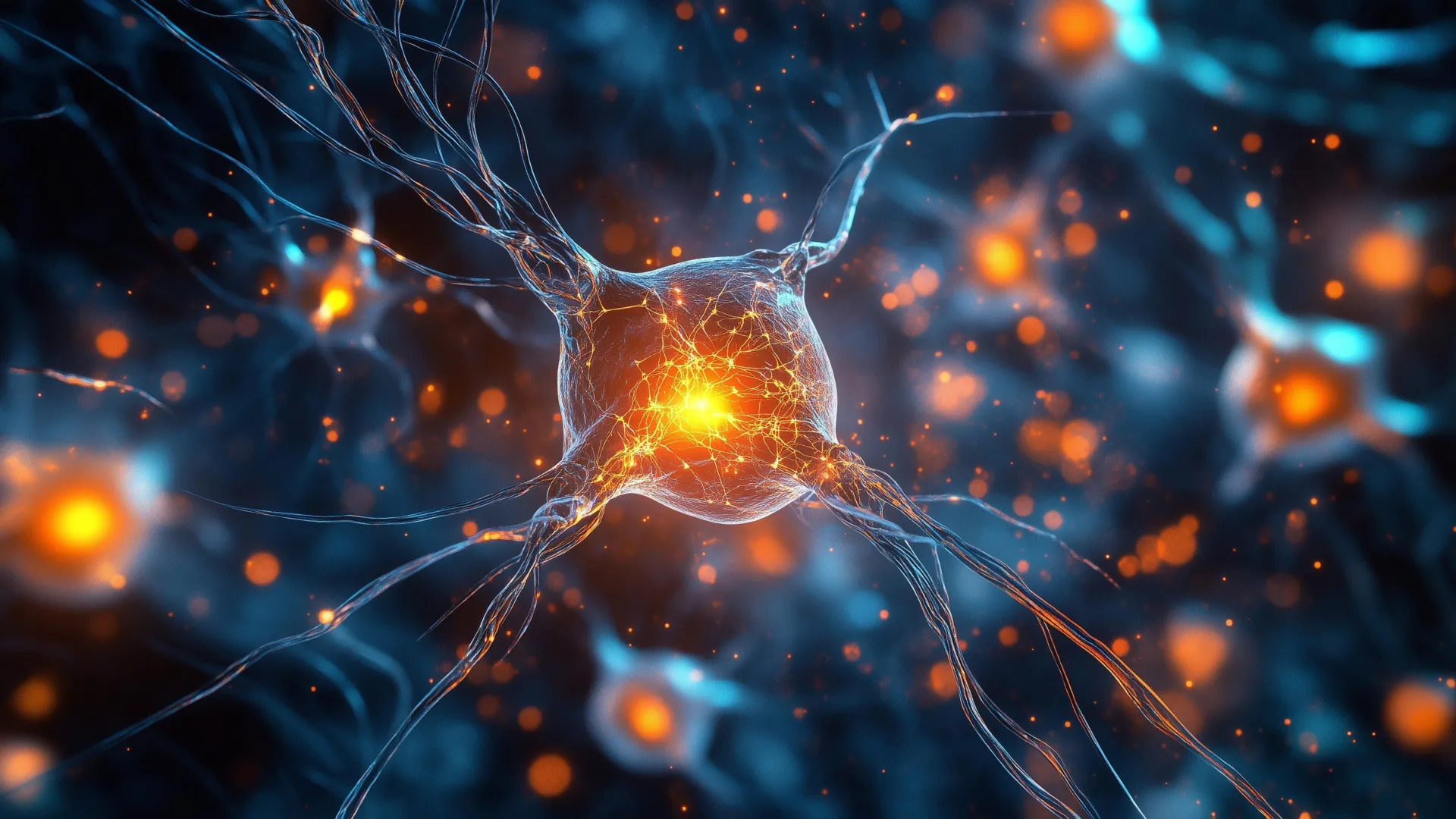
A groundbreaking investigation, recently detailed in the esteemed journal Proceedings of the National Academy of Sciences (PNAS), reveals a paradigm shift in our understanding of neuronal function, proposing that individual human brain cells possess a computational capacity significantly exceeding that of their counterparts in other mammalian species. This revelation offers a compelling new lens through which to examine the unique cognitive architecture that underpins human exceptionalism. For generations, the scientific community has grappled with the intricate question of how the human brain orchestrates faculties such as complex language, abstract imagination, advanced mathematical reasoning, and groundbreaking invention. Traditionally, prevailing theories have predominantly focused on the sheer magnitude of neural architecture – the staggering count of approximately 100 billion neurons and the vast, intricate network of interconnections they form – as the primary drivers of these advanced capabilities. However, this recent research suggests a crucial, previously underappreciated factor resides at a far more granular level: the inherent sophistication of individual cellular processing.
Researchers have meticulously demonstrated that neurons within the human cerebral cortex function as considerably more intricate information processing entities, akin to specialized microchips, when contrasted with homologous cells in other mammals. The implications of these findings are profound, positing that the fundamental building blocks of the human cortex are themselves remarkably powerful, potentially shedding light on the evolutionary trajectory that led to the development of unparalleled human cognitive abilities. This pioneering work was spearheaded by a collaborative team from the Edmond and Lily Safra Center for Brain Sciences (ELSC) at the Hebrew University, comprising Professors Idan Segev and Mickey London, alongside doctoral candidates Ido Aizenbud and Daniela Yoeli. Their research was further augmented by the expertise of Professor Chris de Kock from the Free University of Amsterdam. Professor Segev articulated a fundamental misconception, stating, "The common perception is that a neuron acts as a rudimentary on-or-off switch. Our findings, however, unequivocally demonstrate that a solitary human neuron functions as an exceptionally sophisticated computational device in its own right."
To empirically quantify the computational potential of a single brain cell, the research team devised an innovative methodology. This novel approach integrated sophisticated computational modeling techniques with advanced artificial intelligence algorithms. The core principle involved assessing the degree of complexity required for an advanced artificial neural network (ANN) to accurately learn and replicate the intricate relationship between the myriad signals a biological neuron receives and the subsequent electrical response it generates. The underlying logic is elegantly simple: if a digital counterpart necessitates a substantially more complex architecture to mimic the behavior of a biological neuron, it directly indicates that the biological neuron possesses superior intrinsic computational power.
The results yielded a striking disparity, highlighting the exceptional capabilities of neurons within the human cortex. Their elaborately branched dendritic structures, coupled with their distinctive electrical properties, endow them with the capacity to perform surprisingly sophisticated computations on the incoming sensory information. This includes the ability to process and differentiate complex visual inputs, such as distinguishing between images of different animal species like cats and dogs. In essence, the research reframes the individual human cortical neuron as far more than a basic binary component; each cell acts as an independent, advanced computing unit, possessing computational prowess that rivals that of sophisticated deep neural networks.
This discovery compels a re-evaluation of long-held assumptions about the genesis of human intelligence. The prevailing notion that intelligence primarily stems from the sheer quantity of neurons and their interconnectedness is now challenged. Instead, this research strongly suggests that the inherent complexity of individual neurons has played a pivotal role in the evolutionary ascent of human cognition. Furthermore, the researchers have successfully established a systematic and broadly applicable framework for correlating the physical architecture of brain cells with their functional computational capabilities. This methodological advancement holds the promise of accelerating scientific progress towards a more profound comprehension of the neural underpinnings of human thought, learning, and cognition.
Beyond its implications for neuroscience, these findings also possess the potential to significantly influence the future trajectory of artificial intelligence development. Current state-of-the-art machine learning systems are predominantly constructed from highly simplified artificial units. This new research opens up an alternative avenue, suggesting the development of brain-inspired AI systems built from artificial units that are themselves computationally profound and powerful, thereby more closely mirroring the intricate capabilities observed in biological neurons. This could lead to AI that is not only more efficient but also possesses a deeper, more nuanced understanding of complex data, potentially unlocking solutions to challenges that have long eluded conventional computational approaches. The intricate branching patterns of dendrites, for instance, which enable neurons to integrate information from thousands of other cells, are a key area of focus for future AI architectures aiming to replicate this biological efficiency. The way neurons modulate their electrical signals, a process far more nuanced than a simple on/off switch, also presents a rich source of inspiration for designing more adaptive and intelligent artificial systems. By understanding these fundamental computational units of the brain, scientists are not only unraveling the mysteries of human consciousness but also laying the groundwork for the next generation of artificial intelligence.
About the Author












