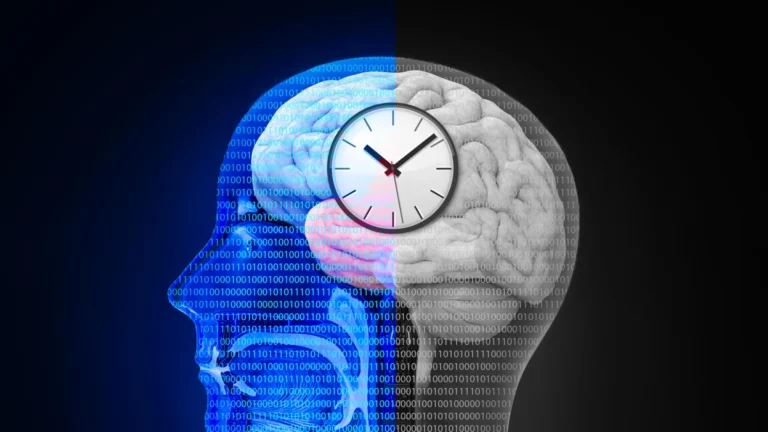
A groundbreaking investigation conducted by scientists at Baylor College of Medicine has unveiled a startling capacity within the human brain: the ability to engage in sophisticated language processing even when an individual is rendered fully unconscious by general anesthesia. These revelations, meticulously documented and disseminated in the esteemed journal Nature, fundamentally challenge established paradigms concerning the intricate nexus between consciousness and cognitive operations. Furthermore, they illuminate novel avenues for future scientific exploration into the mechanisms of memory formation, the complexities of linguistic comprehension, and the development of advanced brain-computer interfaces.
"Our findings unequivocally demonstrate that the brain exhibits a far greater degree of activity and capability during states of unconsciousness than was previously posited," stated Dr. Sameer Sheth, a distinguished professor, holder of the Cullen Foundation Endowed Chair of Neurosurgery, and a McNair Scholar at Baylor. "Even when patients are under the influence of general anesthesia, their neural networks continue to actively process and analyze the surrounding environment."
Direct Neural Recordings Illuminate the Unconscious Brain
In an effort to meticulously chart the latent capabilities of the unconscious brain, Dr. Sheth and his research cohort embarked on a pioneering endeavor to record the electrical impulses of hundreds of individual neurons located within the hippocampus. This crucial brain structure is intrinsically linked to the intricate processes of memory formation and retrieval. The electrophysiological data was collected from patients undergoing surgical procedures for epilepsy, a critical juncture that afforded researchers an exceptionally rare opportunity for direct, in-situ examination of this vital neural region while the subjects were under general anesthesia.
The research team employed cutting-edge Neuropixels probes, a sophisticated technological innovation that had not previously been utilized within the hippocampus for this specific category of inquiry. This advanced instrumentation empowered them to meticulously observe the brain’s responsive patterns to auditory stimuli and linguistic input, even in the complete absence of conscious awareness on the part of the patients.
The Brain’s Persistent Engagement with Language
The initial phase of the experimental protocol involved exposing the anesthetized patients to a carefully orchestrated sequence of repetitive auditory tones, interspersed with occasional, unexpected sounds. The researchers observed a consistent and pronounced detection of these anomalous tones by neurons within the hippocampus. Even more remarkably, the neural networks demonstrated an enhanced proficiency in recognizing these unexpected sounds as the experiment progressed, strongly suggesting that processes of learning and neural plasticity remained active and functional during the anesthetic state.
The experimental design was subsequently escalated in complexity with the introduction of short narrative passages, while the continuous monitoring of neural activity was maintained. The hippocampal recordings revealed unambiguous evidence of real-time language processing. The intricate patterns of neuronal firing patterns indicated that the brain was capable of discerning distinct grammatical components within the spoken language, including the identification of nouns, verbs, and adjectives.
A further astonishing discovery emerged from the team’s observations: neural signals could be reliably employed to anticipate forthcoming words within the narrative even before they were articulated.
"It appears that the brain possesses the capacity to predict subsequent elements of a story, even in the absence of conscious perception," commented Dr. Sheth, who also holds the esteemed position of Director of The Gordon and Mary Cain Pediatric Neurology Research Foundation Laboratories within the Duncan Neurological Research Institute at Texas Children’s Hospital.
"This form of predictive coding is a cognitive function we typically associate with states of wakefulness and attentiveness, yet it is demonstrably occurring within an unconscious state," remarked Dr. Benjamin Hayden, a professor of neurosurgery at Baylor, underscoring the profound implications of the findings.
A Paradigm Shift in Our Understanding of Consciousness
These groundbreaking findings strongly suggest that fundamental cognitive faculties, such as the comprehension of language and the ability to predict linguistic sequences, may not be exclusively contingent upon conscious awareness. Instead, the very essence of consciousness itself might emerge from the complex interplay and communication between multiple, interconnected brain regions, rather than being solely localized to activity within a single area, such as the hippocampus.
The researchers also drew attention to striking parallels between the brain’s predictive behaviors observed during anesthesia and the operational principles of artificial intelligence (AI). Analogous to how advanced language models generate text by forecasting the subsequent word, the hippocampus appeared to engage in comparable predictive processes during linguistic analysis. A deeper understanding of these shared underlying principles could significantly advance scientific comprehension of both biological and artificial forms of intelligence.
This seminal research also holds considerable promise for the future development of communication technologies, including the design of sophisticated speech prosthetics for individuals who have experienced a loss of vocal function due to various medical conditions.
"Can we harness these neural signals to effectively deploy and operate a speech prosthetic for individuals whose brains have been affected by conditions such as stroke or injury? These are precisely the types of transformative questions that we can now meaningfully explore in relation to the functional capabilities of this critical brain region," posited Dr. Vigi Katlowitz, the study’s lead author and a neurosurgery resident at Baylor, highlighting the translational potential of the work.
Navigating the Nuances: The Need for Further Investigation
The scientific team earnestly advises that these remarkable findings should be interpreted with careful consideration of their specific context. The study exclusively examined the effects of a single type of general anesthetic, meaning that the observed phenomena may not be universally applicable to all forms of unconsciousness, such as natural sleep or pathological coma. Furthermore, the research primarily focused on a singular brain region, leaving the extent to which these complex processes are distributed throughout the entire brain as a subject requiring further extensive investigation.
"This body of work compels us to fundamentally re-evaluate our conceptualization of what it truly means to be conscious," concluded Dr. Sheth. "The brain is demonstrably performing a far greater repertoire of intricate operations behind the scenes than we currently possess a comprehensive understanding of."
About the Author