The remarkable journey from a solitary fertilized cell to the intricate architecture of the human brain, a network comprising an estimated 170 billion specialized cells, has long captivated developmental neuroscientists. A fundamental enigma revolves around the precise mechanisms that orchestrate this cellular migration and differentiation, ensuring each neuron and glial cell occupies its designated position to forge a functional neural network. New research emerging from Cold Spring Harbor Laboratory, in collaboration with esteemed institutions like Harvard University and ETH Zürich, proposes a paradigm-shifting perspective on this developmental marvel, suggesting that the organizational principles might be more inherent and less reliant on extensive external cues than previously hypothesized.
At the core of this scientific inquiry lies the challenge of cellular identity and localization. As Dr. Stan Kerstjens, a postdoctoral researcher in Professor Anthony Zador’s lab, eloquently describes, a developing cell exists in a limited sensory environment, primarily perceiving its immediate surroundings and cellular neighbors. However, its ultimate destiny—whether it becomes a specific type of neuron or a supporting glial cell—is intrinsically tied to its spatial coordinates within the nascent brain. This necessitates that each cell must intrinsically answer two critical questions: "Where am I located?" and consequently, "What role am I destined to fulfill?" The traditional scientific consensus has largely attributed the dissemination of this vital positional information to a complex interplay of diffusible chemical signals, a model that has proven effective in explaining the organization of smaller biological structures.
However, the sheer scale of the developing human brain, with its billions of neurons requiring precise placement, presents a significant challenge to this purely chemical signaling hypothesis. Chemical gradients, while effective over short distances, tend to dissipate and become less precise as they extend through larger volumes of tissue. This inherent limitation has fueled a long-standing debate about how cells situated deep within a rapidly expanding neural mass can accurately ascertain their relative positions. The new theoretical framework introduced by Kerstjens, Zador, and their colleagues offers an elegant solution, drawing an analogy to the way human populations organically spread and organize themselves across geographical landscapes over successive generations.
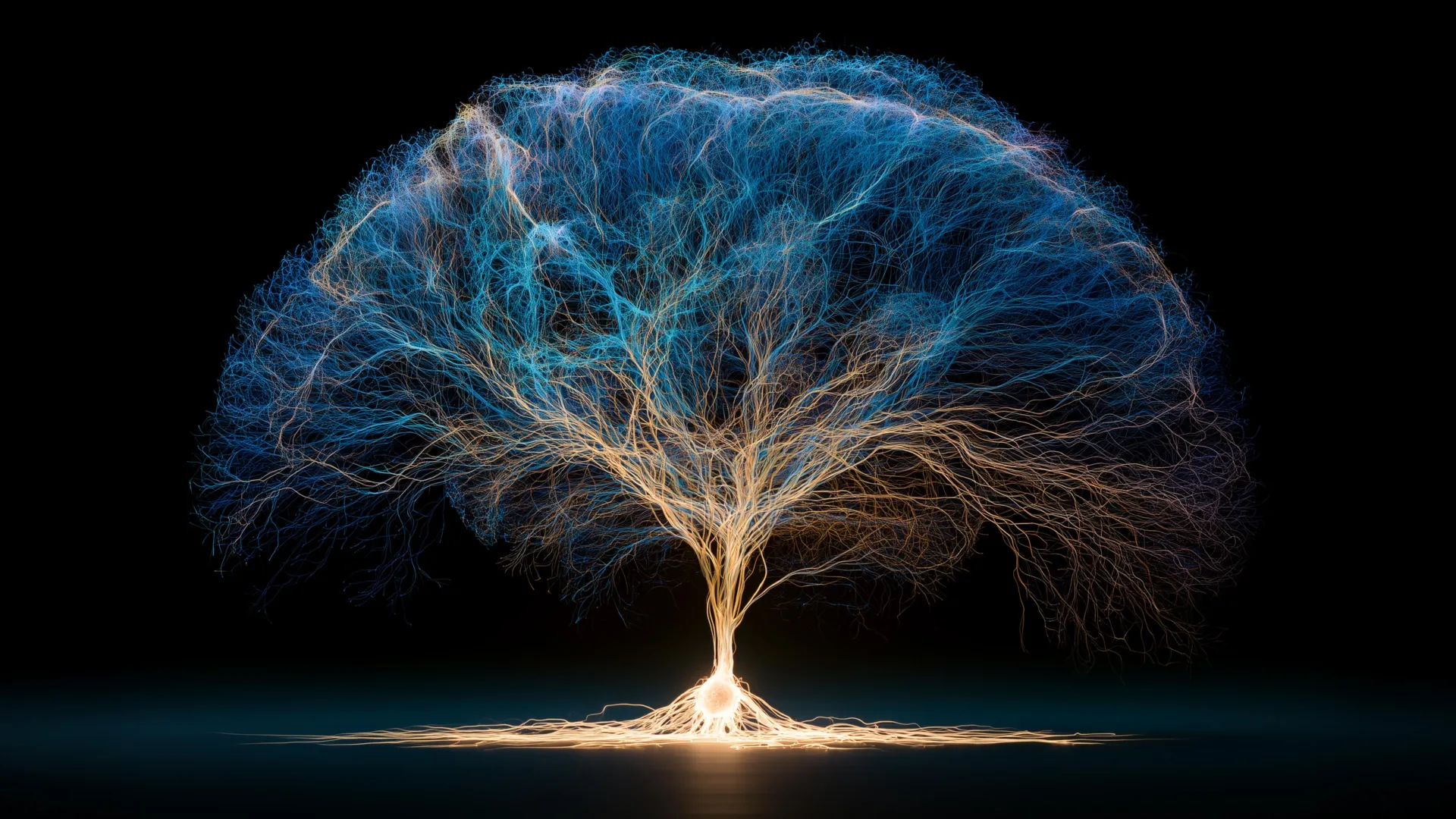
The researchers posit a "lineage-based model of scalable positional information." This concept suggests that cells which originate from the same progenitor cell—that is, share a direct ancestral lineage—tend to remain in close proximity to one another as they proliferate and differentiate. Much like descendants in human societies establishing communities near their parental settlements, leading to the formation of large-scale regional structures without the need for constant, direct, long-range communication, these related cells would naturally form distinct clusters and layers within the developing brain. This intrinsic tendency for familial cells to stay together provides a fundamental organizational principle that can operate across vast cellular populations.
To rigorously test this hypothesis, the research team embarked on a multi-pronged investigation. Initially, they employed theoretical calculations to ascertain the mathematical plausibility of such a lineage-based mechanism effectively generating complex spatial organization. Following this theoretical validation, their attention turned to empirical observations. They meticulously analyzed gene expression patterns within the developing brains of laboratory mice, examining both individual cells and broader cellular ensembles. This allowed them to identify potential molecular markers associated with cellular lineage and spatial clustering. The findings from these mouse studies were then further corroborated by examining developmental patterns in zebrafish, a model organism known for its rapid development and transparent embryos, which enabled detailed real-time observation. The consistent results observed across species with significantly different brain sizes strongly suggest that this lineage-based organizational principle is not limited to a particular brain architecture but possesses a fundamental scalability.
The implications of this research extend far beyond simply refining our understanding of brain development. While the study’s immediate focus is on the neural architecture, the underlying principle of lineage-based organization could have profound implications for a wide array of biological processes. For instance, the uncontrolled proliferation and aberrant spatial organization characteristic of tumors might, in part, be influenced by disruptions in these fundamental lineage-tracing mechanisms. Understanding how normal tissues maintain their intricate structures through cellular inheritance could shed light on the processes that go awry in cancer.
Furthermore, the theory offers intriguing potential connections to the rapidly evolving field of artificial intelligence. As researchers explore the creation of more sophisticated and autonomous AI systems, particularly those designed for self-replication or continuous learning, the concept of information inheritance across "generations" of computational processes becomes paramount. Future AI architectures might find inspiration in this biological model, leveraging similar organizational principles to manage complexity and ensure coherent development within their digital frameworks.
Perhaps the most profound impact of this discovery lies in its potential to illuminate the very nature of intelligence. By deciphering how a single primordial cell orchestrates the construction of an organ as complex and capable as the human brain, scientists may gain crucial insights into the evolutionary and developmental origins of cognitive abilities. The brain’s capacity to generate consciousness, thought, and learning is one of science’s most enduring mysteries. This research offers a vital piece of the puzzle, suggesting that the fundamental organizational blueprint laid down at the cellular level is intrinsically linked to the emergence of higher-level cognitive functions. Understanding this developmental trajectory could help answer the monumental question of how the brain has accumulated its remarkable capabilities, not just within an individual’s lifetime, but across vast stretches of evolutionary time. This work provides a foundational understanding of the physical substrate upon which intelligence is built, offering a new lens through which to view the enduring enigma of the mind.
About the Author