
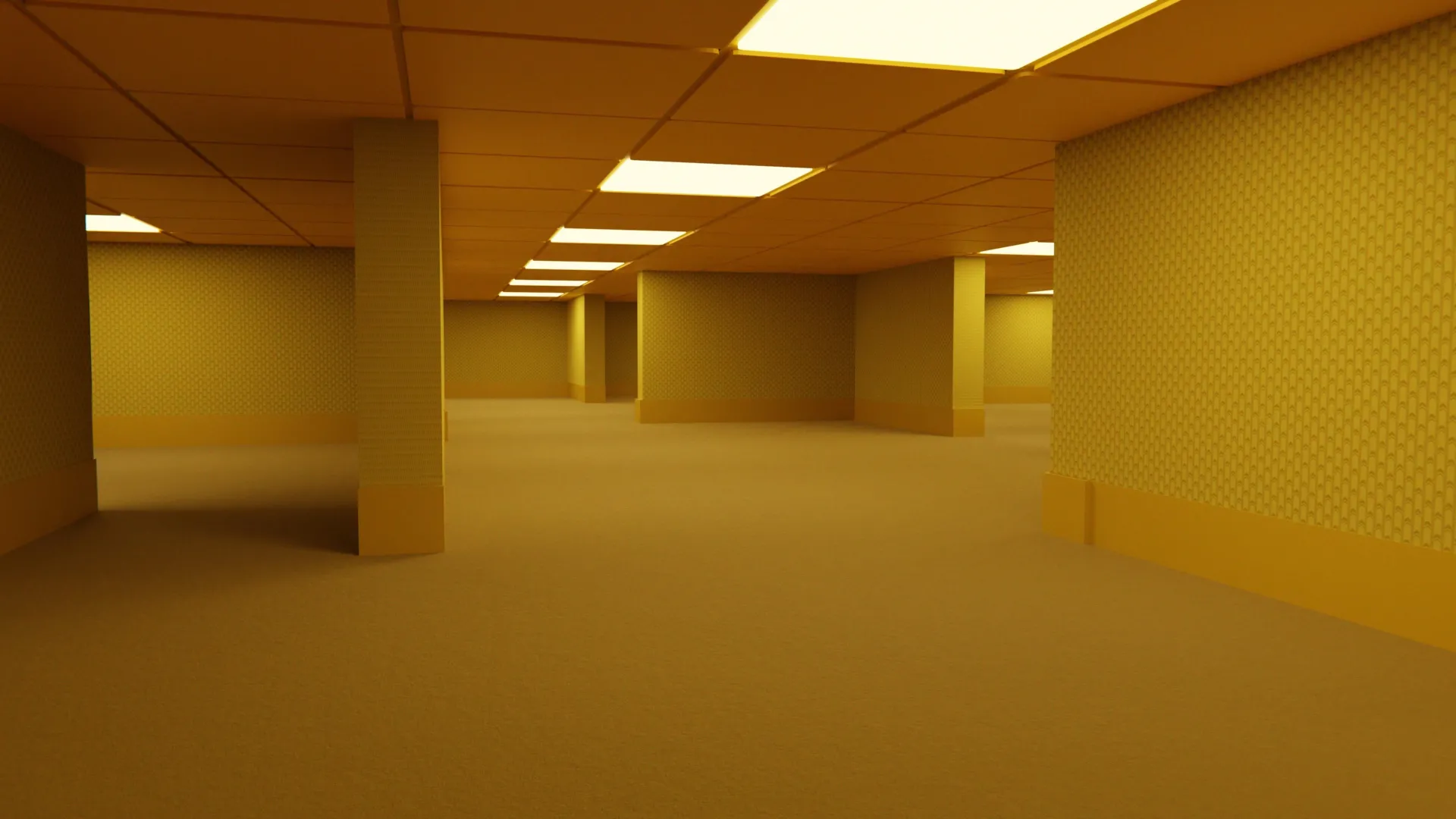
The concept of the Backrooms, an internet-born fictional expanse, has transcended its origins as a mere digital curiosity to become a burgeoning phenomenon, captivating millions and evolving into a unique form of virtual tourism. This intricate, user-generated universe, characterized by its disorienting, endless corridors and monotonous, fluorescent-lit interiors, offers a compelling glimpse into the evolving landscape of digital culture and its impact on how we perceive and engage with constructed realities. Emerging from a now-iconic, anonymously posted image on the online forum 4chan in 2019, the Backrooms presented a stark, unsettling vision: a seemingly infinite series of empty rooms adorned with garish yellow wallpaper, worn carpeting, and the incessant hum of overhead lighting, all devoid of any discernible exits or features beyond a pervasive sense of unease.
This initial visual prompt, imbued with a potent blend of dread and a strange, almost nostalgic familiarity, ignited the collective imagination of internet denizens. Users began weaving narratives around this desolate architecture, speculating about its nature as a liminal space, a dimension one might inadvertently fall into, severing ties with the tangible world. What began as a single image and a speculative caption has since blossomed into a vast, collaborative mythology, permeating platforms like Reddit, TikTok, and YouTube, and even influencing the realm of video gaming. The digital ecosystem surrounding the Backrooms is a testament to participatory culture, where enthusiasts collectively chart its supposed geography, chronicle the experiences of its fictional inhabitants, and continually expand its lore. The common threads weaving through this diverse content are the eerie visual motifs of endless yellow-hued hallways and vacant, office-like environments, all situated in a conceptual space that exists beyond the confines of ordinary reality.
A significant catalyst for the Backrooms’ ascent into mainstream consciousness has been the viral success of filmmaker Kane Parsons’ series of "found footage" style videos on YouTube. Parsons transformed the static, low-resolution imagery that defined the early Backrooms into immersive, cinematic explorations. His work has been instrumental in solidifying the Backrooms as one of the internet’s most recognizable and unsettling horror environments. The phenomenon’s increasing cultural footprint is further underscored by Parsons’ current involvement in adapting the Backrooms for a feature-length horror film, signaling a rapid transition from niche online lore to broader cultural discourse.
While the Backrooms might superficially resemble other internet-fueled urban legends, often categorized as "creepypasta"—such as the enigmatic Slenderman or the disturbing "Russian Sleep Experiment"—its resonance suggests a deeper cultural shift. Research indicates a growing consumer interest in spaces associated with horror and trauma, and importantly, in novel ways of experiencing and interacting with these themes. The Backrooms distinguish themselves from traditional horror narratives not merely by their digital genesis, but by their very structure, which encourages active participation rather than passive consumption.
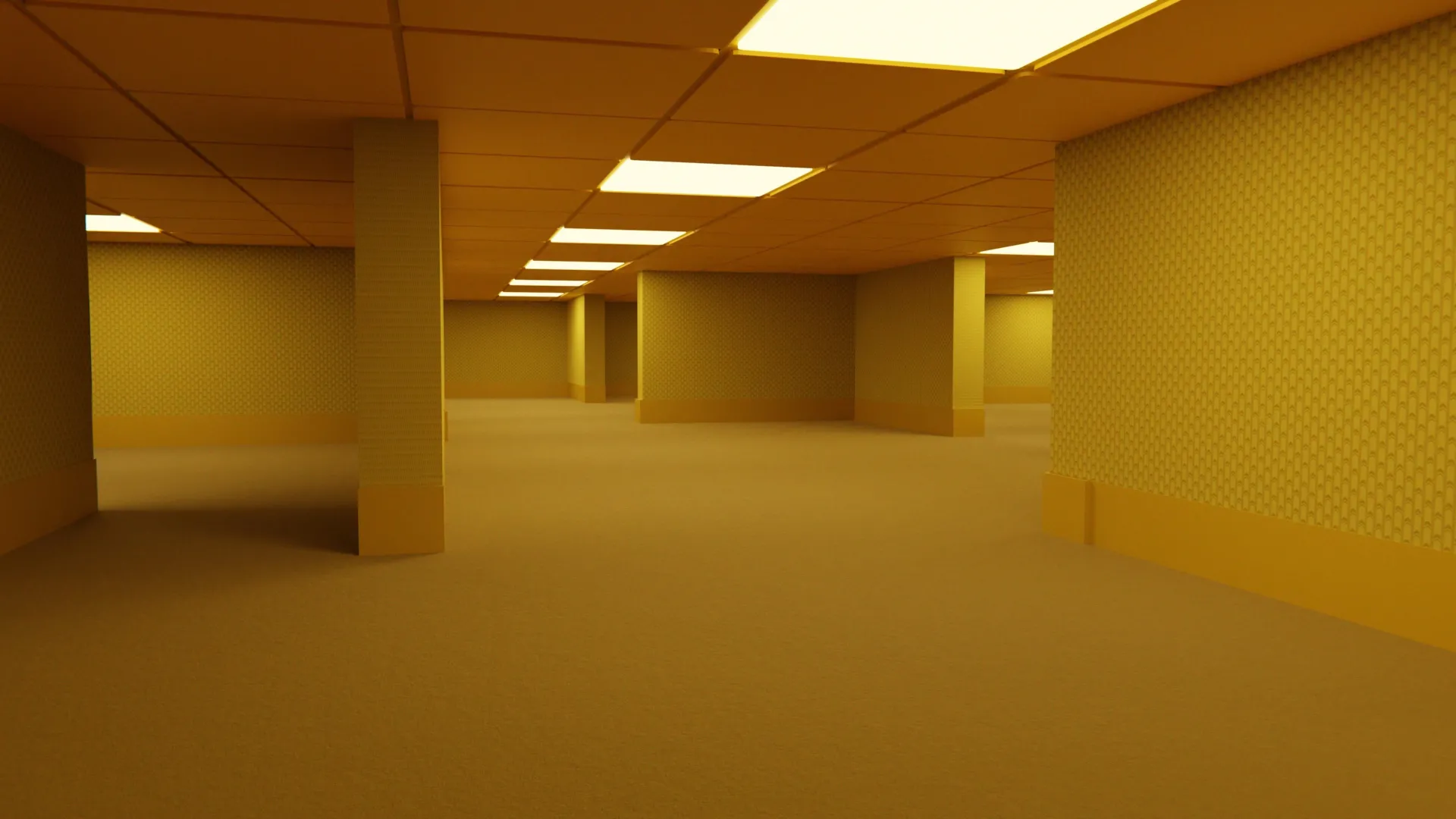
The appeal of the Backrooms lies in its deliberate ambiguity and its departure from the hyper-curated, overexposed nature of modern travel and experience. In an era where virtually every destination is meticulously documented, reviewed, and channeled into shareable online content, the mystery of the Backrooms offers a refreshing counterpoint. This perceived lack of an easily digestible, fully explained narrative allows for a more profound, personal engagement. Subreddits dedicated to the Backrooms boast hundreds of thousands of active members, while the #backrooms tag on TikTok has amassed over half a million posts, with fan pages on Instagram garnering similarly massive followings. These communities actively contribute to the world-building, generating maps, fictional journal entries, survival guides, and first-person accounts that collectively flesh out the expansive, unsettling landscape.
This collaborative approach fundamentally alters the audience’s relationship with the narrative. Instead of merely observing a finished story, users become active participants in constructing and navigating the environment itself. Folklore scholar Michael Kinsella describes this online phenomenon as "online legend-tripping," a form of engagement where audiences transition from passive spectators to contributors, collaborators, and ultimately, co-creators of the mythos. This participatory dynamic is a key factor in the Backrooms’ enduring appeal, setting it apart from conventional horror media.
The fascination with the Backrooms can also be understood through the lens of "dark tourism," a field of study that examines humanity’s draw to locations associated with death, disaster, tragedy, and the uncanny. These sites, whether abandoned prisons, historical battlefields, or places marked by unsettling events, often possess an atmosphere that is symbolically, emotionally, or existentially charged. The Backrooms, however, extend this concept into uncharted territory, offering a unique form of "virtual dark tourism" that bypasses the need for a physical location or a documented historical tragedy. Unlike its real-world counterpart, the Backrooms provides a collectively imagined digital space defined by its pervasive sense of abandonment, unease, and liminality.
The enduring interest in the Backrooms stems precisely from its lack of a fixed mythology, geographical anchor, or definitive historical narrative. This void allows users the freedom to imbue the space with their own meanings, fostering a connection to environments that, despite their fictional nature, evoke a powerful sense of familiarity. The dated aesthetics, the reminiscent hotel-like corridors, the ubiquitous ceiling tiles, and the abandoned office layouts are all elements that echo the often-overlooked "non-places" of contemporary life—spaces we frequently traverse but rarely consciously acknowledge. The Backrooms effectively transform these mundane, liminal spaces into potent sites of psychological unease.
In essence, the Backrooms illustrate how digital culture is actively reshaping traditional notions of experience, particularly those associated with tourism, by rendering the mundane into the menacing. The Backrooms function less as a story to be received and more as a world to be inhabited. Through a multitude of media—including YouTube videos, video games, virtual reality experiences, and TikTok edits—audiences are placed directly within the environment, blurring the lines between narrative, role-playing, exploration, and digital participation. This cross-pollination of experiences helps explain the phenomenon’s profound resonance in the current cultural moment. The internet is no longer solely a conduit for information or a platform for communication; it is progressively evolving into a complex landscape that individuals navigate emotionally and inhabit more fully. The Backrooms stand as a harbinger of a future where collaboratively constructed digital worlds can function as significant cultural environments in their own right—places people visit, explore, invest in emotionally, and return to repeatedly, all without ever physically existing.
About the Author












