
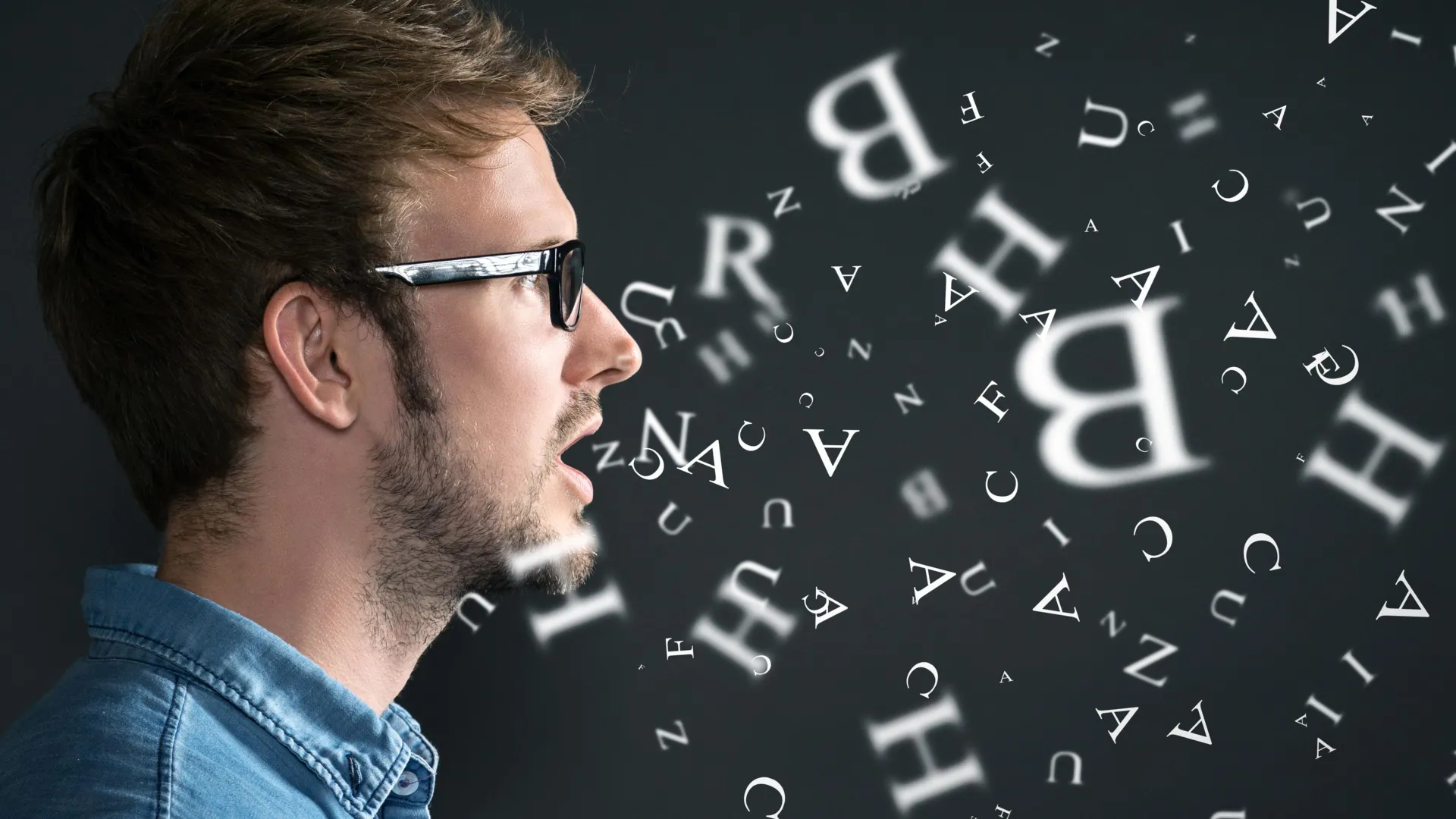
The intricate tapestry of human language, a marvel of complexity and nuance, presents a compelling paradox when viewed through the lens of information theory. Theoretically, the same depth of meaning could be conveyed using a far more streamlined, compressed format, akin to the digital language of computers. This fundamental discrepancy prompts a profound inquiry: what inherent properties of human cognition and interaction prevent us from adopting a purely binary system of ones and zeros for communication?
Addressing this enigmatic question is a collaborative effort by linguist Michael Hahn of Saarbrücken and Richard Futrell from the University of California, Irvine. Their groundbreaking research, recently disseminated in the esteemed journal Nature Human Behaviour, has culminated in a sophisticated model designed to illuminate the underlying reasons for the unique structural characteristics of human language.
Globally, an estimated 7,000 distinct languages are currently in use, ranging from those spoken by dwindling communities to behemoths like Mandarin Chinese, English, Spanish, and Hindi, each boasting billions of speakers. Despite their vast diversity in phonology, grammar, and lexicon, all human languages serve the fundamental purpose of conveying meaning. This is achieved through a hierarchical assembly of words into phrases, which are subsequently organized into sentences, with each constituent element contributing its semantic weight to form a coherent message.
As Michael Hahn articulates, "This is, in essence, a remarkably intricate architecture." He elaborates on the apparent conflict with natural principles, stating, "Given that the natural world generally tends towards maximizing efficiency and resource conservation, it is entirely logical to question why the human brain encodes linguistic information in such a seemingly convoluted manner, rather than adopting a digital approach, similar to a computer’s." The theoretical advantage of encoding speech as binary sequences is its potential for extreme information compression. However, the persistent question remains: why do humans not communicate in a manner reminiscent of fictional robotic entities? Hahn and Futrell posit that they have unearthed a compelling explanation.
Central to their model is the proposition that human language is intrinsically shaped by and anchored to the realities of our lived experiences. Hahn illustrates this vividly: "Human language is molded by the actual circumstances of our existence." He provides a hypothetical scenario: "If I were to describe a hybrid entity composed of half a cat and half a dog, referring to it with an abstract term like ‘gol,’ it is highly improbable that anyone would comprehend my meaning. This is because the concept of a ‘gol’ is not rooted in any shared sensory experience; it simply does not correspond to anything anyone has actually encountered." Similarly, he contends, the arbitrary fusion of words like "cat" and "dog" into a nonsensical string of letters, such as "gadcot," while technically retaining the constituent characters, results in a sequence devoid of meaning for the listener. Conversely, the phrase "cat and dog" is immediately intelligible precisely because both animals are well-established, familiar concepts within our collective understanding. Human language, therefore, functions effectively by establishing direct connections to this reservoir of shared knowledge and embodied experience.
The researchers propose that the human brain exhibits a distinct preference for processing information in ways that leverage pre-existing patterns and familiarity. Hahn summarizes their findings by stating, "To put it plainly, it is less demanding for our brains to navigate what might appear to be the more circuitous route." While natural language may not achieve maximal compression, it imposes significantly less cognitive load. This is attributed to the brain’s continuous operation in conjunction with our existing knowledge of the world.
A purely digital code, while capable of transmitting information at a rapid pace, would inherently be divorced from the rich context of everyday experience. Hahn draws an analogy to the familiar act of commuting: "During our usual journey to work, the route is so ingrained in our memory that the drive often proceeds almost autonomously. Our brain anticipates each turn and landmark, minimizing the cognitive effort required. Opting for a shorter, yet unfamiliar, route, however, demands substantially more attention and mental exertion, proving to be far more fatiguing." From a computational perspective, he adds, "The volume of data the brain needs to process is considerably smaller when we communicate through familiar, natural linguistic structures."
In essence, the act of speaking and comprehending a purely digital code would necessitate a far greater expenditure of mental energy from both the sender and the receiver. Instead, the human brain operates through a sophisticated process of probabilistic prediction, constantly estimating the likelihood of specific words and phrases appearing in sequence. Given that individuals utilize their native languages daily over many years, these linguistic patterns become deeply ingrained, facilitating a smoother and less demanding communication process.
This principle of predictive processing profoundly influences the way speech is structured and understood. Hahn offers a compelling illustration using German: "When I utter the German phrase ‘Die fünf grünen Autos’ (English: ‘the five green cars’), this sentence will almost invariably make sense to another German speaker, whereas ‘Grünen fünf die Autos’ (English: ‘green five the cars’) will not," he explains.
Upon hearing the grammatically sound phrase, "Die fünf grünen Autos," the listener’s brain immediately begins to infer meaning. The initial article "Die" signals specific grammatical possibilities, allowing a German speaker to rapidly narrow down the potential interpretations, ruling out masculine or neuter singular nouns. The subsequent word, "fünf" (five), indicates a countable quantity, thereby excluding abstract concepts. The adjective "grünen" (green) further refines the possibilities, suggesting that the noun will be plural and possess the color green. At this juncture, the object could plausibly be cars, bananas, or even frogs. It is only upon the utterance of the final noun, "Autos" (cars), that the meaning is definitively resolved. With each successive word, the brain systematically reduces uncertainty until only a single, coherent interpretation remains.
In stark contrast, the jumbled sequence "Grünen fünf die Autos" disrupts this predictable cognitive flow. The expected grammatical cues are presented out of their conventional order, rendering it exceedingly difficult for the brain to construct meaning from the aberrant sequence.
The findings of Hahn and Futrell, rigorously demonstrated through mathematical modeling and published in Nature Human Behaviour, underscore a fundamental principle: human language prioritizes the minimization of cognitive load over the maximization of information compression.
These insights carry significant implications that extend beyond the realm of linguistics, potentially influencing the development of advanced artificial intelligence systems. Specifically, the understanding of how the human brain processes language could pave the way for enhanced large language models (LLMs), the sophisticated systems underpinning generative AI tools such as ChatGPT and Microsoft’s Copilot. By achieving a more profound comprehension of natural communication patterns, researchers may be able to engineer AI systems that exhibit a greater affinity with human-like linguistic interaction, leading to more intuitive and effective human-AI collaboration.
About the Author












