
As individuals progress through their sixties and beyond, many encounter a common physiological shift: an apparent thickening around the midsection. This phenomenon often prompts a search for effective solutions, frequently leading to a focus on conventional abdominal exercises like crunches. However, insights from seasoned fitness professionals, drawing on decades of experience in personal training and fitness education, reveal that a more nuanced, comprehensive approach—particularly a consistent morning routine—yields superior and more sustainable results compared to isolated "ab workouts." This article delves into the underlying causes of age-related waistline changes and presents a targeted five-movement sequence designed to address these root issues, fostering a healthier, more defined core.
Deconstructing Age-Related Torso Alterations
The perception of an expanding waistline in later life is rarely attributable to a single factor. Instead, it typically arises from a confluence of three interconnected physiological processes, which, when understood, illuminate the path to effective intervention.
Firstly, hormonal fluctuations play a significant role in altering fat distribution. In women, the decline in estrogen levels during menopause often triggers a shift in fat storage patterns. While pre-menopausal fat might predominantly accumulate around the hips and thighs (gynoid fat), post-menopause sees a tendency for fat to redistribute towards the abdomen and lower back, increasing visceral fat (android fat). Similarly, in men, a gradual reduction in testosterone, a process known as andropause, can lead to increased central adiposity. This hormonal re-orchestration means that even if total body weight remains relatively stable, the visible outline of the torso can appear significantly thicker due to this internal relocation of adipose tissue.
Secondly, the natural process of sarcopenia—age-related muscle loss—profoundly impacts the core. The deep muscles of the trunk, which include the transverse abdominis (a muscle that acts like a natural corset, wrapping horizontally around the abdomen), the internal and external obliques, and the multifidus muscles along the spine, are crucial for maintaining core stability and providing internal support. With reduced physical activity and the aging process, these intrinsic stabilizers can weaken and atrophy over time, often unnoticed. This diminished muscular support allows the abdominal contents to protrude forward, creating a "sagging" appearance that is often mistaken for increased fat, even when subcutaneous fat levels haven’t drastically changed. The lack of robust muscular engagement means the waist loses its inherent shape and structural integrity.
The third critical element is postural degradation. Over decades, cumulative habits, sedentary lifestyles, and gravitational forces can contribute to changes in spinal alignment. A common manifestation is thoracic kyphosis, or a rounding of the upper back, which often coexists with an anterior pelvic tilt (where the pelvis tips forward). These postural deviations effectively compress the abdominal cavity and push its contents forward and downward. Consequently, the torso appears thicker and more prominent, irrespective of the actual amount of fat or muscle present. Addressing and correcting these postural imbalances can yield rapid visual improvements in waistline definition, sometimes within a matter of weeks, even before significant changes in body composition occur.
Why a Holistic Morning Routine Outperforms Isolated Abdominal Exercises
The conventional wisdom often steers individuals towards repetitive abdominal flexion exercises like crunches or sit-ups when seeking to reduce waist circumference. However, this approach frequently misses the mark, primarily because these exercises predominantly target the rectus abdominis—the superficial "six-pack" muscle. While strong, the rectus abdominis is primarily responsible for spinal flexion and does little to cinch the waist or provide deep internal support.
The muscles vital for genuine waist shaping and core stability are the deeper, often overlooked, components of the trunk. The transverse abdominis, as mentioned, functions as a powerful natural girdle. The obliques, positioned diagonally across the sides of the abdomen, are crucial for rotational stability and lateral flexion, contributing significantly to a tapered waistline. Furthermore, the musculature of the lower back and pelvic floor must work synergistically with the abdominal wall to create a truly stable and well-supported core. Traditional isolated ab workouts rarely engage these critical deep stabilizers in a comprehensive, functional manner.
Incorporating a specific series of movements into a morning routine offers distinct advantages. Firstly, engaging these trunk muscles early in the day helps to "set" the body’s posture. By activating and strengthening the deep core, individuals are more likely to maintain an upright, aligned posture throughout their daily activities, immediately contributing to a visually leaner appearance. Secondly, early morning physical activity has been shown to elevate the body’s metabolic rate for several hours, contributing to increased calorie expenditure throughout the day. This sustained metabolic boost is beneficial for overall fat loss, a crucial component in addressing the hormonal fat redistribution discussed earlier. In contrast, evening workouts, while beneficial for general fitness, typically do not confer the same prolonged metabolic advantage.
The Strategic Morning Regimen: Five Foundational Movements

This carefully curated sequence of five exercises focuses on functional movements that engage the deep core, improve posture, and enhance overall body coordination, providing a holistic solution for age-related abdominal thickening. These movements are designed to be performed standing, maximizing engagement of stabilizing muscles and minimizing spinal stress.
-
Standing Alternating Knee-to-Opposite-Elbow:
- Benefit: This dynamic exercise effectively targets the obliques through rotational movement while simultaneously elevating the heart rate, combining core strengthening with cardiovascular benefits. It mimics the action of a bicycle crunch but is performed upright, reducing stress on the neck and spine.
- Execution: Stand tall with feet hip-width apart, hands lightly placed behind the head or crossed over the chest. Engage your core. As you exhale, lift your right knee towards your chest while simultaneously rotating your torso to bring your left elbow towards your rising knee. Aim to connect them, or get as close as comfortable. Inhale as you return to the starting position. Alternate sides, bringing the left knee towards the right elbow.
- Avoid These Mistakes: Do not pull on your neck with your hands; keep the movement controlled rather than jerky; avoid excessive leaning backward or arching the lower back.
- Form Enhancements: Maintain a lifted chin and gaze forward to encourage spinal length. Focus on initiating the rotation from your core, not just your arms or shoulders.
-
Standing Wood Chopper:
- Benefit: This powerful functional movement engages the deep rotational muscles of the trunk, including the obliques and transverse abdominis, in a pattern that mimics everyday activities like lifting and turning. It firms the sides of the waist and strengthens core stabilizers.
- Execution: Stand with feet shoulder-width apart, holding an imaginary (or light actual) object with both hands. Begin with the "object" positioned above and outside one shoulder (e.g., right shoulder). As you exhale, powerfully "chop" diagonally across your body and down towards the opposite hip (e.g., left hip), bending your knees and pivoting your feet as if chopping wood. Keep your core tight throughout the movement. Inhale as you smoothly return to the starting position. Complete all repetitions on one side before switching.
- Avoid These Mistakes: Do not round your back or hunch your shoulders; avoid relying solely on arm strength—the power should come from your core and legs; ensure controlled movement, not just momentum.
- Form Enhancements: Visualize a straight line from your hands to your opposite hip. As you progress, consider using a light dumbbell or resistance band to increase intensity. Perform 8 controlled chops per direction.
-
Counter Plank:
- Benefit: This modified plank variation is exceptionally effective for strengthening the deep transverse abdominis, the body’s natural "corset," while being gentler on the shoulders and lower back than a traditional floor plank. Its ease of holding for longer durations allows for significant strength building.
- Execution: Stand facing a sturdy counter or wall, placing your hands shoulder-width apart on the surface, arms extended. Step your feet back until your body forms a straight line from head to heels, leaning into your hands. Engage your core by drawing your belly button towards your spine, ensuring your hips don’t sag or pike upwards. Your body should be a rigid plank.
- Avoid These Mistakes: Do not let your hips sag towards the counter or pike up towards the ceiling; avoid locking your elbows; ensure your neck remains neutral, aligned with your spine.
- Form Enhancements: Actively squeeze your glutes to help maintain a straight line. Focus on engaging the deep abdominal muscles as if bracing for a gentle punch. Hold for 30 seconds, rest for 20 seconds, and repeat for 3 rounds. If new to core work, allow a rest day after the first week if you feel excessive soreness.
-
Standing Side Bend with Overhead Reach:
- Benefit: This exercise directly targets the obliques through controlled lengthening and contraction, helping to restore the natural curvature and shape of the waistline, particularly the muscles above the hip bone that often become inactive with age.
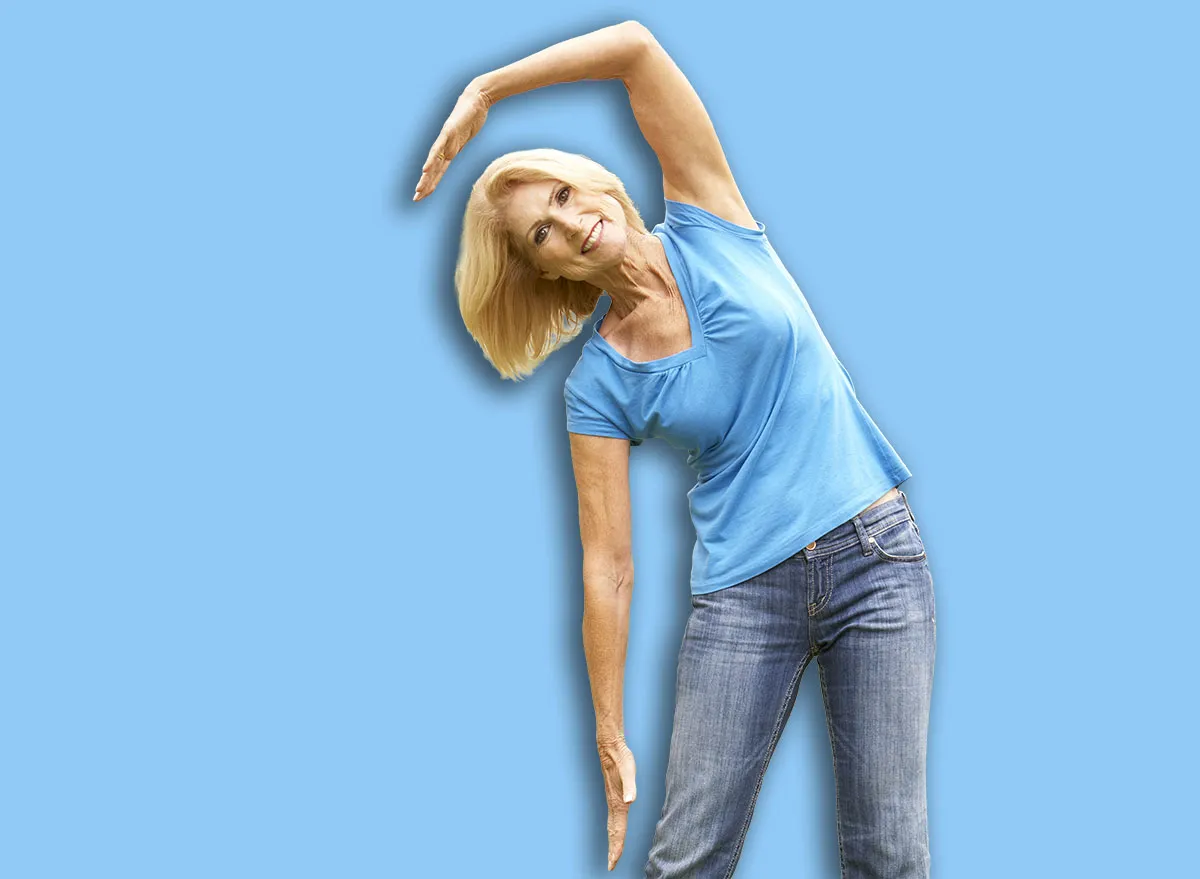
- Execution: Stand tall with feet hip-width apart. Extend one arm straight overhead, palm facing inward. Place the other hand on your hip or gently behind your head. Engage your core. As you exhale, slowly bend sideways towards the hand on your hip, reaching further overhead with the extended arm. Feel the stretch along the side of your torso and the contraction on the opposite side. Inhale as you return to the upright position.
- Avoid These Mistakes: Do not lean forward or backward; keep your hips relatively stable, focusing the movement purely from the waist; avoid rushing the movement.
- Form Enhancements: Imagine sliding your extended hand up an invisible wall as you bend. This helps maintain proper alignment. Perform 8 repetitions per side with deliberate control.
-
Squat to Overhead Reach:

- Benefit: This compound movement utilizes the body’s largest muscle groups—the legs and glutes—while also promoting trunk extension and chest opening. The full-body engagement significantly boosts metabolic rate, contributing to systemic fat loss and improved posture.
- Execution: Stand with feet shoulder-width apart, toes pointing slightly outward. Begin with your arms relaxed at your sides. Initiate the squat by pushing your hips back and bending your knees as if sitting into a chair, keeping your chest lifted and back straight. Descend to a comfortable depth where your thighs are parallel to the floor or slightly above. As you powerfully drive through your heels to stand up, simultaneously extend your arms straight overhead, reaching towards the ceiling and lengthening your spine. Return arms to your sides as you prepare for the next squat.
- Avoid These Mistakes: Do not let your knees cave inward; avoid rounding your lower back at the bottom of the squat; ensure your heels remain grounded throughout the movement.
- Form Enhancements: Focus on a controlled descent and an explosive, yet smooth, ascent. Incorporate a 3-second descent after the first month to increase time under tension and muscle activation. Aim for 12 to 15 repetitions.
Integrating the Routine into Your Weekly Schedule
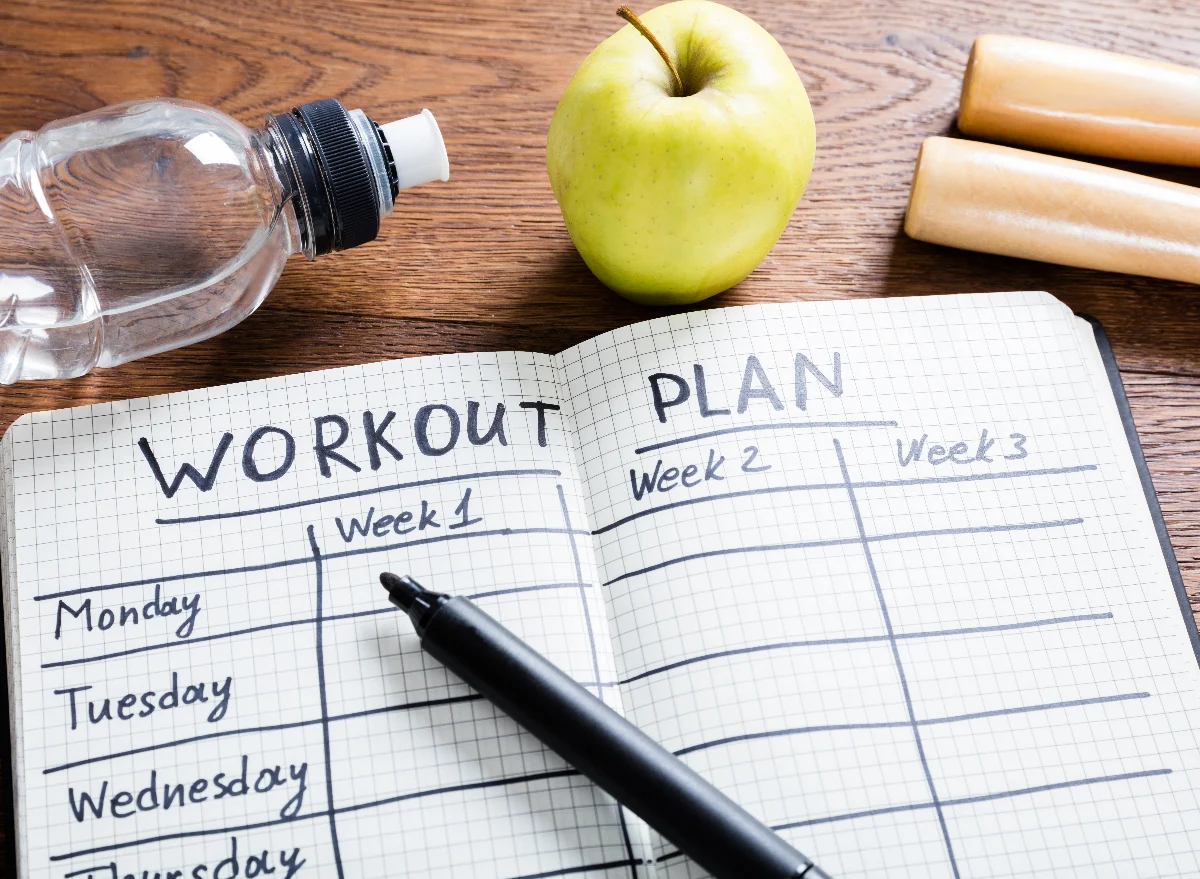
Consistency is paramount for achieving tangible results. Perform these five exercises in the prescribed order, dedicating 45 seconds to each movement followed by a brief 15-second rest period. This constitutes one 5-minute circuit. After completing the first round, take a 30-second breather, then repeat the entire sequence for a second round. The total duration of this targeted morning routine is approximately 11 minutes.
For optimal outcomes, aim to perform this regimen four to five mornings per week. Daily execution is also permissible and generally well-tolerated due to the low-impact nature of the movements. The only potential exception is the counter plank; if significant core soreness occurs during the initial week, allowing a rest day after performing it can be beneficial, particularly if the deep core muscles have been dormant for an extended period.
On the days when you are not performing the strength routine, integrate a brisk 30-minute walk. This complementary cardiovascular activity is crucial for overall fat loss, especially around the torso, as it burns calories without catabolizing the valuable muscle mass you are actively building through the core exercises.
After the initial month, consider progressively increasing the challenge by slowing the tempo of certain movements. For instance, implementing a 3-second controlled descent during the squat and a 3-second controlled lowering phase during the side bend will effectively double the muscular work without requiring additional equipment. This subtle adjustment often leads to an acceleration in visible changes.
Anticipated Outcomes and Long-Term Wellness
The commitment to this consistent morning regimen yields a cascade of positive changes, both aesthetic and functional.
Within the first two weeks, many individuals report a noticeable difference in how their clothing fits around the waist. This initial improvement is primarily attributed to the deep core muscles beginning to regain their tone and effectively provide internal support, coupled with an immediate enhancement in postural alignment. These changes occur even before substantial fat redistribution takes place.
By the four-week mark, the visual transformation becomes more apparent. The waistline often appears narrower from the front perspective, and the abdomen sits back more naturally rather than protruding forward. The sides of the torso also exhibit a firmer, less "soft" contour. Concurrently, improved posture contributes to an overall perception of a longer, leaner trunk.
Between six to eight weeks, the accumulated changes are typically significant enough that previously shelved garments may comfortably re-enter rotation. Strength gains across the core musculature are commonly observed, often ranging from 30 to 50 percent, signifying that the trunk is performing its stabilizing and supportive functions with much greater efficiency.
Sustained adherence to this routine over six months and beyond leads to profound and lasting changes. Clients frequently achieve a noticeably smaller waist circumference, confidently returning to clothes they had long set aside. The synergistic effect of consistent core strengthening, regular walking for fat metabolism, and mindful nutritional choices collectively accelerates progress towards a healthier, more defined midsection and an enhanced quality of life. Beyond aesthetics, a strengthened core and improved posture contribute to better balance, reduced risk of falls, alleviation of back pain, and greater ease in performing daily activities, fostering independence and vitality in older adults.
About the Author










