Maintaining robust core strength becomes increasingly vital with age, contributing significantly to overall health, functional independence, and quality of life, particularly for individuals over 60. While traditional abdominal exercises like crunches often dominate fitness discussions, a concise, chair-based routine offers a surprisingly effective and safer alternative for strengthening the midsection and addressing the critical issue of visceral fat. This innovative approach, requiring merely seven minutes, prioritizes mindful muscle engagement and stability, making it especially beneficial for older adults.
The accumulation of abdominal fat, often referred to as a "belly pooch," is not merely a cosmetic concern; it frequently indicates the presence of visceral fat. Unlike subcutaneous fat, which resides just beneath the skin, visceral fat wraps around internal organs deep within the abdominal cavity. This type of adipose tissue is metabolically active and releases inflammatory compounds and hormones that significantly elevate the risk of serious health conditions. These include an increased likelihood of developing type 2 diabetes, cardiovascular diseases such as heart disease and stroke, hypertension, and even certain forms of cancer. Consequently, actively managing and reducing visceral fat through targeted physical activity and a balanced diet is a crucial component of healthy aging.
For many older adults, conventional floor exercises, including standard crunches, can present significant challenges. Concerns regarding balance, joint integrity, and the risk of falls often deter participation or lead to improper form, which can reduce effectiveness and potentially cause injury. Joe Ghafari, a Certified Personal Trainer and Nutritionist, and Co-Founder of Visiting Wrld, highlights this predicament. He explains that as people age, their balance and joint health naturally change. This shift introduces what he metaphorically refers to as a "stability tax" when performing exercises on the floor. The body’s primary focus often diverts to maintaining equilibrium, rather than effectively engaging the target muscle groups. This instinctive fear of falling or wobbling can prevent the brain from establishing a strong "mind-muscle connection," which is essential for activating deeper core muscles.
Chair-based exercises circumvent this issue by providing inherent stability. By removing the need for constant balance, participants can direct their mental focus and physical effort precisely toward the intended musculature. This allows for a more profound and conscious engagement of the transverse abdominis, often described as the body’s internal corset. Strengthening this deep abdominal muscle is paramount for spinal support, improved posture, and a genuinely tightened core, far more effectively than superficial movements that primarily target the rectus abdominis (the "six-pack" muscle). Ghafari emphasizes that the objective for older individuals extends beyond achieving visible abdominal definition; it centers on cultivating functional independence and avoiding what he terms "physical prison," a state where restricted mobility limits daily activities and overall freedom. Training smarter, not just harder, becomes the guiding principle.
The efficacy of a focused, short-duration routine like this 7-minute chair workout lies in its ability to consistently stimulate key core muscles. Consistency, even in brief bursts, often yields more substantial and sustainable results than sporadic, intense sessions. This approach is particularly advantageous for seniors who might have limited energy, time, or physical capacity for prolonged exercise. Regular engagement helps to maintain muscle mass, improve flexibility, and enhance neuromuscular control—the communication between the brain and muscles.
Let’s delve into the types of movements that constitute such an effective chair routine, emphasizing their unique benefits:
1. Seated "Corset" Tucks (Targeting the Transverse Abdominis):
This exercise specifically hones in on the transverse abdominis (TA), the deepest layer of abdominal muscle that wraps horizontally around the torso, acting like a natural girdle. Unlike crunches, which primarily work the rectus abdominis, corset tucks focus on drawing the navel inward towards the spine, activating the TA to stabilize the lumbar spine and flatten the lower abdomen.
- Execution Principle: Sit upright on a stable chair, feet flat on the floor, hip-width apart. Maintain a neutral spine. Gently draw your belly button towards your spine as if zipping up tight pants, without holding your breath or tilting your pelvis. Hold this contraction for several seconds, then slowly release. The movement is subtle, internal, and controlled.
- Benefits: Crucial for postural support, reducing low back pain, and creating an internal "cinching" effect that genuinely firms the midsection. It also improves intra-abdominal pressure, which is vital for core stability during everyday activities like lifting or bending.
2. Seated Knee-to-Chest (Engaging the Lower Core):
This movement targets the lower abdominal muscles and hip flexors in a controlled, seated environment, minimizing strain on the back and neck.
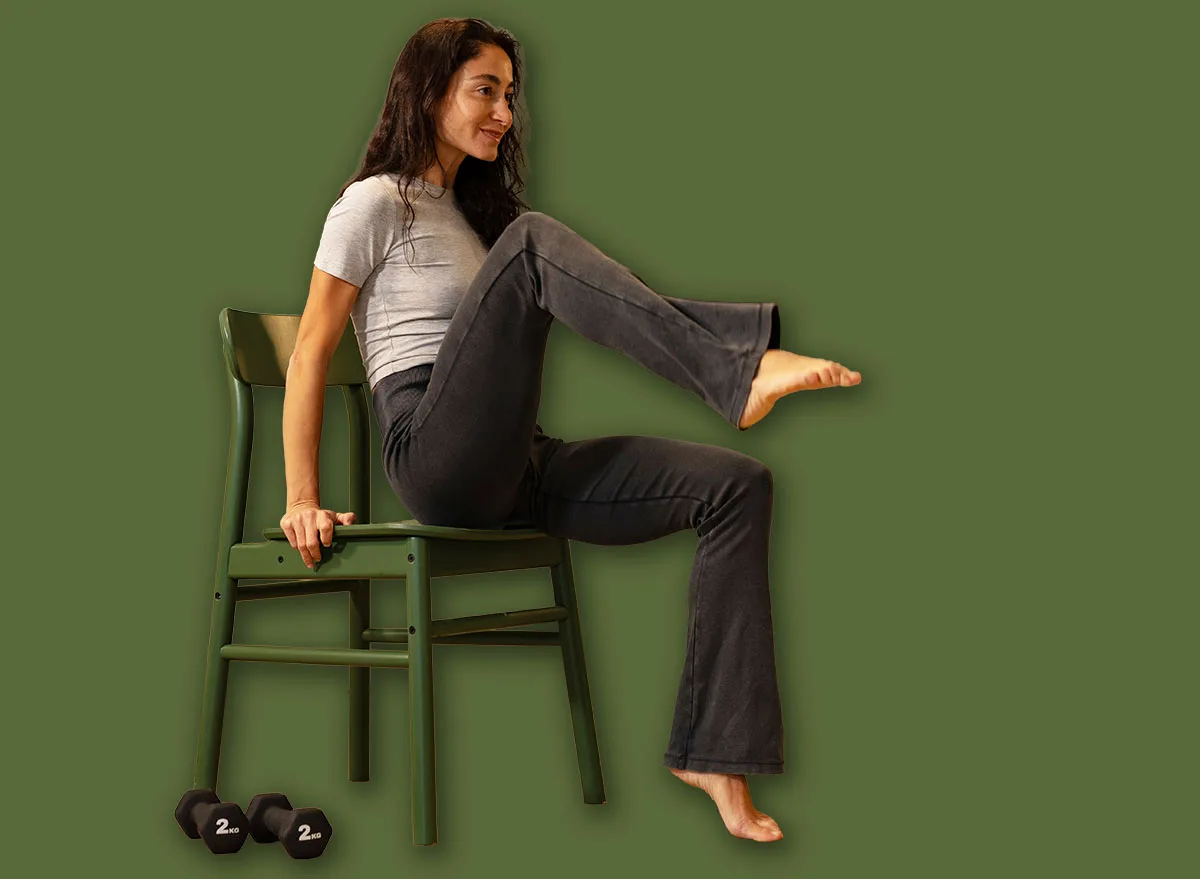
- Execution Principle: Sit tall on the chair, holding onto the sides for support if needed. Engage your core, then slowly lift one knee towards your chest, bringing it as high as comfortable without rounding your back. Focus on using your abdominal muscles to initiate and control the lift, rather than just momentum. Lower the leg with control and repeat on the other side.
- Benefits: Strengthens the lower abdominal region, improves hip flexibility, and enhances coordination. It helps counteract the effects of prolonged sitting by engaging muscles that can become weak and tight.
3. Seated Windshield Wiper (Activating the Obliques):
The obliques are the muscles on the sides of your torso, responsible for rotational movements and lateral flexion. Strengthening them contributes to a well-rounded core and improved stability for twisting motions.
- Execution Principle: Sit towards the front edge of your chair, keeping your feet together or slightly apart. Lean back slightly, engaging your core, and lift both feet a few inches off the floor. Keeping your knees bent, slowly rotate your knees from side to side, mimicking the motion of windshield wipers, while keeping your upper body relatively stable. The movement should originate from your core, not just your legs.
- Benefits: Develops strength in the internal and external obliques, improving rotational stability and aiding in everyday activities that involve twisting, such as reaching for something behind you or getting out of a car. It also contributes to overall core endurance.
A comprehensive core routine, even a brief one, ideally incorporates movements that address all facets of the abdominal wall: the deep stabilizing muscles (transverse abdominis), the flexors (rectus abdominis, though less emphasized in this chair routine), and the rotators (obliques). This multi-faceted approach ensures balanced strength and functional fitness.
Beyond the specific exercises, the "mind-muscle connection" principle is foundational to this routine’s effectiveness. It involves consciously focusing on the muscle being worked during each repetition, enhancing neural activation and recruitment of muscle fibers. For seniors, this intentional focus helps retrain communication pathways between the brain and muscles, which can become less efficient with age. This heightened awareness not only maximizes the benefit of each movement but also reduces the risk of injury by ensuring proper form.
Integrating this 7-minute routine into a daily or near-daily schedule can yield significant long-term benefits. Consistency is more impactful than intensity in this context. While the chair provides support, maintaining proper posture throughout the exercises is crucial. Keeping the spine long, shoulders relaxed, and engaging the core throughout each movement will maximize results and prevent strain. As strength improves, individuals might consider progressing by increasing repetitions, extending hold times, or performing the movements more slowly and deliberately for increased muscle time under tension.
It is important to remember that physical activity, while powerful, is one component of a holistic approach to health. Complementing this chair routine with a nutrient-rich diet, adequate hydration, sufficient sleep, and stress management strategies will amplify its benefits. A diet rich in fiber, lean proteins, and healthy fats, while limiting processed foods and added sugars, directly supports the reduction of visceral fat. Regular consultations with healthcare professionals before embarking on any new exercise regimen, especially for older adults or those with pre-existing conditions, are always recommended to ensure safety and suitability.
In conclusion, the pursuit of a strong, healthy core after 60 does not necessitate strenuous or risky exercises. This targeted, accessible 7-minute chair routine offers a professional, evidence-based pathway to enhancing abdominal strength, fostering functional independence, and actively combating the health risks associated with visceral fat. By embracing smarter training methodologies that prioritize stability and mindful engagement, older adults can effectively fortify their core, contributing profoundly to their well-being and vitality for years to come.
About the Author