Maintaining robust balance and stability is a cornerstone of independent living and overall well-being, particularly as individuals progress beyond their sixth decade of life. The ability to navigate one’s environment confidently, without the pervasive concern of a stumble or fall, significantly impacts quality of life. While a gradual decline in postural control is often associated with aging, it is not an irreversible fate. Experts in physical conditioning and rehabilitation emphasize that balance is a highly adaptable skill, responsive to targeted, consistent practice, often yielding surprising improvements within relatively short periods. A structured, week-long regimen focusing on standing exercises can profoundly recalibrate the body’s intrinsic stability mechanisms, offering a tangible path to enhanced security and renewed confidence.
The intricate system governing human balance is a sophisticated interplay of multiple sensory inputs and motor responses. Primarily, it relies on three interconnected pillars: the vestibular system, the somatosensory (or proprioceptive) system, and the visual system. The vestibular system, housed within the inner ear, acts as the body’s internal gyroscope, detecting head movements and spatial orientation. Proprioception involves sensory receptors in muscles, tendons, and joints that provide continuous feedback to the brain about body position and movement. Finally, the visual system offers crucial environmental cues, helping to orient the body relative to its surroundings. These systems work in concert, allowing for instantaneous adjustments that maintain an upright posture, whether stationary or in motion.
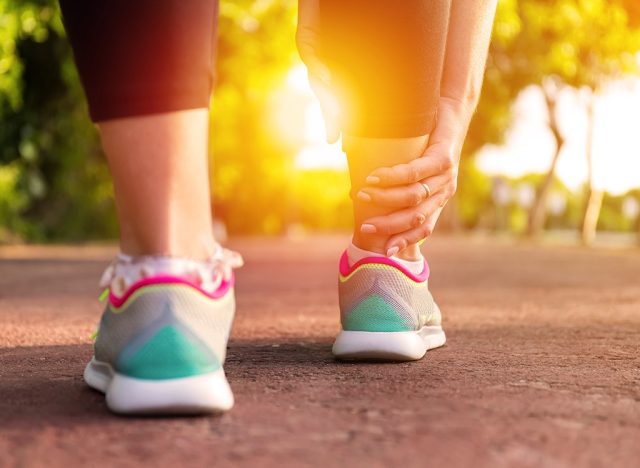
As individuals age, each of these vital systems can experience subtle yet cumulative decrements. The vestibular apparatus may become less responsive, delaying the detection of shifts in equilibrium. Proprioceptive acuity can diminish, leading to a reduced awareness of limb position and subtle ground irregularities. Visual processing speed and depth perception may also decline. Concurrently, the musculoskeletal system undergoes changes. Small, stabilizing muscles around the ankles, crucial for minute postural corrections, often lose strength and responsiveness. Larger muscle groups in the legs and hips, which provide the power for quick recovery from a stumble, can experience sarcopenia – age-related muscle loss – making swift, forceful reactions more challenging. This combined physiological weakening creates a heightened susceptibility to falls. Beyond the purely physical, a psychological dimension, often termed the "fear of falling," can emerge after an initial wobble or near-miss. This apprehension can lead to more cautious, constrained movement patterns, paradoxically reducing the daily practice of balance skills and further weakening the very systems intended to protect. Breaking this cycle requires both physical rehabilitation and a rebuilding of self-assurance.
Recognizing these age-related vulnerabilities, a focused approach to balance training becomes imperative. The efficacy of standing balance exercises lies in their principle of specificity. The human nervous system learns and adapts most effectively when training closely mimics the functional demands of real-life situations. Since falls predominantly occur during upright activities—walking, turning, reaching, or transitioning between positions—it logically follows that balance training should primarily take place while standing. Exercises performed while seated, while beneficial for strength or flexibility, do not adequately challenge the complex neural pathways and muscular coordination required for dynamic upright stability. Standing drills compel the ankle stabilizers, hip abductors, and core musculature to engage precisely as they would during daily movements, fostering rapid, reflexive responses that are critical for preventing a fall. Scientific literature robustly supports this methodology, with numerous studies demonstrating that consistent, standing-based balance interventions can significantly reduce fall rates in older adults, often by 20% to 40% within a few months. This makes it one of the most impactful and evidence-backed strategies in geriatric fitness.
The core of an effective seven-day balance enhancement program typically integrates a quartet of foundational movements, each targeting distinct yet complementary aspects of postural control.
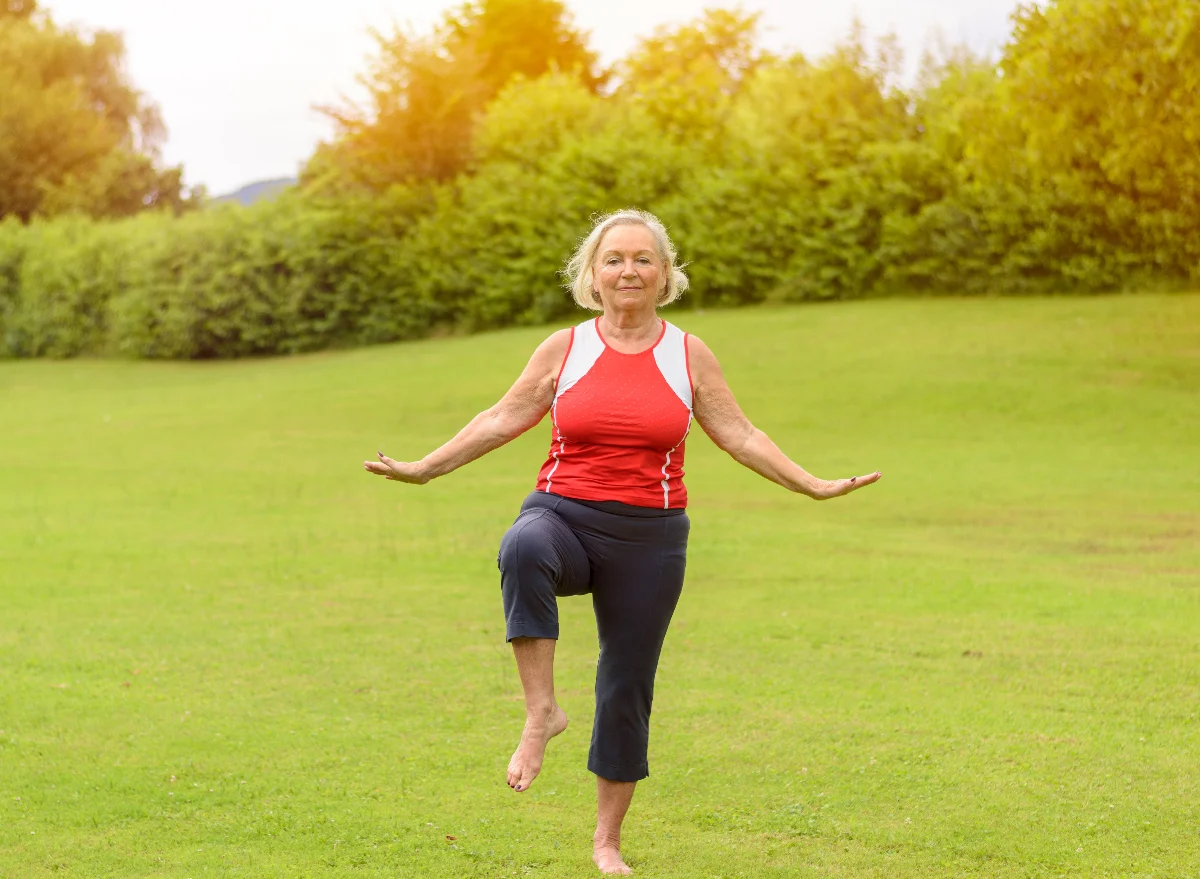
The Single-Leg Stand is arguably the purest assessment and developer of static and dynamic balance. By lifting one foot off the ground, the body is immediately challenged to recruit ankle evertors and invertors, hip abductors, and core muscles to stabilize the trunk over a reduced base of support. This exercise directly simulates the moment of single-leg support during walking or stepping over an obstacle, enhancing the precise, coordinated muscular firing necessary to maintain equilibrium. Progression involves gradually reducing external support, moving from holding onto a sturdy object with two hands to one, and eventually attempting the stand without any external aid.
Heel-to-Toe Walking, often referred to as tandem gait, specifically addresses dynamic balance, the ability to maintain stability while moving. By requiring the placement of one foot directly in front of the other, the exercise significantly narrows the base of support and demands continuous, subtle adjustments from the entire balance system as weight shifts from one foot to the next. This motion directly strengthens the balance system’s capacity to manage transitional phases during walking, precisely where many falls originate. Practicing this movement helps refine proprioceptive feedback and improves coordination, making regular ambulation feel more secure.
The Sit-to-Stand exercise is a fundamental movement reflecting functional leg and hip strength, which is inextricably linked to fall prevention. The ability to smoothly transition from a seated to a standing position indicates sufficient lower body power to initiate movement, recover from a momentary loss of balance, or quickly change direction. Strong quadriceps, hamstrings, and gluteal muscles are essential for generating the force needed to catch a stumble before it escalates into a fall. This exercise is so critical that it is often used by physical therapists as a reliable predictor of an individual’s continued functional independence.
Finally, the Standing Hip Abduction exercise specifically isolates and strengthens the gluteus medius, a critical muscle on the outer hip. A robust gluteus medius is vital for pelvic stability, preventing the pelvis from dropping excessively on the unsupported side during single-leg stance, such as when walking. Weakness in this muscle is a frequently overlooked contributor to gait instability and falls in older adults. By directly loading this muscle, the exercise enhances lateral stability, improving walking mechanics and reducing the risk of side-to-side swaying or tripping.
Implementing a structured seven-day regimen for these exercises follows a progressive blueprint designed to gradually build competence and confidence.
- Days 1 and 2 are dedicated to learning the precise mechanics of each movement. Participants should perform two sets of each exercise at a comfortable, controlled pace, utilizing substantial support from a chair or wall as needed. The primary objective is to internalize the correct movement patterns without focusing on intensity or duration. Ten minutes per day is generally sufficient.
- Days 3 and 4 involve reducing reliance on external support. For the single-leg stand, one hand might be removed from the support. During heel-to-toe walking, proximity to a wall can be maintained, but direct contact should be minimized. The sit-to-stand can be performed with arms folded across the chest rather than pushing off the thighs, increasing the demand on leg muscles.
- Days 5 and 6 introduce an increase in volume and challenge. A third set of each exercise is added. For the single-leg stand, brief periods without any hand support can be attempted. Heel-to-toe walking can be practiced with arms extended laterally for balance, further removing wall dependence. The sit-to-stand can be slowed, emphasizing eccentric control during the descent (e.g., four seconds down) and powerful concentric contraction during the ascent (e.g., two seconds up).
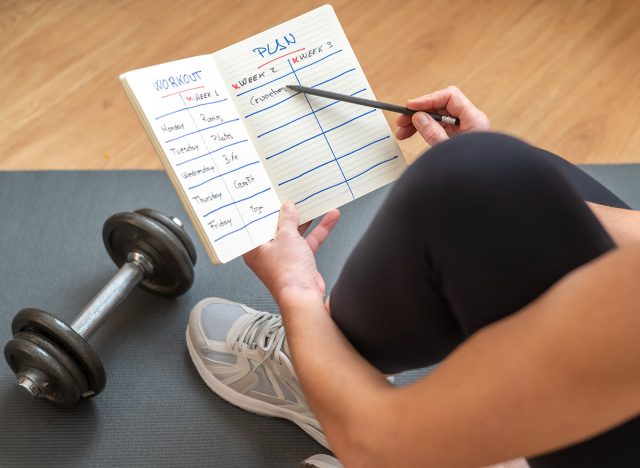
- Day 7 serves as a crucial benchmark day. Participants are encouraged to objectively measure their progress: timing their single-leg stand duration on each side, counting the maximum number of sit-to-stands performed within 30 seconds, and tallying the number of heel-to-toe steps completed without external support. Documenting these baseline metrics provides a quantifiable reference point for future progress tracking, reinforcing motivation for continued practice. The entire daily commitment for this week remains modest, typically between 10 and 15 minutes.
The initial week of this program often yields noticeable improvements, particularly in the neurological aspects of balance. Many individuals report being able to sustain a single-leg stand for significantly longer periods, sometimes doubling their initial hold time. This rapid enhancement is largely attributable to neuroplasticity—the brain’s remarkable ability to reorganize itself by forming new neural connections in response to novel demands. While strength gains in the sit-to-stand may be more modest in such a short timeframe, the nervous system’s improved coordination and muscle activation patterns are readily apparent.
Over subsequent weeks and months of sustained practice, the transformations become more profound. Within approximately six weeks, individuals frequently achieve a single-leg stand duration of up to a minute per side, a strong indicator of robust balance and a significantly reduced fall risk. The heel-to-toe walk, initially a deliberate effort, often becomes a more automatic and fluid movement. By three to six months, substantial physiological adaptations occur: ankle stabilizers are notably stronger, hip abductors demonstrate increased endurance and power, and the entire balance system operates with greater efficiency and speed, providing a more effective defense against unexpected stumbles.
Ultimately, the most significant outcome of consistent balance training is not merely the measurable improvements in exercise performance, but the multitude of falls that simply do not happen. While an absence of incidents might go unnoticed, the statistical evidence is clear: individuals who integrate balance exercises into their routine substantially lower their risk of injurious falls. Beyond physical safety, the intangible benefits are equally compelling: a resurgence of confidence, greater independence in daily activities, and an overall enhancement of life quality, allowing older adults to remain actively engaged in their communities and hobbies. Therefore, the commitment to these practices should extend well beyond the initial seven-day challenge, becoming a vital component of a lifelong strategy for health and well-being.
About the Author