As individuals progress beyond their mid-fifties, maintaining robust physical capacity becomes increasingly vital for preserving independence and overall quality of life. A significant component of this sustained well-being lies in the strength and resilience of the lower body, particularly the musculature of the thighs. While many traditional fitness regimens emphasize dynamic movements like lunges for leg development, experts in geriatric fitness and sports therapy are increasingly advocating for alternative, joint-sparing exercises that deliver comparable, if not superior, benefits for an aging population. These adapted approaches prioritize functional movement, mitigate injury risk, and address the specific physiological changes associated with age-related muscle decline.
The phenomenon of sarcopenia, defined as the progressive and generalized loss of skeletal muscle mass and strength with age, represents a critical health challenge for older adults. This involuntary decline typically commences around the age of 40 and accelerates significantly after 55, impacting an estimated 10% of adults over 65. The multifactorial causes of sarcopenia include reduced physical activity, hormonal shifts (such as decreased testosterone and estrogen), diminished protein synthesis rates, and neurological changes affecting motor neuron integrity. The thigh muscles, comprising the powerful quadriceps and hamstrings, are particularly susceptible to this atrophy, given their substantial mass and constant engagement in everyday activities. Weakened thigh muscles directly correlate with diminished functional mobility, impaired balance, and a heightened propensity for falls, which can lead to severe injuries and a cascade of health complications. Furthermore, robust leg musculature plays a crucial role in maintaining bone density, offering a protective effect against conditions like osteoporosis, a common concern in later life.
John White, a Level 3 Sports Massage Therapist, accomplished running expert, and qualified adult nurse, highlights the pronounced impact of sarcopenia on the thighs. He observes that while lunges are undeniably effective for developing lower body strength, their execution can impose considerable stress on the knees and hips, joints frequently affected by age-related wear and tear or pre-existing conditions. For this reason, White advocates for a series of less impactful, yet equally beneficial, exercises designed to build strength without exacerbating joint discomfort. This perspective is echoed by Rachel Ruth Tate, a seasoned yoga and fitness professional with two decades of experience in teaching yoga and managing gym facilities. Tate underscores the imperative for fitness professionals to conduct "realistic risk assessments" when designing exercise programs for older adults, emphasizing the need to "minimize the potential for injury." She further notes the potential utility of advanced modalities, such as vibration plates or specialized resistance machines, which can facilitate muscle stimulation and growth while concurrently stabilizing the range of motion, thereby enhancing safety.
The primary muscle groups within the thighs—the quadriceps femoris at the front and the hamstrings at the back—are indispensable for nearly all forms of locomotion and stability. The quadriceps, a group of four muscles, are primarily responsible for extending the knee and flexing the hip, enabling actions like standing up, climbing stairs, and kicking. The hamstrings, a trio of muscles, work antagonistically to flex the knee and extend the hip, crucial for walking, running, and bending. Together, these muscle groups provide critical support for the knee and hip joints, acting as natural shock absorbers and stabilizers. Their coordinated function is fundamental for maintaining equilibrium and executing complex movements with precision and confidence, thereby directly influencing an individual’s ability to live independently and actively.
Given these considerations, a strategic shift towards exercises that prioritize joint health while effectively targeting thigh musculature is warranted for individuals over 55. The following four exercises offer an excellent foundation for a morning routine, capitalizing on the early hours for a consistent and energizing start to the day. Morning workouts have been shown to enhance energy levels, improve mood, and foster greater adherence to fitness regimens due to fewer scheduling conflicts.
1. The Sit-to-Stand Movement:
This seemingly simple exercise is a powerhouse for functional strength, directly replicating one of the most fundamental movements of daily life: rising from a seated position. It engages the major muscle groups of the lower body—the quadriceps, glutes, and even the core—in a controlled and repeatable manner. John White points out that the sit-to-stand effectively "reinforces natural movement" and contributes to improved circulation, a vital benefit for older adults.
- Execution: Begin by sitting on a sturdy chair with your feet flat on the floor, hip-width apart. Lean slightly forward, engaging your core, and push through your heels to stand up completely, without using your hands if possible. Slowly and deliberately lower yourself back to the seated position, maintaining control throughout the movement.
- Benefits: This exercise builds quadriceps and gluteal strength, improves balance, and enhances functional independence. Its low-impact nature makes it highly suitable for individuals with knee or hip sensitivity.
- Modifications: To increase difficulty, use a lower chair or hold a light weight. To decrease difficulty, use a chair with armrests for support or a slightly higher surface.
2. Wall Squats (Isometric Hold):
Unlike dynamic squats, the wall squat is an isometric exercise, meaning the muscles are engaged under tension without changing length. This makes it exceptionally joint-friendly while still delivering significant strength and endurance benefits, particularly for the quadriceps.
- Execution: Stand with your back flat against a wall, feet shoulder-width apart, and approximately 18-24 inches away from the wall. Slowly slide down the wall until your knees are bent at roughly a 90-degree angle, as if sitting in an invisible chair. Ensure your knees are directly above your ankles and not extending past your toes. Hold this position for a designated period.
- Benefits: This exercise is "stellar for boosting quad endurance" and builds significant strength in the quadriceps and glutes without the impact associated with traditional squats or lunges. It also improves knee stability and core engagement.
- Modifications: Adjust the depth of the squat based on comfort and strength. Shorter holds or shallower angles can be used initially, gradually increasing duration and depth as strength improves.
3. Glute Bridges:
Often overlooked, the glute bridge is a highly effective exercise for strengthening the posterior chain—the muscles along the back of the body, including the glutes, hamstrings, and lower back. This exercise is performed lying down, eliminating any balance challenges and making it exceptionally safe for all fitness levels.
- Execution: Lie on your back with your knees bent, feet flat on the floor hip-width apart, and heels a few inches from your glutes. Arms can rest at your sides. Engaging your glutes, lift your hips off the floor until your body forms a straight line from your shoulders to your knees. Hold briefly at the top, then slowly lower your hips back down.
- Benefits: As John White explains, bridge lifts are "good for overall leg strength" as they actively "engage the hamstrings and your glutes." This movement significantly improves hip extension, pelvic stability, and strengthens the crucial hamstrings, which are often underdeveloped compared to the quadriceps.
- Modifications: For an increased challenge, perform single-leg glute bridges or place a light weight across your hips.
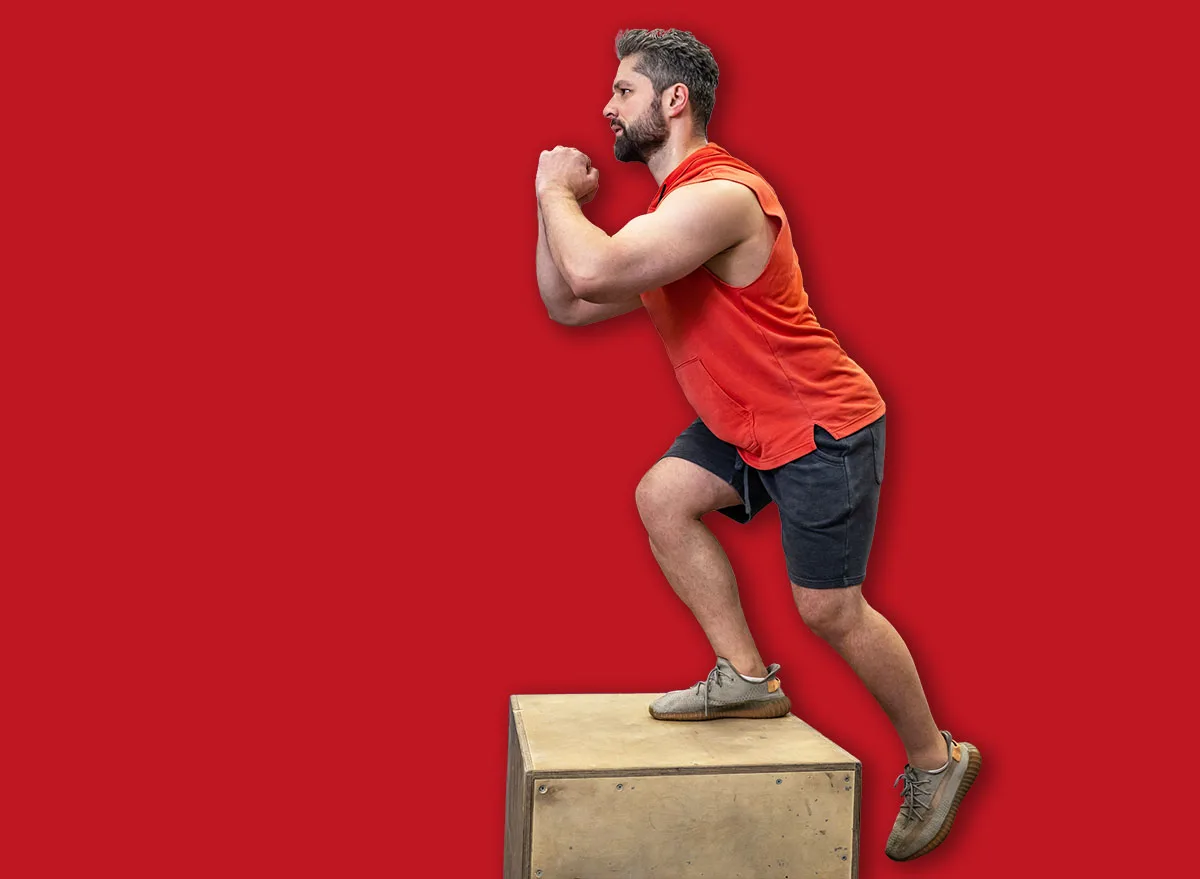
4. Step-Ups:
Step-ups are a highly functional exercise that closely mimics movements like climbing stairs or stepping onto a curb, making them invaluable for real-world mobility. They are a unilateral exercise, meaning they work one leg at a time, which is excellent for addressing muscular imbalances and improving balance.
- Execution: Stand in front of a sturdy step, bench, or low box. Place one entire foot firmly on the elevated surface. Pushing through the heel of the elevated foot, step up, bringing your other foot to meet it on the step. Control the movement as you step back down with the initial foot, then follow with the other, returning to the starting position. Alternate leading legs.
- Benefits: This exercise builds strength in the quadriceps, glutes, hamstrings, and calves, while also enhancing balance and coordination. The controlled nature of the movement allows for careful progression and reduces the impact on joints compared to more dynamic exercises.
- Modifications: Begin with a lower step height and use a wall or railing for balance support if needed. As strength and confidence grow, the step height can be gradually increased, or light hand weights can be introduced.
When incorporating these exercises into a morning routine, consistency is paramount. A general guideline would be to perform 2-3 sets of 10-15 repetitions for each exercise, or hold isometric exercises for 30-60 seconds, 3-4 times per week. Always prioritize proper form over the number of repetitions or the speed of execution. A gentle warm-up, such as light walking or dynamic stretches, should precede the workout, and a cool-down with static stretches should follow. It is crucial for any individual over 55 contemplating a new exercise regimen to consult with a healthcare provider or a certified fitness professional to ensure the program is appropriate for their specific health status and physical capabilities. By adopting a proactive and informed approach to muscle health, particularly targeting the foundational strength of the thighs, older adults can significantly enhance their mobility, reduce injury risks, and maintain a vibrant, active lifestyle for years to come.
About the Author