Maintaining robust lower body strength is a cornerstone of healthy aging, directly impacting an individual’s independence, mobility, and overall quality of life. As people progress beyond their sixth decade, the physiological changes associated with aging often present unique challenges to traditional fitness regimens. While exercises like squats are widely recognized for their efficacy in building leg power, they can pose difficulties or even risks for older adults contending with joint pain, balance issues, or limited mobility. A growing body of research and expert opinion suggests that targeted, low-impact movements performed from the comfort of a bed can offer a highly effective and safe alternative for cultivating significant thigh strength, often with greater accessibility and adherence than more conventional gym-based routines. This approach prioritizes joint protection and stability, making it particularly beneficial for those seeking to enhance their muscular resilience without undue strain.
The human body undergoes a natural process of muscle mass and strength decline, known as sarcopenia, as part of aging. This condition typically begins in the 30s but accelerates significantly after the age of 60. The thigh muscles—comprising the powerful quadriceps at the front, the hamstrings at the back, and the adductors and abductors on the inner and outer sides, respectively—are absolutely critical to daily functional movements. These muscle groups are indispensable for activities such as walking, ascending and descending stairs, maintaining an upright posture, rising from a seated position, and preventing falls. A weakening in these vital areas can lead to a cascade of negative consequences, including diminished balance, reduced gait speed, increased risk of accidental falls, and a general reduction in physical autonomy. Consequently, adopting an exercise strategy that specifically targets and fortifies these muscle groups becomes paramount for seniors aspiring to sustain an active and independent lifestyle.
For many older adults, the thought of engaging in strenuous exercises, especially those requiring significant balance or weight-bearing, can be daunting. This is where bed exercises emerge as a transformative solution. Their inherent advantages are manifold, addressing many of the barriers that prevent seniors from consistent physical activity. Firstly, performing exercises while lying down significantly reduces the gravitational load on joints, making these movements ideal for individuals managing arthritis, osteoporosis, or recovering from injuries. The stable surface of a bed eliminates concerns about balance, fostering a sense of security that encourages greater participation and confidence. Furthermore, this format promotes heightened body awareness and control, as individuals can focus intently on muscle activation without the added complexity of maintaining posture or balance. Meera Watts, the founder and CEO of Siddhi Yoga, a renowned institution focused on accessible strength building, emphasizes this point. "Bed exercises are not a ‘lesser’ form of physical training," Watts explains. "They serve as an exceptional starting point for anyone rebuilding strength, recovering from periods of inactivity, or gently re-engaging with movement. The core principle is to develop strength while honoring the body’s current capabilities." This perspective underscores that these reclining movements are a foundational pathway to regaining and enhancing muscular function, rather than a mere substitute for more demanding workouts.
By strategically incorporating a series of bed-based movements, individuals over 60 can comprehensively target all major thigh muscle groups, fostering not only strength but also flexibility and improved neuromuscular control. These exercises are designed to engage muscles effectively, offering benefits that, for certain populations, can surpass or complement those derived from standing exercises like squats by reducing injury risk and increasing consistency.
1. Supine Knee Flexion and Extension (Reclined Leg Flex and Extend)
This exercise is a cornerstone for engaging the quadriceps and improving the range of motion in the knee joint. Lying flat on the back, one leg is bent with the foot flat on the bed, while the other leg is extended. The extended leg then slowly bends at the knee, drawing the heel towards the glutes, before gently extending back to its starting position. This controlled movement deeply activates the quadriceps as they work to extend the leg against gravity and the resistance of the body, while simultaneously providing a gentle stretch to the hamstrings. The inherent stability of the bed allows for focused muscle contraction and elongation, mitigating any strain on the hip or lower back. Watts highlights its simplicity and effectiveness: "This slow, deliberate stretch effectively works the quadriceps and guides the knee through a beneficial range of motion, all without needing to leave your bed." This makes it an excellent daily practice, even for those with significant mobility limitations.
2. Supported Gluteal and Hamstring Lift (Supported Bridge on a Pillow)
This variation of the bridge exercise primarily targets the gluteal muscles and hamstrings, while also engaging the core for stability. Lying supine with knees bent and feet flat on the bed, a pillow or cushion is placed between the knees. The individual then gently lifts their hips off the bed, engaging the glutes and hamstrings, maintaining a straight line from shoulders to knees. The presence of the pillow encourages adductor engagement (inner thigh muscles) and helps to stabilize the pelvis, ensuring proper form and reducing the risk of lower back strain. This movement is crucial for strengthening the posterior chain, which is often neglected but vital for walking, standing, and preventing falls. The supportive surface of the bed ensures that the focus remains on muscle activation rather than balance.
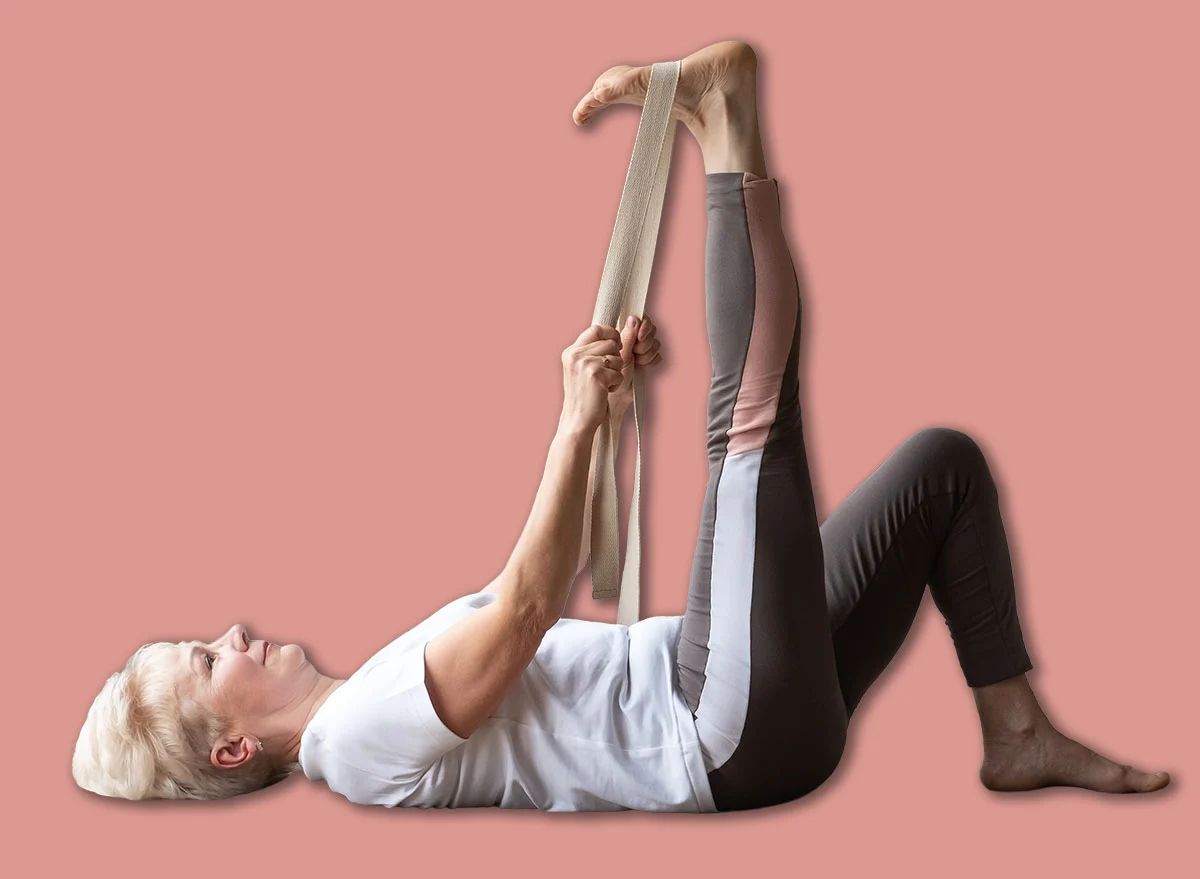
3. Assisted Hamstring and Calf Lengthening (Active Supta Padangusthasana Variation)
Derived from yoga, this exercise focuses on improving hamstring flexibility and controlled leg elevation. Lying on the back, one leg is extended while the other is raised towards the ceiling, with a towel or strap looped around the sole of the foot for support. The individual then gently pulls the leg closer, stretching the hamstring and calf, before lowering it with control. The "active" component comes from the controlled engagement of the quadriceps to assist in the leg lift and hold, thereby strengthening the opposing muscle group while stretching the hamstrings. This movement enhances flexibility, which is crucial for maintaining a full range of motion in the hips and knees, and contributes to better posture and ease of movement. The bed provides the necessary support for this deep, controlled stretch.
4. Lateral Thigh Engagement (Side-Lying Leg Sweeps)
This exercise specifically targets the outer and inner thigh muscles, as well as the hip abductors and adductors, which are crucial for hip stability and side-to-side movements. Lying on one side with the bottom leg slightly bent for support, the top leg is extended straight. The individual then performs controlled "sweeps" forward and backward, maintaining a neutral spine and engaging the gluteus medius and minimus, as well as the tensor fasciae latae (TFL). Watts explains, "Side-lying leg sweeps work the thighs from a distinct angle, where the Tensor Fascia Latae assists the outer thigh in controlling the forward and backward sweep." This motion not only strengthens the muscles responsible for hip stability but also improves balance and agility, which are vital for navigating uneven terrain and preventing lateral falls. The bed’s stability allows for precise isolation of these often-underutilized muscle groups.
5. Isolated Quadriceps Activation (Lying Single-Leg Extension)
This exercise focuses on direct, isolated strengthening of the quadriceps without the involvement of hip flexors or other supporting muscles to the same degree as standing exercises. Lying flat on the back, one leg is bent with the foot on the bed, while the other leg is extended straight. The individual then lifts the extended leg a few inches off the bed, holding for a count before slowly lowering it. The key is to keep the knee straight and focus on contracting the quadriceps muscle. This subtle yet powerful movement builds strength in the vastus medialis, lateralis, and rectus femoris, which are essential for knee stability and powerful leg extension. The bed provides complete support for the torso, allowing for maximal focus on the targeted muscle group and minimizing compensatory movements.
Integrating these accessible routines into daily life can yield profound benefits for individuals over 60. Consistency is key; even short, regular sessions can contribute significantly to muscle maintenance and growth. It is always advisable to listen to one’s body, starting with fewer repetitions and gradually increasing as strength improves. For those with underlying health conditions or specific concerns, consulting with a healthcare professional or a physical therapist before embarking on a new exercise program is highly recommended. These professionals can offer personalized guidance and ensure the exercises are appropriate and beneficial. As strength progresses, individuals may gradually introduce light ankle weights or increase the duration of holds to further challenge their muscles.
In conclusion, the pursuit of lower body strength in later life does not necessitate high-impact or complex gym routines. Through strategic, in-bed exercises, seniors can effectively bolster their thigh power, enhance overall stability, and significantly improve their functional independence. This gentle yet powerful approach to fitness offers a safe, accessible, and highly effective pathway to maintaining vitality and embracing an active, fulfilling life well into their golden years.
About the Author