As individuals progress through their senior years, maintaining physical fitness becomes increasingly vital for preserving independence, enhancing quality of life, and mitigating the risks associated with age-related decline. Among the many facets of physical well-being, a strong and stable core stands out as a cornerstone for optimal health, impacting everything from balance and posture to the execution of everyday movements. For those over 65, the pursuit of a more defined midsection, often referred to as addressing "abdominal protrusion" or "visceral adiposity," requires a thoughtful, accessible, and effective exercise strategy that prioritizes safety and long-term sustainability. Contrary to common misconceptions, workouts utilizing a chair are not merely a simplified alternative but a potent, strategically designed approach that can yield significant benefits for core strength and overall body composition.
The notion that chair-based exercises represent an "easier" or less effective form of training often misrepresents their potential. When executed correctly, a chair can transform a compact space into a dynamic and productive fitness environment, offering a stable and supportive platform that allows for deep muscular engagement without the added challenge of maintaining balance independently or putting undue stress on joints. This accessibility is particularly advantageous for older adults, who may contend with varying degrees of mobility, balance concerns, or joint discomfort. The goal isn’t just to strengthen the superficial abdominal muscles; it’s about fostering a comprehensive core, encompassing the deep stabilizers, hip flexors, and surrounding musculature, all while integrating full-body movements that contribute to caloric expenditure and metabolic health.
Achieving improvements in abdominal contour, especially in later life, is a multifaceted endeavor that extends beyond isolated core work. While exercises directly targeting the abdominal region can undeniably fortify the underlying muscles, visible changes in body composition are primarily driven by a holistic approach. This encompasses consistent strength training, sufficient calorie expenditure through physical activity, mindful daily movement, and unwavering dedication over time. For many older adults, a balanced routine that incorporates both compound movements, which engage multiple muscle groups simultaneously, and targeted core exercises provides the most comprehensive pathway to success. Experienced fitness professionals often observe that older clients thrive in structured workout environments that minimize feelings of haste or disorganization. A stable chair serves as an excellent organizational anchor, and a judicious combination of standing and seated exercises ensures a sufficient level of exertion, making each session feel genuinely productive and impactful.
A crucial element in this integrated strategy is the inclusion of exercises that activate larger muscle groups, such as the legs and hips, alongside specific core movements. This not only elevates the overall metabolic demand of the workout but also promotes functional strength crucial for daily activities like standing, walking, and lifting. For instance, incorporating chair squats alongside seated abdominal exercises creates a more comprehensive stimulus for body recomposition goals than solely focusing on isolated seated core work. It’s imperative to ensure the chair used is sturdy and secure, to execute squats with deliberate power, and to allow the seated core exercises to genuinely challenge the midsection without rushing through repetitions. The emphasis should always be on controlled, purposeful movement rather than speed or momentum.
Let’s delve into four foundational chair-assisted exercises designed to cultivate a robust and more defined midsection:
1. Chair Squats: The Foundation of Functional Strength
Chair squats are a cornerstone of this routine, providing a significant full-body stimulus. This exercise effectively engages the major muscle groups of the lower body, including the quadriceps, glutes, and hamstrings, while simultaneously requiring the core to actively stabilize the torso. This compound movement significantly increases the overall energy expenditure of the workout, rendering the session more effective for body composition objectives compared to relying solely on seated abdominal exercises. The technique involves a controlled descent until the glutes lightly make contact with the chair, followed by a powerful ascent to a fully upright standing position. The key is to "tap" the chair rather than "drop" into it, maintaining tension throughout the movement and standing tall with intention during each repetition.
- Muscles Engaged: Primary movers include the quadriceps, glutes, and hamstrings. The core musculature acts as a critical stabilizer throughout the movement.
- Execution Cues: Begin standing in front of a sturdy chair, feet shoulder-width apart, toes pointing slightly outward. Initiate the movement by pushing the hips backward as if preparing to sit, maintaining a straight back and engaged core. Lower the body until the glutes gently graze the chair’s surface, ensuring the knees track over the toes and do not collapse inward. Drive through the heels to return to the starting standing position, fully extending the hips and knees.
- Volume Recommendation: Aim for 3 sets of 10 to 15 repetitions, allowing for a rest period of 45 to 60 seconds between each set to facilitate recovery.
- Progression Considerations: To increase difficulty, consider higher-chair squats (using a lower surface), pause chair squats (holding the bottom position for a few seconds), or slow-tempo chair squats (extending the time under tension during both the descent and ascent).
- Form Insight: Focus on maintaining an upright chest and preventing the lower back from rounding. Ensure that the chair contact is a gentle touch, not a complete relaxation of tension.
2. Seated Knee Tucks: Engaging the Lower Abdominals
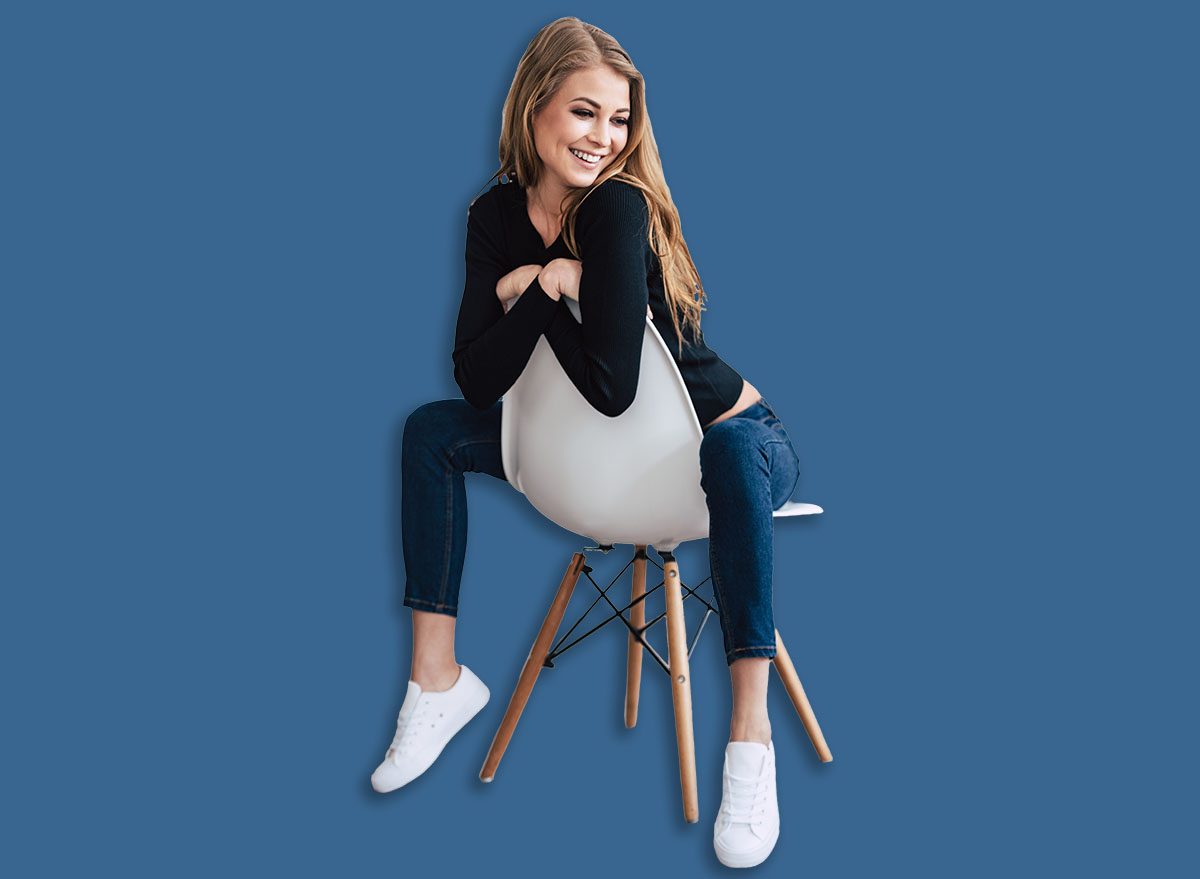
Seated knee tucks offer direct engagement of the lower abdominal muscles and hip flexors from a stable, supported position. This exercise involves drawing the knees towards the chest, requiring the midsection to control the entire range of motion while the chair provides a secure base. The emphasis here is on smooth, deliberate repetitions, consciously avoiding the use of momentum. The greater the muscular control exerted during the movement, the more profoundly effective the exercise becomes in targeting the deep core.
- Muscles Engaged: Primarily targets the rectus abdominis (especially the lower fibers), hip flexors, and deep core stabilizers.
- Execution Cues: Sit upright on the edge of a sturdy chair with feet flat on the floor, hands lightly gripping the sides of the chair for support. Lean back slightly, engaging the core, and lift both feet off the floor. Simultaneously draw both knees towards the chest, contracting the abdominal muscles. Slowly extend the legs back to the starting position without allowing the feet to touch the floor, maintaining continuous core tension.
- Volume Recommendation: Perform 3 sets of 8 to 12 repetitions, with a shorter rest interval of 30 to 45 seconds between sets.
- Progression Considerations: Variations include single-knee tucks (alternating legs), alternating knee tucks (one leg in, one leg out), or slow-tempo knee tucks (increasing time under tension).
- Form Insight: Maintain relaxed shoulders and allow the abdominal muscles, rather than the arms or momentum, to drive the knee lift. Keep the movement controlled and deliberate.
3. Seated Flutter Kicks: Sustained Core Endurance
Seated flutter kicks introduce a continuous, controlled muscular engagement across the lower abdominal region and hip flexors. While the chair provides essential support, the legs are required to move with rhythm and precision. Initially, keeping the kicks relatively small in amplitude can help maintain better form and increase the perceived muscular activation, making the movement feel cleaner and more potent. This exercise is excellent for building core endurance.
- Muscles Engaged: Focuses on the lower rectus abdominis, hip flexors, and quadriceps, with significant involvement from the deep core for stabilization.
- Execution Cues: Sit on the edge of a sturdy chair, leaning back slightly and supporting yourself with your hands on the chair’s sides. Lift both feet off the floor, extending the legs slightly forward. Keeping the legs straight but not locked, perform small, rapid up-and-down "flutter" movements with your feet, similar to kicking in water. Maintain a consistent pace and control throughout.
- Volume Recommendation: Execute 3 sets, aiming for a duration of 20 to 30 seconds per set. Rest for 30 to 45 seconds between sets.
- Progression Considerations: Try bent-knee flutter kicks (easier), shorter-range flutter kicks (focus on control), or slow-tempo flutter kicks (emphasizing muscular tension).
- Form Insight: Ensure the kicks are small enough to prevent any discomfort or arching in the lower back. The movement should originate from the hips and core, not just the knees.
4. Seated Scissor Kicks: Multi-Planar Abdominal Challenge
Seated scissor kicks offer a distinct challenge to the abdominal muscles by incorporating a crossing and opening leg movement. This exercise demands significant stabilization from the torso while the legs perform a lateral motion, providing ample work for the entire midsection, including the obliques. The focus should be on a controlled pace and a comfortable range of motion. This exercise is most effective when executed with fluid, deliberate movements rather than frantic, uncontrolled flailing.
- Muscles Engaged: Targets the rectus abdominis, obliques, hip flexors, inner thighs (adductors), and quadriceps, with the deep core actively engaged in stabilization.
- Execution Cues: Position yourself on the edge of a sturdy chair, leaning back slightly with hands on the chair for support. Lift both feet off the floor and extend the legs forward. Keeping the legs relatively straight, cross one leg over the other, then reverse the motion, scissoring the legs back and forth. Maintain a steady upper body and avoid rocking.
- Volume Recommendation: Complete 3 sets, aiming for a duration of 20 to 30 seconds per set. Rest for 30 to 45 seconds between sets.
- Progression Considerations: Options include bent-knee scissor kicks (easier), shorter-range scissor kicks (focus on core engagement), or slow-tempo scissor kicks (increased time under tension).
- Form Insight: Keep the chest elevated and the shoulders relaxed. If discomfort arises in the hips or lower back, reduce the range of motion of the leg crossing. The core should initiate and control the movement.
Integrating the Routine for Optimal Results
These four chair-based exercises can be effectively structured into a circuit training format. To implement this, perform one set of each exercise consecutively, moving from chair squats to seated knee tucks, then flutter kicks, and finally scissor kicks. Upon completing all four exercises, allow for a rest period of 60 to 90 seconds before initiating the next round. Aim to complete two to three total rounds of this circuit.
Consistency is paramount for seeing sustained results. Incorporating this routine into your fitness regimen several times a week, perhaps on non-consecutive days, will allow for adequate muscle recovery and adaptation. As strength improves, consider progressive overload by increasing repetitions, extending duration, slowing down the tempo of movements, or reducing rest times. Always prioritize impeccable form over the number of repetitions or speed.
Ultimately, a chair-assisted fitness routine provides a highly effective and accessible method for engaging the core directly while simultaneously promoting overall activity. By executing chair squats with power, maintaining control through the seated core movements, and committing to consistent effort, individuals over 65 can actively work towards a firmer midsection and significantly enhance their functional fitness and overall well-being over time. Remember, physical activity is but one pillar of health; a balanced diet, adequate hydration, sufficient sleep, and stress management are equally crucial components in supporting a vibrant, active lifestyle in your golden years. Consulting with a healthcare professional or a certified fitness expert before embarking on any new exercise program is always recommended, especially for older adults.
About the Author