Spain’s Decisive COVID-19 Interventions and Societal Resilience Applauded by World Health Organization
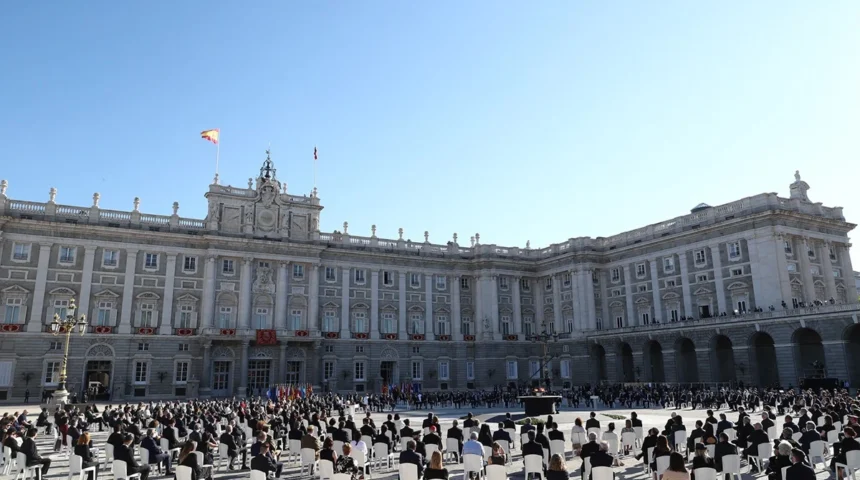
In a significant commendation of national fortitude and strategic public health management, Dr. Tedros Adhanom Ghebreyesus, Director-General of the World Health Organization (WHO), recently journeyed to Spain to formally acknowledge the nation’s profound sacrifices and exemplary leadership in confronting the initial, devastating wave of the COVID-19 pandemic. His visit served as a poignant tribute to the countless lives lost, a powerful salute to the unwavering dedication of healthcare professionals, and a robust endorsement of the Spanish government’s comprehensive and resolute response that ultimately succeeded in reversing the virus’s alarming transmission trajectory. This high-level recognition underscores Spain’s journey from a country grappling with one of the most severe outbreaks to a compelling global example of how collective action and decisive policy can bring a virulent pathogen under control.
The early months of 2020 cast a long, somber shadow across Spain. As the novel coronavirus rapidly escalated from a localized epidemic to a global pandemic, Spain quickly emerged as one of Europe’s epicenters, bearing the brunt of an unprecedented health crisis. The sheer speed and scale of the virus’s spread overwhelmed the nation’s robust, yet ultimately finite, healthcare infrastructure. Hospitals faced critical shortages of beds, intensive care units reached maximum capacity, and medical personnel worked under immense pressure, often without adequate protective equipment. At its zenith, the crisis saw staggering numbers, with daily new infection figures soaring close to 10,000, painting a stark picture of a society under siege. This period was marked by profound national grief, as families mourned their loved ones and the country grappled with an invisible enemy that inflicted a heavy human toll, testing the very fabric of Spanish society.
Responding to this existential threat, the Spanish government, demonstrating formidable political leadership, swiftly implemented a series of stringent, nationwide measures. A state of alarm was declared, granting authorities the necessary powers to impose severe restrictions on movement and public life. These included a strict national lockdown, shuttering non-essential businesses, and limiting citizens’ outdoor activities to only the most crucial tasks. The underlying philosophy was rooted in data-driven decision-making, with public health experts guiding policy formulation to contain the virus’s spread. This decisive governmental action, while imposing significant burdens on the economy and daily life, was pivotal in mobilizing a coordinated national effort to safeguard public health, striking a difficult but necessary balance between mitigating health risks and managing societal disruption.
Central to Spain’s success was the meticulous deployment of a multi-pronged public health strategy designed to disrupt the virus’s chain of transmission. This strategy was anchored by robust surveillance systems, which involved significantly scaling up testing capabilities. Initially, this meant prioritizing PCR tests for symptomatic individuals and healthcare workers, later expanding to include widespread antigen testing to identify asymptomatic carriers. Complementing this was an aggressive contact tracing program, where dedicated teams meticulously identified and monitored individuals who had been in contact with confirmed cases, ensuring their isolation to prevent further spread. Furthermore, the healthcare system adapted rapidly, expanding hospital capacity, converting public facilities into temporary medical centers, and ensuring treatment pathways were available for all who required them, from mild cases to those needing critical care. This comprehensive approach, informed by scientific advice, became the bedrock of the country’s containment efforts.
Amidst the chaos and uncertainty, Spain’s healthcare professionals emerged as true heroes, embodying an extraordinary spirit of sacrifice and unwavering commitment. Doctors, nurses, paramedics, and support staff worked relentless shifts, often under harrowing conditions, risking their own health and well-being to save lives. They faced critical shortages of personal protective equipment (PPE), endured immense emotional and physical exhaustion, and witnessed firsthand the devastating impact of the virus. Yet, their resolve never faltered. They were the unwavering front line, providing compassionate care, innovating solutions under pressure, and serving as a beacon of hope for a frightened nation. Their collective efforts, often celebrated with nightly applause from balconies, underscored the profound debt of gratitude owed to those who dedicated themselves to the health of others.
The efficacy of the government’s measures was profoundly amplified by the remarkable adherence and collective sacrifice demonstrated by the Spanish public. Faced with unprecedented restrictions, including prolonged lockdowns, mandatory mask-wearing in public spaces, and strict physical distancing protocols, citizens largely embraced their civic duty. This widespread compliance, born out of a sense of collective responsibility and solidarity, was instrumental in bringing down infection rates. Families endured separation, businesses faced severe economic hardship, and social life was drastically curtailed. However, the understanding that individual actions contributed to the greater good fostered a powerful sense of unity, underpinning the government’s efforts and demonstrating that community support is an indispensable component of any effective pandemic response.
The combination of robust governmental action, comprehensive public health strategies, the dedication of healthcare professionals, and the steadfast adherence of the populace yielded tangible and dramatic results. Spain, which had once been overwhelmed, began to witness a significant reduction in new infections, hospital admissions, and mortality rates. The infamous "curve" flattened, and then began to descend, signaling a successful suppression of the initial outbreak. This shift represented a monumental achievement, transforming Spain’s trajectory from one of escalating crisis to one of managed recovery. It served as a powerful testament to the fact that even in the face of a rapidly spreading and deadly pathogen, concerted and coordinated efforts can effectively change the course of an epidemic, allowing a nation to move from emergency management to a more stable and controlled phase.
Dr. Tedros’s visit and his commendation transcended a mere diplomatic gesture; they underscored a critical global lesson. He emphasized that Spain’s experience illustrates a universal principle: with decisive political leadership and action, bolstered by strong community support, COVID-19 can be brought under control, regardless of the initial stage or severity of transmission in a country. This message resonates deeply with the WHO’s overarching guidance, which consistently advocates for comprehensive public health measures, robust health systems, and engaged communities as essential pillars of pandemic response. Spain’s journey provided a compelling, real-world case study, reinforcing the WHO’s global strategy and offering encouragement to other nations facing similar challenges, demonstrating the potential for recovery even from the brink of crisis.
However, the WHO Director-General’s praise was tempered with a crucial caveat: the imperative of continued vigilance. He unequivocally supported the Spanish authorities’ commitment to remain watchful, acknowledging the persistent and evolving threat posed by COVID-19. This caution was not merely a formality but a strategic warning against complacency. The potential for new waves of infection, the emergence of variants, and the complexities of reopening societies meant that sustained efforts in surveillance, testing, and public health messaging were vital. Investing in resilient public health infrastructure, maintaining readiness for future outbreaks, and adapting strategies based on evolving scientific understanding became paramount to preventing a resurgence and ensuring long-term national health security.
Ultimately, the COVID-19 pandemic left an indelible mark on Spain, profoundly impacting its society, economy, and healthcare system. Yet, the nation’s rigorous response and the resilience of its people have also forged valuable lessons for future public health crises. Spain’s experience stands as a powerful example of how national unity, scientific guidance, and sustained effort can collectively overcome an unprecedented challenge. It highlights the indispensable value of robust public health systems, the courage of frontline workers, and the critical role of informed public cooperation. As the world continues to navigate the complexities of global health, Spain’s commended journey offers enduring insights into the power of decisive action, reminding all nations of the ongoing importance of international collaboration and shared learning in safeguarding collective well-being against infectious diseases.

Related News