Revisiting the Triune Brain Model: New Research Reimagines Evolutionary Brain Development Through Wiring Strategies.
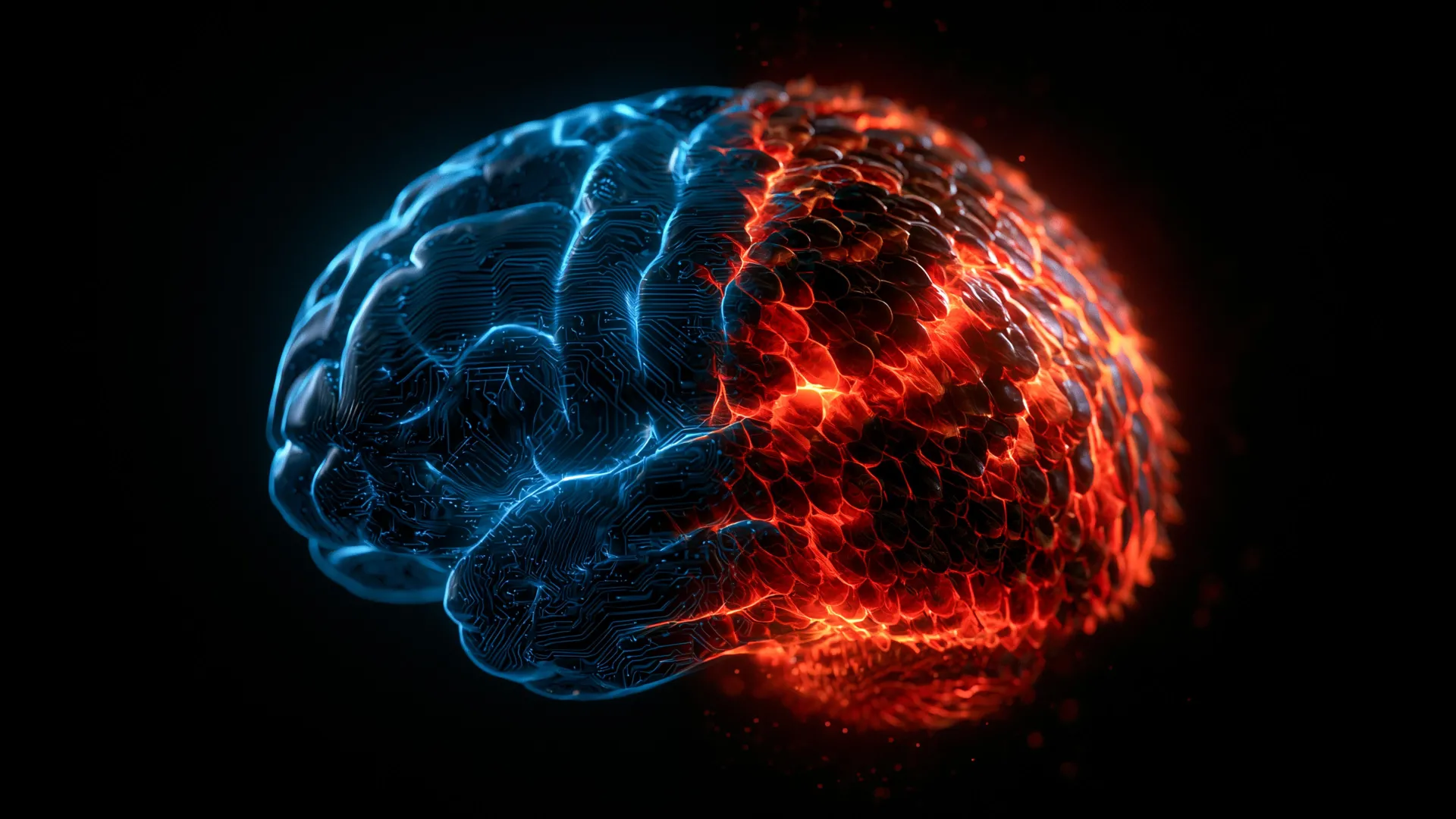
For decades, a prevailing narrative in popular science has depicted the human brain as a stratified entity, a layered evolutionary triumph where a primal, instinct-driven "lizard brain" contends with a more recently developed, rational neocortex. This dichotomy, often invoked to explain the internal conflict between logic and emotion, suggests a linear progression of brain evolution, with sophisticated cognitive functions emerging atop more ancient structures. However, a recent investigation challenges this long-held perspective, proposing a more nuanced understanding rooted in the fundamental organization and allocation of neural wiring rather than a simple addition of newer brain regions.
The foundational concept of the "triune brain" theory, which gained traction in the mid-20th century, posited that the brain evolved in distinct stages: a basal, reptilian core responsible for fundamental survival behaviors, an intermediate limbic system governing emotions and memory, and a highly developed neocortex dedicated to abstract thought and reasoning. This model, while intuitively appealing and widely disseminated in public discourse, has increasingly come under scrutiny from evolutionary biologists and neuroscientists. Nabil Imam, an assistant professor at Georgia Tech’s Institute for Computational Science and Engineering and a member of the Institute for Neuroscience, Neurotechnology, and Society (INNS), explains that this layered, sequential evolutionary model is not how contemporary evolutionary biologists conceptualize the intricate development of the brain. Instead, the scientific community is moving towards a more dynamic and interconnected view of neural evolution.
Research published in the prestigious journal Science Advances offers compelling evidence that brain evolution is better understood as a process of intricate wiring and resource allocation, rather than a simple stacking of progressively advanced brain regions. Imam and his collaborators, by analyzing the organizational principles of both biological brains across diverse species and sophisticated artificial neural networks, have identified a crucial evolutionary mechanism: the strategic distribution of a finite amount of brain space among competing wiring paradigms. Their computational model illustrates a fascinating tug-of-war between two fundamentally distinct neural architectures, both of which are established early in development, even prenatally. This ongoing competition for neural resources, they suggest, shapes the relative sizes and prominence of different brain systems, providing a more accurate account of evolutionary divergence.
The implications of these findings extend beyond clarifying a persistent puzzle in neurobiology; they also hold significant promise for the advancement of artificial intelligence. By deciphering the evolutionary logic behind efficient neural organization, researchers may unlock pathways to creating AI systems that are not only more biologically plausible but also significantly more parsimonious in their data and energy consumption. The current paradigm in AI development often relies on training artificial neural networks with immense datasets, a process Imam likens to "nurture" in the context of biological development. However, he emphasizes that biological brains are not merely blank slates passively molded by experience; they are a complex interplay of "nature" and "nurture," where innate, pre-wired architectures play a critical role. Translating these fundamental biological wiring principles into AI could lead to systems that learn and function with the remarkable efficiency observed in living organisms.
The popular "lizard brain" and "logical brain" terminology, while pervasive, oversimplifies the complex functional landscapes of brain regions. The neocortex, often championed as the seat of higher cognition, is indeed the brain’s outermost layer and is instrumental in processing sensory information, perception, complex reasoning, and a host of other advanced cognitive abilities. However, the concept of a singular, unified "lizard brain" is far less precise. Imam clarifies that the limbic system, frequently equated with the "reptilian brain," is a functionally heterogeneous collection of structures. While it broadly encompasses emotional processing, it also houses distinct regions critical for memory formation, olfactory perception, spatial navigation, and the intricate regulation of emotional states. The persistent grouping of these disparate regions under a single, simplistic moniker has lacked a robust theoretical underpinning to explain their shared evolutionary or functional significance.
To address this ambiguity, the research team embarked on a comparative analysis of how these brain systems have evolved across a wide spectrum of species. Rather than focusing on isolated brain regions, their investigation examined the co-variation of the limbic system and the neocortex throughout evolutionary history. A striking and consistent pattern emerged: when specific components of the limbic system showed a relative increase in size, other limbic regions tended to expand concurrently. Concurrently, this expansion within the limbic system was often associated with a proportional reduction in the size of the neocortex. This inverse relationship strongly suggests that these brain systems do not evolve in isolation but rather exhibit a coordinated developmental trajectory across evolutionary lineages. Imam posits that this coordinated expansion and contraction of limbic components points towards the system functioning as an integrated network, rather than a mere aggregation of unrelated structures.
The next critical inquiry then became the underlying drivers of this observed coordinated evolutionary shift. Imam’s explanation centers on the intrinsic wiring principles established during early development. Neural circuits within the neocortex are characterized by a topographical or spatial organization. This means that brain regions processing adjacent areas of the body, such as the thumb and index finger, are physically located in close proximity. A similar spatial mapping is evident in the neural pathways responsible for processing visual and auditory information.
In contrast, the limbic system exhibits a fundamentally different organizational schema. Instead of relying on spatial proximity, its wiring operates more akin to a "bar code" system. Here, complex memories or particular olfactory stimuli are represented not by the physical location of neurons but by distributed patterns of neural activity across the network. To ascertain whether these distinct wiring paradigms were primarily dictated by inherent architectural predispositions or were predominantly shaped by environmental experience, the researchers employed artificial intelligence models. They constructed AI networks with localized, spatial connections, finding them inherently adept at processing visual, auditory, and tactile information. Conversely, networks employing distributed, "bar code-style" connectivity demonstrated superior performance in tasks involving olfactory recognition and memory recall, underscoring the functional specialization dictated by wiring strategy.
The research team then delved into the reasons behind the consistent shifts in the relative proportions of these brain systems observed across different species. The fundamental hypothesis driving this investigation is the principle of limited neural resources. The brain, as a finite organ, possesses constraints in terms of physical space and metabolic energy. Consequently, natural selection may favor the wiring system that provides the most significant adaptive advantage for survival within a specific environmental niche. To empirically test this hypothesis, the researchers developed a multimodal artificial neural network where spatial and distributed wiring systems competed for computational "real estate."
Their simulations revealed a direct correlation between environmental pressures and the proportional growth of these neural architectures. When the simulated environment prioritized olfactory cues, the distributed wiring system within the network experienced widespread expansion, while the spatially organized neocortical equivalent diminished. Conversely, when visual processing was favored, the pattern reversed, with the neocortical system growing at the expense of the distributed network. This inherent trade-off mechanism offers a compelling explanation for pronounced differences observed in the brains of real-world animal species. For instance, the nine-banded armadillo, which relies heavily on its acute sense of smell, possesses a remarkably enlarged limbic system, whereas the squirrel monkey, whose survival is largely dependent on its keen eyesight, exhibits a brain dominated by a highly developed neocortex. Across the 182 species analyzed in the study, these findings collectively suggest that brain evolution is less about the incremental addition of newer, more sophisticated cognitive layers and more about a dynamic reallocation of neural resources between different wiring systems, driven by their adaptive utility for survival in diverse ecological contexts.
The insights gleaned from studying brain evolution hold profound implications for the future trajectory of artificial intelligence. If engineers can successfully integrate aspects of these innate neural organization principles into AI architectures, it may pave the way for the development of systems that learn with a greater resemblance to biological brains, requiring substantially less training data and a fraction of the energy currently consumed. Imam articulates that contemporary artificial neural networks are largely dependent on massive data inputs, a process he characterizes as "nurture." However, he reiterates that the brain’s development is not solely a product of experience; it is a sophisticated synthesis of both "nature" and "nurture," where the "nature" component is embodied by its pre-wired architectural foundation. By translating these foundational biological wiring principles into AI systems, it becomes possible to create more brain-like artificial intelligences, enhancing their learning capabilities and operational efficiency to levels that more closely mirror the remarkable efficacy of biological brains. This collaborative effort, involving researchers from Cornell University and supported by the National Science Foundation, represents a significant step forward in our understanding of brain evolution and its potential to revolutionize artificial intelligence.
Related posts:

Related News