Irritable Bowel Syndrome (IBS) stands as one of the most prevalent and enigmatic functional gastrointestinal disorders globally, significantly impacting the quality of life for millions. Characterized by a constellation of distressing symptoms including recurrent abdominal pain, bloating, and altered bowel habits – manifesting as either persistent constipation, chronic diarrhea, or an unpredictable oscillation between the two – its etiology has historically eluded definitive explanation. Epidemiological data consistently reveal a higher incidence among women, highlighting a complex interplay of physiological and potentially hormonal factors. Despite its widespread nature, the precise mechanisms underpinning IBS have remained largely obscure, although scientific consensus has increasingly pointed towards the intricate conditions within the intestinal environment, particularly the composition and function of the gut microbiota and the crucial signaling molecule, serotonin, as pivotal contributors.
Serotonin, a chemical messenger often primarily associated with its role as a neurotransmitter regulating mood and cognition within the central nervous system, possesses an equally, if not more, profound presence and function beyond the confines of the brain. Astonishingly, over 90 percent of the body’s total serotonin is synthesized and stored within the gastrointestinal tract. Here, it exerts a multifaceted regulatory influence over a vast array of digestive processes through the enteric nervous system (ENS), an intricate network of neurons often colloquially referred to as the "second brain." This neural system, embedded within the walls of the alimentary canal, autonomously governs vital functions such as gut motility, secretion of digestive enzymes, blood flow, and the transmission of visceral sensations. Serotonin acts as a key modulator within the ENS, orchestrating the rhythmic contractions that propel food through the intestines and influencing the overall sensitivity and permeability of the gut lining. Dysregulation of serotonin signaling in the gut is therefore intimately linked to the pathophysiology of IBS, with imbalances potentially contributing to the characteristic symptoms of altered transit time and heightened visceral pain sensitivity.
For some time, the scientific community has acknowledged that the vast ecosystem of microorganisms residing in the gut, collectively known as the gut microbiota, plays a substantial role in influencing the host’s serotonin levels. Previous investigations suggested that these microbial communities could indirectly modulate serotonin production, perhaps by influencing the availability of its precursor, tryptophan, or by impacting the host’s enterochromaffin cells, which are the primary producers of serotonin in the gut lining. However, a critical question remained unanswered: were gut bacteria themselves capable of directly synthesizing biologically active serotonin? This query represented a significant gap in understanding the full extent of microbial influence on host physiology, particularly concerning such a vital signaling molecule.
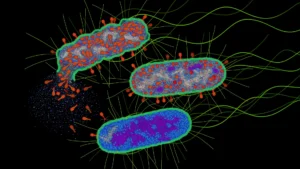
A groundbreaking study, recently published in the esteemed scientific journal Cell Reports, has now decisively addressed this long-standing question, heralding a significant advancement in our comprehension of gut-brain axis communication and the pathogenesis of functional gastrointestinal disorders. Researchers identified two specific bacterial species, Limosilactobacillus mucosae and Ligilactobacillus ruminis, that possess the remarkable ability to collaboratively produce serotonin directly. This discovery marks a pivotal moment, definitively establishing certain gut microbes not merely as modulators, but as direct biological factories for this crucial neurotransmitter within the intestinal milieu.
To rigorously investigate the physiological impact of these newly identified serotonin-producing bacteria, the scientific team conducted a series of meticulously designed experiments utilizing germ-free mice. These animals, reared in sterile environments, completely lack an indigenous microbiota and, consequently, exhibit abnormally low baseline levels of serotonin within their intestines. The controlled introduction of Limosilactobacillus mucosae and Ligilactobacillus ruminis into these germ-free subjects yielded compelling results. Following the colonization of these specific microbes, a discernible and statistically significant increase in serotonin concentrations was observed throughout the animals’ intestines. Beyond mere biochemical alterations, these changes translated into profound physiological effects. The research documented a notable proliferation in the number of nerve cells within the colon, suggesting a direct trophic influence of the bacteria-derived serotonin on the structural integrity and neuronal density of the enteric nervous system. Furthermore, and perhaps most tellingly for the context of digestive function, the time required for food to traverse the animals’ intestines, a critical indicator of gut motility, normalized considerably. This normalization directly implies a restoration of healthy digestive transit, offering a tangible link between microbial serotonin production and fundamental gut function.
Professor Fredrik Bäckhed, a leading author of the study and an expert in molecular medicine at the Sahlgrenska Academy at the University of Gothenburg, underscored the profound implications of these findings. "It is incredibly fascinating how the gut bacteria can produce bioactive signaling molecules that affect health," he remarked, emphasizing the sophistication of microbial communication and its direct impact on host physiology. This sentiment captures the essence of a paradigm shift, moving beyond a simplistic view of microbes as passive residents to recognizing them as active participants in the intricate biochemical orchestra of the human body.
The translational potential of this discovery for human health, particularly for individuals suffering from IBS, is immense. Building upon their findings in animal models, the researchers extended their investigation to human cohorts, analyzing stool samples from both healthy individuals and patients diagnosed with IBS. Their analysis revealed a striking difference: individuals afflicted with IBS exhibited significantly lower levels of one of the key serotonin-producing bacteria, Limosilactobacillus mucosae, compared to their healthy counterparts. This bacterium, as identified in the study, possesses the specific enzymatic machinery required for the biosynthesis of serotonin. The observed deficiency in IBS patients strongly suggests a direct correlation between the absence or reduced abundance of this particular microbial strain and the altered serotonin dynamics believed to contribute to IBS symptoms. This correlation opens exciting new avenues for understanding the underlying pathophysiology of IBS, moving beyond broad microbial dysbiosis to pinpoint specific functional deficiencies.
Professor Magnus Simrén, a distinguished professor of medical gastroenterology also at the Sahlgrenska Academy at the University of Gothenburg, articulated the forward-looking implications of this research for clinical practice. "Our results indicate that certain intestinal bacteria can produce bioactive serotonin and thus play an important role in intestinal health and open new avenues for the treatment of functional gastrointestinal disorders such as IBS," he stated. This perspective highlights the potential for developing highly targeted therapeutic strategies, shifting from symptomatic management to addressing fundamental imbalances at the microbial level.
The ramifications of this research extend far beyond the immediate scope of IBS treatment, offering deeper insights into the complex bidirectional communication pathway known as the gut-brain axis. The realization that specific commensal bacteria can directly synthesize and release neuroactive compounds like serotonin fundamentally reshapes our understanding of how the gut and its microbial inhabitants can influence neurological functions and even behavior. As Professor Bäckhed further elaborated, "Our findings indicate that intestinal bacteria can form signaling substances such as serotonin, which may be the key to understanding how the intestine and its inhabitants can affect our brain and the behavior." This statement points to a future where understanding and manipulating the gut microbiome could unlock novel approaches not only for digestive disorders but potentially for a spectrum of neurological and psychiatric conditions where serotonin dysregulation is implicated.
Looking ahead, this pioneering research lays robust groundwork for the development of innovative therapeutic interventions. The identification of specific serotonin-producing bacterial strains paves the way for the creation of targeted probiotic formulations designed to replenish or augment these beneficial microbes in the guts of IBS patients. Such precision microbiome modulation could aim to restore optimal intestinal serotonin levels, thereby alleviating symptoms like abnormal motility and visceral pain. Furthermore, dietary strategies or prebiotics that specifically foster the growth and activity of Limosilactobacillus mucosae and Ligilactobacillus ruminis could emerge as complementary approaches. The challenges, however, remain significant, encompassing the need for large-scale clinical trials to confirm efficacy and safety, the development of personalized approaches accounting for individual microbial ecosystem variability, and a deeper understanding of the precise mechanisms through which microbially-derived serotonin interacts with host receptors and neural pathways. Nevertheless, this discovery represents a critical leap forward, positioning the gut microbiome at the forefront of future therapeutic strategies for complex gastrointestinal and potentially broader health conditions.
About the Author