
Maintaining robust mobility and confident ambulation stands as a cornerstone of independent living, particularly as individuals progress beyond the age of 65. The natural aging process often brings subtle yet significant changes to our musculoskeletal system, including a gradual decline in muscle mass, strength, and neurological coordination, a phenomenon medically recognized as sarcopenia. While general physical activity remains crucial for overall health, a specific, targeted approach to strength and balance training can profoundly impact the quality and safety of an older adult’s walking ability. This article explores a series of five standing exercises designed not just to build muscle, but to directly enhance the complex biomechanics of gait, offering a more functional pathway to restoring walking proficiency than general cardiovascular equipment alone.
The seemingly simple act of walking is, in reality, a sophisticated interplay of strength, balance, coordination, and proprioception. With advancing age, many individuals notice a gradual shift in their gait pattern; steps may become shorter, slower, and less powerful. Navigating curbs or stairs can require increased concentration, and longer distances might feel more arduous than before. These changes are often indicators of diminished strength in key muscle groups responsible for propulsion, stabilization, and clearance during the walking cycle. The potential implications extend beyond mere inconvenience, directly contributing to an elevated risk of falls, a leading cause of injury and reduced independence among older adults. Understanding these subtle transformations is the first step toward implementing an effective intervention.
While exercise equipment such as treadmills undeniably offers significant benefits for cardiovascular health and promoting consistent physical activity, their role in restoring specific walking strength and dynamic balance for seniors presents a nuanced discussion. Treadmills provide a continuously moving, predictable surface, which, while excellent for aerobic conditioning, can sometimes diminish the need for the body’s intrinsic balance mechanisms and reactive muscle engagement demanded by real-world, varied terrains. Functional standing exercises, conversely, directly challenge the body in positions that mimic daily movements. They necessitate active engagement of stabilizing muscles, improve proprioception (the body’s sense of its position in space), and build strength in a manner that translates directly to navigating uneven ground, turning corners, and maintaining equilibrium during the single-leg support phase of walking. The ability to utilize external support, like a chair or wall, further enhances the accessibility and safety of these exercises, fostering confidence as strength and stability improve.
A strong, stable gait relies on several interconnected pillars: the power to propel the body forward, the ability to lift the foot clear of the ground, robust single-leg support for balance, and dynamic stability to adapt to environmental changes. Each of the following exercises has been selected to target these specific components, addressing common deficits observed in older adults and laying a foundation for more confident and resilient movement. Integrating these movements into a regular fitness routine can significantly contribute to enhancing mobility and mitigating the risk factors associated with age-related gait decline.
1. The Standing March: Cultivating Confident Knee Lift and Hip Strength
A clean, deliberate knee lift is fundamental to preventing the shuffling gait often observed in older adults, which can dramatically increase the risk of tripping and falls. The standing march is a deceptively simple yet highly effective exercise that directly targets the hip flexors, quadriceps, and core musculature. This movement helps to rebuild the strength and neural control necessary for adequate foot clearance during the swing phase of walking, ensuring each step is lifted and placed with precision. By engaging the core, it also promotes an upright posture, crucial for balance and efficient movement.
- How to Perform: Begin by standing tall, ideally near a stable surface like a counter or chair for support. Gently shift your weight to one foot, maintaining a slight bend in the standing knee. With control, lift the opposite knee towards your chest, aiming for a height that challenges you without compromising balance. Hold briefly at the peak of the movement, then slowly lower your foot back to the starting position. Alternate legs, performing the movement deliberately and with focus.
- Muscles Engaged: Primarily targets hip flexors (iliopsoas), quadriceps, and engages the core stabilizers, glutes, and calves of the standing leg.
- Recommendation: Aim for 2-3 sets of 8-12 repetitions per leg. For increased challenge, reduce reliance on support; for greater stability, perform the movement more slowly or reduce the knee lift height.
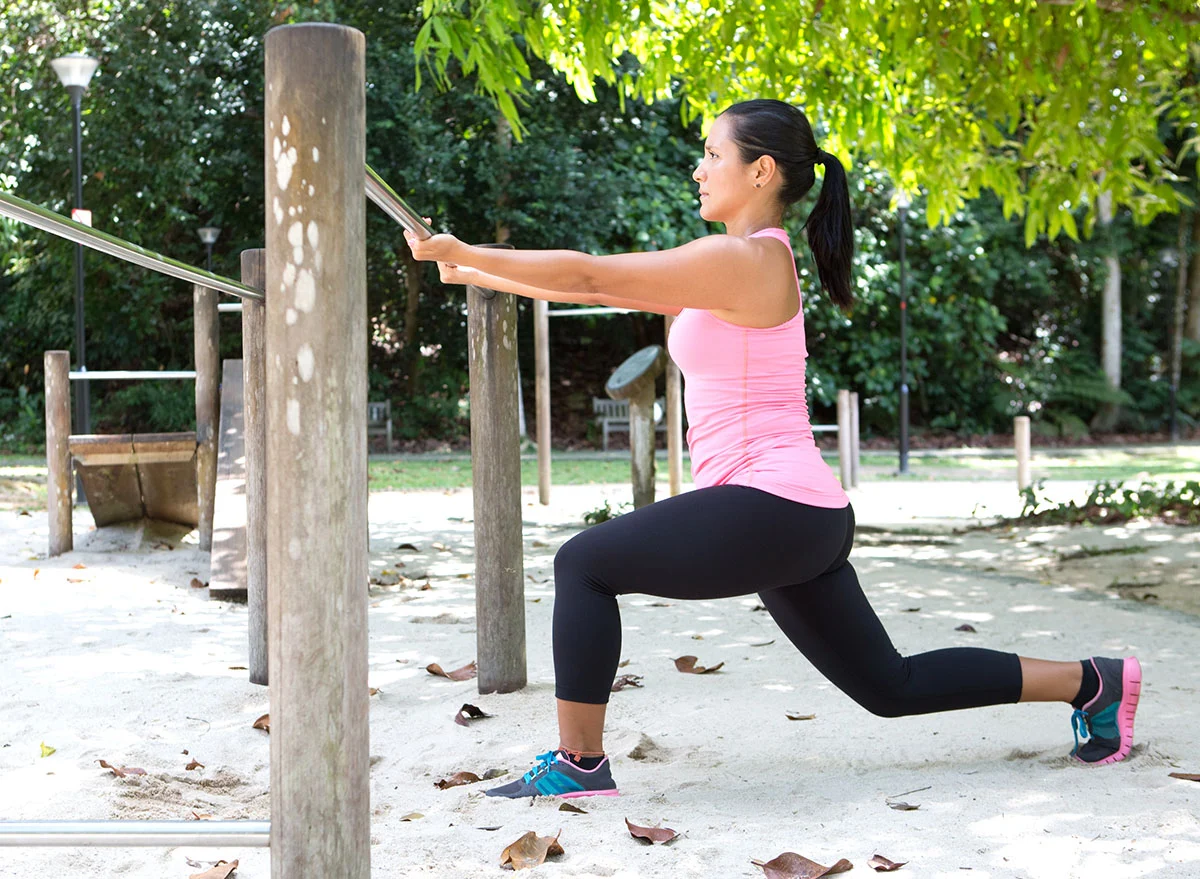
2. The Supported Reverse Lunge: Building Power for Propulsion and Ascent
Walking involves a continuous cycle of controlled lowering and powerful pushing. The supported reverse lunge is an exceptional exercise for developing the eccentric strength (muscle lengthening under tension) needed to absorb impact and the concentric strength (muscle shortening) required for propulsion. This movement directly translates to real-world tasks such as ascending stairs, standing up from a low chair, and maintaining a powerful, extended stride on varied terrain. By utilizing support, individuals can focus on the working muscles without undue concern for balance.

- How to Perform: Stand upright, holding onto a stable support with one hand. Take a controlled step backward with one leg, lowering your hips until both knees are bent at approximately 90-degree angles. Ensure your front knee remains aligned over your ankle and does not extend past your toes. Your back knee should hover just above the floor. Push strongly through the heel of your front foot to return to the starting standing position.
- Muscles Engaged: Primarily strengthens the quadriceps and gluteal muscles of the front leg, with significant contribution from the hamstrings, calves, and core for stabilization.
- Recommendation: Complete 2-3 sets of 6-10 repetitions per leg. To progress, try a smaller range of motion or reduce dependence on the support. A supported split squat, where one foot remains back, can also be a valuable variation.
3. Standing Calf Raises: Empowering the Push-Off Phase
The calf muscles, comprising the gastrocnemius and soleus, are instrumental in the "toe-off" or propulsive phase of walking, providing the critical force that drives the body forward with each step. Weak calves can lead to a flat-footed gait, diminished stride power, and reduced ankle stability. Standing calf raises not only strengthen these vital muscles but also enhance the strength and flexibility of the ankle complex, which is crucial for dynamic balance and adapting to uneven surfaces.
- How to Perform: Stand tall with your feet hip-width apart, holding onto a stable support for balance. Slowly lift both heels off the ground, rising onto the balls of your feet as high as comfortably possible. Focus on a controlled, smooth ascent without bouncing. Hold briefly at the top, feeling the contraction in your calves, then slowly lower your heels back to the floor.
- Muscles Engaged: Predominantly targets the gastrocnemius and soleus muscles in the lower leg, while also engaging intrinsic foot muscles and ankle stabilizers.
- Recommendation: Perform 2-3 sets of 10-15 repetitions. To increase intensity, consider a single-leg assisted calf raise or incorporate a slower tempo, emphasizing the eccentric (lowering) phase.
4. Mini-Band Lateral Walks: Bolstering Hip Stability for a Steady Stride
While walking is primarily a forward movement, strong hip abductor muscles, located on the outer part of the hips, are absolutely essential for maintaining pelvic stability during the single-leg support phase. Without sufficient strength in these muscles, individuals may exhibit a "Trendelenburg gait," characterized by a noticeable side-to-side sway or drop of the pelvis on the unsupported side. Mini-band lateral walks directly target these crucial outer glutes and core stabilizers, reducing lateral instability and promoting a cleaner, more controlled stride, particularly beneficial when navigating uneven ground or avoiding obstacles.
- How to Perform: Place a mini-band around your ankles or just above your knees. Stand with your feet hip-width apart, knees slightly bent, and a slight hinge at the hips. Maintain tension on the band throughout the exercise. Take a small, controlled step to the side with one foot, then follow with the other foot, maintaining band tension. Continue walking laterally for several steps, then reverse direction.
- Muscles Engaged: Primarily targets the gluteus medius and minimus (outer hips), as well as the tensor fasciae latae, quadriceps, hamstrings, and core for stabilization.
- Recommendation: Complete 2-3 sets of 5-8 steps in each direction. Ensure steps remain small and deliberate to keep continuous tension on the band, maximizing muscle activation.
5. Heel-to-Toe Walk (Tandem Gait): Refining Balance and Proprioception
Beyond raw strength, a strong stride demands exquisite balance and precise foot placement. The heel-to-toe walk, also known as tandem gait, significantly narrows the base of support, forcing the feet, ankles, hips, and core to work synergistically to maintain equilibrium. This exercise directly challenges and enhances dynamic balance, spatial awareness, and the neural control required for navigating tight spaces, walking on narrow paths, or recovering from minor stumbles. It is a direct and highly functional way to improve gait control.
- How to Perform: Stand with one foot directly in front of the other, so the heel of your front foot is touching the toes of your back foot. Maintain a straight line as if walking on a tightrope. Keep your gaze forward and core engaged. Slowly and deliberately take a step forward, placing the heel of your new front foot against the toes of your back foot. It is strongly recommended to perform this exercise close to a wall or counter so you can lightly touch it for support if needed.
- Muscles Engaged: Primarily engages the intrinsic muscles of the feet and ankles, along with the glutes and core, predominantly through their role in balance and stabilization rather than pure strength.
- Recommendation: Perform 2-3 rounds, aiming for 8-12 slow, controlled steps in a straight line. To simplify, widen the stance slightly between the heel and toe. To progress, try pausing briefly with each foot placement or reducing reliance on external support.
Integrating a Functional Strength Regimen for Lasting Mobility
Incorporating these five functional standing exercises into a regular fitness routine, typically two to four days per week, can yield profound improvements in walking strength, balance, and overall confidence. It is vital to remember that consistency is key, and these strength-focused movements should complement, not replace, regular walking and other forms of physical activity. Begin with appropriate support, prioritize correct form over speed or the number of repetitions, and gradually increase the challenge as strength and confidence develop. Listening to your body and consulting with a healthcare professional or certified fitness expert before starting any new exercise program is always advisable, particularly for individuals with pre-existing health conditions.
Beyond the immediate benefits to gait, a proactive approach to maintaining and restoring functional mobility in later life contributes to a higher quality of life, greater independence, and a reduced risk of falls and related injuries. Empowering oneself through targeted movement is an investment in long-term well-being, fostering the ability to navigate the world with renewed stability and self-assurance. These standing exercises represent a powerful tool in that journey, helping older adults stride confidently towards a more active and fulfilling future.
About the Author










