
As global demographics continue their shift towards an older population, the imperative for maintaining functional fitness throughout life gains increasing prominence. Among the various components of physical well-being, balance stands out as a critical, yet frequently underestimated, element for fostering independence and quality of life in senior years. Impaired balance is not merely an inconvenience; it represents a significant health risk, particularly increasing the likelihood of falls, which can lead to serious injuries, long-term disability, and a substantial decline in overall well-being. While many fitness programs for older adults focus on strength and cardiovascular health, targeted balance training often receives less attention, despite its profound impact on daily function and safety. Interestingly, insights into effective balance enhancement can sometimes emerge from unexpected realms of high-performance athletics, offering adaptable principles for a broader demographic.

The human body’s intricate system for maintaining equilibrium, known as postural control, involves a complex interplay of sensory information from vision, the vestibular system (inner ear), and proprioception (the body’s sense of its position in space), all processed by the central nervous system. With advancing age, natural physiological changes can gradually compromise these systems. Muscle mass and strength, particularly in the lower limbs, tend to diminish through a process called sarcopenia. Nerve conduction velocity slows, affecting reaction times, while proprioceptive acuity—the ability to sense limb position without visual input—can decrease. Furthermore, age-related changes in vision and the vestibular system can further compound stability challenges. These cumulative effects contribute to a heightened risk of instability, stumbling, and ultimately, falls. Statistics underscore this concern: falls are a leading cause of injury among older adults, often resulting in hip fractures, head trauma, and other severe consequences that necessitate hospitalization and prolonged recovery. Beyond the physical toll, the fear of falling itself can lead to a reduction in physical activity, fostering a vicious cycle of deconditioning and increased vulnerability. However, this decline is not an inevitable consequence of aging; rather, it is a process that can be significantly mitigated, and even reversed, through consistent, appropriate exercise.
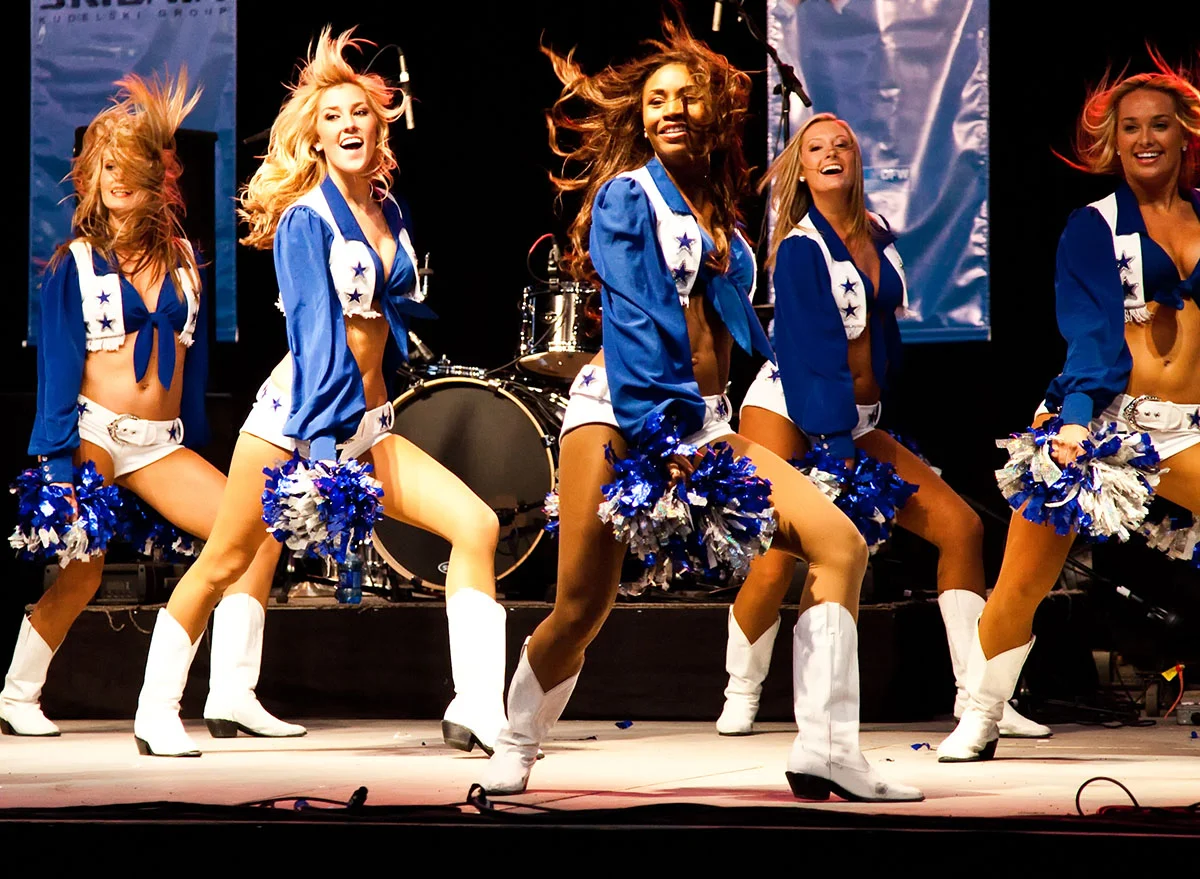
To illustrate the sophisticated mechanics of balance, one might consider the seemingly disparate world of professional cheerleading. While the vibrant routines and dynamic performances of groups like the Dallas Cowboys Cheerleaders might appear far removed from the daily life of an older adult, their training regimen offers profound insights into the foundational elements of peak physical control. Lee Cain, a distinguished Personal Trainer, Certified Strength and Conditioning Specialist, and the Managing Director of HFE, emphasizes that the athletic prowess required for such performances extends far beyond mere high kicks. It demands a sophisticated blend of raw strength, expansive mobility, intricate coordination, robust cardiovascular fitness, and, critically, exceptional proprioceptive and neuromuscular control. Acknowledging the comprehensive nature of this training, individuals such as Dallas Cowboys Cheerleader Jada McLean incorporate diverse cross-training modalities, including weightlifting, Pilates, and running, alongside their intensive dance practices, to cultivate a holistic physical capacity. Cain underscores that the paramount takeaway for anyone seeking to improve movement quality is the mastery of bodily control across its full range of motion. While flexibility is beneficial, the ability to command one’s body through its movements, particularly in challenging positions, is far more vital. This principle directly informs the selection of exercises that build not just strength, but also the stability and coordination necessary for everyday function. Exercises like squats, lunges, Romanian deadlifts, and controlled leg raises contribute significantly to this foundation, but it is single-leg movements that specifically target and enhance balance and stability by forcing the body to find equilibrium on a reduced base of support.

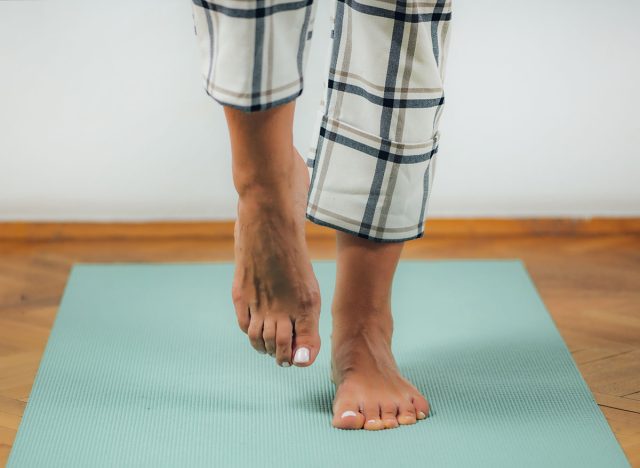
Drawing directly from these principles, Cain advocates for a highly accessible yet remarkably effective exercise for adults aged 60 and above: the supported single-leg stand. This exercise, deceptively simple in its execution, is a cornerstone for cultivating improved balance and preventing falls. To perform it, an individual should position themselves adjacent to a sturdy piece of furniture, such as a countertop or a stable chair, which can provide immediate support if needed. From this position, one foot is gently lifted a short distance off the floor, transferring the body’s weight entirely onto the standing leg. The objective is to maintain this single-leg stance for a duration of 10 to 30 seconds, striving for a tall, upright posture while making only minimal, controlled adjustments to sustain equilibrium. After completing the desired hold on one side, the process is repeated on the opposite leg. Cain recommends aiming for two to three repetitions per leg.
The power of the supported single-leg stand lies in its comprehensive engagement of the body’s balance systems. As one attempts to stabilize on a single limb, a complex neural and muscular cascade is initiated. The ankle, knee, and hip joints of the standing leg, along with the core musculature, are compelled to work in concert to counteract any perceived sway or instability. The nervous system is continuously processing feedback from proprioceptors in the muscles and joints, as well as from the vestibular system, to precisely map the body’s position in space and issue commands for minute muscular contractions that maintain balance. This constant, subtle recalibration strengthens the proprioceptive pathways, sharpens neuromuscular control, and enhances the overall efficiency of the body’s equilibrium mechanisms. For those who find the initial supported version manageable, progression involves gradually reducing reliance on the external support or introducing gentle, controlled movements of the lifted leg, such as small swings forward, backward, or to the side. These variations introduce dynamic challenges that further refine balance and coordination.

The physiological benefits of consistently practicing single-leg exercises extend across multiple bodily systems crucial for stability. Improved proprioception means the body becomes more acutely aware of its position and movement without needing visual cues, enhancing spatial orientation and reaction time to unexpected shifts. The vestibular system, responsible for sensing head movements and orientation in space, is also stimulated and refined, leading to better overall equilibrium. Muscularly, the exercise heavily recruits the deep core stabilizers, including the transversus abdominis and obliques, which form a crucial foundation for spinal stability. The gluteal muscles, particularly the gluteus medius, are activated to stabilize the hips and prevent lateral sway. Furthermore, the quadriceps, hamstrings, and especially the intricate network of muscles around the ankle and foot are strengthened, improving ankle stability and control. This holistic muscular engagement, combined with enhanced neuromuscular signaling, leads to improved overall postural control and a reduced risk of uncontrolled movements that could precipitate a fall. The strengthening of supporting musculature around key joints also contributes to their long-term health and resilience.
The direct translation of enhanced single-leg balance to everyday life is profound. Consider the multitude of daily movements that necessitate a brief transfer of weight onto one leg: climbing a flight of stairs, stepping over a threshold or a curb, entering or exiting a vehicle, reaching for an item on a high shelf, or simply walking across uneven terrain. Most human locomotion is inherently a series of controlled single-leg stances. As Cain elucidates, "Single-leg training teaches you to generate and control force through one leg while maintaining your balance." He further explains that balance is not merely a static attribute; it is a dynamic process essential for every step, turn, and weight shift. By regularly practicing single-leg stands, individuals fortify their ability to navigate these common, yet often challenging, scenarios with greater confidence and reduced risk of missteps. This improved functional capacity directly contributes to maintaining independence, allowing older adults to engage more fully in their communities and daily routines without the constant apprehension of losing their footing. The psychological benefit of increased confidence in one’s physical capabilities should not be underestimated, as it can significantly enhance overall quality of life.
Prioritizing safety is paramount when incorporating any new exercise, especially for older adults. Before embarking on a single-leg balance routine, it is crucial to ensure a safe environment. This means practicing on a stable, non-slip surface and removing any potential tripping hazards such as loose rugs, cables, or clutter. Fatigue can significantly impair balance, so it is advisable to perform these exercises when feeling rested and alert. Furthermore, Lee Cain strongly emphasizes the importance of consulting a healthcare professional, such as a physician or physiotherapist, before beginning if an individual has a history of falls, experiences regular dizziness or loss of balance, or is recovering from an injury or surgery. The exercise should present a challenge to balance without placing the individual at undue risk. A fundamental safety guideline is always to be within easy reach of support or to be able to place the foot down immediately if stability is compromised. The goal is progressive improvement, not reckless exertion.
Ultimately, the most significant lesson that adults over 60 can draw from the rigorous training of a professional cheerleader is not about performing high-flying acrobatics, but about prioritizing the quality of movement. As Cain articulates, "You don’t need to learn a cheerleading routine or do high kicks. You can simply practice slowly raising one knee, stopping and bringing it down again with no momentum. That trains balance, coordination and control together." This philosophy underscores that the objective for older adults is not to replicate youthful athleticism but to preserve and enhance the fundamental physical capabilities required for confident, independent movement for as long as possible. Focusing on controlled, deliberate motions, even seemingly simple ones, builds the underlying strength, coordination, and proprioceptive awareness that are vital for navigating the demands of daily life. By embracing accessible and targeted balance exercises like the supported single-leg stand, older adults can proactively invest in their long-term mobility, minimize fall risks, and cultivate a sense of physical empowerment that contributes meaningfully to a vibrant and autonomous lifestyle in their later years.
About the Author










