
Maintaining robust physical stability stands as a cornerstone of independent living and overall well-being as individuals progress into their later years. The capacity to navigate daily environments without the apprehension of imbalance or falls significantly influences quality of life, extending beyond mere physical agility to encompass psychological confidence and social engagement. While the physiological processes of aging naturally lead to a gradual decline in various bodily systems, targeted interventions can profoundly mitigate these effects, particularly concerning equilibrium. Among the most accessible and effective strategies for fostering stability in older adults are seated exercise regimens, which offer a secure platform for strengthening vital muscle groups and honing proprioceptive awareness.
The intricate mechanism of human balance relies on a sophisticated interplay of several sensory and motor systems. Vision provides crucial information about our surroundings and orientation. The vestibular system, located in the inner ear, detects head movements and changes in spatial position. Proprioception, often described as our "sixth sense," involves receptors in muscles, tendons, and joints that relay information about body position and movement to the brain. These sensory inputs are then processed by the neurological system, which coordinates muscle contractions via the musculoskeletal system to maintain an upright posture and execute controlled movements. With advancing age, each of these components can experience a natural decline: visual acuity may diminish, vestibular function can become less responsive, proprioceptive feedback may be blunted, and muscle strength, power, and reaction time often decrease. This cumulative effect substantially elevates the risk of falls, which represent a significant public health concern for older populations globally.
Falls are not merely an inconvenience; they are a leading cause of injury, hospitalization, and even mortality among adults aged 65 and over. Beyond the immediate physical trauma, such as fractures, head injuries, or soft tissue damage, a fall can trigger a debilitating "fear of falling" syndrome. This apprehension often leads to reduced physical activity, social withdrawal, and a spiraling decline in functional independence, ironically increasing the very risk it seeks to avoid. Consequently, proactive engagement in physical activity designed to preserve and enhance balance is not just beneficial but imperative for healthy aging.
While many forms of exercise contribute to overall fitness, seated workouts offer distinct advantages for older adults, particularly those with existing mobility limitations, joint pain, or a heightened fear of falling. The inherent stability provided by a chair minimizes the risk of losing balance during movements, allowing individuals to focus on muscle activation and controlled motion without the added challenge of maintaining an upright stance. This reduced impact on joints like the knees and ankles makes seated exercises a gentle yet effective entry point into a regular fitness routine.
Dr. Caryn McAllister, a distinguished physical therapist with over three decades of experience in enhancing motor function across diverse age groups and clinical presentations, underscores the critical importance of consistent balance training. She highlights that the systems governing balance—vision, the vestibular system, proprioception, musculoskeletal strength, and neurological coordination—are all susceptible to age-related decline. However, Dr. McAllister emphasizes that this decline is not inevitable; rather, it can be actively counteracted through regular, challenging engagement. Her philosophy aligns with the fundamental principle that continuous stimulation and incremental challenge are essential for maintaining and improving physical capabilities, asserting that stagnation inevitably leads to regression. She advocates for integrating specific, expert-recommended seated exercises into daily routines to foster flexibility, strength, and the agility necessary to continue cherished activities safely and with ease.
Dr. McAllister recommends a series of five foundational seated exercises, each targeting different aspects of balance and functional strength:
1. Controlled Sit-to-Stand Maneuvers
The act of transitioning between sitting and standing is a fundamental movement integral to countless daily activities, from getting out of bed to rising from a dining chair. This seemingly simple action is, in fact, a complex biomechanical process that demands significant lower body strength, core engagement, and precise weight shifting. Dr. McAllister explains that the sit-to-stand exercise is essentially a modified squat, effectively strengthening the quadriceps, glutes, and hamstrings—muscle groups critical for locomotion and stability. The exercise involves shifting one’s body weight forward and then bearing that weight through the lower limbs to achieve an upright position. For individuals who may find a full stand challenging due to safety concerns or physical limitations, Dr. McAllister suggests a modified approach: simply lifting the buttocks slightly off the chair and leaning forward, mimicking the initial phase of the movement. The key to maximizing the therapeutic benefit of this exercise lies in performing it slowly and deliberately. This controlled pace increases the muscular effort required and enhances motor control, forcing the nervous system to work harder to coordinate the movement, thereby improving both strength and neuromuscular efficiency. Regular practice of the sit-to-stand significantly contributes to functional independence, reducing the effort and risk associated with common transfers.
2. Dynamic Seated Cross-Body Reaches
Trunk strength, often referred to as core strength, is an indispensable component of overall balance. The core musculature provides a stable base from which all other movements originate and helps to maintain upright posture against gravitational forces. Dr. McAllister emphasizes that seated cross-body reaches specifically target and strengthen these vital trunk muscles. By extending the arms across the midline of the body in various directions, individuals engage the obliques and other core stabilizers, enhancing rotational strength and coordination. This movement directly translates to improved dynamic balance, particularly during walking. As Dr. McAllister notes, gait is a highly complex process that involves more than just leg movements; it incorporates arm swings and subtle trunk rotations, all orchestrated by core muscles to maintain equilibrium. People often underestimate the intricate muscular interplay involved in simply walking. Incorporating light hand weights during these reaches can further increase the intensity and challenge, promoting greater strength gains in the core and upper body, which in turn supports a more stable and efficient gait.
3. Articulated Seated Toe Taps
While seemingly minor, the strength and mobility of the ankles and feet play a crucial role in maintaining balance, especially when encountering uneven surfaces or unexpected shifts in weight. Seated toe taps are a deceptively simple yet highly effective exercise for enhancing lower leg strength and ankle articulation. Dr. McAllister highlights this exercise as a foundational movement that should be performed frequently. It involves lifting the toes off the floor while keeping the heels grounded, activating the tibialis anterior muscle, which is essential for foot clearance during walking. Individuals can experiment with alternating between the right and left foot, mimicking the reciprocal motion of walking, or perform them simultaneously. While alternating taps offer greater functional relevance, simultaneous taps efficiently engage both legs and can be a time-saving option. Regular practice of toe taps improves ankle dorsiflexion, strengthens the shin muscles, and enhances proprioceptive feedback from the feet, all contributing to a more stable base of support and a reduced risk of tripping.
4. Engaging Ball Toss in Unsupported Sitting
To truly challenge and improve balance, exercises must often introduce an element of dynamic instability or cognitive engagement. The ball toss performed while sitting without back support effectively achieves both. Dr. McAllister explains that this exercise requires individuals to maintain perfect posture and core stability for extended periods without external assistance, which is inherently challenging. The act of tossing a ball in various directions—upward, to the sides, across the body—introduces external perturbations that compel the body to make constant, subtle adjustments to maintain equilibrium. This encourages anticipatory postural adjustments and reactive balance responses. The reaching movements involved in catching and throwing further promote weight shifting and trunk activation, mirroring the dynamic challenges encountered in everyday life. Furthermore, this exercise engages cognitive functions such as hand-eye coordination, reaction time, and spatial awareness, adding a neurological component to the physical benefits. By constantly adapting to the ball’s trajectory, individuals refine their ability to respond to unpredictable stimuli, a vital skill for fall prevention.
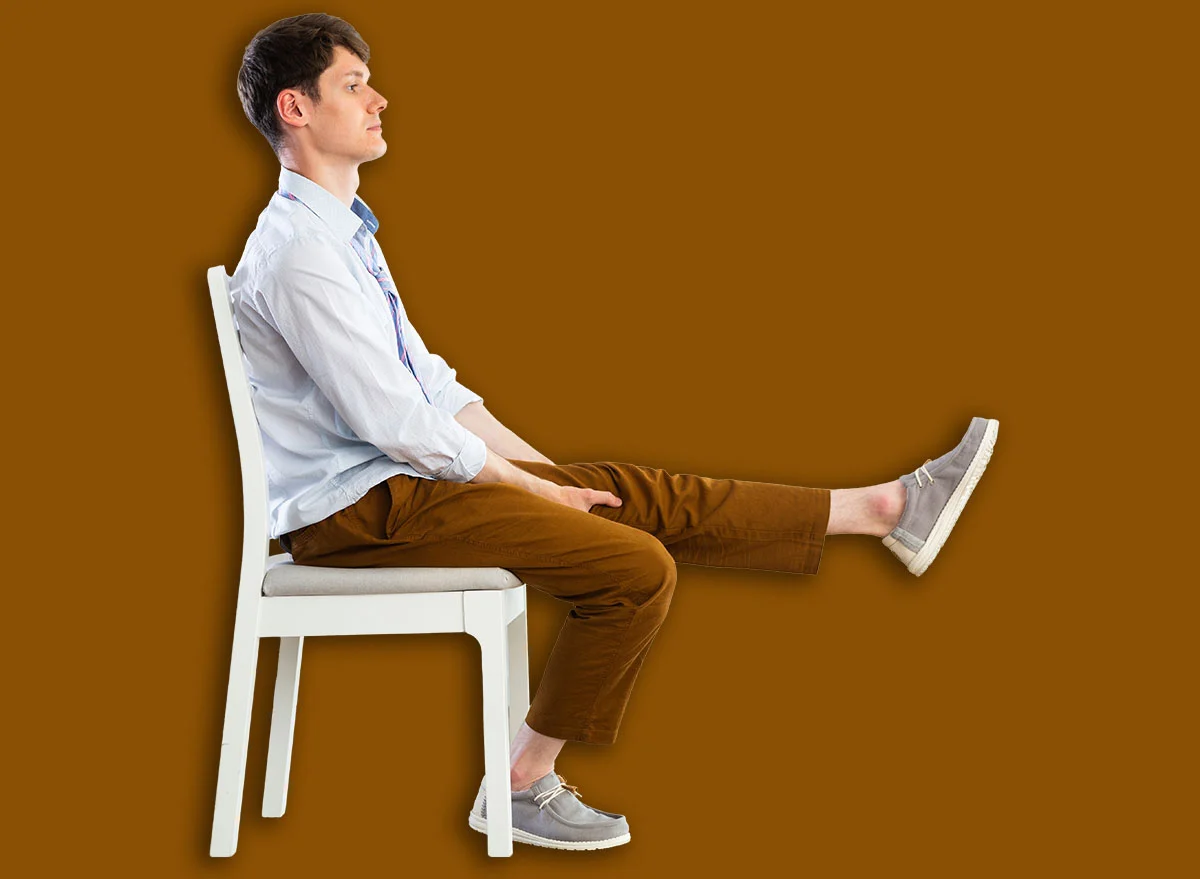
5. Resisted Seated Leg Kicks with Ankle Weights
The quadriceps, the large group of muscles at the front of the thigh, are paramount for knee extension, walking, climbing stairs, and the powerful push-off required for standing. Strengthening these muscles is therefore critical for maintaining functional mobility and preventing falls. Dr. McAllister emphasizes that seated leg kicks, particularly when performed with ankle weights, effectively target the quadriceps. For this exercise to be maximally beneficial, excellent sitting posture is essential. Maintaining a straight back and engaged core ensures that the quadriceps are properly activated, preventing other muscle groups from compensating and reducing the exercise’s efficacy. The movement involves both concentric contraction (muscle shortening as the leg straightens) and eccentric contraction (controlled muscle lengthening as the leg bends back), both of which are vital for joint stability and injury prevention. Adding ankle weights provides progressive resistance, which is key for building muscle mass and strength over time, further enhancing the quadriceps’ capacity to support daily activities and contribute to overall balance.
Integrating these expert-recommended seated exercises into a consistent routine offers a comprehensive approach to preserving and enhancing balance in later life. Beyond the immediate physical benefits of increased strength, flexibility, and coordination, engaging in such purposeful movement fosters a greater sense of confidence and independence. It empowers older adults to maintain their active lifestyles, participate in cherished hobbies, and navigate their world with reduced fear and increased security. As with any new exercise program, it is always advisable to consult with a healthcare professional or a qualified physical therapist to ensure the exercises are appropriate for individual health conditions and to receive personalized guidance on proper form and progression. Through proactive engagement and consistent effort, the journey toward optimizing geriatric equilibrium can lead to a richer, more active, and fall-free life.
About the Author










