
As individuals navigate the landscape of their later years, maintaining functional strength, balance, and independence becomes paramount for an enhanced quality of life. Central to achieving these objectives is a robust and responsive core, often misunderstood as merely the superficial abdominal muscles. For those over sixty, the emphasis shifts from aesthetic abdominal definition to cultivating deep core stability and control, which underpins virtually every movement and posture. This crucial aspect of physical fitness can significantly impact daily activities, from walking confidently to lifting everyday objects, and plays a vital role in preventing falls and mitigating chronic back pain.
The concept of "weak abs" in older adults often misrepresents a more fundamental issue: a deficit in core control. This isn’t simply about the inability to perform numerous crunches; rather, it’s the body’s diminished capacity to stabilize the spine and pelvis during dynamic movements or when subjected to external forces. The core musculature acts as a natural corset, providing a stable foundation from which the limbs can operate efficiently and safely. When this intrinsic control falters, movements become less efficient, balance is compromised, and the risk of injury, particularly to the lower back, escalates. Re-establishing this foundational strength is not about rigorous, high-intensity workouts but about consistent, targeted exercises that teach the body to brace and resist unwanted movement patterns effectively.
Aging naturally brings about physiological changes, including a gradual decline in muscle mass (sarcopenia), reductions in bone density, and alterations in proprioception – the body’s sense of its position in space. A strong, responsive core directly counters these age-related challenges. It supports proper spinal alignment, which can alleviate pressure on intervertebral discs and surrounding nerves, thereby reducing the prevalence of back discomfort. Moreover, by stabilizing the trunk, core strength enhances balance, making tasks like navigating uneven terrain or recovering from a stumble more manageable, thus profoundly reducing the risk of falls, a leading cause of injury and diminished independence among seniors.
The advantages of incorporating a targeted core strengthening regimen at home are manifold, particularly for the senior demographic. Home-based exercises offer unparalleled convenience, eliminate the need for gym memberships or specialized equipment, and allow individuals to progress at a pace that suits their personal fitness level and comfort. This accessibility fosters greater consistency, which is a cornerstone of effective long-term physical improvement. With just a few simple tools—such as a resistance band, a light hand weight (like a dumbbell or kettlebell), and a sturdy counter or table—a comprehensive and impactful core program can be implemented without ever leaving the house.
To genuinely rebuild and enhance core function, the focus must shift towards movements that challenge the core’s ability to resist rotation, lateral flexion, and extension, as well as those that integrate core stability with limb movement. The following four exercises are foundational pillars for cultivating functional core resilience, specifically curated for accessibility and effectiveness in individuals over sixty.
1. Anti-Rotational Band Press (Pallof Press)
The Anti-Rotational Band Press is an exceptionally effective exercise for teaching the core to resist twisting forces, a critical component of functional strength often overlooked. This movement directly targets the obliques and the deep transversus abdominis, musculature essential for spinal stability during asymmetrical loads.

- Core Principle: This exercise specifically trains the core’s capacity to prevent unwanted spinal rotation, strengthening the muscles that act as anti-rotators.
- Muscles Engaged: Primarily targets the internal and external obliques, transversus abdominis, glutes, and shoulders, with secondary engagement of the lats and spinal erectors.
- Execution Focus: To perform, secure a resistance band to a sturdy anchor point at chest height. Stand perpendicular to the anchor, grasping the band with both hands and holding it against your sternum. With feet shoulder-width apart and a slight bend in the knees, engage your core deeply, ensuring your hips and shoulders remain square to the front. Slowly press the band straight forward, extending your arms without allowing your torso to rotate towards the anchor. Control the band as it retracts back to the starting position. The key is to maintain a rigid, unmoving trunk throughout the entire movement.
- Real-World Relevance: This action directly translates to daily activities such as carrying a heavy bag on one side, reaching across your body, or bracing yourself against an unexpected push. It builds the intrinsic stability needed for confident, controlled movements in various situations.
- Adaptability: Begin with a lighter resistance band to master the form, gradually increasing tension as control improves. Variations include performing the press from a staggered stance or incorporating a sustained hold at the extended position.
- Rep/Set Guidance: Aim for 2 to 3 sets of 8 to 12 repetitions per side, allowing for 30 to 45 seconds of rest between sets.
2. Weighted Marching (Goblet Hold Marching)
This dynamic exercise marries core stability with lower body mobility and balance, directly enhancing coordination and the ability to move confidently on one’s feet. Holding a weight at the chest amplifies the challenge, forcing the core to work harder to maintain an upright posture.
- Core Principle: Weighted marching cultivates dynamic core stability, requiring the core to prevent excessive spinal extension and lateral flexion while simultaneously challenging balance as one leg lifts off the ground.
- Muscles Engaged: Engages the rectus abdominis, transversus abdominis, hip flexors, quadriceps, glutes, and upper back muscles (like the traps and rhomboids) for postural support.
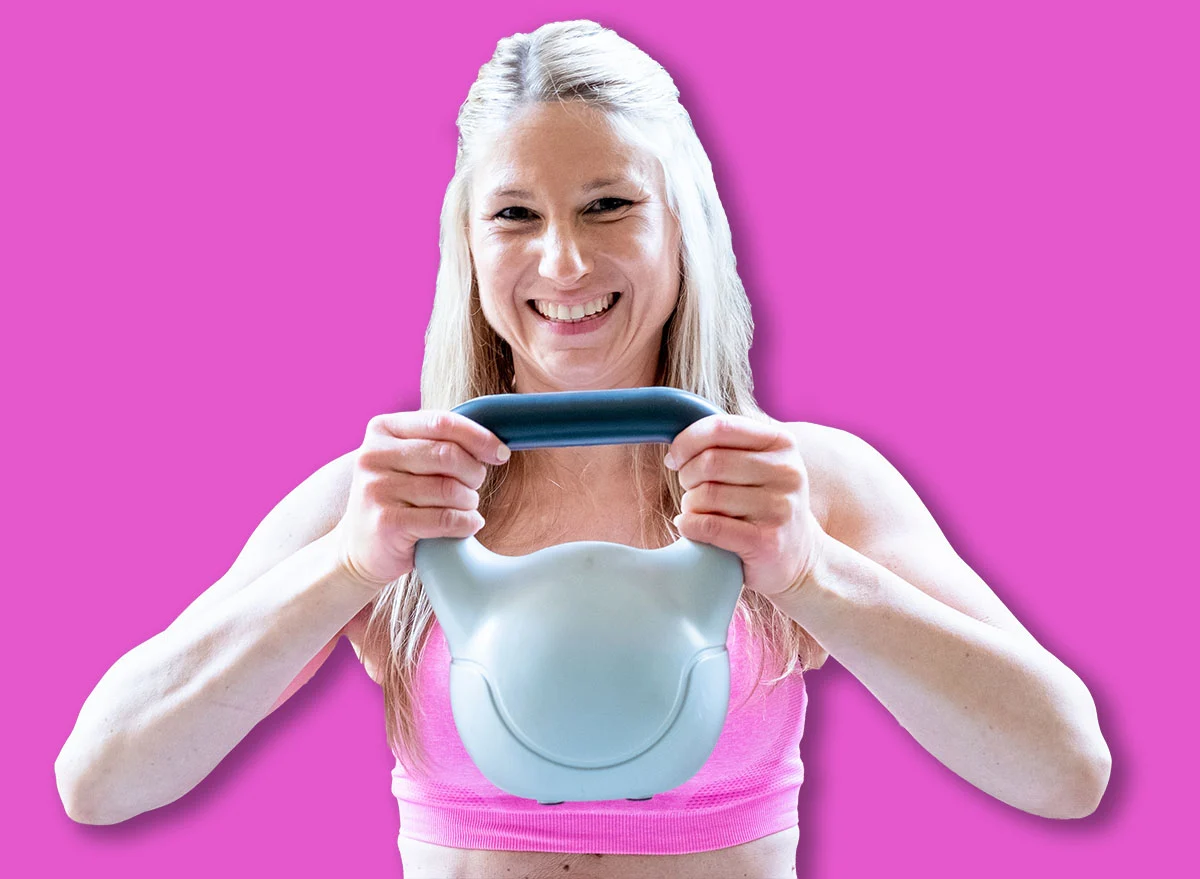
- Execution Focus: Hold a dumbbell or kettlebell vertically against your chest, keeping your elbows tucked in. Stand tall with your shoulders relaxed and core engaged. Slowly lift one knee towards your chest, maintaining a stable and upright torso without leaning or wobbling. The height of the knee lift should be controlled and comfortable. Gently lower the foot back down and repeat with the opposite leg. Focus on controlled, deliberate movements rather than speed.
- Real-World Relevance: This exercise directly mimics and strengthens the muscular engagement required for walking, climbing stairs, or simply maintaining balance while standing and moving one limb, such as reaching for something on a high shelf.
- Adaptability: For those new to the exercise, start with bodyweight marching. As strength and balance improve, gradually increase the weight held. Supporting yourself lightly with one hand on a sturdy surface can also provide assistance initially.
- Rep/Set Guidance: Perform 2 to 3 sets of 8 to 12 marches per side, with a rest period of 30 to 45 seconds between sets.
3. Unilateral Load Carry (Suitcase Carry)
The Suitcase Carry is a deceptively simple yet profoundly effective exercise that mirrors real-life challenges involving asymmetrical loads. It vigorously trains the core’s ability to resist lateral flexion, preventing the body from leaning to one side when carrying something heavy.
- Core Principle: This movement primarily strengthens the obliques and quadratus lumborum, muscles vital for preventing the spine from bending sideways under load. It also builds robust grip strength and integrates full-body stability.
- Muscles Engaged: Predominantly targets the obliques, quadratus lumborum, deep core stabilizers, grip muscles (forearms), trapezius, and glutes.
- Execution Focus: Hold a single dumbbell or kettlebell in one hand, allowing it to hang naturally by your side. Stand tall, with your shoulders level and chest proud. Engage your core, ensuring you do not lean towards the side holding the weight. Walk a predetermined distance, focusing on maintaining a perfectly upright posture and a normal gait. Switch hands and repeat. Start with a weight that allows you to maintain perfect form for the entire duration without compensation.
- Real-World Relevance: This exercise directly enhances the ability to carry groceries, luggage, gardening tools, or a grandchild without compromising posture or straining the back. It teaches the body to remain stable and symmetrical even when facing an uneven load.
- Adaptability: Begin with a lighter weight and shorter distances. As strength and endurance improve, gradually increase the weight or the duration of the carry. A stationary "suitcase hold" can also be performed for initial strength building.
- Rep/Set Guidance: Complete 2 to 3 carries per side, each lasting 20 to 40 seconds, with 30 to 45 seconds of rest.
4. Elevated Plank (Incline Plank)
The Incline Plank offers an accessible and modifiable way to build isometric core strength and endurance without the need to get onto the floor, which can be challenging for some older adults. It trains the core to brace and resist spinal extension, promoting a stable, rigid trunk.
- Core Principle: This isometric exercise develops the core’s ability to maintain a neutral spine, preventing sagging or arching, which is crucial for overall spinal health and functional bracing.
- Muscles Engaged: Engages the rectus abdominis, transversus abdominis, obliques, shoulders, chest, and glutes, creating a full-body bracing effect.
- Execution Focus: Place your hands shoulder-width apart on a sturdy elevated surface such as a kitchen counter, a robust table, or a sturdy bench. Step your feet back until your body forms a straight line from your head to your heels. Your arms should be straight, and your core deeply engaged to prevent your hips from sagging or rising too high. Maintain this straight line, actively squeezing your glutes and bracing your abdominal muscles, while breathing steadily. The higher the incline, the easier the exercise; lowering the incline increases the challenge.
- Real-World Relevance: The ability to brace the core firmly is fundamental for numerous daily tasks, including lifting objects from the floor, maintaining good posture while standing or sitting, and providing spinal protection during sudden movements.
- Adaptability: Adjust the incline by using a higher or lower surface to modify the intensity. For progression, increase the hold duration or introduce subtle movements like alternating shoulder taps while maintaining core stability.
- Rep/Set Guidance: Perform 2 to 3 holds, each lasting 20 to 40 seconds, with 30 to 45 seconds of rest between holds.
Integrating these functional core exercises into a weekly routine, approximately two to four times per week, can yield significant improvements in strength, balance, and overall physical confidence. Consistency is more valuable than intensity, so prioritize proper form and listen to your body’s signals. Begin each session with a brief warm-up, such as gentle arm circles and leg swings, and conclude with some light stretching.
Beyond specific exercises, adopting a holistic approach to core health involves being mindful of posture throughout the day, practicing diaphragmatic breathing, and ensuring adequate hydration and nutrition to support muscle function and recovery. By committing to these foundational principles and incorporating this targeted regimen, individuals over sixty can not only restore but significantly enhance their core capabilities, fostering greater mobility, independence, and an active, vibrant lifestyle for years to come.
About the Author










