Maintaining robust core strength is a cornerstone of overall physical health, particularly as individuals progress into their senior years. A strong core, encompassing the muscles of the abdomen, back, and hips, is indispensable for preserving balance, fostering stable posture, facilitating independent movement, and significantly reducing the risk of falls and injuries that can profoundly impact quality of life. However, traditional core strengthening exercises, such as the widely recognized plank, often present considerable challenges for older adults. The conventional plank position can impose substantial pressure on sensitive weight-bearing joints—including wrists, elbows, shoulders, and the lower spine—making it potentially hazardous for those with pre-existing joint conditions, reduced bone density, or general age-related wear and tear. For this demographic, a paradigm shift toward more accommodating, yet equally effective, exercise modalities is not merely beneficial but often essential.
Enter chair-based exercises: a transformative approach to core strengthening that prioritizes safety, accessibility, and efficacy. These modified movements allow individuals to engage their deep abdominal and spinal muscles from a stable, seated, or chair-assisted position, thereby circumventing the undue stress associated with floor-based exercises. By providing inherent support, chairs enable a more controlled and focused muscle activation, making it possible to achieve profound core conditioning without compromising joint integrity or risking injury. This method is gaining traction among fitness professionals catering to older adults, recognizing its potential to deliver superior core development compared to traditional planks for those over 60.
Experts in geriatric fitness underscore the critical advantages of integrating chair exercises into senior wellness routines. Karen Nelson, a certified personal trainer and fitness instructor at Grandview Terrace, a Sun Health Community in Sun City West, AZ, frequently observes the difficulties many older adults face with conventional planks. She highlights that maintaining correct form in a traditional plank can be exceedingly difficult due to the extensive joint load and spinal demands. "When proper form cannot be sustained, the likelihood of injury escalates," Nelson explains, advocating for the feasibility of targeting the identical muscle groups with equal effectiveness and enhanced safety while seated. This perspective is echoed by Ben Walker, Founder & Personal Trainer at Anywhere Fitness, who specializes in home-based training for diverse clienteles, including seniors. Walker points out that many individuals, regardless of age, grapple with muscle imbalances, where certain muscle groups are disproportionately stronger or weaker than others. He notes that the supportive structure of a chair provides invaluable assistance, promoting more uniform engagement of core musculature and alleviating strain on weaker areas, thus diminishing the overall risk of exercise-induced harm.
The strategic adoption of chair-based core exercises offers a practical solution to these challenges, enabling older adults to build strength, enhance stability, and improve functional movement without the inherent risks of floor exercises. Let’s delve into four distinct chair-assisted movements that are particularly potent in cultivating a resilient core.
1. Seated Knee Lifts (or Marching)
This fundamental yet remarkably effective exercise is a cornerstone for bolstering lower abdominal strength and improving hip mobility, both of which are crucial for maintaining an active and independent lifestyle. The movement is performed from a seated position, ideally with feet flat on the floor and the back straight, slightly away from the chair back to encourage independent core engagement. The individual then alternately lifts one knee towards their chest, focusing on engaging the lower abdominal muscles and hip flexors, before gently lowering it back down and repeating with the opposite leg.
The controlled motion of seated knee lifts directly targets the iliopsoas muscle group, essential for walking and climbing stairs, alongside the deeper lower abdominal muscles that contribute to overall core stability. Unlike standing marching, the seated version removes the balance component, allowing for a more isolated and intensive focus on the core and hip flexors without the risk of losing equilibrium. This exercise helps to fortify the musculature responsible for lifting the legs, thereby enhancing gait efficiency and reducing the effort required for everyday movements. Furthermore, the repetitive, controlled flexion and extension of the hips can significantly improve range of motion in the hip joints, mitigating stiffness and enhancing overall lower body flexibility. For seniors, improved hip mobility translates directly into greater ease with tasks like getting in and out of cars, stepping over obstacles, and maintaining an upright posture without strain.
2. Seated Torso Bends
Targeting the oblique muscles, which run along the sides of the torso, is vital for rotational stability, lateral flexion, and providing comprehensive support for the spine. Seated torso bends offer an excellent means to strengthen these often-overlooked muscles without putting direct pressure on the lower back. To perform this exercise, sit upright with good posture, feet flat on the floor. With hands gently placed behind the head or crossed over the chest, slowly lean the torso to one side, feeling the stretch on the opposite side and the contraction of the obliques on the side bending. The movement should be controlled and deliberate, avoiding any jerking motions, before returning to the center and repeating on the other side.
Incorporating light hand weights, held in one hand, can amplify the challenge and further engage the shoulders and upper back muscles, contributing to improved postural strength. The primary benefit of this exercise lies in its capacity to strengthen the lateral core stabilizers, which are instrumental in preventing sideways sway and supporting the spine during various daily activities such, as reaching for objects, twisting to look behind, or simply maintaining an erect posture. Strong obliques are crucial for preventing lower back pain, as they work synergistically with the rectus abdominis and erector spinae to create a stable central column. By performing these bends in a seated position, individuals minimize the risk of straining the lower back or losing balance, making it an exceptionally safe and effective movement for seniors seeking to enhance their core’s lateral resilience and overall spinal health.
3. Chair-Assisted Plank (Elevated Forearm Plank)
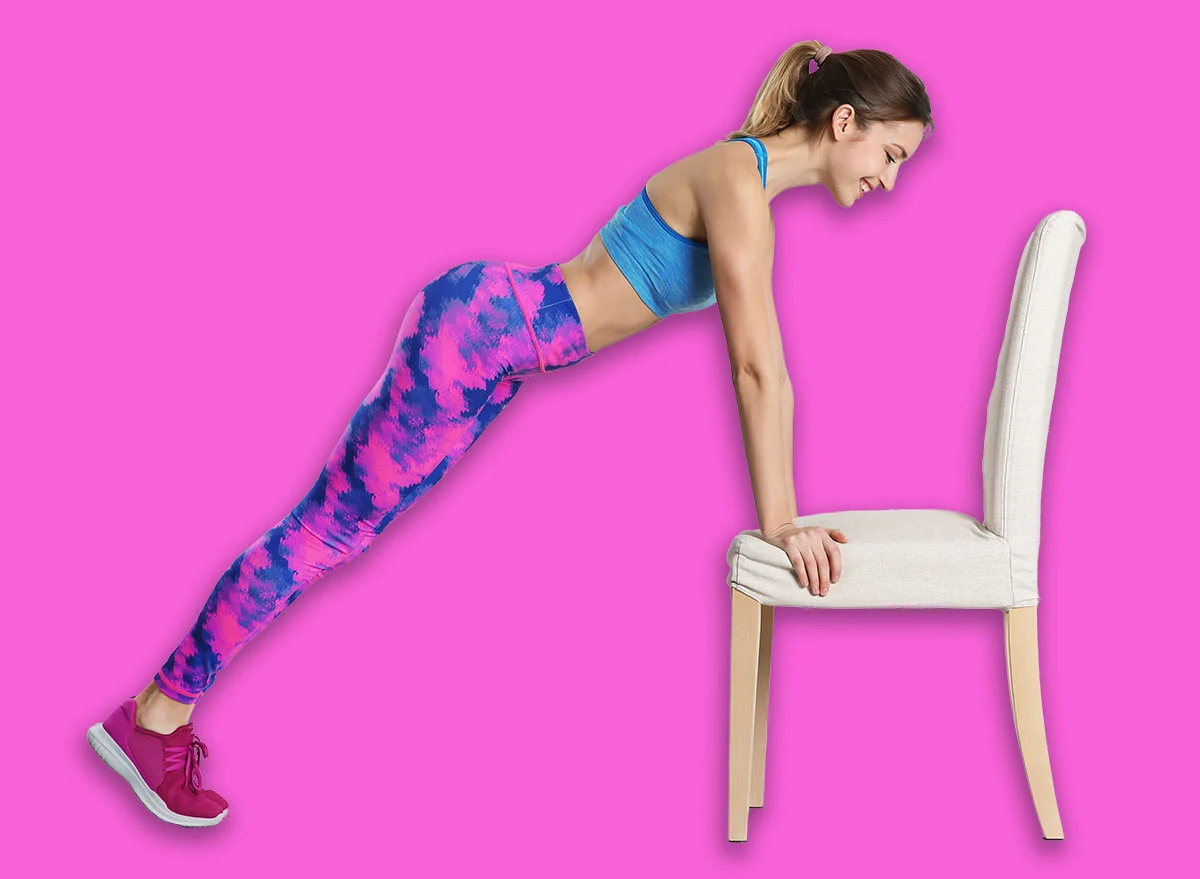
While traditional planks can be problematic, their core-engaging benefits are undeniable. The chair-assisted plank, or elevated forearm plank, offers a brilliant modification that retains these benefits while completely eliminating the strain on wrists, shoulders, and the lower back. This exercise involves placing the forearms on the seat of a sturdy chair, ensuring the elbows are directly beneath the shoulders. From this position, the individual steps their feet back, one at a time, until their body forms a straight line from head to heels, similar to a traditional plank. The core must be actively engaged, with the hips tucked slightly to maintain a neutral spine, preventing any arching or sagging.
The elevation provided by the chair significantly reduces the gravitational load on the upper body joints and the lumbar spine, allowing for a sustained hold that effectively activates the rectus abdominis (the "six-pack" muscles), the obliques, and critically, the transverse abdominis—the deep corset-like muscle vital for spinal stability. Ben Walker emphasizes that this modified approach allows individuals to experience the full engagement of all the same core muscles as a regular plank, including the lower back, but within a much safer framework. This exercise is particularly beneficial for developing isometric strength throughout the entire core, which translates into improved endurance for maintaining posture, lifting objects, and executing complex movements with greater control and reduced injury risk. It represents a powerful method to build comprehensive core strength without the typical physical barriers associated with floor-based versions.
4. Modified Mountain Climbers (Hands on Chair)
Mountain climbers are renowned for their dynamic core engagement and cardiovascular benefits, but the floor version can be challenging for older adults due to wrist pressure and spinal strain. The modified mountain climber, performed with hands on a chair, provides an accessible and effective alternative. In this variation, the individual places their hands on the seat of a sturdy chair, with arms extended and the body in an elevated plank position. From this stable base, one knee is driven towards the chest, mimicking a running motion, before returning to the starting position and alternating with the other leg.
This elevation effectively reduces the direct load on the hands and wrists, which are often susceptible to pain or injury during floor exercises. Moreover, as Ben Walker notes, the floor version of mountain climbers can impose excessive pressure on the spine, particularly for older adults with weaker opposing core and lower back muscles. By elevating the upper body, the modified version allows for a more controlled and less strenuous execution, while still delivering significant benefits. It dynamically engages the entire core, including the deep stabilizers, while also activating the hip flexors and providing a cardiovascular element if performed with briskness. This exercise improves core stability under dynamic conditions, enhances coordination, and contributes to functional strength necessary for activities requiring quick, controlled leg movements, all while prioritizing joint protection and spinal health.
In conclusion, for individuals over the age of 60, prioritizing core strength is paramount for maintaining independence, preventing falls, and enhancing overall physical well-being. While traditional floor planks may pose undue risks due to joint stress and form difficulties, the innovative application of chair-based exercises offers a compelling and superior alternative. Movements such as seated knee lifts, seated torso bends, chair-assisted planks, and modified mountain climbers provide a comprehensive core workout that is both highly effective and inherently safe. By embracing these accessible methods, seniors can cultivate a resilient core, improve functional mobility, and confidently navigate their daily lives with enhanced stability and reduced risk of injury, proving that age is no barrier to achieving significant physical fitness gains.
About the Author