
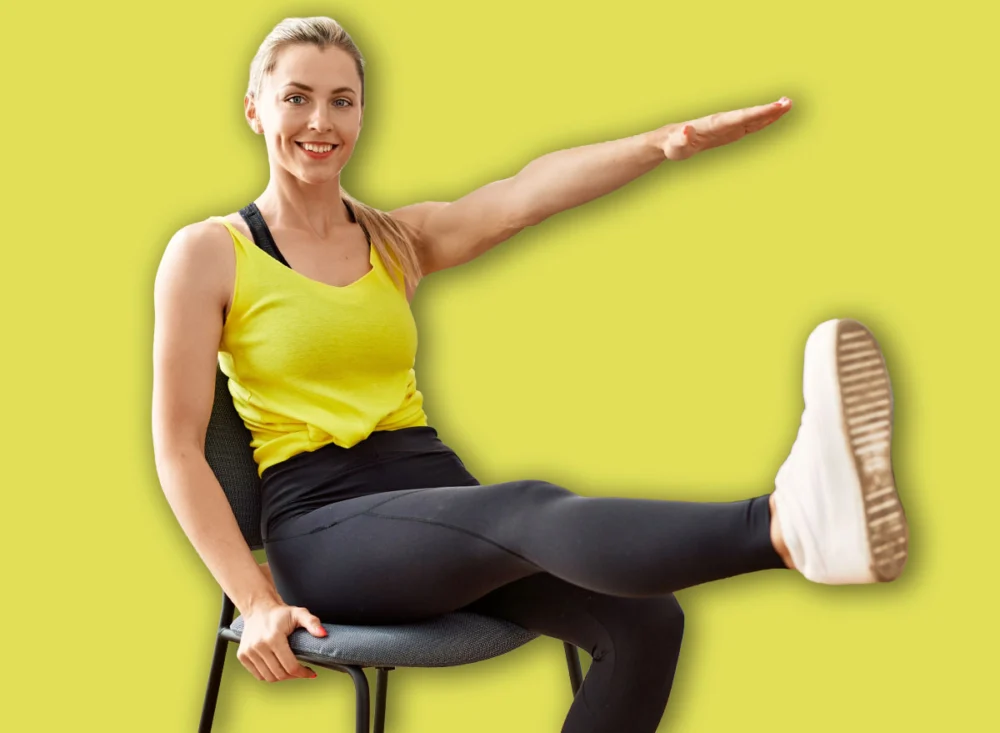
As individuals progress through their later years, maintaining robust lower body strength becomes an increasingly critical component of overall health, mobility, and independence. While many fitness enthusiasts and casual exercisers instinctively turn to widely recognized compound movements like squats for leg development, a nuanced understanding of muscular anatomy reveals that certain key muscle groups can be overlooked by such general approaches. Specifically, the adductor muscles, often referred to as the inner thighs, frequently exhibit an accelerated decline in strength and tone with age, leading to potential instability and a perceived "looseness" that many seek to address. This article delves into the unique efficacy of chair-based exercises as a superior, targeted methodology for fortifying these vital adductor muscles, particularly for those over the age of 55.
The adductor group comprises a set of five muscles situated along the inner aspect of the thigh: the adductor longus, adductor brevis, adductor magnus, pectineus, and gracilis. Collectively, their primary role is hip adduction, meaning they draw the legs inward towards the body’s midline. Beyond this fundamental action, these muscles are crucial for hip flexion, internal and external rotation, and, critically, for stabilizing the pelvis and trunk during walking, standing, and various dynamic movements. A well-conditioned adductor complex contributes significantly to balance, gait efficiency, and the structural integrity of the lower kinetic chain.
However, the natural aging process often brings about sarcopenia, an age-related loss of muscle mass and strength, which can be exacerbated by sedentary lifestyles. The adductors, perhaps due to their less prominent role in everyday activities compared to the quadriceps or glutes, often experience this weakening earlier than other major leg muscles. When these inner thigh muscles lose their capacity, individuals may notice a tangible decrease in leg stability, a greater propensity for imbalance, and a characteristic reduction in firmness around the inner thigh region. Addressing this specific muscular deficiency requires a focused approach that traditional, broad-spectrum exercises might not adequately provide.
The common perception that squats represent the pinnacle of leg strengthening, while valid for comprehensive lower body development, often misdirects attention from the adductors. Biomechanically, squats primarily engage the powerful quadriceps at the front of the thigh and the gluteal muscles at the rear. While the adductors do act as synergists, assisting in hip extension and providing some stabilization, they are not the primary movers in a typical squat pattern. Their activation during a squat is often secondary and insufficient for truly isolating and rebuilding their strength, especially when compared to the intense work performed by the quads and glutes.
Furthermore, many individuals, particularly in older demographics, may contend with pre-existing conditions such as hip mobility limitations, knee discomfort, or lower back pain. These issues can compromise the depth, form, and overall effectiveness of squats, making it challenging to achieve any significant adductor engagement without risking strain or injury. The focus shifts from muscle activation to managing joint mechanics and balance, further diminishing the potential for targeted inner thigh work. It is precisely in these scenarios that the strategic implementation of chair-based exercises reveals its profound utility.
Chair exercises offer a distinctive set of advantages that make them exceptionally well-suited for targeting the adductors. Firstly, the seated position provides inherent stability and support, eliminating the need to concurrently manage balance. This foundational support allows individuals to concentrate solely on the controlled contraction and relaxation of the target muscles, fostering a much stronger mind-muscle connection. This focused engagement is paramount for activating muscles that might otherwise remain dormant or underutilized during more complex, multi-joint movements.
Secondly, the reduced demand for balance and overall body coordination translates into lower joint stress. Knees, hips, and the lumbar spine are spared the compressive forces and dynamic loading associated with standing exercises. This makes chair-based routines accessible to a broader population, including those recovering from injury, managing chronic pain, or simply seeking a gentler, yet effective, path to strength training. The ability to perform movements slowly and deliberately from a supported position also encourages deeper muscle engagement, promoting the rebuilding of muscle tone and improving stability during crucial daily activities such as walking, ascending stairs, or simply rising from a chair.
Personal trainers with extensive experience working with clients over the age of 50 frequently observe that individuals report a more pronounced sensation of the inner thigh muscles working during these focused, seated drills than they ever do during conventional lower-body workouts. This consistent, high-quality activation is key to reversing the age-related decline in adductor strength and firmness.
Let us explore five specific chair-based exercises that expertly target the adductor muscles, fostering strength, stability, and improved tone:
1. Seated Pillow Squeeze:
This foundational exercise is remarkably effective for initiating adductor activation and teaching individuals how to properly engage these muscles. It requires no specialized equipment beyond a soft object like a pillow or a rolled towel. When performed with precision and sustained contraction, the inner thighs immediately register the effort. The act of sitting upright with correct posture during this movement also inherently engages the core muscles, reinforcing stability throughout the hips and pelvis. Clients often note unexpected fatigue in their inner thighs, a clear indication that these muscles are finally receiving the dedicated attention they require. The sustained isometric contraction not only builds strength but also improves neural pathways to these often-neglected muscles.
2. Seated Leg Extensions with Inner Thigh Focus:
While traditional leg extensions primarily strengthen the quadriceps, a simple modification can effectively recruit the adductors. By performing leg extensions from a seated position, individuals can focus on maintaining a gentle, inward squeeze of the thighs as they extend their legs forward. This deliberate co-contraction of the adductors alongside the quadriceps enhances both leg strength and inner thigh firmness. The combined effort builds endurance and power across the entire thigh, which clients frequently report translates into improved stamina and ease during walking and other ambulatory activities. This dynamic movement challenges the adductors through a controlled range of motion.
3. Seated Inner Thigh Lifts:
This movement is designed for direct, isolated engagement of the adductor muscles, surpassing the activation typically achieved during most general leg exercises. Performed while seated, the body remains fully supported, allowing the focus to remain exclusively on the inner thigh. Individuals lift one leg slightly off the floor, bringing it towards the centerline of the body in a controlled arc. This action elicits a potent contraction along the inner thigh, enhancing muscle tone and significantly improving hip stability. When executed with deliberate slowness and precision, even a limited number of repetitions can induce noticeable muscular fatigue, signifying effective training.
4. Seated Wide-Knee Press:
In contrast to inward squeezing movements, the seated wide-knee press challenges the adductors through a resistive, outward-pushing action. This exercise requires the inner thighs to actively stabilize and resist an external force, often achieved by pressing the knees outwards against a resistance band looped around the thighs, or simply by imagining pushing against an immovable object. This dynamic strengthens the adductors in a different functional plane, improving not only their contractile strength but also their capacity for hip control and stability during abduction (moving legs away from the body). This type of stabilization carries over directly to enhanced balance and fluid everyday movements.
5. Seated Heel Press:
The seated heel press integrates inner thigh activation with a broader lower body engagement, providing a powerful isometric finish to an adductor-focused routine. This exercise involves pressing the heels firmly into the floor while simultaneously maintaining a gentle, inward squeeze of the thighs. This combined action creates a strong isometric contraction within the adductor muscles, fostering improved muscle awareness and stability throughout the lower limbs. The simplicity of the movement belies its effectiveness in reinforcing consistent muscle engagement and promoting a more grounded, stable sensation in the legs.
Beyond merely improving the aesthetic appearance of the inner thighs, strengthening these often-neglected muscles offers profound functional benefits. Robust adductors contribute significantly to overall lower body stability, which is a critical factor in preventing falls, a major health concern for older adults. Strong inner thighs support proper gait mechanics, allowing for a more confident and efficient stride. They also play an indirect role in core stability and pelvic health, further enhancing overall physical well-being.
Incorporating these targeted chair exercises into a regular fitness regimen, especially for those over 55, can yield substantial improvements in strength, muscle tone, and functional mobility. The key lies in performing these movements slowly and deliberately, focusing on the muscle contraction, and maintaining steady, controlled breathing. While squats remain a valuable component of a comprehensive fitness plan, for the specific objective of firming and strengthening the inner thighs, particularly in a demographic seeking joint-friendly and highly effective solutions, chair-based adductor exercises offer a superior and highly recommended pathway to sustained vitality and independence. Always consult with a healthcare provider or certified fitness professional before embarking on any new exercise program to ensure it aligns with individual health needs and capabilities.
About the Author










