As individuals navigate the landscape of aging, maintaining physical vitality, particularly core strength and a healthy midsection, often presents unique challenges. The accumulation of adipose tissue around the abdomen, frequently termed "belly pooch," is a common concern among those over 60, not merely for aesthetic reasons but significantly due to its implications for overall health and functional independence. Conventional wisdom often directs older adults toward repetitive floor exercises like planks or crunches, yet a growing body of expert opinion, spearheaded by seasoned fitness professionals, suggests a more dynamic and integrated approach: standing core movements. These exercises, designed to engage multiple muscle groups simultaneously, offer a potent alternative, enhancing not only abdominal strength but also balance, coordination, and the ability to perform daily activities with greater ease and safety.
The physiological shifts that accompany aging contribute significantly to changes in body composition. After the age of 60, metabolic rates naturally decelerate, reducing the body’s efficiency in burning calories. Concurrently, sarcopenia, the age-related loss of muscle mass, becomes more pronounced. Since muscle tissue is metabolically more active than fat, its decline further compounds the challenge of weight management and fat reduction. Hormonal changes, such as decreased estrogen in postmenopausal women and fluctuations in testosterone for men, along with potentially elevated cortisol levels due to stress, can also predispose the body to store fat preferentially around the midsection. Furthermore, a gradual reduction in physical activity and an increase in sedentary behavior exacerbate these tendencies, creating a conducive environment for fat deposition in the abdominal region. This visceral fat, situated deep within the abdominal cavity, is particularly concerning from a health perspective, as it is metabolically active and linked to an increased risk of cardiovascular disease, type 2 diabetes, and certain cancers.
For many years, the fitness industry has emphasized isolated abdominal exercises, with planks and crunches being foundational components of core workouts. While these exercises undeniably contribute to strengthening specific core muscles, their effectiveness for older adults, particularly in addressing functional fitness and overall energy expenditure, may be limited when performed exclusively. Planks, for instance, primarily target isometric strength—the ability to hold a position against resistance—which is valuable but does not fully replicate the dynamic, multi-directional movements encountered in daily life. Crunches, on the other hand, focus on spinal flexion, which can place undue stress on the lower back if not performed with proper form, and also lack the full-body engagement necessary for significant caloric burn.
This is where the paradigm shifts towards standing exercises. Tyler Read, a certified personal trainer with extensive experience coaching adults over 60, highlights a critical distinction: standing movements inherently recruit larger muscle groups across the entire kinetic chain. This holistic engagement not only elevates the heart rate more effectively, contributing to greater caloric expenditure, but also simultaneously enhances balance, coordination, and core stability. The very act of maintaining an upright posture during exercise challenges the deep stabilizing muscles of the core in a functional context, preparing the body for real-world movements like reaching, twisting, and lifting. Unlike floor exercises, which often isolate muscles, standing routines mimic the complex, integrated movements humans perform constantly, thereby building what Read terms "functional fitness"—the practical strength and agility needed for everyday living. Clients who adopt this approach often report not just a firmer midsection but also improved posture, greater stability, and a general feeling of enhanced athleticism.
Incorporating these dynamic, standing movements into a regular fitness regimen can yield substantial benefits beyond superficial appearance. They serve as a powerful catalyst for improving cardiorespiratory health, bolstering musculoskeletal integrity, and significantly reducing the risk of falls, a critical concern for the aging population. By activating the core from various angles and planes of motion, these exercises foster a robust, resilient midsection that acts as the body’s central pillar of support.
Here are five standing exercises championed by fitness experts for their efficacy in promoting comprehensive core development and functional wellness in senior years:
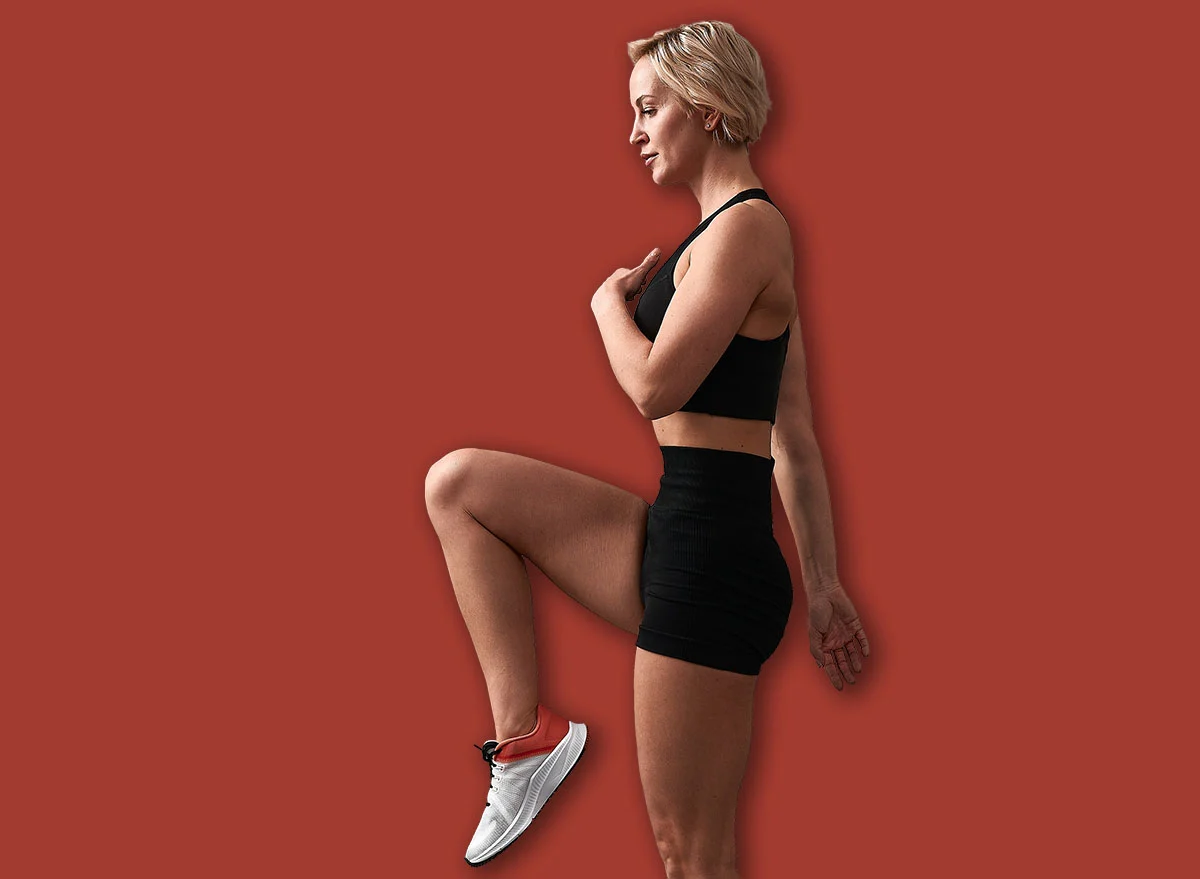
1. Standing Knee Drives
This exercise is a cornerstone for activating the core while gently elevating the heart rate, making it an excellent warm-up or active recovery movement. It closely mimics the powerful leg and arm swing of brisk walking, making it highly functional.
- Muscles Engaged: Abdominals (especially lower abs), hip flexors, glutes, quadriceps, and the stabilizing muscles of the standing leg.
- Functional Relevance: Improves walking efficiency, balance, and coordination. The alternating motion challenges proprioception and dynamic stability.
- How to Do It: Begin standing tall with feet hip-width apart, shoulders relaxed. Gently shift your weight to one leg. As you lift the opposite knee towards your chest, simultaneously drive the opposite arm forward as if marching powerfully. Focus on drawing your navel towards your spine to engage the core. Return the foot to the starting position with control and immediately repeat on the other side. Maintain a steady, rhythmic pace, aiming for controlled movement rather than speed.
2. Standing Wood Chop
Rotational strength is paramount for everyday activities like twisting to reach for something, getting in and out of a car, or carrying groceries. This exercise builds powerful, controlled rotation through the torso.
- Muscles Engaged: Obliques, rectus abdominis, shoulders, hips, glutes, and the muscles of the upper back.
- Functional Relevance: Enhances the body’s ability to twist safely and powerfully, protecting the lower back from strain during rotational tasks. Improves overall mobility.
- How to Do It: Stand with feet shoulder-width apart, knees slightly bent. Imagine holding an axe or a medicine ball with both hands. Start with your hands positioned above one shoulder (e.g., right shoulder). In a controlled, sweeping motion, "chop" diagonally across your body and down towards the opposite hip (e.g., left hip). Allow your hips and torso to rotate naturally with the movement, pivoting on your back foot as needed. Keep your core tight throughout the motion. Return to the starting position with control. Perform a set on one side before switching to the other.
3. Lateral Step with Reach
Often overlooked, side-to-side (lateral) movements are crucial for maintaining agility and preventing falls. This exercise integrates lateral stepping with an overhead reach to challenge the core and improve balance in multiple planes.
- Muscles Engaged: Obliques, hip abductors/adductors, glutes, shoulders, and the deep core stabilizers.
- Functional Relevance: Crucial for navigating uneven terrain, stepping over obstacles, and recovering from stumbles. Improves spatial awareness and lateral stability.
- How to Do It: Stand tall with feet together. Take a wide step to one side (e.g., right), bending the knee of the stepping leg while keeping the other leg relatively straight. As you step, simultaneously reach both arms overhead and slightly to the opposite side (e.g., left). Feel the stretch along your side body and the engagement of your core. Push off the stepping foot to return to the starting position. Alternate sides or complete a set on one side before switching.
4. Standing Cross-Body Punches
Deceptively simple, this exercise delivers a full-body workout that combines cardiovascular benefits with core and upper body strengthening. It hones coordination and dynamic core stability.
- Muscles Engaged: Obliques, shoulders, chest, back, and legs (for stability).
- Functional Relevance: Enhances reactive strength, coordination, and stamina. Improves upper body power and rotational control.
- How to Do It: Stand with feet slightly wider than shoulder-width apart, knees softly bent, and hands up in a guard position near your chin. Begin by rotating your torso and hips, pivoting on the ball of your back foot, as you extend one arm across your body in a punching motion (e.g., right arm punching towards the left). Ensure the power comes from your core and hips, not just your arm. Retract the punching arm quickly and with control, returning to the guard position, and immediately repeat with the opposite arm. Focus on smooth, controlled rotation rather than sheer speed.
5. Sit-to-Stand with Overhead Reach
This highly functional movement is fundamental to daily living, representing the act of getting up from a chair or bed. Adding an overhead reach amplifies core engagement and overall energy expenditure.
- Muscles Engaged: Quadriceps, hamstrings, glutes, rectus abdominis, obliques, erector spinae, and shoulders.
- Functional Relevance: Directly reinforces the ability to rise from a seated position independently and safely. Improves leg strength, balance, and spinal stability.
- How to Do It: Position a sturdy chair behind you. Begin by sitting on the edge of the chair, feet flat on the floor, hip-width apart. Lean slightly forward, engaging your core, and push through your heels to stand up fully. As you stand, simultaneously extend both arms directly overhead, reaching towards the ceiling. Hold briefly at the top, feeling the full-body engagement. With control, reverse the movement, slowly lowering back down to the chair while bringing your arms down. Ensure your core remains active throughout the descent to maintain spinal stability.
To maximize the benefits of these standing core exercises, it is imperative to integrate them within a broader framework of holistic wellness. Regular, brisk walking remains a cornerstone of cardiovascular health and overall fitness for older adults. Furthermore, nutritional choices play a pivotal role in managing body composition; a balanced diet rich in lean protein, whole grains, fruits, and vegetables supports muscle maintenance and healthy weight. Adequate hydration, sufficient sleep, and stress management techniques also contribute significantly to metabolic health and the body’s ability to recover and adapt.
Ultimately, achieving a stronger, leaner midsection after 60 extends far beyond the pursuit of a flat stomach. It signifies enhanced functional capacity, greater independence, and an improved quality of life. By embracing dynamic, standing exercises that engage the body as an integrated unit, older adults can cultivate not just physical resilience, but also a renewed sense of vitality and confidence, transforming their approach to health and fitness for years to come.
About the Author