Maintaining equilibrium and stability stands as a cornerstone of independent living, particularly as individuals progress beyond their mid-sixties. The ability to navigate varied terrains, recover from unexpected shifts, and confidently perform daily activities hinges significantly on robust balance, which regrettably often diminishes with age. This decline is not an inevitable surrender but rather a complex interplay of physiological changes, including the natural atrophy of lean muscle mass, a deceleration in reaction times, alterations within the inner ear’s vestibular system, and evolving visual acuity. Furthermore, polypharmacy—the concurrent use of multiple medications—can introduce side effects that compromise steadiness, exacerbating the risk of falls. Such incidents are not merely minor inconveniences; they represent a leading cause of injury, disability, and even mortality among older adults, often initiating a cascade of reduced mobility and diminished quality of life. Consequently, a proactive and intelligently designed exercise regimen specifically targeting balance and lower body strength becomes not just beneficial, but essential.
A common misconception conflates static balance—the ability to hold a still position—with the more crucial dynamic stability, which Dr. Melanie Wintle, a chiropractor and corrective exercise specialist with over two decades of clinical experience in rehabilitation and functional strength training, clarifies as the true objective. Dr. Wintle emphasizes, "Stability is your ability to stay upright and catch yourself if something shifts unexpectedly, such as walking on an uneven surface, icy conditions, or maneuvering around obstacles or stairs." These real-world scenarios demand not only joint resilience but also explosive power, enabling rapid corrective movements to avert a misstep from escalating into a dangerous fall. Recognizing this distinction is paramount in designing effective interventions.
While many fitness routines champion exercises like lunges for lower body development, Dr. Wintle cautions against their inclusion for older adults, particularly those new to exercise or already grappling with balance or mobility challenges. Forward lunges, in particular, demand a substantial range of motion in the ankle and knee, significant lower body strength, and the power to propel oneself back to a standing position. For someone whose balance mechanisms are already compromised, attempting such a complex, multi-joint movement can be counterproductive, increasing the risk of instability rather than improving it. Instead, the focus should shift to foundational movements that progressively build the necessary strength, coordination, and proprioceptive awareness without undue risk. The goal is to fortify the body’s intrinsic ability to react and stabilize, fostering confidence and reducing the propensity for falls through accessible, functional exercises.
A tailored morning routine, executable within the comfort of one’s home, can offer significant advantages in this pursuit. The following five exercises, recommended by Dr. Wintle, are designed to enhance balance more effectively and safely than traditional lunges for the over-65 demographic, by addressing key physiological components of stability.
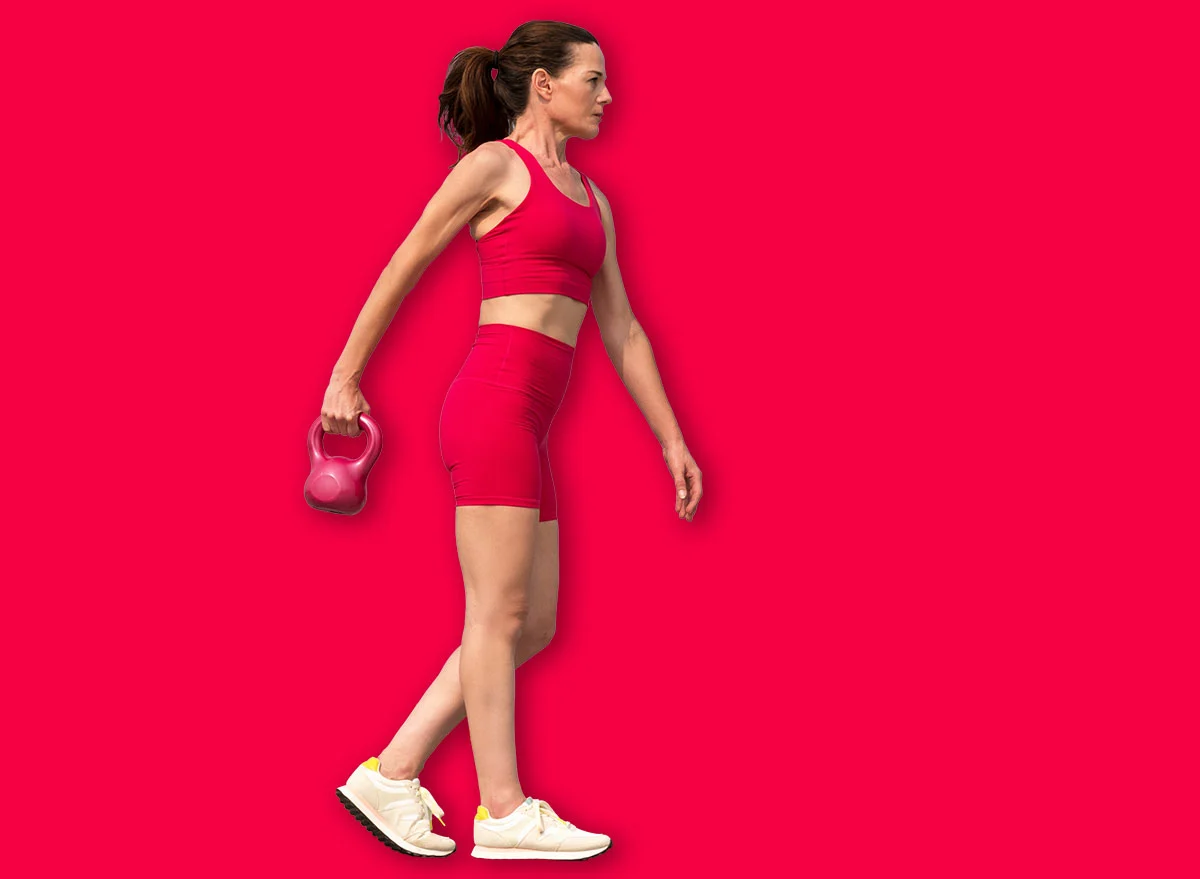
1. Unilateral Loaded Carries (Single-Arm Farmer’s Carry)
The Single-Arm Farmer’s Carry transcends a simple strength exercise; it is a profound lesson in core stability and anti-rotational strength, directly translating to improved functional balance. When an individual walks with a heavy object in one hand, their body is immediately thrown off its natural center of gravity. To counteract this asymmetrical load, the deep core muscles—including the obliques, transversus abdominis, and quadratus lumborum—must engage powerfully to prevent the trunk from rotating or laterally flexing towards the weighted side. This active resistance against twisting (anti-rotation) and side-bending (anti-lateral flexion) is precisely what builds dynamic core stability. As Dr. Wintle explains, this movement mimics everyday activities such as carrying groceries, a briefcase, or a suitcase, making it highly functional. By forcing the body to constantly adjust and stabilize, it trains the neurological pathways responsible for maintaining upright posture under dynamic, real-world conditions. Progression can involve increasing the weight, duration, or distance carried, or even navigating around obstacles to further challenge the body’s adaptive responses.
2. Progressive Single-Leg Stance Drills (Marching in Place to Single-Leg Squats)
This exercise sequence seamlessly integrates marching in place with controlled single-leg squats, creating a dynamic functional movement pattern crucial for daily activities. Marching in place inherently requires shifting weight from one leg to the other, momentarily placing the entire body’s weight on a single limb. This fundamental action is amplified by transitioning into a single-leg squat, which demands greater hip, knee, and ankle stability. Dr. Wintle highlights its relevance to actions like climbing stairs, stepping onto a bus, or navigating uneven curbs. These are moments where the body must efficiently absorb impact and maintain control on one leg. By practicing this controlled weight transfer and unilateral loading, individuals develop the proprioceptive awareness—the body’s sense of its position in space—and the muscular endurance necessary to manage such transitions safely. Modifying the depth of the squat or holding onto a stable support initially can make this exercise accessible, gradually increasing the challenge as stability improves.
3. Posterior Chain Activation (Glute Bridge)
The Glute Bridge is a foundational exercise that directly targets the gluteal muscles, which are central to overall stability and power. These powerful muscles form a significant part of the "posterior chain"—the group of muscles on the backside of the body—and are critical for stabilizing the pelvic girdle and hips during both standing and walking. Strong glutes provide the necessary thrust for forward propulsion, but equally important, they are instrumental in deceleration and "braking" movements. As Dr. Wintle points out, they are the muscles that help you catch yourself if you misstep or lose balance, particularly when walking downhill or encountering an unexpected obstacle. By strengthening the glutes, individuals improve their gait mechanics, reduce strain on the lower back, and enhance their ability to recover from unexpected balance disturbances. This exercise is also excellent for improving hip extension, which often becomes limited with prolonged sitting.
4. Ankle and Foot Proprioception (Standing Calf Raises)
The feet and ankles serve as the body’s primary contact points with the ground, making their strength, flexibility, and proprioceptive capabilities indispensable for balance. As the "first responders" to any shift in the body’s center of gravity, the foot and ankle joints provide crucial sensory feedback to the brain about ground conditions and body position. Standing Calf Raises specifically target the calf muscles, which are vital for pushing off during walking and for maintaining stability on varied surfaces. Dr. Wintle emphasizes their role in proprioceptive awareness. To elevate the challenge and further enhance dynamic stability and spatial awareness, she suggests incorporating small arm circles or performing the exercise with eyes closed. Closing the eyes removes visual input, forcing the vestibular system (inner ear) and proprioceptors to work harder, thereby sharpening the body’s internal sense of balance. Arm circles introduce an upper body perturbation, requiring the core and lower body to stabilize against additional movement, mirroring the complexities of real-life balance demands.
5. Hip Stabilizer Engagement (Standing Leg Raises)
Standing Leg Raises specifically target the glutes and other crucial hip stabilizing muscles, such as the hip abductors and adductors. These muscles are essential for maintaining pelvic alignment and preventing excessive lateral sway when weight is shifted onto a single leg, which occurs with every step taken during walking, climbing stairs, or simply standing. Dr. Wintle explains that these muscles are "essential for staying steady when your weight shifts onto one leg." By strengthening these often-underutilized muscles, individuals can significantly improve their ability to maintain a stable posture during gait, reducing the risk of lateral falls. Incorporating leg raises in various planes—forward (hip flexion), to the side (hip abduction), and backward (hip extension)—ensures comprehensive strengthening of the muscles that support the hip joint, leading to a more stable and confident stride.
The cumulative effect of consistently engaging in these targeted exercises extends far beyond mere physical conditioning. It represents an investment in long-term health, independence, and an enhanced quality of life. By prioritizing functional movements that directly address the multifaceted nature of balance, older adults can proactively mitigate the risks associated with falls, fostering a greater sense of confidence and autonomy in their daily routines. It is always prudent, however, to consult with a healthcare professional or a certified exercise specialist before commencing any new exercise program, particularly for individuals with pre-existing health conditions or mobility concerns, to ensure the routine is safe and appropriately tailored to individual needs. Embracing this proactive approach to physical well-being is a powerful step towards a more stable, active, and fulfilling later life.
About the Author