
A groundbreaking therapeutic strategy developed by scientists at Oregon State University has demonstrated a remarkable improvement in extending survival rates for glioblastoma, a particularly virulent and challenging form of brain cancer, in preclinical murine models. This aggressive malignancy, characterized by rapid proliferation and widespread infiltration of brain tissue, has historically presented formidable obstacles to effective treatment, with less than 30% of diagnosed patients surviving beyond two years.
The research, spearheaded by a dedicated team from the OSU College of Pharmacy including Oleh Taratula, Olena Taratula, and Yoon Tae Goo, directly addresses two critical impediments that have persistently undermined therapeutic success against glioblastoma. Firstly, any potential treatment must possess the capability to traverse the blood-brain barrier (BBB), a highly selective physiological defense mechanism that rigorously governs the passage of substances from the systemic circulation into the delicate environment of the central nervous system. Secondly, the therapeutic agent must exhibit a high degree of specificity, ensuring its accumulation and action within cancerous cells while minimizing collateral damage to surrounding healthy neural tissue.
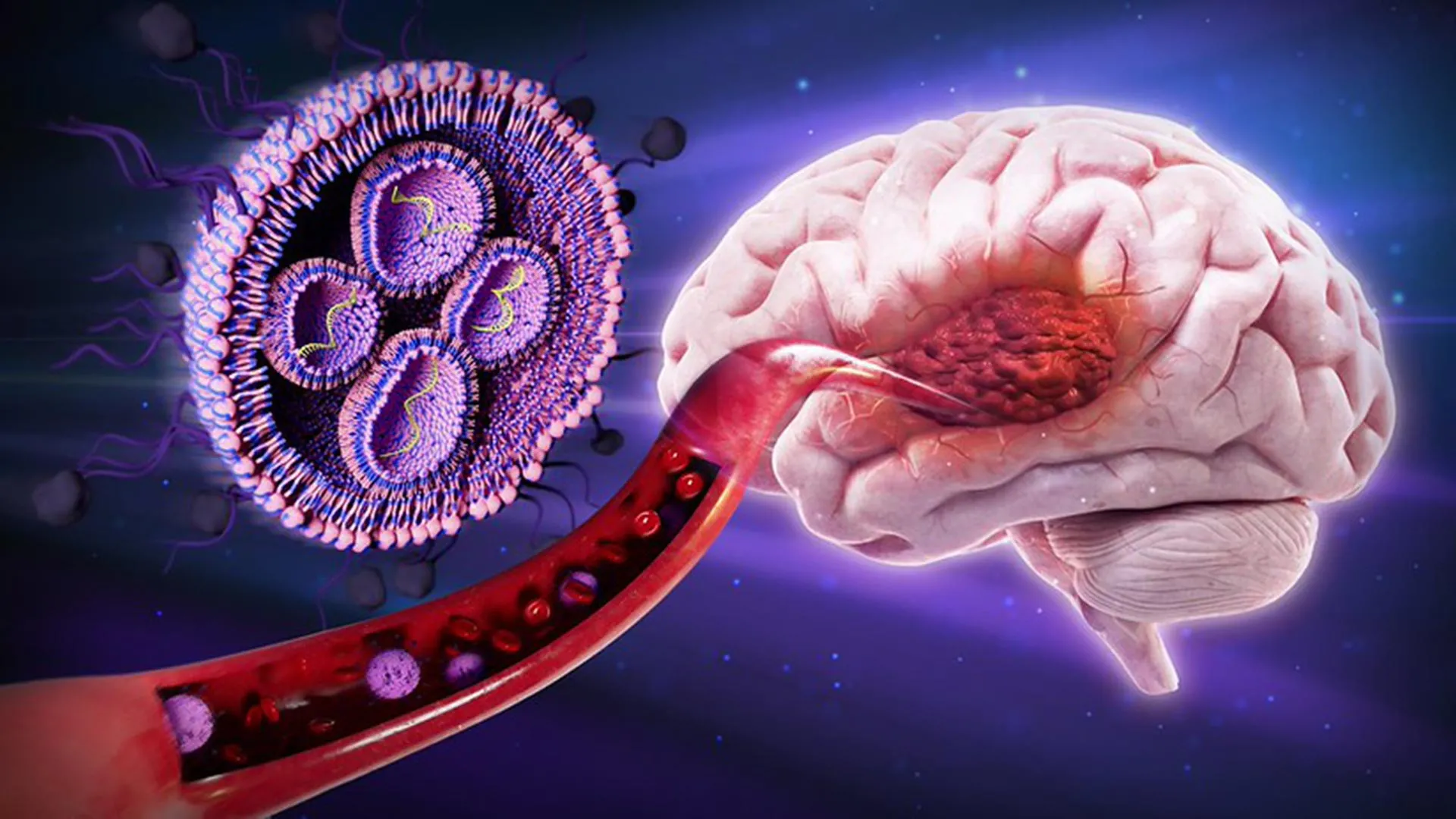
At the heart of this innovative approach lies the utilization of lipid nanoparticles, meticulously engineered to encapsulate genetic material with the specific objective of re-establishing the body’s inherent capacity to inhibit tumorous growth. A pivotal advancement in this strategy is the incorporation of a unique sugar-based exterior coating. This modification serves a dual purpose: facilitating the nanoparticles’ passage across the formidable blood-brain barrier and enabling their preferential concentration within the confines of the tumorous mass.
The findings, meticulously documented and published in the esteemed Journal of Controlled Release, reveal a profound impact on survival metrics. In the investigated mouse model, this novel therapeutic intervention led to a remarkable 50% increase in the median survival time for subjects afflicted with glioblastoma.
The specific carbohydrate employed for the nanoparticle’s outer shell is mannose, a monosaccharide closely analogous to glucose, which serves as the primary fuel source for cellular metabolism throughout the body. The endothelial cells that form the inner lining of cerebral blood vessels are equipped with specialized molecular transporters, notably Glucose Transporter 1 (GLUT1). These transporters are principally responsible for facilitating the uptake of glucose into the brain. Crucially, GLUT1 exhibits a capacity to recognize and bind to mannose as well, thereby providing the sugar-coated nanoparticles with a biochemical key to unlock and utilize the same endogenous pathway for crossing the blood-brain barrier.
Oleh Taratula elaborated on the competitive landscape for GLUT1 engagement, explaining that "the bloodstream contains relatively high concentrations of glucose, and that’s what the nanoparticles are competing against for GLUT1’s attention." He further emphasized the critical importance of the nanoparticle’s surface architecture, stating, "For the nanoparticles to get it, they need a densely coated sugar surface, and that’s our central innovation. By chemically connecting mannose to cholesterol, a major structural component of the nanoparticles, we improved surface coverage sixfold." This enhanced surface density of mannose is instrumental in outcompeting the abundant glucose for binding sites on GLUT1, thereby maximizing nanoparticle entry into the brain.
Beyond their ability to penetrate the central nervous system, these sophisticated nanoparticles are engineered to serve as potent carriers of therapeutic genetic payloads. Specifically, they deliver messenger RNA (mRNA) sequences designed to instruct cells to produce PTEN, a crucial protein that plays a vital role in regulating cellular proliferation and preventing the uncontrolled growth characteristic of malignant tumors. PTEN is frequently found to be deficient or functionally impaired in glioblastoma cells, contributing significantly to the disease’s aggressive progression.
To safeguard the integrity of the mRNA cargo from enzymatic degradation before reaching its intended cellular destination, the researchers incorporated a positively charged cholesterol derivative. This component acts as a molecular anchor, ensuring that the delicate genetic material remains securely encapsulated and protected within the nanoparticle’s core throughout its journey.
A significant aspect of this therapeutic design exploits a metabolic anomaly prevalent in glioblastoma cells. These cancerous cells exhibit an exaggerated reliance on glucose metabolism, leading to an overproduction of GLUT1 transporters. This elevated expression of GLUT1 on the surface of glioblastoma cells creates a preferential target for the mannose-coated nanoparticles. Consequently, once the nanoparticles have successfully navigated the blood-brain barrier, they demonstrate a pronounced tendency to accumulate within tumorous tissues, thereby concentrating the therapeutic payload precisely where it is most needed.
Olena Taratula highlighted this selective accumulation, noting, "Glioblastoma is metabolically reprogrammed and expresses GLUT1 at three times the levels of normal brain tissue, so the particles preferentially accumulate in tumor tissue after crossing the blood-brain barrier." She further underscored the functional outcome of this targeted delivery: "And restoring PTEN expression in tumor cells reinstates growth control. Across repeated dosing, tumor shrinkage occurred without any measurable organ toxicity." This observation is particularly encouraging, suggesting a favorable safety profile for the therapeutic approach.
Glioblastoma represents a devastating neurological malignancy with a grim prognosis. In the United States, the incidence rate is approximately 3.19 cases per 100,000 individuals. The disease disproportionately affects males compared to females, with the median age at diagnosis falling around 64 years. The overwhelming majority of patients, exceeding 95%, succumb to the disease within five years of their initial diagnosis, underscoring the urgent need for more effective treatment modalities.
The collaborative effort behind this research involved significant contributions from Vincent Cataldi, Vladislav Grigoriev, Neera Yadav, Tetiana Korzun, Chao Wang, and Adam Alani, all affiliated with the College of Pharmacy at Oregon State University. This pioneering work received crucial financial backing from esteemed institutions, including the National Cancer Institute of the National Institutes of Health, the Eunice Kennedy Shriver National Child Health and Human Development, and the National Research Foundation of Korea, demonstrating broad support for its potential to address a critical unmet medical need.
About the Author












