
Scientists at Oregon State University have unveiled a groundbreaking therapeutic strategy that has demonstrated a remarkable increase in survival times for animals afflicted with glioblastoma, the most formidable and rapidly progressing form of brain cancer. This aggressive malignancy currently presents a grim prognosis, with fewer than 30% of diagnosed patients surviving beyond a two-year period. The pioneering work, spearheaded by a dedicated research team within OSU’s College of Pharmacy, including Oleh Taratula, Olena Taratula, and Yoon Tae Goo, directly confronts two persistent and formidable obstacles that have historically hampered effective glioblastoma treatment: the formidable blood-brain barrier and the imperative of precise drug delivery to tumor sites without collateral damage to healthy brain tissue.
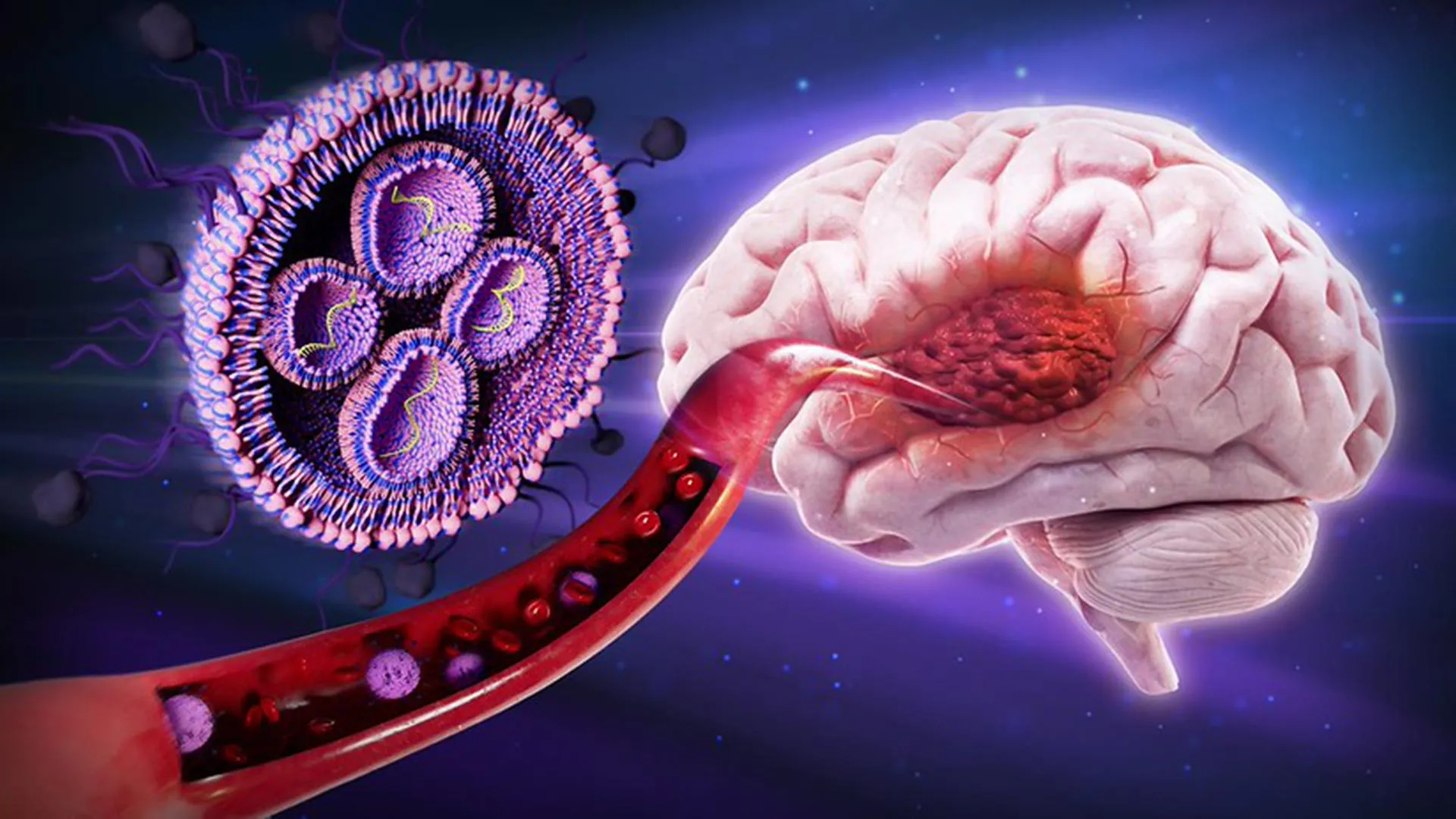
At the heart of this innovative approach lies the development of lipid nanoparticles, meticulously engineered to ferry therapeutic genetic material across the protective blood-brain barrier and concentrate within malignant growths. These sophisticated nanocarriers are adorned with a unique sugar coating, a critical feature enabling their passage into the brain and their preferential accumulation within tumorous regions. In controlled experiments utilizing a mouse model engineered to exhibit glioblastoma, this sugar-coated nanoparticle system was tasked with delivering genetic instructions designed to reawaken the body’s intrinsic mechanisms for suppressing tumor proliferation.
The published findings, appearing in the esteemed Journal of Controlled Release, articulate a significant triumph for this novel methodology, revealing a substantial 50% augmentation in the median survival duration for mice bearing glioblastoma. This represents a significant leap forward in the quest for more effective glioblastoma therapies.
The specific sugar component employed in the nanoparticle’s outer shell is mannose, a monosaccharide closely allied with glucose, the primary fuel source for cellular energy within the body. The inner lining of blood vessels within the brain is characterized by specialized structures known as transporters, with GLUT1 being a prime example. This transporter typically facilitates the influx of glucose from the bloodstream into the central nervous system. Crucially, GLUT1 also possesses the capacity to recognize and bind with mannose. This shared affinity serves as a sophisticated biological key, permitting the mannose-coated nanoparticles to leverage the same established vascular pathway to traverse the otherwise impenetrable blood-brain barrier.
Oleh Taratula explained the intricate competitive landscape for this critical transporter: "The bloodstream harbors relatively substantial concentrations of glucose, and this presents a competitive challenge for the nanoparticles vying for GLUT1’s attention. For the nanoparticles to successfully engage and utilize this pathway, they necessitate an exceptionally dense coating of sugar molecules on their surface – this is the core of our innovation. By chemically conjugating mannose to cholesterol, a fundamental structural element of these nanoparticles, we achieved a sixfold enhancement in surface coverage, significantly increasing their affinity for the GLUT1 transporter."
The therapeutic payload contained within these advanced nanoparticles is messenger RNA (mRNA), a nucleic acid molecule that carries genetic instructions from DNA to the cell’s protein-making machinery. In this instance, the mRNA is programmed to direct cells to synthesize PTEN, a critical protein known for its role in inhibiting uncontrolled cellular proliferation and maintaining cell cycle regulation. Glioblastoma cells frequently exhibit a deficiency or inactivation of PTEN, contributing significantly to their aggressive growth patterns.
To safeguard the delicate mRNA cargo from enzymatic degradation before it could reach its intended cellular targets, the researchers incorporated a positively charged cholesterol derivative. This ingenious addition acts as a molecular anchor, helping to maintain the structural integrity of the mRNA and ensuring its secure encapsulation within the lipid nanoparticle.
A further layer of targeting specificity is achieved by the unique metabolic characteristics of glioblastoma cells themselves. These cancerous cells exhibit an elevated expression of the GLUT1 transporter, often at levels three times higher than that observed in healthy brain tissue. This metabolic reprogramming means that once the sugar-coated particles successfully navigate the blood-brain barrier, they are disproportionately drawn to and accumulate within the tumorous microenvironment.
"Glioblastoma cells undergo significant metabolic alterations, leading them to express GLUT1 at considerably higher concentrations compared to normal brain tissue," elucidated Olena Taratula. "Consequently, the particles exhibit a preferential accumulation within the tumor tissue after successfully crossing the blood-brain barrier. Furthermore, by restoring PTEN expression within the tumor cells, we effectively reinstate crucial growth control mechanisms. Across multiple administrations of the therapeutic, we observed significant tumor shrinkage without any detectable signs of toxicity in vital organs."
Glioblastoma remains a devastating diagnosis, impacting approximately 3.19 individuals per 100,000 population in the United States. The disease exhibits a slightly higher incidence in males compared to females, with the median age at diagnosis being 64 years. The prognosis is stark, with over 95% of patients succumbing to the disease within five years of their initial diagnosis. The development of effective treatments that can overcome the inherent challenges of targeting brain tumors has been a long-standing priority in oncology.
The collaborative effort contributing to this significant research included the expertise of Vincent Cataldi, Vladislav Grigoriev, Neera Yadav, Tetiana Korzun, Chao Wang, and Adam Alani, all affiliated with the College of Pharmacy at Oregon State University. Financial support for this groundbreaking research was generously provided by the National Cancer Institute, a part of the National Institutes of Health, the Eunice Kennedy Shriver National Child Health and Human Development, and the National Research Foundation of Korea, underscoring the broad recognition of the importance and potential of this work. This advancement offers a beacon of hope for future therapeutic interventions against one of medicine’s most challenging adversaries.
About the Author












