
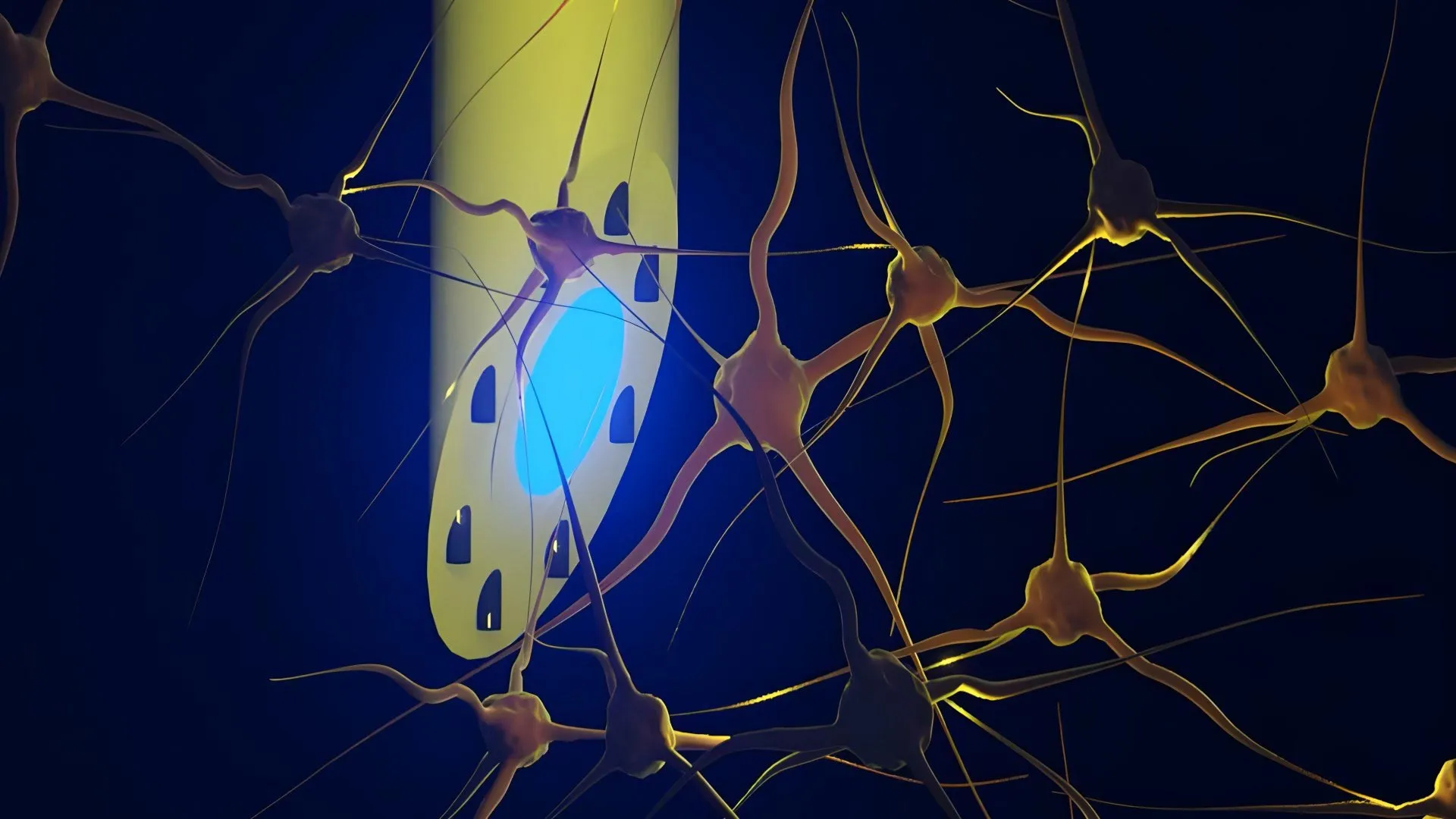
A groundbreaking advancement in neurotechnology promises to unlock unprecedented insights into brain function and potentially pave the way for more targeted therapeutic interventions for neurological disorders. Researchers from a consortium including the Technical University of Denmark (DTU), the University of Copenhagen, and University College London have engineered a sophisticated, needle-thin neural implant capable of performing multiple critical functions simultaneously within the delicate brain environment. This innovative device, christened the microfluidic Axialtrode (mAxialtrode), distinguishes itself by incorporating microscopic channels along its entire length, enabling distributed points of interaction with brain tissue.
The core innovation of the mAxialtrode lies in its capacity to serve as a multifaceted tool for neuroscientific exploration. For the immediate future, its primary role is envisioned as an advanced research instrument. Scientists can leverage its unique architecture to meticulously trace the intricate pathways of neural signal transmission across various brain layers. This capability is particularly valuable for understanding complex processes implicated in conditions such as epilepsy, where abnormal electrical activity can cascade through different neural networks. Furthermore, the device’s distributed functionality will allow for more nuanced investigations into the neural underpinnings of memory formation and the intricate decision-making processes that govern behavior.
The journal Advanced Science recently featured the comprehensive findings detailing the development and capabilities of this pioneering technology. The research team highlights that the mAxialtrode is not merely an incremental improvement but a significant leap forward, moving beyond the limitations of conventional brain interfaces.
Looking towards the horizon of clinical application, the researchers foresee substantial therapeutic potential for the mAxialtrode. The ability to precisely deliver pharmacological agents to specific neural loci while simultaneously applying localized electrical or optical stimulation offers a powerful new paradigm for treating brain disorders. This integrated approach could allow for highly personalized and effective interventions, minimizing off-target effects and maximizing therapeutic efficacy.
Associate Professor Christos Markos, who co-developed the mAxialtrode concept with Postdoc Kunyang Sui, emphasizes the strategic advantage of consolidating multiple functionalities within a single implant. This integration not only streamlines experimental procedures, reducing the complexity and invasiveness associated with deploying multiple separate devices, but also enables researchers to conduct more precise and comprehensive experiments. The simultaneous recording of neural activity and targeted delivery of substances or stimulation at different depths within the brain provides a holistic view of neural circuit dynamics.
A significant departure from prevalent brain implants, which often rely on rigid materials like silicon, the mAxialtrode addresses a critical challenge in neural interfacing: biocompatibility. Traditional silicon-based implants, while effective for recording, can elicit inflammatory responses and cause mechanical irritation to the sensitive brain tissue due to their inherent stiffness. In contrast, the mAxialtrode is constructed from pliable, plastic-like optical fibers. Its specially engineered, angled tip further contributes to its minimal invasiveness, reducing tissue trauma during implantation. This inherent flexibility allows the device to adapt to the natural movements of brain tissue, thereby mitigating the risk of chronic inflammation and long-term tissue damage.
While the potential for clinical translation is considerable, Kunyang Sui prudently notes that the technology remains in its nascent stages and is not yet ready for widespread clinical adoption. A rigorous and extensive development pipeline, encompassing comprehensive preclinical testing, further technological refinement, and stringent regulatory approvals, will be necessary before the mAxialtrode can be considered for patient care.
The innovation of the mAxialtrode is particularly relevant when considering the limitations of existing tools, especially in the field of optogenetics. Current optogenetic experiments often employ conventional, flat-ended optical fibers. These fibers, typically made of glass or plastic, are capable of delivering light to deep brain structures, enabling researchers to activate genetically modified neurons using light. However, their primary interaction with brain tissue is confined to the distal tip, or the "nose" of the fiber. This singular point of contact means that stimulation or recording can only occur at one specific location at a time. Consequently, even when investigating brain functions that inherently involve complex communication across multiple layers and deeper brain regions, researchers are often restricted to observing or influencing a single neural plane. This limitation can hinder a comprehensive understanding of distributed neural processing.
The fabrication process of the mAxialtrode underscores its sophisticated engineering. It begins with a larger polymer rod, which is then subjected to a precisely controlled heating and drawing process. This meticulous technique transforms the raw material into an exceptionally fine fiber, akin to the delicate artistry of creating spun sugar, but with an advanced level of scientific precision.
Embedded within the core of this ultra-fine fiber is a light-conducting pathway. Encircling this central lumen are eight microscopic channels, meticulously designed to transport fluids. These channels are not only capable of delivering therapeutic agents or flushing the local environment but can also house exceptionally thin metallic wires. These integrated wires are crucial for the electrophysiological aspect of the device, enabling the measurement of electrical activity within the brain.
The resulting mAxialtrode is remarkably diminutive, measuring less than half a millimeter in diameter. Its construction endows it with a high degree of flexibility, a critical attribute for minimizing mechanical stress on neural tissue. This flexibility is paramount, as rigid implants can provoke adverse inflammatory reactions when left in situ for extended periods, potentially compromising both the integrity of the implant and the health of the surrounding brain.
To validate its functionality and biocompatibility, the mAxialtrode underwent rigorous testing not only in controlled laboratory settings but also in vivo, within living animal models. These experiments involved implanting the electrode into the brains of mice and connecting it to external systems for light delivery, neural signal recording, and precise fluid administration via miniature pumps.
The results of these in vivo trials were highly encouraging. The mAxialtrode successfully demonstrated its ability to stimulate nerve cells using both blue and red light wavelengths, consistent with optogenetic principles. Simultaneously, researchers were able to capture electrical activity originating from distinct neural depths, encompassing both superficial cortical areas and deeper structures such as the hippocampus. Furthermore, the device facilitated the targeted injection of different substances at separate depths, with delivery points spaced as close as three millimeters apart. All these complex operations—light stimulation, electrical recording, and multi-point fluid delivery—were accomplished using a single, lightweight fiber. The mice exhibited no apparent signs of distress or discomfort while carrying the implanted device, underscoring its minimal invasiveness.
The collaborative efforts of Associate Professor Rune W. Berg from the University of Copenhagen and Associate Professor Rob C. Wykes from University College London were instrumental in the neurophysiological validation and in vivo experimentation. Their expertise in analyzing neural circuits and developing models relevant to neurological conditions, particularly epilepsy, provided critical insights that guided the research and interpretation of the findings.
The research team is actively pursuing intellectual property protection for the mAxialtrode technology, signaling their commitment to its future development and potential commercialization. Concurrently, they are diligently investigating the necessary steps and requirements for initiating clinical trials, aiming to translate this promising research breakthrough into a tangible benefit for patients suffering from debilitating neurological conditions.
About the Author












