
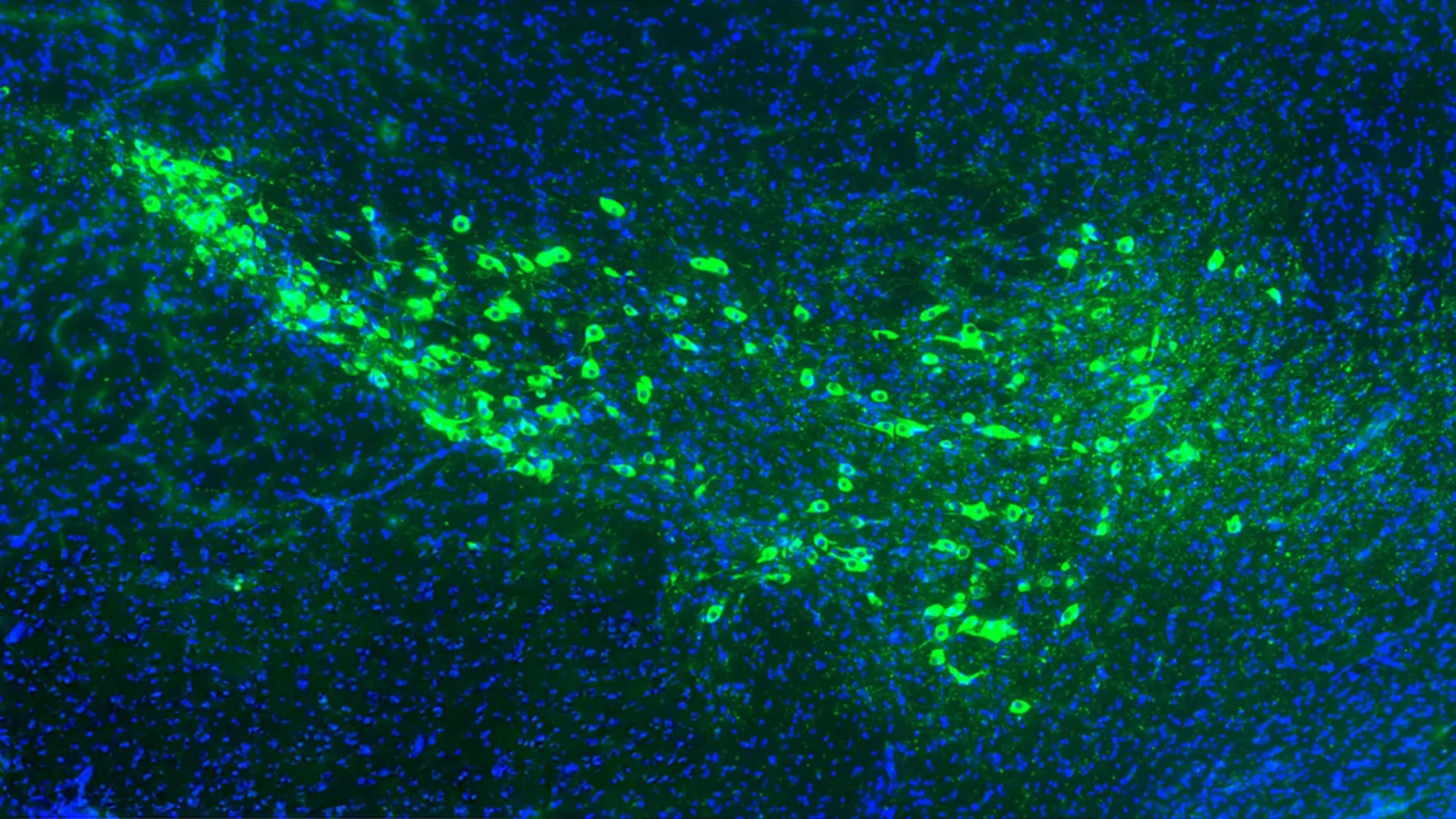
A groundbreaking investigation by researchers at Yale School of Medicine (YSM) has illuminated a critical mechanism by which Parkinson’s disease may propagate through the intricate circuitry of the brain. The findings suggest that the disease’s relentless advance could be significantly influenced by the interaction of specific proteins situated on the outer membranes of motor neurons, potentially paving the way for therapeutic interventions aimed at arresting or decelerating its progression, rather than merely alleviating its debilitating symptoms.
Parkinson’s disease is characterized by a progressive degeneration and eventual demise of neural cells, primarily affecting motor control. A hallmark pathological feature of this condition is the aberrant accumulation of a misfolded protein known as alpha-synuclein. This misfolded protein is believed to be inherently toxic, and its capacity to migrate from compromised neurons to healthy ones is a principal driver of the escalating severity of clinical manifestations over time. For a considerable period, the precise molecular pathways enabling alpha-synuclein to infiltrate previously unaffected neurons after its release from dying cells remained an enigma. However, recent scholarly work, published in the esteemed journal Nature Communications, has identified two key cell surface proteins, specifically mGluR4 and NPDC1, as pivotal facilitators that actively assist in the translocation of this misfolded protein into adjacent healthy brain cells.
The scientific community has long recognized the profound implications of alpha-synuclein’s aberrant folding and aggregation. Senior author of the study, Dr. Stephen Strittmatter, who holds the Vincent Coates Professorship of Neurology and chairs the Department of Neuroscience at YSM, articulated that these newly uncovered insights hold substantial promise for developing more effective strategies to confront Parkinson’s disease. Dr. Strittmatter underscored that misfolded alpha-synuclein represents "the pathologic hallmark of Parkinson’s disease." He further elaborated, stating that a comprehensive understanding of "how it gets into neurons" is a fundamental prerequisite for developing interventions that could potentially "block or slow down the progression of the disease." Consequently, the focus has shifted towards unraveling the intricate molecular choreography that governs its intercellular dissemination.
The relentless increase in neurodegenerative disorders, including Parkinson’s and Alzheimer’s diseases, presents an escalating public health imperative across the United States. Data from the Parkinson’s Foundation indicates that approximately 1.1 million Americans are currently living with Parkinson’s disease, with an alarming nearly 90,000 new diagnoses occurring annually. The disease typically manifests with a constellation of motor impairments, encompassing tremors, compromised balance, and a noticeable reduction in the speed of movement. These symptoms arise as misfolded alpha-synuclein progressively accumulates within motor neurons. As this pathological protein continues its spread to an ever-wider network of neurons, the disease’s debilitating impact intensifies.
Prior to this investigation, researchers hypothesized that alpha-synuclein might gain entry into healthy cells by binding to specific protein receptors present on the neuronal cell surface. To systematically explore this hypothesis, Dr. Strittmatter and his dedicated research team embarked on an extensive screening process. They engineered approximately 4,400 distinct cell cultures, with each culture being designed to express a unique surface protein. The objective was to rigorously assess whether misfolded alpha-synuclein would exhibit any affinity or binding interaction with these diverse surface proteins.
The overwhelming majority of the tested cell cultures demonstrated no discernible interaction with the misfolded protein. However, a critical subset of 16 surface proteins was found to bind to the toxic alpha-synuclein. Among this select group were mGluR4 and NPDC1, proteins notably abundant on dopaminergic neurons, the very cell type predominantly affected in the substantia nigra, the brain region most severely impacted by Parkinson’s disease pathology. Through meticulous experimentation, the research team conclusively demonstrated that these identified proteins actively facilitated the transport of misfolded alpha-synuclein into the cells.
Building upon this pivotal discovery, the researchers then turned their attention to investigating whether these identified proteins played a direct role in mediating the transfer of alpha-synuclein from one neuron to another. To this end, they employed sophisticated genetic engineering techniques to create mouse models in which either the mGluR4 or NPDC1 gene was rendered non-functional. These genetically modified mice were subsequently exposed to misfolded alpha-synuclein.
The outcomes of this experimental phase were highly revealing. In the control group of normal mice, exposure to misfolded alpha-synuclein resulted in the development of significant protein accumulations within their brains, mirroring the pathological changes observed in Parkinson’s disease, and consequently, they exhibited Parkinson’s-like symptoms. In stark contrast, the mice engineered to lack functional mGluR4 or NPDC1 proteins did not develop these pathological hallmarks or display comparable symptomology. Further reinforcing these findings, a separate experimental model designed to mimic Parkinson’s disease progression in mice revealed that the genetic ablation of either mGluR4 or NPDC1 led to a notable reduction in symptom severity and a decreased risk of mortality. These combined observations strongly suggest that mGluR4 and NPDC1 function synergistically as crucial conduits for the cellular uptake of misfolded alpha-synuclein into neurons, at least within the context of these murine models.
Dr. Strittmatter emphasized that this newly elucidated mechanism represents a highly promising therapeutic target for future drug development efforts. He noted that current therapeutic strategies for Parkinson’s disease primarily focus on managing the observable symptoms and offer limited efficacy in significantly retarding the underlying disease process. The prospect of developing interventions that can effectively block the intercellular propagation of misfolded alpha-synuclein between neurons opens up a potential avenue for slowing, or even halting, the inexorable march of Parkinson’s disease.
The imperative for developing therapies capable of disease modification is poised to intensify in the coming years. Parkinson’s disease and other neurodegenerative conditions disproportionately affect older adults. Projections indicate a substantial increase in the population aged 65 and above in the United States over the next several decades, consequently expanding the demographic at heightened risk for these devastating illnesses. Dr. Strittmatter concluded by stating, "We have an aging population. How we can stop or slow neurons from dying is an enormous problem." He underscored the critical timeliness of this research, asserting, "This is really the time to make some inroads into figuring out how to slow it down."
About the Author












