
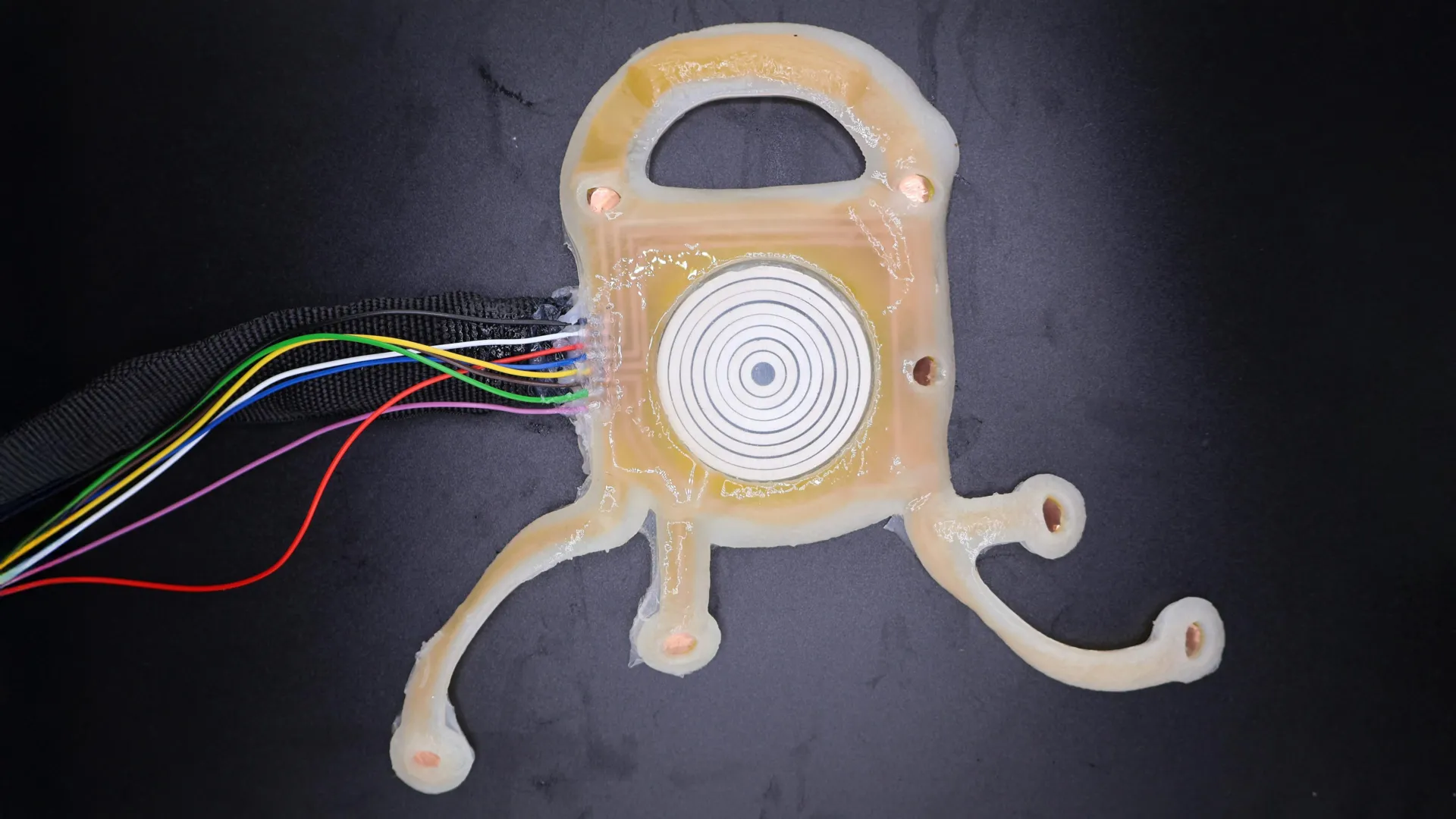
A groundbreaking innovation emerging from the University of Texas at Austin is poised to redefine the landscape of sleep health, offering a drug-free and surgery-free pathway to enhanced REM sleep. Researchers have successfully developed a sophisticated, wearable patch, christened NEUSLeeP, which masterfully integrates gentle ultrasonic stimulation with real-time electroencephalography (EEG) monitoring. This dual functionality allows the device to precisely target and influence the deep brain structures crucial for REM sleep, while simultaneously capturing and analyzing the brain’s electrical responses. The significance of this development lies in its ability to non-invasively modulate brain activity during sleep, a feat previously achievable only through invasive procedures or pharmaceutical interventions.
The NEUSLeeP system represents a paradigm shift in our approach to understanding and treating sleep disturbances. According to Kai Wing "Kevin" Tang, the recent biomedical engineering Ph.D. graduate who spearheaded the research, this marks the first instance of successfully targeting deep brain regions associated with REM sleep without requiring any surgical implantation or the use of medication. The implications are far-reaching, as Tang explained, "Our skin-attached NEUSLeeP patch opens up new possibilities for understanding sleep and treating sleep disorders in home settings." This sentiment is echoed by Huiliang "Evan" Wang, an assistant professor in the Cockrell School of Engineering’s Department of Biomedical Engineering and the principal investigator who supervised Tang’s work. Wang emphasized that the device facilitates a more accessible and patient-friendly approach to sleep management, moving beyond the confines of clinical settings.
In a rigorous study involving 28 participants, the efficacy of the NEUSLeeP technology was put to the test, with the findings published in the prestigious journal Nature Communications. The results were compelling: on average, individuals using the patch experienced a significant reduction in the time it took to enter REM sleep, reaching this critical stage approximately 43 minutes earlier than their baseline. Furthermore, participants spent an average of 16 minutes longer in REM sleep each night. These improvements were observed across a diverse group, encompassing both individuals with naturally healthy sleep patterns and those who reported experiencing occasional sleep difficulties. User feedback further underscored the device’s potential, with participants consistently describing the patch as comfortable and safe to wear, and the study reported only minimal adverse effects.
Beyond its direct impact on sleep architecture, the NEUSLeeP stimulation demonstrated a notable positive influence on physiological markers associated with stress resilience. Among healthy participants, the device’s application was correlated with an increase in heart rate variability (HRV). HRV is widely recognized as a key indicator of the autonomic nervous system’s ability to adapt to stressors, reflecting a more robust physiological response to challenges. Concurrently, neuroimaging studies revealed discernible alterations in brain circuits intricately linked with emotional processing. These findings suggest that the NEUSLeeP technology might play a role in modulating mood and bolstering psychological resilience, offering a potential avenue for supporting emotional well-being.
Gregory Fonzo, an assistant professor in the Dell Medical School’s Department of Psychiatry and Behavioral Sciences and a co-principal investigator on the project, elaborated on the profound connection between REM sleep and emotional health. "REM sleep is not just about dreaming — it’s about emotional reset and stress adaptation," Fonzo stated. He further posited that by enhancing REM sleep, the NEUSLeeP technology could equip individuals with improved coping mechanisms for stress and contribute to an overall enhancement of their well-being. The disruption of REM sleep has been increasingly linked to a spectrum of mental health conditions, including depression, anxiety disorders, and post-traumatic stress disorder (PTSD). Current therapeutic interventions for sleep disorders, such as pharmacological treatments and behavioral therapies, often come with potential side effects or may not effectively address the underlying biological mechanisms that impede healthy REM sleep.
Buoyed by these promising initial results, the research team is charting a course for more extensive clinical trials. The next phase of research aims to validate these findings in larger cohorts and to investigate the therapeutic potential of NEUSLeeP for individuals grappling with specific conditions like PTSD, depression, and chronic insomnia. The researchers also foresee broad applications for the device in the realm of home-based sleep monitoring, advancing fundamental neuroscience research, and enabling the development of highly personalized sleep treatment strategies. Vincent Mysliwiec, M.D., a professor at UT Health San Antonio and a recognized expert in sleep disorders who also served as a co-principal investigator, articulated a compelling vision for the future. "Our vision is a future where patients with mental health disorders can optimize their sleep with a noninvasive and safe treatment," Mysliwiec remarked, adding that this technology holds the promise of helping millions of people achieve the restorative sleep essential for their health and recovery.
The journey from laboratory innovation to widespread clinical application is being actively facilitated through a strategic collaboration with Discovery to Impact, the University of Texas’s dedicated commercialization arm. This partnership is designed to streamline the process of bringing the NEUSLeeP technology to market. To protect the intellectual property associated with this novel device, a patent application has also been formally submitted. The interdisciplinary team behind this breakthrough comprises a diverse group of researchers from the Department of Biomedical Engineering, including William D. Moscoso-Barrera, Mengxia Yu, Mengmeng Yao, Jinmo Jeong, Ilya Pyatnitskiy, Anakaren Romero Lozano, Jiachen Wang, Ju-Chun Hsieh, Tony Sungjin Chae, Daniel Song, Julieta Garcia, Rithvik Mittapalli, and Adam Bush. Further contributions to the project came from Benjamin Baird of the College of Natural Sciences’ Department of Psychology and Wynn Legon of Virginia Tech’s Fralin Biomedical Research Institute, highlighting the collaborative spirit that underpins this significant scientific advancement.
About the Author












