
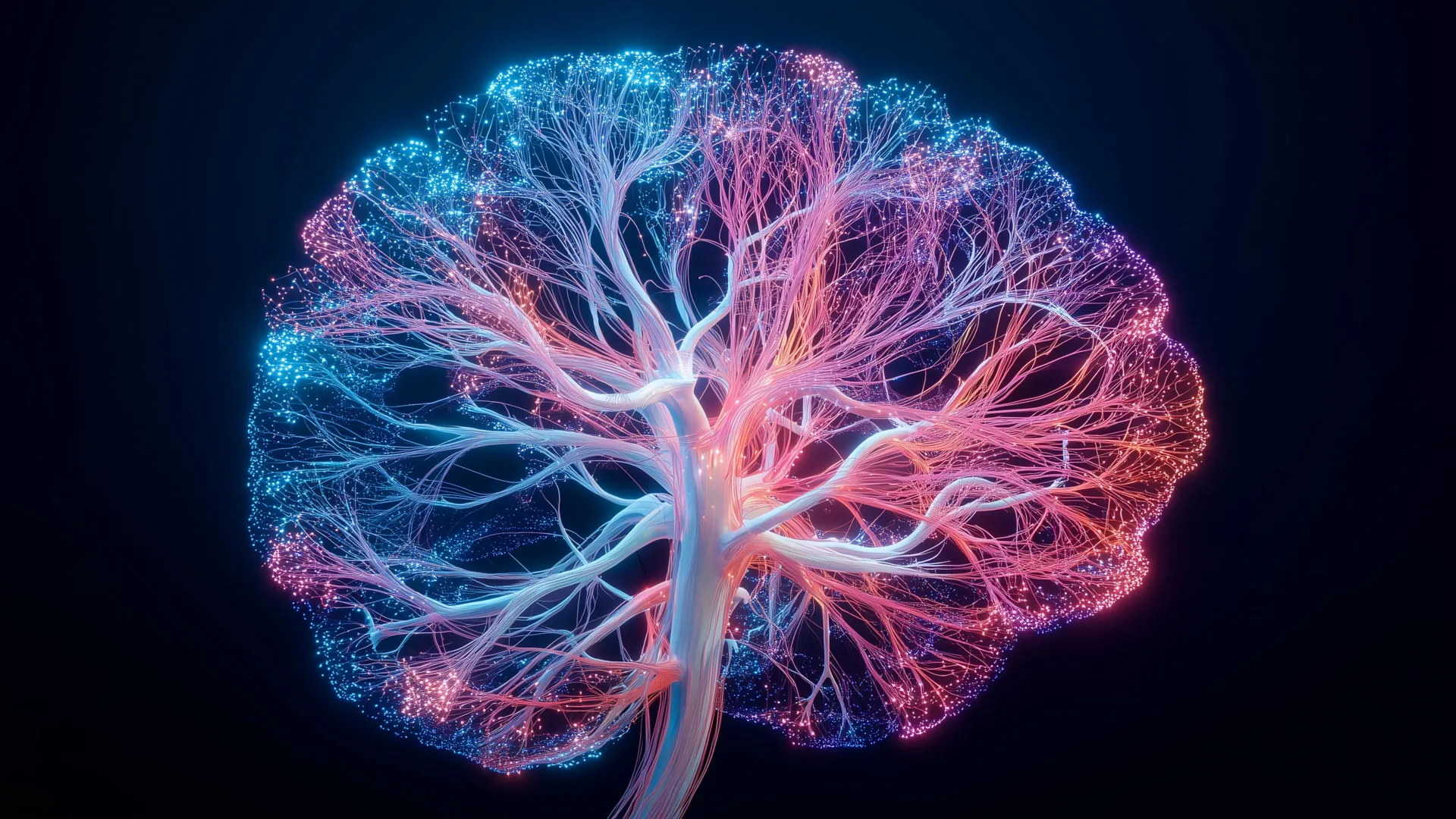
A groundbreaking investigation by researchers at the University of Illinois Urbana-Champaign is poised to fundamentally alter our understanding of cognitive processes, with profound implications for the development of artificial intelligence. The study’s findings indicate that the initiation of decision-making within the brain occurs significantly earlier than previously theorized, presenting novel avenues for conceptualizing AI systems that exhibit enhanced capabilities and vastly improved energy efficiency. This paradigm shift challenges the long-held notion of a linear, hierarchical information flow in neural processing.
The human brain, a marvel of biological engineering, remains one of science’s most intricate puzzles, its complete comprehension a formidable undertaking. For decades, a dominant inspiration for artificial intelligence, particularly in systems like convolutional neural networks, has been the model of a unidirectional information pathway. This established perspective posits that sensory input ascends through a cascade of progressively complex neural regions, culminating in the frontal cortex where the final decision is purportedly rendered. However, this simplified view has increasingly come under scrutiny by scholars such as Yurii Vlasov, a professor of electrical and computer engineering at The Grainger College of Engineering, and his colleagues, whose recent work, published in the prestigious journal Proceedings of the National Academy of Science (PNAS), offers compelling evidence to the contrary.
The research undertaken by Vlasov’s team suggests that the intricate dance of decision-making is not confined to the brain’s uppermost echelons but rather engages much earlier sensory processing areas. By meticulously recording neural activity in laboratory mice as they navigated a simulated environment and made perceptual choices, the scientists identified significant decision-related signals emanating from the primary somatosensory cortex (S1). This region, conventionally understood as an initial hub for sensory information processing, demonstrated a more active and complex role than previously acknowledged. Instead of merely relaying raw data, S1 appeared to be dynamically modulated by signals originating from higher brain centers. This bidirectional communication, characterized by top-down regulatory influences, indicates that decision formation is a distributed, iterative process, involving continuous dialogue across multiple neural territories, rather than a sequential, one-way transmission.
This discovery offers a tantalizing glimpse into the principles of natural intelligence, a system honed by hundreds of millions of years of evolutionary refinement. Unlike the step-by-step processing often mimicked in contemporary AI, biological intelligence leverages interconnected feedback loops, allowing information to traverse neural pathways in both directions. This integrated approach is responsible for the remarkable cognitive feats that biological organisms accomplish with an efficiency that far surpasses current artificial systems, which often require vast amounts of energy. Understanding the architectural underpinnings of this biological efficiency could provide invaluable blueprints for the next generation of AI.
Professor Vlasov articulates this aspiration, stating, "We want to learn from a billion years of evolution." He elaborates on the desire to comprehend the organizational principles of biological intelligence and explore how emulating its architecture could lead to AI that is not only more effective and less power-intensive but also demonstrably more intelligent. He pinpoints decision-making as a critical area where current AI systems exhibit significant limitations.
The implications of this research for artificial intelligence are substantial, though the scientists are careful to note that their findings do not constitute a direct roadmap for constructing superior AI. Rather, they provide a refined understanding of how the brain orchestrates decision-making, offering conceptual inspiration for future AI architectures. The intricate interplay between early sensory regions and higher cognitive centers, mediated by feedback loops, suggests that AI systems might benefit from incorporating similar recursive processing mechanisms. This could lead to more robust and adaptable AI that can learn and respond to complex environments with greater nuance and efficiency.
Future research endeavors by Vlasov and his team are focused on delving deeper into the temporal dynamics of these neural signals. They aim to investigate the precise timing of interactions within these feedback loops to gain a clearer understanding of their emergent properties and their role in coordinating different levels of brain processing. The development of advanced neural activity measurement technologies is also a priority, which will facilitate a more detailed examination of how feedback mechanisms are established and orchestrated.
"By looking at the fast temporal dynamics of neural activity, maybe we can understand better how these feedback loops are engaged in making decisions," Vlasov suggests. This line of inquiry, he believes, has the potential to unlock currently elusive mechanisms governing the dynamic organization of feedback loops and their influence on various processing levels. Such insights, he posits, could then be translated into innovative architectures for artificial intelligence, paving the way for systems that more closely mirror the efficiency and sophistication of biological cognition. The exploration of these temporal aspects is crucial for deciphering the complex neural code, which remains largely an enigma. This systems-level comprehension holds the promise of guiding the creation of more efficient artificial neural networks, fundamentally rethinking the design principles for next-generation AI by drawing analogies from the sophisticated designs found in real brains.
About the Author












