As individuals progress through their fifties and beyond, the imperative to maintain physical robustness and autonomy becomes increasingly pronounced. The natural physiological shifts associated with aging, such as a gradual decline in muscle mass (sarcopenia), reductions in bone density, diminished balance, and decreased overall mobility, pose significant challenges to sustaining an active and independent lifestyle. While the desire to counteract these effects is often strong, common impediments like limited time, the perceived complexity of gym routines, or the financial commitment of specialized equipment frequently deter many from engaging in consistent physical activity. However, a growing body of evidence and expert consensus highlights the efficacy of brief, functional, and equipment-free exercise regimens as a potent antidote to these age-related declines, offering a pragmatic pathway to enhanced strength and stability right from the comfort of one’s home.
The conventional wisdom often dictates that substantial fitness gains necessitate lengthy gym sessions involving an array of machines. Yet, for older adults, the focus should strategically pivot towards functional fitness – exercises that directly enhance the ability to perform everyday tasks with ease and confidence. This paradigm shift is crucial because while isolated muscle training on machines can build strength in specific areas, it frequently neglects the critical role of synergistic muscle groups and core stabilizers. Functional movements, by contrast, engage multiple joints and muscle systems simultaneously, mimicking the complex actions required in daily life, such as rising from a chair, carrying groceries, navigating stairs, or maintaining equilibrium on uneven surfaces. This holistic approach builds resilience, preparing the body for the unpredictable demands of real-world scenarios and significantly reducing the risk of falls, a leading cause of injury and disability in older populations.
Carter Lee, a Certified Personal Trainer and Strength & Conditioning coach with extensive experience crafting fitness programs for the over-50 demographic, underscores the limitations of machine-based workouts for this age group. He explains that while gym machines offer a controlled environment for muscle isolation, they often "take away the need for stabilization." This omission is a significant drawback for mature individuals, as the ability to stabilize one’s body against internal and external forces is fundamental to balance, coordination, and injury prevention. True functional strength, Lee contends, is not merely about lifting heavy weights in a fixed plane but about mastering the body’s natural movement patterns across various planes of motion.
According to Lee, a truly comprehensive strength program, regardless of its duration, must incorporate four fundamental pillars of movement to be effective: the squat/hinge pattern, the push/pull pattern, the rotation/anti-rotation pattern, and the locomotion/balance element. These foundational movements are deeply ingrained in human biomechanics and are essential for navigating the physical world safely and efficiently. The squat and hinge patterns are vital for lower body power, enabling actions like sitting, standing, and lifting objects from the floor while protecting the spine. Push and pull movements are critical for upper body strength, supporting tasks such as opening doors, reaching for items, or carrying bags. Rotational and anti-rotational exercises bolster core stability, protecting the lower back and enhancing the body’s capacity to twist and turn without strain. Finally, the locomotion and balance component is indispensable for confident walking, navigating obstacles, and preventing falls, directly addressing a primary concern for older adults.
The compelling news for those facing time constraints or reluctant to visit a gym is that significant advancements in these critical areas can be achieved through remarkably brief, standing, equipment-free routines. These concise workouts, often requiring less than ten minutes, capitalize on the body’s natural mechanics to activate deeper stabilizing muscles and integrate movement patterns that gym machines typically overlook. By engaging multiple muscle groups and joints simultaneously, these routines not only enhance functional strength but also contribute to a higher caloric expenditure compared to isolated machine exercises, optimizing the efficiency of each minute spent. This approach democratizes fitness, making robust physical health accessible to anyone, anywhere, without the need for specialized gear or a dedicated facility.
Let’s delve into a selection of highly effective, standing exercises that exemplify these principles, drawing on expert guidance for proper execution and maximum benefit:
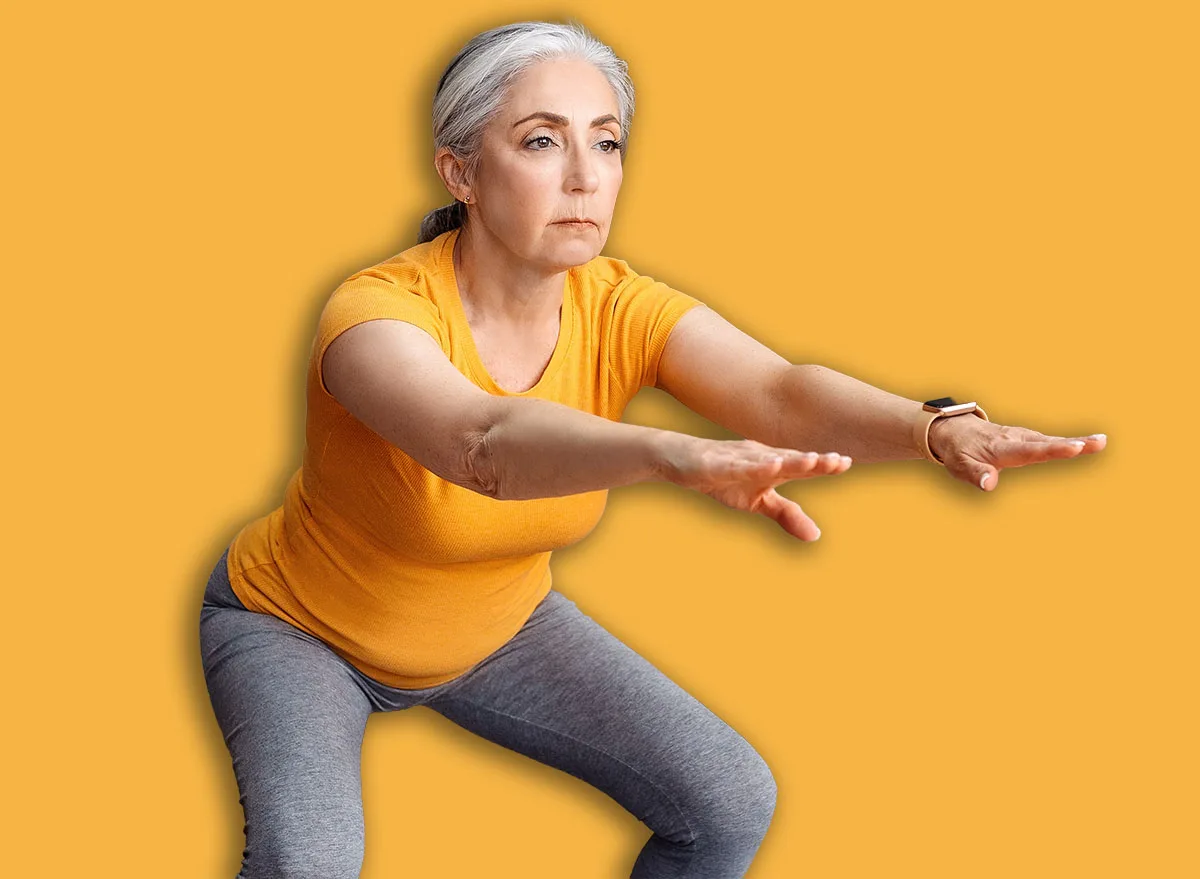
1. Air Squats: This fundamental lower-body exercise is a cornerstone of functional strength. It directly translates to everyday actions like sitting down, standing up, and ascending stairs. To execute an air squat correctly, begin with feet shoulder-width apart, toes pointed slightly outward. Initiate the movement by pushing the hips back as if sitting into an imaginary chair, ensuring the chest remains upright and the gaze forward. Descend until the thighs are roughly parallel to the floor, or as far as comfort allows without compromising form. Crucially, as Carter Lee advises, "To protect the knees, ensure your weight stays in your heels. You should be able to wiggle your toes at the bottom of the movement." This cue ensures proper weight distribution, engaging the glutes and hamstrings effectively while minimizing undue stress on the knee joints. The return to the standing position should be controlled, driving through the heels.
2. Vertical Wall Pushup: Addressing the push pattern, the vertical wall pushup offers a scalable and joint-friendly alternative to traditional floor push-ups, ideal for developing upper body pushing strength in the chest, shoulders, and triceps. Stand facing a wall, about arm’s length away, with hands placed slightly wider than shoulder-width apart at chest height. Lean into the wall, bending the elbows and keeping the body in a rigid, plank-like line from head to heels. Push back to the starting position by extending the arms. Lee emphasizes maintaining core engagement: "Keep your body as stiff as a plank. Do not let your hips sag toward the wall. This builds upper-body pushing strength without the high-impact stress of floor push-ups." This focus on core rigidity prevents compensation and ensures the target muscles are effectively engaged.
3. YTW Exercise: This movement targets the often-neglected muscles of the upper back and shoulders, crucial for posture, shoulder health, and counteracting the forward-rounded posture common in modern lifestyles. Begin standing tall, with a slight hinge at the hips. Extend both arms straight out to form a "Y" overhead, squeezing the shoulder blades together. Then, bring the arms down and out to the sides to form a "T," again focusing on scapular retraction. Finally, bend the elbows to form a "W," pulling the elbows down and back. Each shape should be held briefly with controlled movement, promoting stability and strength in the posterior shoulder girdle.
4. The Bird-Dog Extension: A powerhouse for core stability and lower back health, the standing bird-dog extension (often adapted from a kneeling position) challenges balance and coordination while strengthening the glutes and spinal erectors. While traditionally performed on hands and knees, a standing variation involves standing tall and extending one arm forward while simultaneously extending the opposite leg straight back, maintaining a flat back and engaged core. The key, as Lee highlights, is to "focus on length, not height. Imagine someone is pulling your hand forward and your heel backward. This strengthens the lower back and the glutes at the same time." This emphasis on elongation rather than extreme elevation ensures proper muscle activation and spinal protection.
5. The Standing Cross-Crawl: This exercise is a potent "neurological reset," as described by Lee, designed to enhance coordination and promote bilateral brain communication. It’s particularly beneficial for gait health and preventing trips by improving the synchronization between the left and right hemispheres of the brain. Standing upright, simultaneously lift the right knee towards the chest and bring the left elbow to meet it, gently crossing the midline of the body. Alternate sides smoothly and rhythmically. This contralateral movement stimulates neural pathways, improving balance and body awareness, which are crucial for navigating dynamic environments.
6. The Isometric Slow March: Targeting deep hip flexor strength and balance, this static hold is vital for clearing obstacles and preventing falls. Stand tall and slowly lift one knee towards the chest, holding the position for several seconds. The "isometric" component refers to the static nature of the hold, building endurance and strength in the hip flexors, which are essential for lifting the feet high enough to clear curbs, uneven stairs, and other common trip hazards, as Lee meticulously explains. Maintaining a stable core throughout the hold further enhances balance.
7. The Tandem Balance and Pulse: This exercise directly challenges static balance and proprioception, the body’s sense of its position in space. Stand with one foot directly in front of the other, heel-to-toe, as if walking on a tightrope. Hold this position for a set duration. For an increased challenge, Lee suggests a simple yet effective modification: "If this is too easy, gently turn your head left to right while holding the position. This ‘tricks’ the inner ear and forces your ankles to work harder to stabilize you." This deliberate disturbance of the vestibular system significantly amplifies the demands on ankle stabilizers and core muscles, leading to greater improvements in overall balance.
By incorporating these intelligently designed, functional movements into a consistent, brief daily routine, individuals over fifty-five can proactively address the physiological challenges of aging. This approach transcends the limitations of isolated machine workouts by fostering integrated strength, superior balance, and enhanced coordination – qualities that directly contribute to sustained independence, a higher quality of life, and the confidence to master everyday movements with ease. It’s a testament to the power of smart, accessible fitness: true strength and vitality are not confined to the gym, but cultivated through purposeful movement, wherever one may be. As with any new exercise regimen, consulting a healthcare professional before beginning is always recommended to ensure it aligns with individual health needs and conditions.
About the Author