
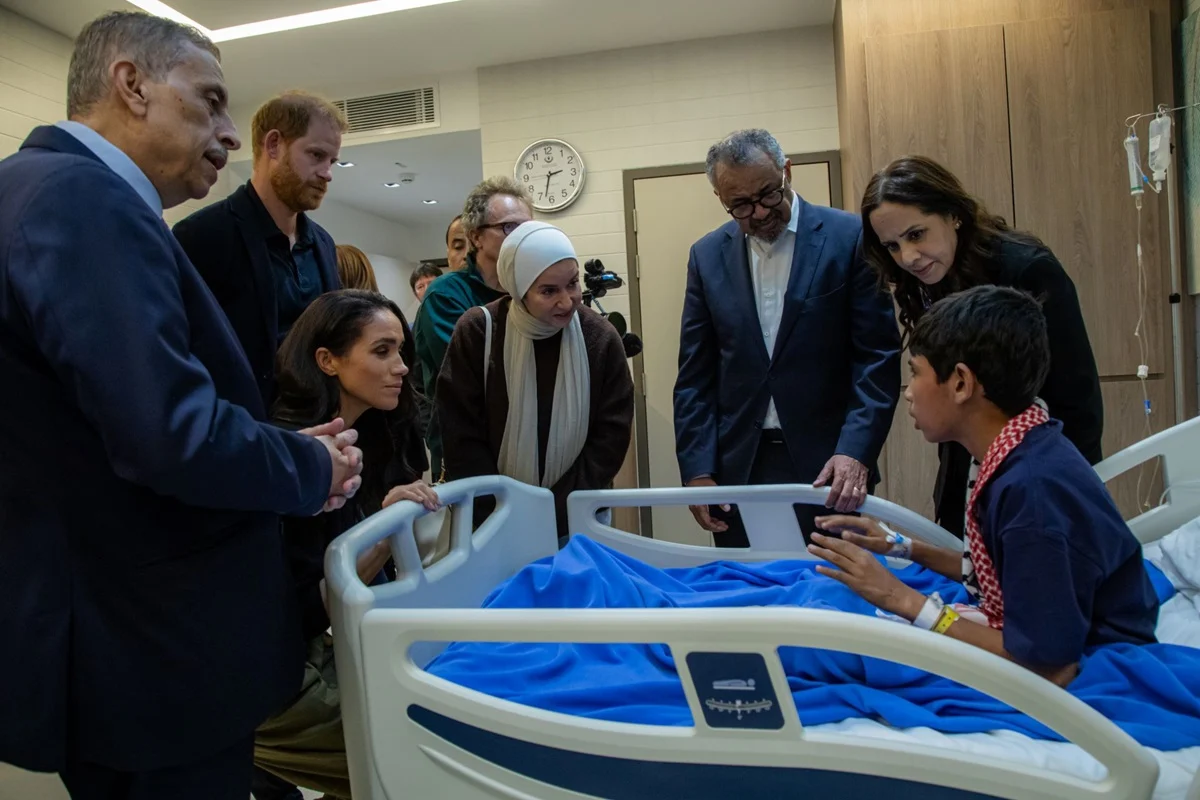
The Hashemite Kingdom of Jordan recently hosted Dr. Tedros Adhanom Ghebreyesus, Director-General of the World Health Organization (WHO), for a high-level state visit, underscoring the nation’s pivotal role in global health initiatives and its steadfast commitment to humanitarian action. This significant engagement served to reaffirm the deep-seated partnership between the WHO and Jordan, focusing intensely on critical areas such as achieving universal health coverage (UHC), strengthening mental health provisions, and enhancing emergency health responses across the volatile Middle East region. The discussions and site visits during the two-day itinerary brought into sharp focus Jordan’s unique position and its enduring efforts to safeguard public health amidst complex geopolitical challenges.
A cornerstone of the Director-General’s itinerary was a crucial meeting with His Majesty King Abdullah II. This royal audience reflected the profound importance attributed to the visit and Jordan’s widely recognized leadership in elevating health as both a national imperative and a global priority. Central to their deliberations were strategies for fortifying Jordan’s health infrastructure, broadening access to essential medical services for all residents, and sustaining robust support mechanisms for ongoing regional emergencies. A particular emphasis was placed on the dire health needs of the Palestinian population, including patients evacuated from the Gaza Strip to Jordan for specialized medical treatment, and the extensive refugee communities seeking sanctuary within the Kingdom’s borders. Dr. Tedros conveyed his profound appreciation to King Abdullah II, acknowledging His Majesty’s unwavering dedication to advancing universal health coverage. He also extended gratitude to the Jordanian populace for their exemplary solidarity and generosity in providing vital health services to over three million refugees, predominantly from Gaza and Syria, who have found a temporary home in the country. This remarkable humanitarian effort, often carried out under immense resource strain, stands as a testament to Jordan’s commitment to human dignity.
Jordan’s geographical location places it at the nexus of several regional conflicts, compelling it to shoulder an extraordinary burden as a primary host nation for refugees. For decades, the country has provided refuge to those displaced by conflict and instability, extending healthcare, education, and other fundamental services. This protracted situation, while showcasing Jordan’s profound compassion, simultaneously places considerable pressure on its public services, particularly the healthcare system. The WHO Director-General specifically lauded Jordan’s broader humanitarian leadership, highlighting His Majesty’s Medical Corridor initiative. This vital program facilitates the transfer of critically ill and injured children from Gaza, ensuring they receive urgent medical intervention. This initiative exemplifies Jordan’s proactive approach to humanitarian crises, demonstrating a profound commitment to prioritizing health and human life above all else. The Director-General’s remarks reinforced the international community’s recognition of Jordan’s role as a beacon of humanity in a region frequently overshadowed by conflict.
Beyond emergency responses, the dialogue between Dr. Tedros and Jordanian officials delved deeply into the nation’s progress towards universal health coverage. UHC, a fundamental principle championed by the WHO, ensures that all people have access to the health services they need, when and where they need them, without financial hardship. Jordan has emerged as a global frontrunner in adopting a robust primary health care approach to achieve this ambitious goal. This strategy emphasizes accessible, community-based care, focusing on prevention, early intervention, and integrated services. A significant aspect of Jordan’s UHC framework is the progressive integration of mental health services into routine primary care. This innovative model ensures that psychological support and treatment are not siloed but become an accessible component of general healthcare, reducing stigma and increasing early access to care. The WHO actively supports these efforts through its Director-General’s Special Initiative for Mental Health, which aims to catalyze global action for mental health. During bilateral discussions with Jordan’s Minister of Health, further strategies for bolstering the national health system and accelerating the path to comprehensive UHC were meticulously explored.
The global significance of mental health, particularly in populations affected by conflict, displacement, and trauma, cannot be overstated. The psychological toll of living in crisis zones or as a refugee is immense, often leading to chronic mental health conditions that impede recovery and well-being. Jordan’s pioneering work in integrating mental health services into its primary healthcare system is thus particularly commendable. It provides a blueprint for other nations grappling with similar challenges, demonstrating that mental health care is not a luxury but an essential component of overall health and societal resilience. This proactive integration ensures that individuals can access crucial mental health support as part of their regular medical care, fostering a more holistic and compassionate healthcare ecosystem.
The state visit also served as a platform for convening a high-level meeting with a diverse group of health partners, including donor countries, various United Nations agencies, and philanthropic organizations. The primary objective of this gathering was to deliberate on financing priorities essential for further strengthening Jordan’s health system and sustaining its ongoing humanitarian health initiatives. A key area of discussion was the imperative to scale up mental health services, especially for countries like Jordan that host substantial refugee populations. Dr. Tedros commended the robust collaboration and unwavering commitment demonstrated by these partners, whose investments are crucial for bolstering health outcomes both within Jordan and across the wider region.
Adding a notable dimension to several engagements, His Royal Highness Prince Harry, Duke of Sussex, and Meghan, Duchess of Sussex, accompanied the Director-General. In their capacity as founders of Archewell Philanthropies, and as long-standing advocates for the WHO’s mission, their presence brought increased visibility and advocacy to the critical issues discussed. Archewell Philanthropies has a history of supporting a broad spectrum of WHO initiatives, ranging from efforts to ensure equitable global access to COVID-19 vaccines to vital medical evacuation operations and mental health programs. Prince Harry, a vocal proponent for mental health awareness, specifically participated as an ally of WHO’s work in this domain. He underscored the profound importance of investing in mental health across diverse communities and in emergency contexts, with a particular focus on addressing the unique needs of men, young people, and children.
Dr. Tedros acknowledged the significant contributions of these partners, stating, "I wish to convey my sincere gratitude to our esteemed collaborators, including Prince Harry, Duke of Sussex, and Meghan, Duchess of Sussex, whose dedication to mental well-being and humanitarian efforts has been instrumental in generating awareness, securing resources, and instilling hope in some of the world’s most vulnerable communities. Their synergistic partnership is advancing the World Health Organization’s overarching objective of ensuring health for every individual." Prince Harry echoed these sentiments, expressing his honor to be alongside the WHO Director-General in Jordan, a nation he lauded for its exemplary compassion, remarkable resilience, and innovative spirit. He elaborated on his experiences with Archewell Philanthropies, noting, "Through our endeavors with Archewell Philanthropies, my wife and I have directly witnessed the tangible impact of the WHO’s initiatives in bolstering mental health and providing critical, life-saving care during emergencies. We remain deeply committed to enhancing public understanding, diminishing the pervasive stigma, and expanding access to mental health assistance for all individuals impacted by conflict and crises. Mental well-being is foundational to recovery, dignity, and the establishment of enduring peace, and we are proud to stand united with the WHO and its global partners in making this a universal priority."
The second day of Dr. Tedros’s visit was structured to further explore Jordan’s comprehensive health ecosystem and its community-level interventions. His itinerary included a visit to Jordan’s National Center for Rehabilitation of Addicts, a facility supported by the WHO that provides integrated medical, psychological, and social services. This visit highlighted Jordan’s holistic approach to public health challenges, extending beyond immediate emergency care to address long-term societal well-being. He was also slated to engage with influential community leaders and women’s groups, including the Jordanian Hashemite Fund for Human Development, acknowledging their crucial role in fostering social development and health awareness. A visit to the renowned King Hussein Cancer Center was also planned, offering an opportunity to discuss advancements in cancer care and foster regional collaboration in this specialized field.
The state visit was set to conclude with additional meetings with key partners who are instrumental in supporting humanitarian operations within the region. These concluding engagements served to reinforce Jordan’s indispensable and multifaceted role as a strategic hub for medical evacuation, a rapid responder in emergencies, and a cornerstone for building health system resilience across the Middle East. The WHO Director-General’s visit reaffirmed not only the strong bond between the organization and Jordan but also the latter’s vital contribution to global health security and humanitarian principles in an increasingly complex world.
About the Author












