Geneva, Switzerland – In a significant boost to the global integration and scientific understanding of traditional medicine, the Government of India has formally pledged an additional US$85 million over the next decade to bolster the operational framework of the World Health Organization’s Global Centre for Traditional Medicine (WHO GCTM). This substantial financial allocation, spanning from 2022 to 2032, underscores a deepening commitment to leveraging ancient healing practices within modern healthcare paradigms, impacting billions worldwide who rely on these systems for their health and well-being.
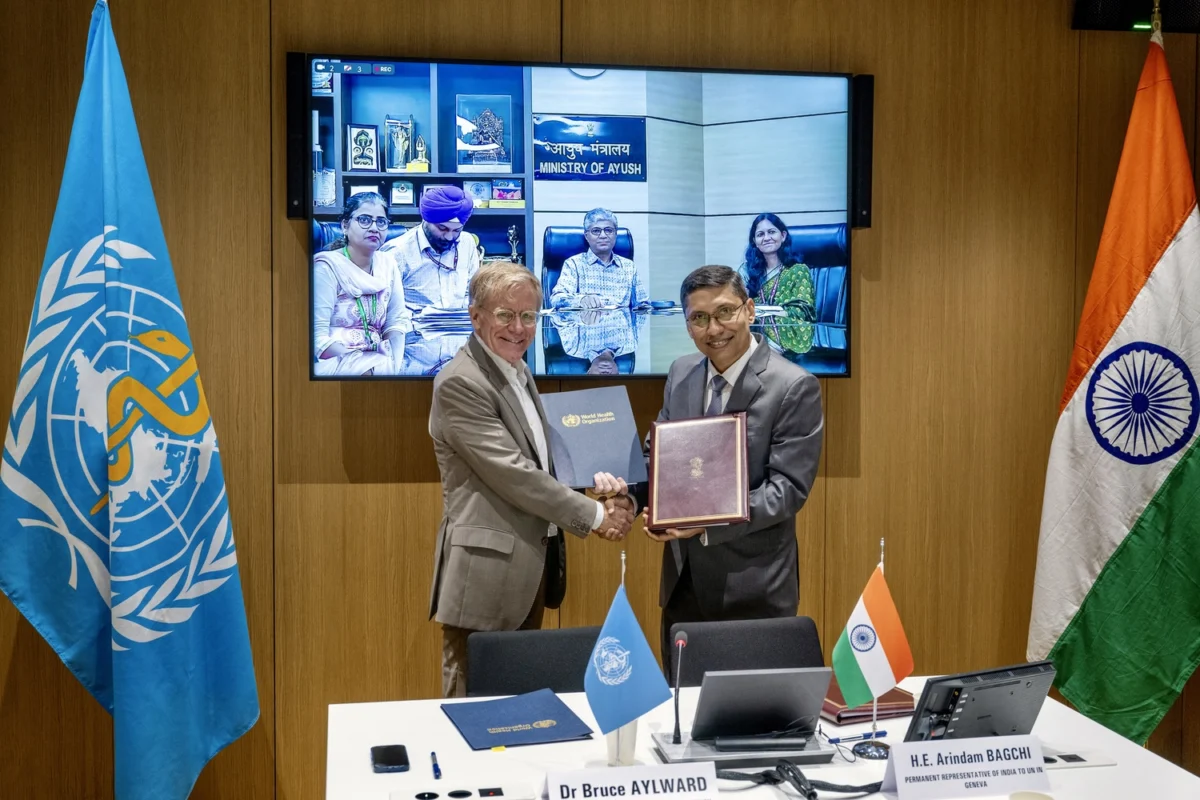
The formalization of this donor agreement in Geneva marks a crucial step in a broader US$250 million investment from India, initially announced in 2022, aimed at establishing and fortifying the WHO GCTM. This larger funding package is meticulously designed to cover not only the Centre’s core work plan but also its infrastructural needs, including the provision of interim facilities and the construction of a permanent, state-of-the-art building in Jamnagar, Gujarat, India. Such a comprehensive commitment is poised to significantly augment the WHO’s capacity to engage with traditional medicine across its diverse technical divisions and regional offices, fostering a spirit of international collaboration and solidarity in health. Furthermore, a portion of India’s generous contribution is slated for inclusion in the WHO’s upcoming Investment Round, earmarked to resource the organization’s foundational activities between 2025 and 2028, thereby demonstrating a long-term strategic partnership.
Traditional medicine, encompassing a vast array of health practices, approaches, knowledge, and beliefs incorporating plant, animal, and mineral-based medicines, spiritual therapies, manual techniques, and exercises, is an integral part of healthcare for an estimated 80% of the world’s population, particularly in developing nations. Despite its widespread use, many traditional systems have historically lacked the robust scientific validation and structured integration into national health systems that conventional medicine enjoys. The WHO GCTM, therefore, emerges as a pivotal initiative designed to bridge this gap, serving as a global knowledge hub dedicated to the systematic study and promotion of traditional medicine.
The Centre’s mandate is structured around five interconnected pillars of work, each critical to its overarching mission. The US$85 million contribution specifically targets the strengthening of the evidence base for traditional medicine. This involves rigorous efforts to collect, analyze, and disseminate data on traditional medicine policies, clinical practices, product efficacy and safety, and public utilization patterns. By fostering robust research and generating credible evidence, the GCTM aims to provide Member States with the necessary tools and information to make informed decisions regarding the inclusion and regulation of traditional medicine within their national health frameworks. This emphasis on data-driven insights is fundamental to ensuring that traditional medicine interventions are both safe and effective, aligning them with global health standards.
Beyond research, the GCTM focuses on the critical interface between primary health care (PHC) and universal health coverage (UHC). As Dr. Bruce Aylward, Assistant Director-General of the Universal Health Coverage and Life Course division of WHO, articulated, India’s commitment is "opportune" because traditional medicine, when appropriately supported within national health systems, possesses the unique potential to extend healthcare access to "those most often left behind." Integrating traditional practices and indigenous knowledge systems is, in his view, indispensable for achieving the overarching goal of health for all. This perspective highlights traditional medicine not merely as an alternative but as a complementary pathway to broader health equity, particularly in contexts where conventional healthcare infrastructure is sparse or inaccessible.

The Centre also champions the preservation and ethical utilization of Indigenous Knowledges and biodiversity, recognizing the profound wisdom embedded in ancestral healing traditions and the natural resources from which many traditional medicines are derived. Simultaneously, it explores digital health applications to modernize and expand the reach of traditional medicine, harnessing technology to improve access, education, and research. Finally, the GCTM organizes biennial WHO Global Traditional Medicine Summits and fosters diverse collaborations, establishing a platform for global dialogue, policy formulation, and knowledge exchange among stakeholders.
India’s leadership in this domain is deeply rooted in its rich heritage of traditional medicine systems such as Ayurveda, Yoga, Naturopathy, Unani, Siddha, and Homoeopathy (AYUSH). The nation has long been a proponent of integrating these systems into its public health strategy, establishing a dedicated Ministry of Ayush to promote their development and regulation. Vice Minister Vaidya Rajesh Kotecha, Secretary of the Ministry of Ayush, Government of India, emphasized that the signing of this donor agreement represents a "major milestone" in realizing the shared vision of Honourable Prime Minister of India Shri Narendra Modi and WHO Director-General Dr. Tedros Adhanom Ghebreyesus for the development of the WHO GCTM. This collaboration is seen as a testament to India’s dedication to strengthening traditional medicine systems globally, thereby contributing to universal health coverage and serving humanity, particularly through the Jamnagar Centre, which is envisioned as a focal point for these collective efforts to benefit all WHO Member States. Ambassador Arindam Bagchi, Permanent Representative of India to the UN and other International Organizations in Geneva, further affirmed India’s unwavering commitment to supporting WHO in this crucial endeavor.
The establishment of the WHO GCTM is not an isolated initiative but part of a broader strategic framework developed by the WHO. The Centre, currently led by Dr. Shyama Kuruvilla, Director a.i., works in close coordination with the WHO’s Traditional, Complementary and Integrative Medicine (TCI) unit. This unit, which also benefits from a separate five-year technical support agreement signed with India in 2023, plays a crucial role in shaping global policy. It is actively involved in developing the Member State-requested new WHO Traditional Medicine Global Strategy for 2025-2034. The TCI unit is responsible for publishing key benchmark documents, standardized terminologies, and other evidence-informed technical products designed to facilitate the safe and effective integration of traditional medicine into national health systems worldwide.
The collaborative synergy between the GCTM and the TCI unit, alongside other WHO teams, is fundamental to advancing the organization’s multisectoral agenda on traditional medicine. This coordinated effort is further reinforced through regular meetings of the WHO Technical Expert Network, jointly managed by the GCTM and TCI. This network aims to foster a "One WHO approach" to traditional medicine, ensuring coherent and consistent strategies across headquarters, regional offices, and country offices. This integrated approach is vital for maximizing the impact of initiatives and avoiding fragmented efforts.
Significant progress has already been made under this collaborative framework. The inaugural WHO Traditional Medicine Global Summit, held in August 2023 in Gujarat, India, culminated in the adoption of the "Gujarat Declaration." This pivotal document outlines a multistakeholder action agenda, charting a course for future research, policy development, and integration efforts in traditional medicine. Looking ahead, the much-anticipated launch of the 2025-2034 Global Strategy for Traditional Medicine is scheduled for the 78th World Health Assembly in May 2025. Following this, the next WHO Global Summit is planned for November 2025, which will undoubtedly build upon the foundations laid by the Gujarat Declaration and the newly launched global strategy.
India’s sustained and multifaceted support for traditional medicine, exemplified by these substantial financial contributions and strategic partnerships with the WHO, marks a transformative moment for global health. By investing in evidence generation, policy development, and international collaboration, India and the WHO are not only elevating the stature of traditional medicine but also actively working towards a more inclusive, equitable, and comprehensive global health landscape where diverse healing traditions can contribute meaningfully to the well-being of all people. This long-term vision promises to unlock the full potential of traditional medicine, ensuring it plays a robust and scientifically validated role in achieving universal health coverage and addressing contemporary health challenges.
About the Author