The journey through midlife often brings with it distinct physiological shifts, particularly noticeable in body composition. For individuals navigating their fifth decade and beyond, a common concern revolves around the accumulation of fat around the lower abdomen, frequently referred to as a pendulous abdomen or "apron belly." This shift is not merely cosmetic; it signals deeper metabolic changes influenced by factors such as hormonal fluctuations, a gradual decline in lean muscle mass (sarcopenia), and a corresponding reduction in basal metabolic rate. While these changes are a natural part of aging, the human body retains a remarkable capacity to adapt and respond positively to appropriate physical activity and lifestyle interventions. The fundamental principle governing body fat reduction remains rooted in achieving a sustainable caloric deficit—expending more energy than is consumed. However, the type of physical activity significantly impacts the efficiency and sustainability of this process, especially when targeting stubborn fat deposits and enhancing overall functional health in an aging demographic.
Traditional approaches to abdominal fat loss often gravitate towards isolated core exercises, such as crunches or machine-based abdominal routines. While these movements undeniably strengthen the rectus abdominis and obliques, their efficacy in directly reducing adipose tissue in the midsection is limited. Scientific understanding increasingly points away from the concept of "spot reduction," where exercising a specific body part is believed to primarily burn fat from that area. Instead, effective fat loss is a systemic process driven by overall energy expenditure and metabolic demand. This is where dynamic, compound standing exercises emerge as a superior strategy. By engaging multiple large muscle groups simultaneously and requiring continuous core stabilization, these movements significantly elevate heart rate and energy consumption, creating a more potent stimulus for systemic fat burning and muscle development. Moreover, they foster functional strength, balance, and coordination—critical components of healthy aging that often decline with sedentary lifestyles.
The following four standing exercises are meticulously selected for their capacity to maximize caloric burn, recruit extensive muscle groups, and inherently challenge the core, thereby offering a highly efficient pathway toward improved body composition and robust midlife wellness. Unlike many machine-based or isolated exercises, these movements demand an integrated effort from the entire body, translating into greater physiological benefits and more efficient workouts for those seeking impactful results.
Kettlebell Swings: Igniting the Posterior Chain and Core Power
The kettlebell swing stands as a powerhouse movement, renowned for its ability to cultivate explosive hip power and comprehensively engage the posterior chain—the group of muscles running along the back of the body, including the glutes, hamstrings, and lower back. This ballistic exercise is driven by a powerful hip hinge, where the hips thrust forward to propel the kettlebell, rather than an arm-dominant lift. During each repetition, the gluteal muscles and hamstrings are intensely activated, serving as the primary engines of the movement. Concurrently, the core musculature, encompassing the deep stabilizers of the spine and the abdominal wall, works strenuously to brace the torso and transfer force efficiently, preventing undue stress on the lower back. This synergistic activation of large muscle groups not only leads to a substantial elevation in heart rate, promoting cardiovascular fitness, but also significantly increases overall caloric expenditure. Consistent practice of kettlebell swings fosters remarkable hip strength, enhances muscular endurance, and contributes to a more resilient and toned midsection by strengthening the integrated core system. The dynamic nature also improves coordination and proprioception, essential for maintaining agility in later years.
- Primary Muscle Groups Engaged: Glutes, Hamstrings, Erector Spinae (lower back stabilizers), and the entire Core complex (transverse abdominis, obliques, rectus abdominis).
- Execution Focus: Initiate the movement by hinging at the hips, allowing the kettlebell to swing between the legs. Drive powerfully through the hips and glutes to stand upright, allowing the kettlebell to naturally swing to chest height. Maintain a rigid, braced core throughout the entire range of motion, ensuring the power originates from the hips, not the arms or lower back.
- Suggested Protocol: Aim for 3 sets of 12 to 15 repetitions, allowing for approximately 60 seconds of recovery between sets.
- Progressive Variations: To increase challenge or target specific aspects, consider single-arm swings for unilateral strength and increased core demand, alternating swings for coordination, or heavier power swings for maximal force production.
Dumbbell Thrusters: A Full-Body Metabolic Catalyst
Dumbbell thrusters represent a highly efficient, compound movement that seamlessly integrates a lower-body squat with an upper-body overhead press into a single, fluid motion. This exercise demands coordinated effort from virtually every major muscle group, making it an exceptional metabolic conditioner and strength builder. As the body descends into the squat, the quadriceps and glutes are heavily loaded, generating the initial force. This power is then dynamically transferred through the core and torso as the individual explodes upwards, simultaneously pressing the dumbbells overhead. The core acts as a critical link in this kinetic chain, stabilizing the spine and facilitating the efficient transfer of energy from the lower body to the upper body. The continuous nature of the movement, without pauses, maintains a high level of muscle tension and cardiovascular demand, leading to a profound caloric burn and fostering systemic strength. For those over 50, the functional carryover is immense, mimicking actions like lifting objects from the floor and placing them onto a high shelf, thereby enhancing real-world strength and mobility.
- Primary Muscle Groups Engaged: Quadriceps, Glutes, Hamstrings, Deltoids (shoulders), Triceps, and the entire Core (for stability and power transfer).
- Execution Focus: Begin with dumbbells at shoulder height, palms facing each other. Descend into a full squat, keeping the chest upright and core braced. As you powerfully drive up from the squat, simultaneously press the dumbbells directly overhead until arms are fully extended. Control the descent back to the starting position for the next repetition. Prioritize core engagement before initiating the overhead press component.
- Suggested Protocol: Complete 3 sets of 8 to 10 repetitions, resting for 60 seconds between sets.
- Progressive Variations: Explore kettlebell thrusters for a different feel, single-dumbbell thrusters to challenge unilateral strength and core stability, or alternating press thrusters for continuous movement and coordination.
Step-Ups: Unilateral Strength and Functional Endurance
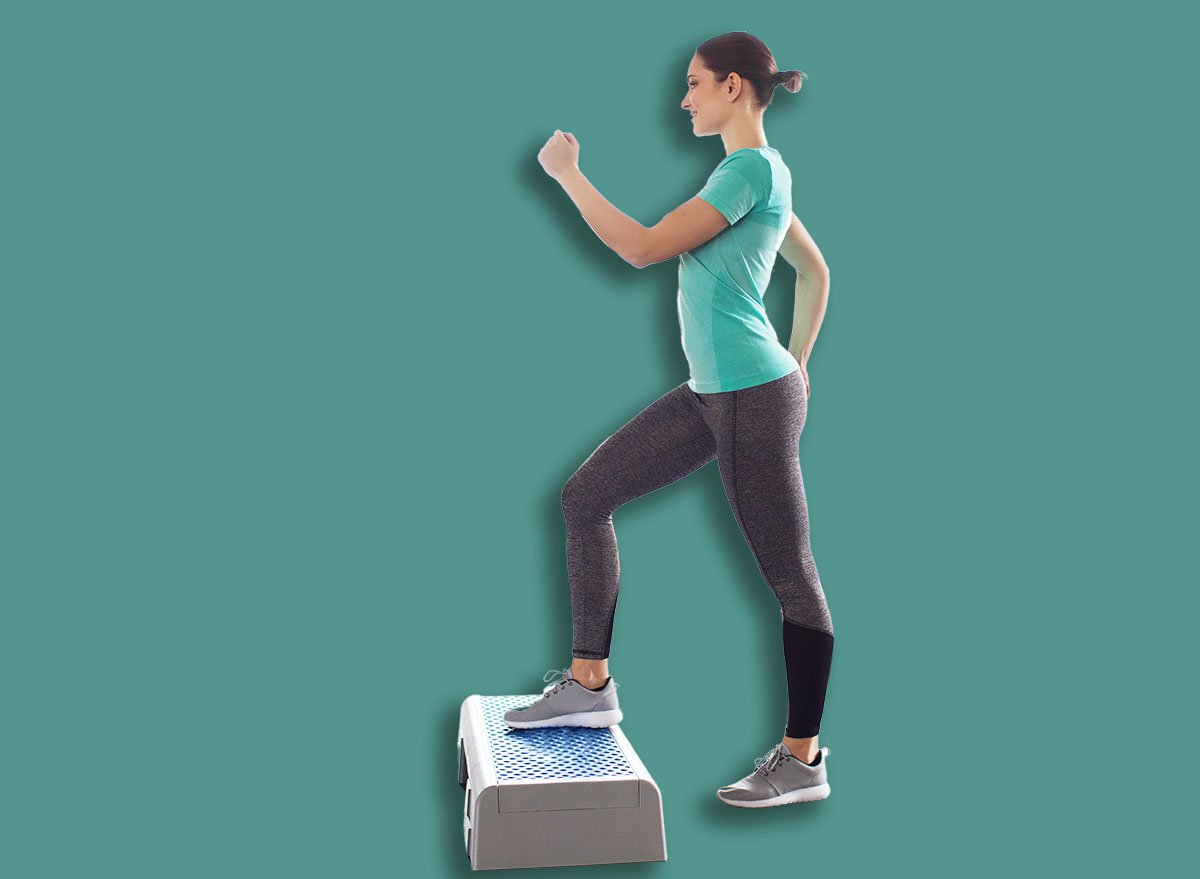
Step-ups are a fundamental yet incredibly effective exercise for developing lower body strength, improving balance, and enhancing cardiovascular endurance, particularly relevant for maintaining mobility and preventing falls in older adults. This unilateral (one leg at a time) movement predominantly targets the glutes and quadriceps, mimicking everyday actions such as climbing stairs or hiking. As one leg steps onto an elevated surface, the primary working leg bears the majority of the body’s weight, requiring significant muscular effort from the glutes and quads to lift the body upward. Simultaneously, the core musculature is continuously engaged to stabilize the torso, maintain an upright posture, and prevent undue swaying or rotation. This steady, controlled effort elevates the heart rate and increases the overall physiological workload without the high impact often associated with other forms of cardio. Regular incorporation of step-ups builds robust leg strength, improves single-leg balance, and directly contributes to enhanced functional capacity in daily activities.
- Primary Muscle Groups Engaged: Quadriceps, Glutes, Hamstrings, and Core (for stability).
- Execution Focus: Stand facing a sturdy box or bench. Place one foot entirely onto the surface. Drive through the heel of the front foot to lift your body onto the box, engaging the glutes. Lightly tap the trailing foot onto the box, or bring it up fully if preferred, then slowly and controlled, step back down to the starting position. Alternate legs or complete all repetitions on one side before switching. Focus on pushing through the lead heel to maximize glute activation.
- Suggested Protocol: Perform 3 sets of 10 repetitions per leg, resting for 60 seconds between sets.
- Progressive Variations: Increase the height of the step, add handheld weights (weighted step-ups), or incorporate a knee drive at the top for added power and core engagement.
Rotational Medicine Ball Slams: Core Power and Explosive Torque
Rotational medicine ball slams are a dynamic, full-body exercise that uniquely combines power, rotation, and high-intensity output, making them exceptionally effective for developing core strength, particularly targeting the oblique muscles that define the waistline. This movement involves generating force through a twisting motion of the torso, engaging the hips and shoulders synergistically to powerfully slam a medicine ball into the ground to one side. The act of twisting and slamming recruits the obliques, transverse abdominis, and other deep core stabilizers in a functional, explosive manner, enhancing both strength and elasticity in the midsection. The rapid, forceful nature of the slam significantly elevates the heart rate, contributing to a high caloric expenditure and boosting metabolic activity. Furthermore, training rotational power improves overall athleticism, coordination, and the ability to perform daily tasks requiring twisting motions with greater ease and safety. Over time, these muscles contribute to a stronger, more capable, and visually tighter midsection.
- Primary Muscle Groups Engaged: Obliques, Shoulders (deltoids), Hips (glutes, hip flexors), and the entire Core complex.
- Execution Focus: Stand with feet shoulder-width apart, holding a medicine ball with both hands. Rotate your torso to one side, bringing the ball overhead and slightly behind you, loading your hips and core. Explosively rotate your torso back to the front and slam the ball forcefully down to the ground on the opposite side of your body, bending at the knees and hips as you do so. Catch the rebound or pick up the ball and repeat on the other side. Emphasize a full torso rotation and maintain strong core engagement throughout the entire powerful movement.
- Suggested Protocol: Execute 3 sets of 10 repetitions per side, with a shorter rest period of 45 seconds between sets to maintain intensity.
- Progressive Variations: Experiment with alternating rotational slams for continuous flow, overhead slams for a different plane of force, or power slams for maximum impact and intensity.
Beyond Movement: Cultivating Complementary Lifestyle Habits for Sustained Results
While these dynamic standing exercises offer a potent stimulus for metabolic enhancement and core development, their efficacy is profoundly amplified when integrated within a broader framework of supportive lifestyle choices. Achieving significant and lasting reduction in abdominal adiposity, especially after the age of 50, necessitates a holistic approach that extends beyond the gym floor.
- Optimized Nutritional Strategy: Prioritize a balanced dietary intake rich in whole foods, lean proteins, complex carbohydrates, healthy fats, and abundant fiber. Adequate protein intake is crucial for preserving and building lean muscle mass, which naturally boosts metabolic rate. A slight, consistent caloric deficit, achieved through mindful eating and portion control, is essential for promoting fat loss without resorting to restrictive or unsustainable diets. Hydration also plays a critical role in metabolic function and satiety.
- Sufficient and Restorative Sleep: Sleep quality profoundly impacts hormonal balance, particularly those hormones that regulate appetite (ghrelin and leptin) and stress (cortisol). Chronic sleep deprivation can elevate cortisol levels, which is directly linked to increased abdominal fat storage. Aim for 7-9 hours of quality sleep per night to support recovery, optimize hormone regulation, and enhance fat metabolism.
- Effective Stress Management: Prolonged psychological stress triggers the release of cortisol, a hormone that, in excess, can promote the accumulation of visceral fat around the abdominal organs. Incorporating stress-reducing practices such as mindfulness meditation, yoga, deep breathing exercises, spending time in nature, or engaging in hobbies can significantly mitigate the physiological impact of stress on body composition.
- Consistency and Patience: Body composition changes are a gradual process, particularly as the body ages. Sustained effort over time yields the most significant and durable results. Adherence to a consistent exercise regimen and healthy lifestyle habits, rather than seeking quick fixes, is the cornerstone of long-term success. Celebrate small victories and view the journey as a continuous process of self-improvement.
- Professional Guidance: For personalized advice and to ensure safety and effectiveness, especially when starting new exercise programs or making significant dietary changes, consulting with healthcare professionals, registered dietitians, and certified fitness trainers is highly recommended. They can provide tailored guidance considering individual health conditions and goals.
By embracing these dynamic standing exercises and integrating them with thoughtful nutritional choices, adequate rest, and effective stress management, individuals over 50 can proactively address abdominal adiposity. This comprehensive strategy not only contributes to a stronger, more defined midsection but also significantly enhances overall functional capacity, metabolic health, and quality of life, empowering a more vibrant and active midlife and beyond.
About the Author