As individuals navigate the physiological shifts that accompany aging, particularly beyond the age of fifty, optimizing body composition and maintaining a strong, functional core becomes increasingly pertinent. The prevalent notion that repetitive abdominal exercises, such as crunches, are the most effective pathway to a toned midsection often overlooks the complex interplay of metabolic changes, muscle mass preservation, and overall functional strength crucial for this demographic. While targeted abdominal work does strengthen specific muscle groups, achieving a leaner physique and reducing abdominal fat necessitates a more comprehensive, integrated approach that engages the entire kinetic chain and elevates metabolic demand. This strategy is particularly powerful when implemented consistently as part of a morning routine, setting a positive physiological and psychological tone for the day.
The body undergoes significant transformations after the fifth decade. Hormonal fluctuations, a natural decline in metabolic rate, and the onset of sarcopenia—the age-related loss of muscle mass and strength—collectively contribute to changes in fat distribution, often leading to increased abdominal adiposity. This includes both subcutaneous fat, located just beneath the skin, and more concerningly, visceral fat, which surrounds internal organs and is linked to various health risks. Relying solely on exercises like crunches, which primarily target the rectus abdominis through spinal flexion, offers limited impact on these broader physiological challenges. Crunches, by themselves, do not burn a significant number of calories, nor do they stimulate the systemic muscle growth required to meaningfully boost resting metabolism. Furthermore, they often neglect the deeper core stabilizers—the transverse abdominis and obliques—which are vital for spinal health, posture, and overall functional movement.
A more effective paradigm shifts the focus from isolated abdominal movements to compound, multi-joint exercises that recruit numerous muscle groups simultaneously. This approach not only burns more calories during the workout but also contributes to greater muscle mass development throughout the body, thereby enhancing metabolic efficiency even at rest. For individuals over fifty, this holistic strategy is not merely about aesthetics; it profoundly impacts functional independence, balance, mobility, and the capacity to perform daily activities with greater ease and reduced risk of injury.
Incorporating such a regimen into the morning hours offers a distinct advantage. Starting the day with physical activity can significantly improve adherence to an exercise program, as fewer competing demands typically arise early on. Physiologically, morning workouts can kickstart metabolism, potentially leading to a higher energy expenditure throughout the day. Mentally, it can cultivate a sense of accomplishment, reduce stress, and enhance mental clarity and focus, thereby positively influencing subsequent choices regarding nutrition and overall activity levels. The objective is to select exercises that are both effective and sustainable, providing sufficient strength stimulus to maintain muscle, elevating cardiovascular effort to promote fat utilization, and ensuring controlled movements to protect joint health—a combination that far surpasses the benefits of a long series of crunches.
Here are five such movements, designed to be integrated into a circuit-based morning routine, emphasizing full-body engagement, core stabilization, and functional strength, without the need for extensive equipment.
1. Dynamic Locomotion: The Walking Lunge
The walking lunge serves as an excellent starting point, immediately engaging the lower body and core in a dynamic, unilateral pattern. Unlike static floor exercises, lunges challenge balance and coordination while building strength in the quadriceps, glutes, and hamstrings of each leg independently. As you step forward and lower your body, the core muscles—including the abdominals and obliques—must work intensely to stabilize the torso and maintain an upright posture, preventing excessive side-to-side sway or forward leaning. This integrated demand makes the walking lunge a superior exercise for core development compared to many isolated abdominal movements. Furthermore, the continuous motion elevates heart rate, contributing to cardiovascular fitness and caloric expenditure.
- Mechanics and Benefits: Each stride in a walking lunge requires precise control, fostering improved proprioception (body awareness in space). The movement pattern mimics everyday activities like walking up stairs or navigating uneven terrain, directly enhancing functional mobility and reducing fall risk. Keeping the front heel grounded ensures proper glute activation, while maintaining a tall torso prevents undue strain on the lower back.
- Adaptations: For beginners or those with knee sensitivity, shortening the stride or performing reverse lunges can reduce joint stress. Holding onto a stable support (like a wall or railing) can assist with balance until strength and coordination improve. As proficiency increases, light dumbbells can be held at the sides to add resistance.
- Recommendation: Aim for 3 sets of 8-10 repetitions per leg, allowing 45-60 seconds of rest between sets to ensure quality of movement.
2. Spinal Mobility and Active Recovery: Down Dog to Cobra Flow
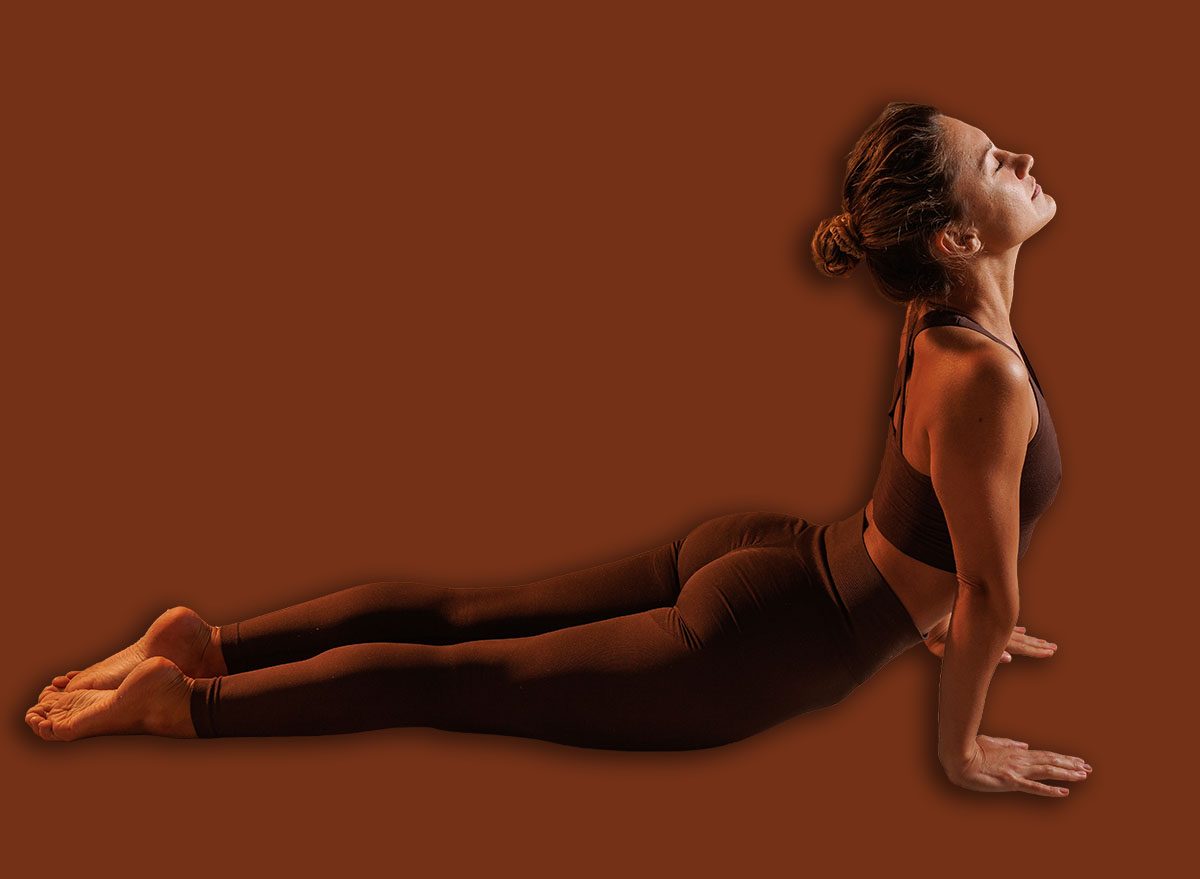
This flowing sequence, inspired by yoga, acts as an ideal dynamic warm-up and mobility drill, preparing the spine, shoulders, and hamstrings for more demanding movements. It transitions the body from a flexed, lengthened position (downward dog) to an extended, open position (cobra), promoting spinal articulation and increasing blood flow to key muscle groups. This movement is not about speed but about smooth, controlled transitions and synchronized breathing, which can also contribute to mental focus and stress reduction.
- Mechanics and Benefits: In downward dog, the hamstrings and calves are stretched, and the shoulders are stabilized. As you flow into cobra, the spine extends, opening the chest and strengthening the spinal erectors, while the glutes and core provide support. This dynamic stretching and strengthening enhances overall flexibility, reduces morning stiffness, and improves postural awareness. It also primes the shoulders and upper back, which are essential for subsequent pulling and pressing movements.
- Adaptations: Individuals with lower back sensitivity should shorten the range of motion in the cobra pose, keeping the elbows slightly bent and avoiding excessive arching. Holding either the downward dog or cobra position statically for a few breaths can also be beneficial, allowing for deeper stretches or isometric holds.
- Recommendation: Perform 2-3 sets of 6-8 repetitions, focusing on smooth, deliberate movements and coordinating with your breath. Rest for 30-45 seconds between sets.
3. Integrated Core and Upper Body Strength: Dumbbell Renegade Row
The dumbbell renegade row is a potent full-body exercise that simultaneously challenges upper body pulling strength, shoulder stability, and, critically, anti-rotational core strength. Performed from a plank position with dumbbells, the exercise requires the core to work intensely to prevent the hips from twisting or shifting as one arm pulls a dumbbell towards the torso. This direct challenge to core stability far surpasses the engagement offered by most traditional crunch variations, which primarily involve spinal flexion.
- Mechanics and Benefits: While the lats, biceps, and upper back muscles execute the rowing motion, the entire core—including the transverse abdominis, obliques, and rectus abdominis—must activate powerfully to maintain a rigid, stable plank. This anti-rotational force is paramount for protecting the spine and enhancing functional core power, directly translating to improved stability in everyday movements. It also builds significant shoulder girdle strength and endurance.
- Adaptations: Begin with lighter dumbbells to master the form. Spreading the feet wider apart provides a more stable base, making the exercise easier to control. For those who find a floor plank too challenging, performing the exercise with hands elevated on a sturdy bench or step can reduce the intensity. The focus should always be on minimizing hip movement.
- Recommendation: Complete 3 sets of 6-8 repetitions per side, resting for 45-60 seconds between sets.
4. Posterior Chain Powerhouse: Dumbbell Deadlift
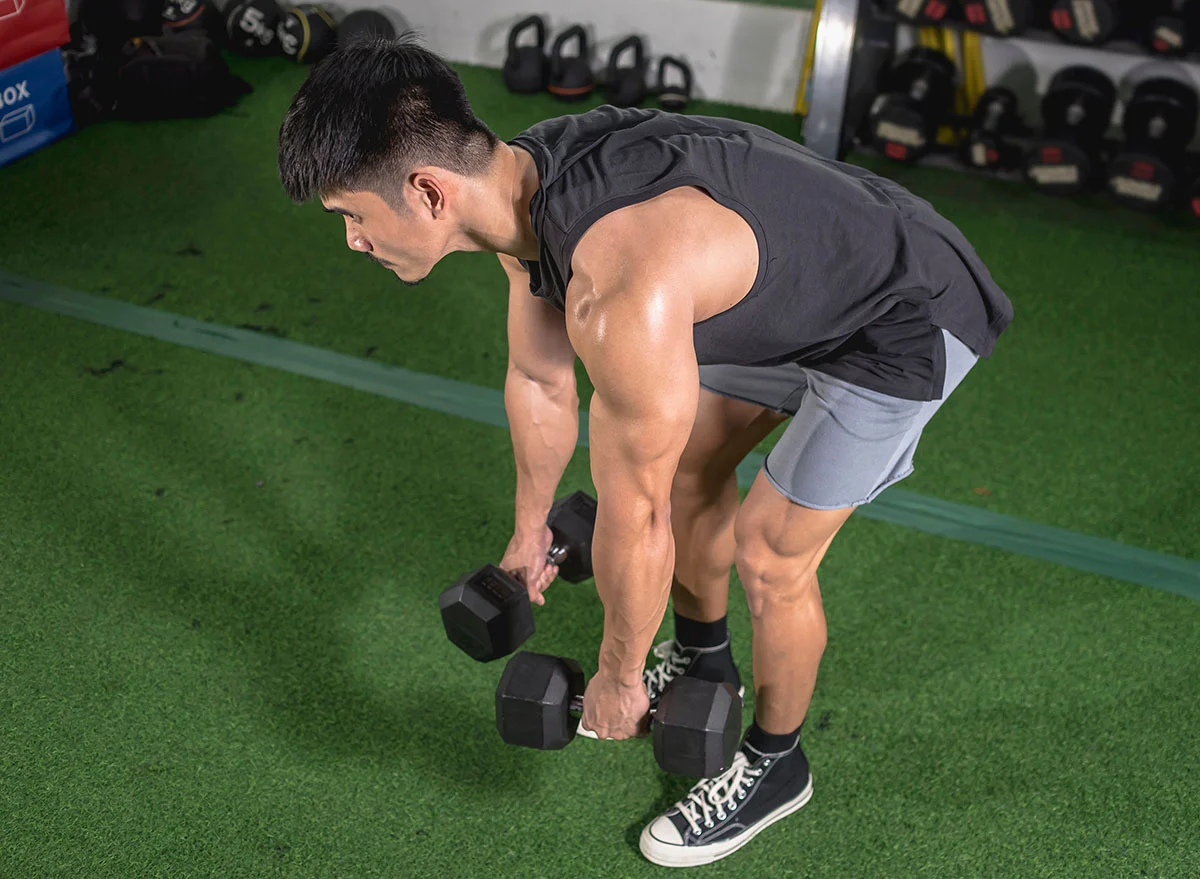
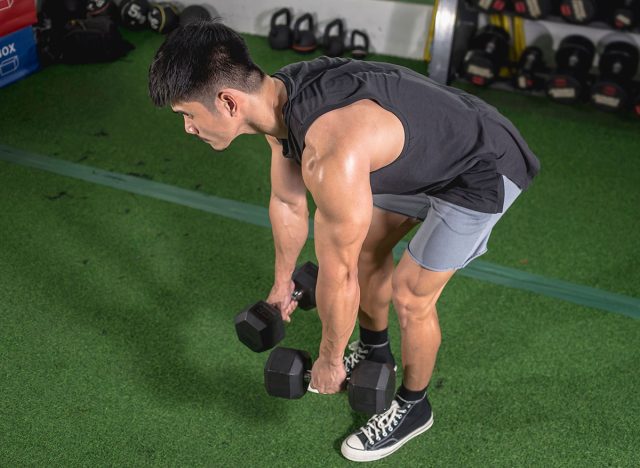
The dumbbell deadlift is a foundational strength exercise that emphasizes the hip hinge pattern, a crucial movement for lifting objects safely and efficiently in daily life. This exercise profoundly engages the posterior chain—the glutes, hamstrings, and lower back—while simultaneously demanding significant core stability to maintain a neutral spinal position under load. It is a highly metabolic movement due to the large muscle groups involved, making it exceptionally effective for improving overall body composition.
- Mechanics and Benefits: Unlike a squat, which is primarily knee-dominant, the deadlift initiates movement from the hips, pushing them backward while maintaining a slight bend in the knees. This recruits the glutes and hamstrings to a much greater extent, building powerful and resilient musculature. The core muscles brace rigorously to protect the spine throughout the lift, reinforcing foundational strength and reducing the risk of lower back injury. Regular deadlifting also contributes to improved bone density, grip strength, and overall functional strength.
- Adaptations: Mastering the bodyweight hip hinge first is essential to ensure proper form. Keep the dumbbells close to the legs throughout the movement to minimize leverage on the lower back. For those new to deadlifts, starting with Romanian deadlifts (RDLs), where the weight doesn’t fully touch the floor, can help reinforce the hamstring and glute engagement.
- Recommendation: Perform 3 sets of 8-12 repetitions, resting for 45-60 seconds between sets. Focus on controlled movement and proper hip hinge mechanics.
5. Advanced Core Stability and Shoulder Endurance: Plank with Shoulder Taps

Concluding the routine with the plank with shoulder taps provides a targeted challenge to core stability and dynamic control. Building upon the static plank, this exercise introduces an element of instability by requiring one hand to lift off the ground and tap the opposite shoulder. The core muscles, particularly the obliques and transverse abdominis, must work overtime to resist rotation and maintain a perfectly still torso, preventing the hips from swaying side to side.
- Mechanics and Benefits: This movement primarily strengthens the anti-rotational capabilities of the core, which are essential for spinal health and preventing injury during twisting or unbalanced movements. It also enhances shoulder stability and body awareness. The key to effectiveness lies in slowing down the movement and focusing on maintaining a rigid, unwavering plank throughout each tap, maximizing the engagement of the deep core stabilizers.
- Adaptations: To make the exercise more accessible, widen the stance of your feet or perform the taps from a knee plank position. Elevating the hands on a stable surface, such as a bench or sturdy counter, can also reduce the intensity. Conversely, for a greater challenge, slow down the tempo of each tap, or try a narrower foot stance.
- Recommendation: Execute 3 sets, aiming for 20-30 seconds of continuous, controlled taps. Rest for 45-60 seconds between sets.
Implementing the Morning Regimen for Sustainable Results
To maximize the benefits of these exercises, integrate them into a circuit-style routine performed three to four mornings per week. After a brief warm-up (perhaps a few minutes of light cardio or dynamic stretches), complete one set of each exercise consecutively. Once all five exercises are done, rest for 60-90 seconds, and then repeat the entire circuit for a total of two to three rounds.
Consistency is paramount. Even short, effective sessions performed regularly will yield superior results compared to sporadic, intense workouts. Always prioritize proper form over the number of repetitions or the amount of weight used. As strength and confidence grow, gradually increase the resistance (e.g., heavier dumbbells), the number of repetitions, or the duration of holds, following the principle of progressive overload.
Ultimately, achieving significant improvements in body composition, particularly in the abdominal region for individuals over fifty, extends beyond the gym. These morning exercises serve as a powerful catalyst, but they must be complemented by a balanced, nutrient-dense diet, adequate hydration, sufficient sleep, and a commitment to overall active living. By embracing this holistic perspective and incorporating a well-rounded, functional fitness routine, individuals can not only sculpt a stronger, more resilient core but also cultivate lasting health and vitality well into their later years.
About the Author