The pursuit of a more defined midsection, particularly for individuals navigating the physiological shifts that accompany aging past 55, often leads to a common misconception: that endless repetitions of abdominal crunches are the most direct route to reducing what is colloquially known as "belly pooch." While exercises specifically targeting the rectus abdominis and obliques certainly contribute to muscular development in the core, the scientific understanding of body fat reduction, especially in specific areas, underscores a more comprehensive reality. True and sustainable trimming of the waistline is predominantly a function of systemic energy balance, where the body expends more calories than it consumes, leading to a gradual depletion of overall stored adipose tissue. Emerging research suggests some minor localized fat reduction might accompany targeted muscle activation; however, the most profound and lasting changes in body composition typically result from physical activities that engage a multitude of muscle groups, thereby significantly elevating metabolic demand and caloric expenditure across the entire body.
This is precisely where dynamic, multi-joint standing exercises reveal their unparalleled efficacy. Movements that synchronize the action of the hips, legs, and upper body not only dramatically increase heart rate but also recruit a much broader spectrum of muscle fibers, leading to a considerably higher energy output compared to isolated abdominal work. This integrated approach has proven particularly effective for many fitness professionals working with clients over 55 who seek efficient yet impactful workout routines. Engaging in large, compound movements compels the body to work harder as a unified system, simultaneously bolstering the deep core musculature responsible for stabilizing and supporting the midsection in a functional context.
Beyond the age of 55, the human body undergoes several physiological transformations that impact body composition and metabolic health. A natural decline in muscle mass, known as sarcopenia, accelerates with age if not actively combated through resistance training. Since muscle tissue is metabolically more active than fat tissue, a reduction in lean mass leads to a lower basal metabolic rate (BMR), making it easier to accumulate fat, particularly around the abdomen. This accumulation of visceral fat, which surrounds internal organs, is a significant health concern linked to increased risks of cardiovascular disease, type 2 diabetes, and certain cancers. Hormonal shifts, such as decreased estrogen in women and testosterone in men, further contribute to this predisposition for central adiposity. Therefore, an exercise regimen that prioritizes muscle preservation and growth, alongside robust caloric expenditure, becomes paramount for both aesthetic goals and long-term health.
The exercises outlined below ingeniously blend strength training with fluid movement, creating a potent physiological stimulus. Each chosen movement actively engages large muscle groups while concurrently demanding constant engagement and stabilization from the core. Regular incorporation of these exercises into a fitness routine will not only cultivate significant strength gains but also substantially boost caloric burn, thereby fostering an environment conducive to reducing persistent abdominal fat.
1. Side Slams (Medicine Ball Slams)
Side slams represent a powerful fusion of rotational force, explosive power, and comprehensive full-body engagement within a single, dynamic action. The act of explosively driving a medicine ball downwards and across the body vigorously activates the oblique muscles – the musculature wrapping around the sides of the waist – while the powerful drive originating from the legs and hips generates significant propulsive force. This synergistic combination places considerable demand on the core’s ability to stabilize and produce rotational power, concurrently elevating the heart rate and augmenting overall caloric expenditure. Rotational exercises are particularly beneficial as they specifically strengthen the entire girdle of muscles that encompass the waistline. Over time, cultivating stronger obliques provides enhanced structural support for a more toned and stable midsection, improving functional movement patterns relevant to daily activities.
- Muscles Engaged: Primarily obliques, alongside shoulders, glutes, hamstrings, and the entire core musculature.
- Execution Insight: Focus on initiating the rotation from your torso, allowing your hips to follow, while maintaining stable foot placement and a continuously braced core throughout the explosive movement.
- Recommended Protocol: Execute 3 sets of 10 to 12 repetitions per side. Allow for a 45-second recovery period between each set.
2. Kettlebell High Pulls
Kettlebell high pulls are an exceptional exercise for developing explosive hip extension power, while simultaneously presenting a formidable challenge to the upper body and core. The forceful drive generated from the hips recruits a substantial volume of muscle mass within the glutes and hamstrings, which are among the largest muscle groups in the body. As the kettlebell ascends in a controlled, powerful arc, the core muscles are intensely engaged to stabilize the torso, ensuring proper posture and controlled movement throughout the lift. This type of full-body exertion significantly amplifies overall energy expenditure and fortifies multiple muscle groups concurrently. Consistent integration of this movement into a training program progressively builds strength, power, and contributes substantially to overall fat loss endeavors by maximizing metabolic activity.
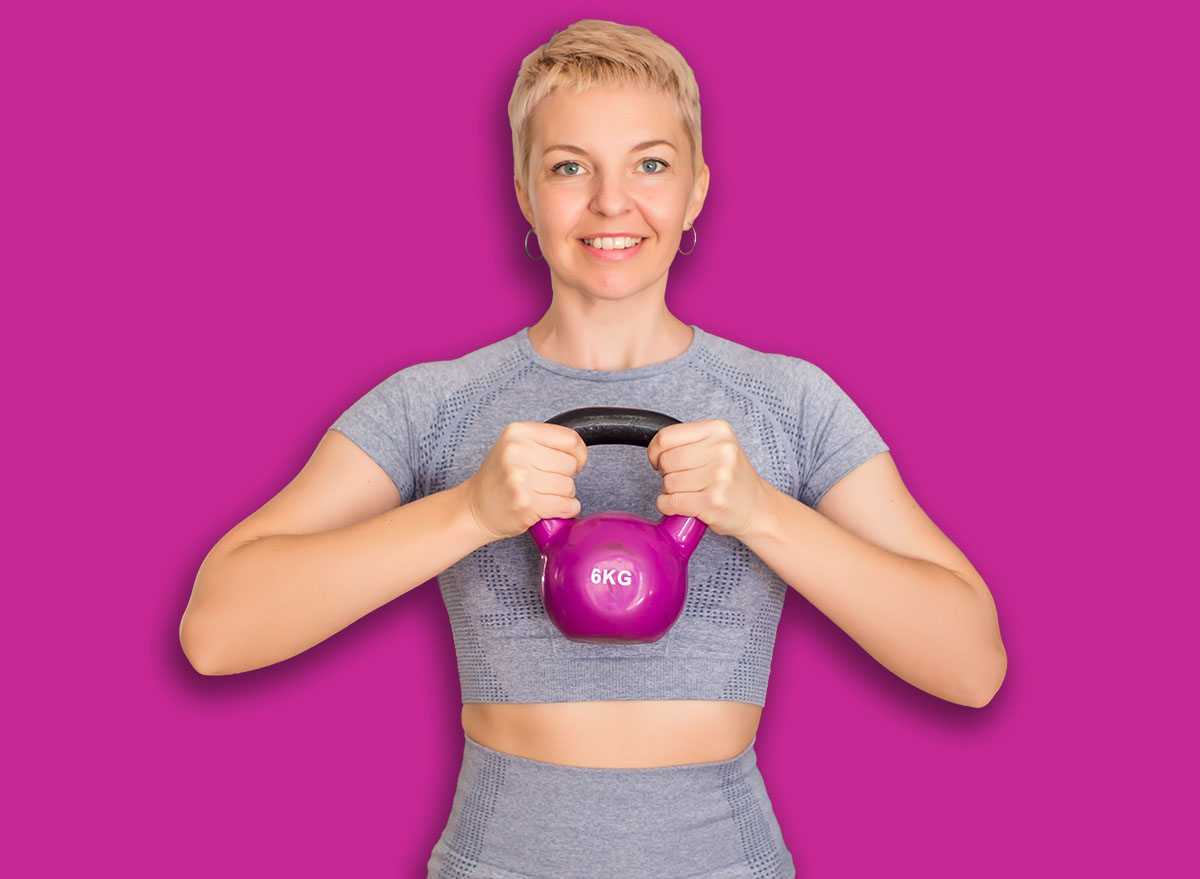
- Muscles Engaged: Glutes, hamstrings, shoulders, and the deep core stabilizers.
- Execution Insight: Critically, the propulsion for the upward movement of the kettlebell should primarily originate from a powerful, explosive extension of your hips and legs, rather than relying predominantly on pulling with your arms.
- Recommended Protocol: Perform 3 sets of 10 to 12 repetitions. Incorporate a 60-second rest interval between each set.
3. Dumbbell Squat to Press (Thruster)
The dumbbell squat to press, often referred to as a thruster, masterfully integrates two fundamental compound movements into one exceptionally potent exercise. The initial squat phase vigorously activates the quadriceps and glutes, while the subsequent overhead press powerfully engages the shoulders and demands significant core stability. This integrated, full-body effort maximizes muscle recruitment across the entire kinetic chain and dramatically elevates caloric expenditure. Crucially, the core remains actively engaged throughout the entirety of the movement, serving to stabilize the spinal column under load and during dynamic transitions. Regular practice of this exercise progressively strengthens the entire musculoskeletal system, while simultaneously supporting and enhancing fat-burning metabolic processes within a comprehensive workout strategy.
- Muscles Engaged: Quadriceps, glutes, shoulders, triceps, and the deep core stabilizers.
- Execution Insight: Prioritize bracing your abdominal muscles firmly before initiating the overhead press component of the movement, ensuring spinal protection and efficient power transfer.
- Recommended Protocol: Complete 3 sets of 8 to 10 repetitions. Rest for 60 seconds between each set.
4. Step-Ups
Step-ups are a highly effective exercise for building robust lower-body strength, while simultaneously elevating heart rate and increasing overall physiological workload. Each individual step requires significant exertion from the glutes and quadriceps, while the core musculature is actively engaged to maintain bodily stability throughout the movement. This powerful combination not only enhances strength in the lower extremities but also contributes significantly to a higher overall caloric expenditure. Furthermore, the step-up movement intrinsically mimics everyday functional activities, such as ascending stairs or navigating uneven terrain, thereby improving real-world mobility and balance. Over time, consistent performance of step-ups cultivates both muscular strength and cardiovascular endurance, serving as a valuable component of any fat-burning fitness regimen.
- Muscles Engaged: Quadriceps, glutes, hamstrings, and the core stabilizers.
- Execution Insight: Consciously drive through the heel of your leading foot as you step onto the elevated surface to maximally engage your gluteal muscles and ensure optimal power generation.
- Recommended Protocol: Execute 3 sets of 10 repetitions per leg, alternating sides or completing all repetitions on one side before switching. Allow for a 60-second rest period between sets.
5. Kettlebell Swing
The kettlebell swing is a foundational exercise renowned for training explosive hip extension and dynamically engaging the entire posterior chain of the body. The powerful, ballistic motion is primarily driven by the forceful contraction of the glutes and hamstrings, while the core is robustly activated to stabilize the spine and transmit force. This repetitive, full-body effort profoundly elevates the heart rate and significantly boosts caloric burn, making it an excellent metabolic conditioning tool. Moreover, kettlebell swings are instrumental in strengthening the muscles vital for maintaining proper posture and facilitating athletic movements. With consistent and correct application, the kettlebell swing emerges as one of the most efficient exercises for simultaneously building strength, power, and dramatically increasing overall energy output.
- Muscles Engaged: Glutes, hamstrings, the entire core complex, and the lower back stabilizers.
- Execution Insight: Emphasize a powerful, crisp hip snap forward at the top of the movement, ensuring your core remains tightly braced throughout the entire arc of the swing to protect your spine and maximize power.
- Recommended Protocol: Perform 3 sets of 12 to 15 repetitions. Incorporate a 60-second rest interval between each set.
Beyond the Workout: Cultivating Supportive Daily Habits for Lasting Change
Achieving a reduction in abdominal fat becomes a significantly more attainable objective when dedicated exercise is synergistically combined with a foundation of supportive daily habits. While physical training effectively stimulates muscle growth and intensifies energy output, the long-term sustainability of fat loss is inextricably linked to broader lifestyle factors. When the pillars of intelligent strength training, balanced nutrition, and adequate recovery are harmoniously aligned, the body’s intrinsic efficiency in maintaining a healthy body composition is profoundly enhanced.
- Prioritize Nutrient-Dense Whole Foods: Focus on a dietary intake rich in lean proteins, complex carbohydrates, and healthy fats. Adequate protein intake is particularly crucial for preserving muscle mass as we age, which directly supports a higher metabolic rate. Fiber-rich foods promote satiety and aid digestive health.
- Ensure Sufficient, Quality Sleep: Sleep is not merely rest; it is a critical period for hormonal regulation. Insufficient sleep can disrupt hormones like cortisol (a stress hormone linked to abdominal fat storage), ghrelin (hunger hormone), and leptin (satiety hormone), making fat loss more challenging. Aim for 7-9 hours of restorative sleep per night.
- Manage Stress Effectively: Chronic stress elevates cortisol levels, which can contribute to increased visceral fat accumulation. Incorporate stress-reduction techniques such as mindfulness, meditation, deep breathing exercises, or engaging in hobbies.
- Stay Adequately Hydrated: Drinking enough water supports metabolic processes, helps differentiate hunger from thirst, and aids in satiety.
- Embrace Consistency: Body composition changes are a marathon, not a sprint. Regular adherence to your exercise routine and healthy eating patterns yields cumulative results over time.
By integrating these comprehensive lifestyle adjustments with the powerful standing exercises detailed above, individuals can construct a holistic routine that not only fosters a stronger body and a more toned midsection but also significantly enhances overall health, vitality, and functional independence well beyond the age of 55. Consulting with a certified fitness professional or healthcare provider is always recommended before embarking on any new exercise program, particularly for those with pre-existing health conditions.
About the Author