Maintaining a high degree of physical vitality and independence becomes increasingly paramount as individuals progress beyond their fifth decade of life. While chronological age is often a mere number, an individual’s capacity for continuous, controlled movement offers a profound insight into their true physiological resilience and overall health status. For many, the ability to fluidly execute a series of functional exercises without pausing for rest serves as a significant benchmark, reflecting a comprehensive integration of cardiovascular stamina, core stability, joint mobility, muscular endurance, and neuromuscular coordination. This metric moves beyond isolated strength or flexibility, revealing how effectively the body’s systems collaborate to support an active and autonomous lifestyle.
Expert trainers and health professionals frequently observe that early morning physical assessments provide an exceptionally candid "snapshot" of a person’s baseline fitness. At this time of day, the body has not yet fully acclimated to the demands of daily activity, and energy systems are just beginning to mobilize. The absence of a thorough warm-up or the mitigating effects of stimulants means that underlying physiological strengths and weaknesses are more readily apparent. Fatigue tolerance, the efficiency of muscle recruitment, and the body’s inherent capacity for sustained effort are all exposed with remarkable clarity. When clients demonstrate the capability to transition seamlessly between diverse movements, it often signifies a robust foundational fitness that extends beyond structured workouts, bolstering their ability to handle everything from routine household tasks to spontaneous recreational pursuits and unexpected physical challenges. This type of integrated, continuous physical work cultivates a deep-seated resilience crucial for navigating the demands of an active life well into later years.
The decline in physical capabilities, often attributed to the natural aging process, is in many cases exacerbated by sedentary lifestyles and a lack of targeted physical activity. Sarcopenia, the age-related loss of muscle mass and strength, coupled with reduced bone mineral density, decreased joint lubrication, and a general stiffening of connective tissues, can significantly impair functional independence. However, strategic engagement in multi-faceted exercise protocols has been scientifically shown to mitigate these effects, preserving and even enhancing physical capacity. The following five-movement sequence, designed to be performed consecutively without rest, is not merely a collection of exercises; it is a holistic diagnostic tool. Successfully completing these movements without interruption indicates a rare and commendable level of systemic fitness for adults over 50, placing them within an elite tier for their age demographic. The emphasis throughout should be on fluid transitions, consistent breathing, and precise execution of each repetition, from commencement to conclusion.
1. Dynamic Cardiovascular Activation: The Jumping Jack
Initiating the sequence, the jumping jack serves as a rapid catalyst for cardiovascular activation, simultaneously engaging multiple muscle groups and enhancing neuromuscular coordination. This full-body rhythmic motion prepares the physiological systems for subsequent exertion, fostering improved circulation and contributing to bone mineral density through its low-impact plyometric nature. Its inclusion at the outset is strategic, designed to elevate the heart rate promptly and challenge the body’s timing mechanisms. When executed with proper alignment and a light, agile foot placement, this deceptively simple movement also contributes to the maintenance of explosive power and agility, attributes often diminished with advancing age.
- Primary Systems Targeted: Cardiovascular system, calves, quadriceps, deltoids.
- Relevance for Over 50: Enhances heart health, improves coordination for fall prevention, and supports bone density.
- Benchmark Reps: Aim for 30 to 50 continuous repetitions.
- Key Form Cue: Maintain a tall chest and land softly on the balls of your feet.
- Adaptations: For lower impact, consider stepping jacks or seal jacks.
2. Core Integrity and Anti-Rotational Stability: Plank with Shoulder Taps
Following the dynamic warm-up, the plank with alternating shoulder taps rigorously evaluates core integrity and anti-rotational stability. This exercise demands sustained engagement of the deep abdominal muscles and stabilizers to prevent pelvic sway, directly translating to improved spinal health, enhanced posture, and reduced risk of injury during everyday movements that involve twisting or reaching. The continuous tapping motion while maintaining a rigid plank position specifically challenges the trunk’s ability to resist rotational forces, a critical component of functional strength often overlooked. This movement also significantly bolsters shoulder girdle stability, crucial for upper body function and injury prevention.
- Primary Systems Targeted: Rectus abdominis, transverse abdominis, obliques, deltoids, glutes.
- Relevance for Over 50: Strengthens the core to protect the spine, improves balance, and supports strong posture, mitigating common age-related back discomfort.
- Benchmark Reps: Perform 20 to 30 total taps, alternating sides.
- Key Form Cue: Keep hips level and avoid rocking; imagine balancing a glass of water on your lower back.
- Adaptations: Widen the foot stance for increased stability, or perform on an incline.
3. Posterior Chain Lengthening and Joint Mobility: Downward-Facing Dog Hold
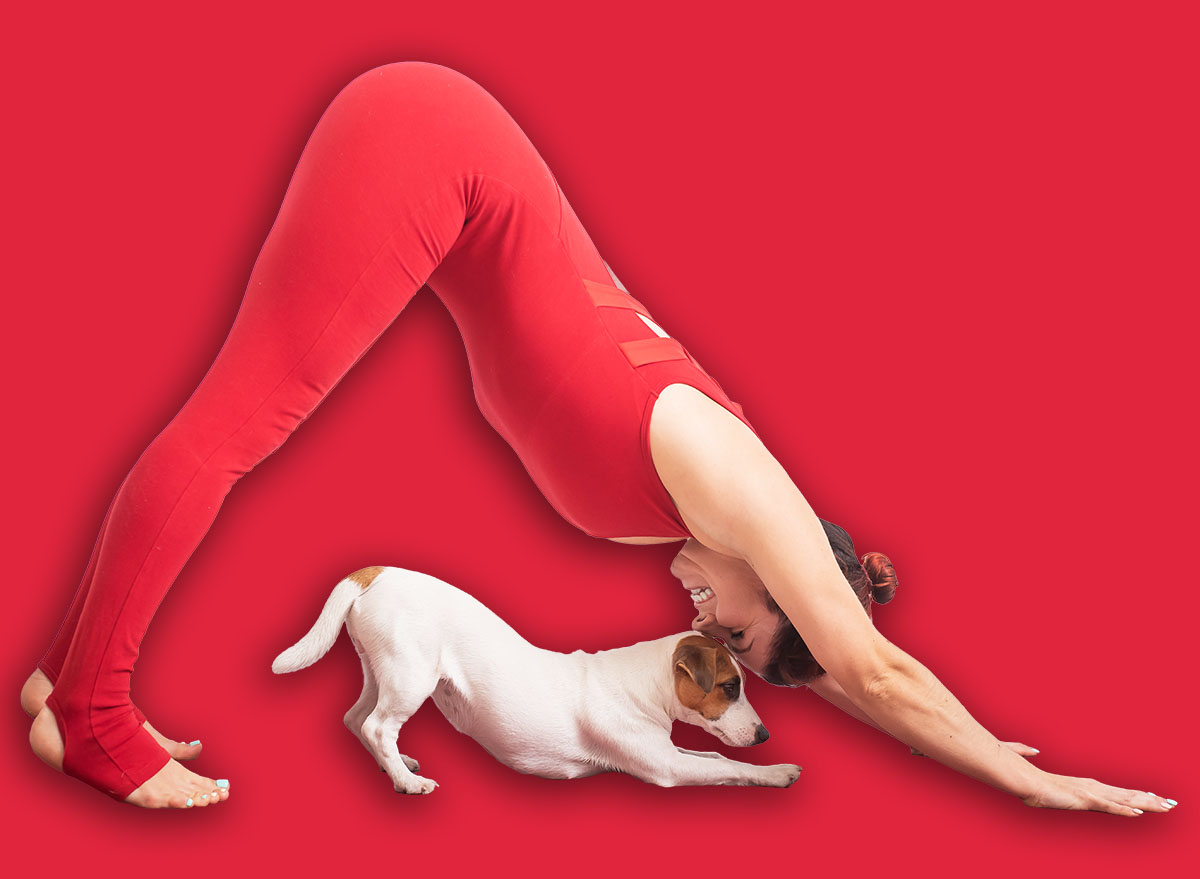
Transitioning to a restorative yet active posture, the downward-facing dog hold targets the often-tight posterior chain, promoting elongation through the hamstrings, calves, and spine. This inverted V-shape stance also cultivates shoulder girdle stability and enhances overall body flexibility, serving as a crucial indicator of joint health and range of motion, which frequently diminishes with age. After the initial cardiovascular and core challenges, this position provides an active recovery that maintains engagement while simultaneously decompressing the spine and stretching key muscle groups. It inherently reinforces proper overhead positioning, a fundamental aspect of functional mobility required for tasks like reaching into high cupboards.
- Primary Systems Targeted: Hamstrings, calves, deltoids, latissimus dorsi, spinal extensors.
- Relevance for Over 50: Improves flexibility, alleviates tension in the lower back and hamstrings, and enhances shoulder mobility for a greater range of motion.
- Benchmark Duration: Hold the position for 30 to 45 seconds.
- Key Form Cue: Prioritize lengthening the spine and pressing hips toward the ceiling over forcing heels to the floor.
- Adaptations: Bend knees deeply to reduce hamstring tension, or pedal the feet to stretch one leg at a time.
4. Gluteal Power and Hip Extension: The Glute Bridge
The glute bridge specifically isolates and strengthens the gluteal muscles and hamstrings, vital for powerful hip extension—a fundamental movement pattern essential for walking, climbing stairs, and maintaining an upright posture. This exercise directly addresses common muscular imbalances, such as "gluteal amnesia," where the glutes become underactive due to prolonged sitting, leading to compensatory strain on the lower back and knees. By restoring strong hip drive, the glute bridge improves locomotion efficiency, reduces the risk of lower back discomfort, and supports overall lower-body endurance. Its placement within the sequence ensures that a foundational strength element is tested after mobility and before more complex unilateral movements.
- Primary Systems Targeted: Gluteus maximus, hamstrings, erector spinae.
- Relevance for Over 50: Crucial for walking mechanics, climbing, reducing back pain, and preventing falls by strengthening the body’s largest and most powerful muscle group.
- Benchmark Reps: Complete 15 to 20 controlled repetitions.
- Key Form Cue: Drive through your heels, squeezing your glutes at the top to lift hips fully off the floor without arching the lower back excessively.
- Adaptations: Perform single-leg glute bridges for increased challenge, or add a resistance band around the knees.
5. Unilateral Strength, Balance, and Coordination: Alternating Reverse Lunges
Concluding the sequence, the alternating reverse lunge is a comprehensive test of unilateral leg strength, dynamic balance, and motor coordination. Mimicking real-world movements like stepping or climbing, this exercise strengthens the quadriceps, hamstrings, and glutes independently, while simultaneously challenging proprioception—the body’s awareness in space—a critical factor in fall prevention and maintaining agility as one ages. Performing these lunges smoothly and with control, especially towards the end of a continuous circuit, demonstrates significant lower-body endurance and the ability to manage fatigue while maintaining proper form. It highlights an individual’s readiness for dynamic, everyday activities.
- Primary Systems Targeted: Quadriceps, glutes, hamstrings, core stabilizers, balance system.
- Relevance for Over 50: Directly improves balance, strengthens leg muscles for walking and stair climbing, and enhances coordination to prevent stumbles and falls.
- Benchmark Reps: Execute 16 to 20 total repetitions, alternating legs.
- Key Form Cue: Step back far enough to allow both knees to bend to approximately 90 degrees, keeping the front knee aligned over the ankle.
- Adaptations: Use a light support (like a chair) for balance, or perform slow-tempo lunges to increase time under tension.
Strategies for Enhancing Physical Prowess Beyond Fifty
Achieving and sustaining the capacity for continuous, unassisted movement after the age of 50 demands a concerted and intelligent approach. Many adults can significantly improve their stamina and functional strength through consistent effort and a progressively challenging regimen. The journey from requiring frequent rest breaks to executing fluid, uninterrupted circuits can often be observed within weeks, provided dedication and strategic training are applied. The cornerstone of improvement lies in practicing controlled movement patterns while gradually escalating the workload.
- Embrace Progressive Overload: To continue making gains, muscles and cardiovascular systems need to be challenged more over time. This could mean increasing repetitions, extending hold durations, reducing rest times, or introducing more challenging variations of exercises.
- Prioritize Consistency: Regularity is more impactful than intensity. Establishing a routine, even if it’s just a few times a week, builds foundational fitness and reinforces positive habits.
- Listen to Your Body: Aging bodies require more mindful attention to recovery and pain signals. Differentiating between muscle soreness and joint pain is crucial. Adjusting workouts as needed, incorporating active recovery, and ensuring adequate rest prevents overtraining and injury.
- Holistic Wellness: Optimal physical performance is intrinsically linked to other lifestyle factors. Ensure a nutrient-rich diet, adequate hydration, sufficient sleep, and effective stress management techniques. These elements collectively support muscle repair, energy levels, and overall vitality.
- Seek Professional Guidance: Consulting with a certified personal trainer or a physical therapist, especially one experienced in working with older adults, can provide tailored programming, correct form guidance, and help navigate individual limitations or pre-existing conditions safely.
- Set Realistic, Achievable Goals: Focus on incremental improvements rather than immediate perfection. Celebrate small victories and maintain a long-term perspective on health and fitness.
- Vary Your Routine: While consistency in the core movements is vital, incorporating other forms of exercise—such as brisk walking, swimming, cycling, or yoga—can further enhance overall fitness, prevent plateaus, and maintain motivation.
These benchmarks are not merely indicators of physical prowess; they are reflections of an investment in an independent, vibrant future. By diligently adhering to a well-structured routine and committing to continuous improvement, individuals can cultivate the comprehensive fitness necessary to thrive in their later years, placing themselves firmly among the most capable and resilient for their generation. The objective extends beyond simply reaching an arbitrary fitness level; it is about empowering a life lived fully, actively, and without undue physical limitation.
About the Author