As individuals navigate the complexities of aging, maintaining a strong and stable core becomes an increasingly important facet of overall health, impacting everything from posture and balance to metabolic well-being. The midsection, often a challenging area to sculpt at any age, undergoes specific physiological transformations after the age of 55, making targeted and intelligent exercise approaches essential. Rather than relying solely on traditional floor-based abdominal work, a growing consensus among fitness professionals emphasizes the efficacy of functional, upright movements. Karen Ann Canham, a Board-Certified Wellness Coach and Nervous System Specialist with nearly two decades of experience in the wellness and corporate leadership sectors, advocates for an accessible eight-minute standing routine specifically designed to address these age-related changes and promote a firmer, more resilient core.
The shift in body composition and the challenge of maintaining a toned midsection post-55 are rooted in several interconnected biological processes. One primary factor is sarcopenia, the progressive and generalized loss of skeletal muscle mass and strength that typically accelerates after the fifth decade of life. This decline directly impacts the core musculature, which, if not consistently stimulated, becomes less active and less capable of providing the necessary support for the abdomen and spine. Consequently, the entire trunk can lose its foundational stability and definition. Furthermore, hormonal fluctuations play a significant role in altering fat distribution patterns. As women enter menopause, a decrease in estrogen levels often leads to a redistribution of fat from the hips and thighs to the abdominal region, specifically increasing visceral fat, which surrounds internal organs and poses greater health risks than subcutaneous fat. Similarly, men experience a gradual decline in testosterone, which can also contribute to increased central adiposity. These hormonal shifts mean that even without a significant change in overall body weight, many adults observe a noticeable accumulation of fat around their waistline.
Beyond these physiological shifts, modern lifestyles, characterized by prolonged periods of sitting and sedentary habits, exacerbate the weakening of deep core stabilizers. Muscles like the glutes, which are critical for hip extension and pelvic stability, often become underactive, while hip flexors can become tight. This imbalance frequently leads to an anterior pelvic tilt and a compensatory arch in the lower back, causing the abdominal muscles to appear more prominent, irrespective of the amount of fat present. The transverse abdominis, a deep core muscle that acts like a natural corset, is particularly susceptible to disengagement in individuals with poor posture or prolonged sitting habits. When these crucial stabilizing muscles lose their strength and activation, the abdomen can protrude, giving the impression of a softer midsection even when excess fat isn’t the primary culprit. Therefore, simply performing crunches or sit-ups on the floor, which often target the more superficial rectus abdominis, may not adequately address the underlying issues of core weakness and postural imbalances prevalent in older adults.
According to Canham, the key to restoring midsection firmness and functional strength lies in embracing exercises that engage the core in upright, dynamic, and functional positions. This approach contrasts with traditional floor-based exercises by integrating core activation with balance, coordination, and movements that mimic daily activities. The emphasis shifts from merely developing visible "six-pack" muscles to cultivating robust stability and improving overall posture. By working the core in standing positions, individuals engage a broader network of muscles, including those responsible for maintaining balance and coordinating movement across multiple joints. This holistic engagement is crucial for enhancing mobility, reducing the risk of falls, and supporting the spine effectively in real-world scenarios.
Canham’s recommended eight-minute routine is a testament to this philosophy, offering a time-efficient and accessible series of exercises that can be performed anywhere without special equipment. Each movement is designed to target key core muscles, improve stability, and promote functional strength.
1. Standing Torso Rotations
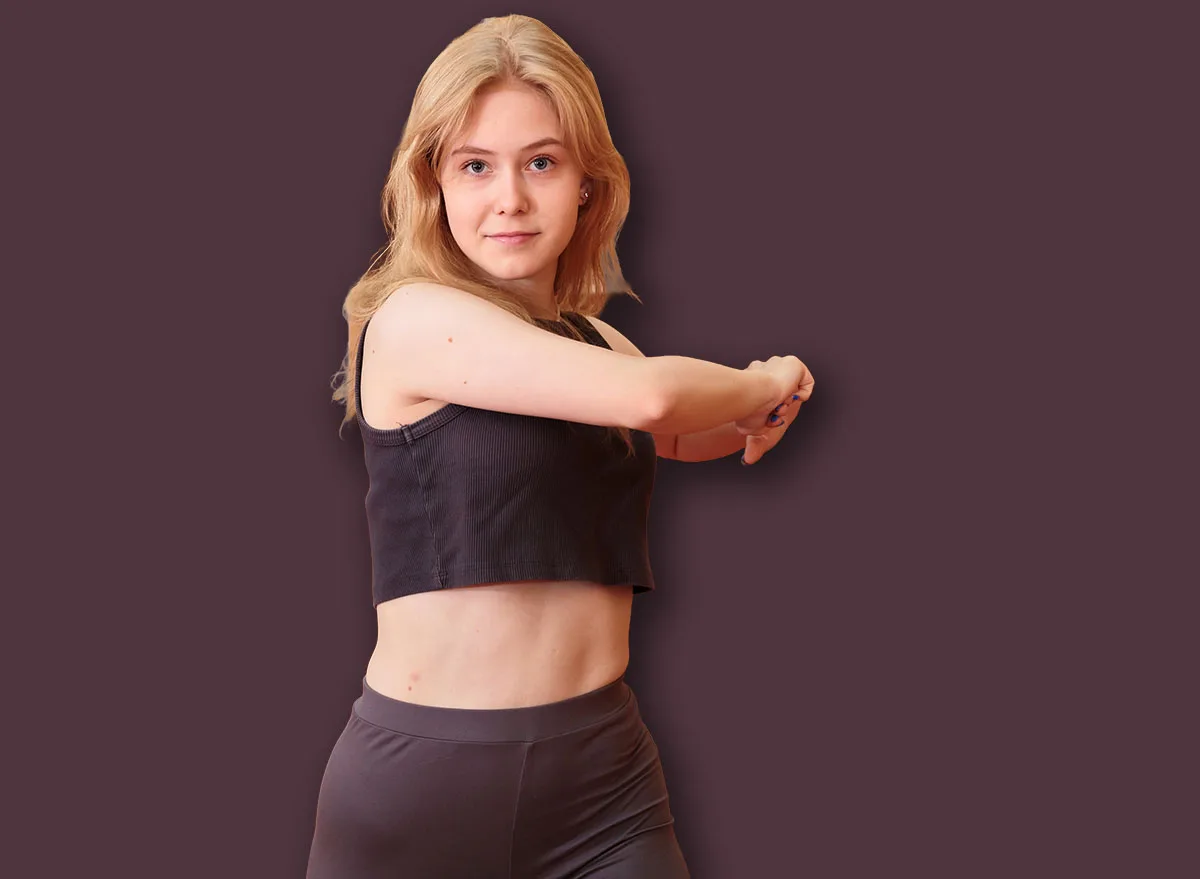
This exercise focuses on improving spinal mobility and engaging the oblique muscles, which are vital for twisting and lateral flexion of the trunk. To perform standing torso rotations, begin with feet shoulder-width apart, knees slightly bent, and the core gently engaged. Extend arms straight out to the sides at shoulder height, or interlace fingers behind the head. Keeping the hips relatively stable and facing forward, slowly rotate the upper body from the waist to one side, feeling a gentle stretch and contraction in the obliques. Hold briefly, then return to the center and rotate to the opposite side. It’s crucial to control the movement, avoiding jerky motions, and to maintain a tall spine throughout. Performing 15-20 repetitions on each side for 60-90 seconds helps enhance rotational strength and flexibility, contributing to a more cinched waistline and improved trunk stability. The controlled rotation also mobilizes the thoracic spine, which can become stiff with age and sedentary habits.
2. Standing Knee Lifts
Standing knee lifts are excellent for engaging the lower abdominal muscles, hip flexors, and improving dynamic balance. Start standing tall with feet hip-width apart, shoulders relaxed, and the core braced. Slowly lift one knee towards the chest, aiming for a 90-degree angle at the hip if comfortable, while keeping the standing leg slightly bent and stable. Focus on pulling the knee up using the abdominal muscles, rather than just swinging the leg. Hold the lifted position for a second or two, emphasizing balance, then gently lower the foot back to the starting position. Alternate legs, performing the movement in a controlled manner. Aim for 10-15 repetitions per leg over 60-90 seconds. This exercise not only strengthens the lower core and hip flexors but also challenges the stabilizing muscles of the standing leg and improves proprioception, which is the body’s awareness of its position in space.
3. Standing Side Bends
Standing side bends effectively target the oblique muscles, quadratus lumborum (a deep muscle in the lower back), and improve lateral flexibility of the spine. Begin standing with feet shoulder-width apart, one hand placed on the hip and the other arm extended overhead, palm facing inward. Keeping the core engaged and shoulders relaxed, slowly bend directly to the side towards the hand on the hip, feeling a stretch along the opposite side of the torso. Avoid bending forward or backward; the movement should be purely lateral. Return to the starting position with control. Perform 10-15 repetitions on one side before switching to the other, or alternate sides for a total of 60-90 seconds. This exercise helps to strengthen the muscles responsible for side-to-side stability, enhancing the definition of the waist and supporting a healthy spine.
4. Standing Cross-Body Punches
This dynamic exercise integrates core rotation, arm movement, and a light cardiovascular element, engaging the obliques, shoulders, and back muscles while enhancing coordination. Stand with feet slightly wider than shoulder-width, knees softly bent, and core tight. Bring hands up to a guard position, fists near the chin. Rotate the torso and punch across the body with one arm, aiming for the opposite side. For instance, if punching with the right arm, rotate the torso to the left, extending the right arm across the body. The pivot should originate from the core and hips, not just the arm. As one arm punches, the other stays in the guard position. Quickly retract the punching arm and repeat on the other side, maintaining a continuous, controlled rhythm for 60-90 seconds. This exercise builds rotational power and endurance in the core, translating into improved functional strength for activities requiring twisting and reaching.
5. Standing Marches
Standing marches are a fundamental yet highly effective exercise for engaging the deep core muscles, improving balance, and activating the hip flexors in a low-impact manner. Stand tall with feet hip-width apart, shoulders back and down, and core gently pulled in towards the spine. Slowly lift one knee towards the chest, aiming for a comfortable height, while keeping the standing leg firm but not locked. The movement should be deliberate and controlled, focusing on maintaining stability through the core. Lower the foot back to the ground with control and immediately lift the other knee. Continue alternating legs in a marching motion. For added challenge, ensure the knee lifts are performed without leaning back or rocking the torso. Aim for a steady pace for 60-90 seconds. This exercise is foundational for developing core stability, improving gait, and enhancing balance, making it particularly beneficial for older adults.
To integrate these exercises into a coherent routine, Canham suggests performing each movement for approximately 60-90 seconds, with minimal rest between exercises, to achieve the total eight-minute duration. Consistency is paramount for observing tangible results. While this standing routine offers a powerful tool for core strengthening, it is crucial to remember that optimal midsection firmness and overall health are multifaceted endeavors. A balanced nutritional intake, adequate hydration, sufficient sleep, and effective stress management strategies all play critical roles in mitigating abdominal fat and supporting muscle maintenance. Before embarking on any new exercise regimen, especially after 55, consulting with a healthcare professional or a certified fitness expert is always advisable to ensure the exercises are appropriate for individual health conditions and fitness levels. By embracing this functional, standing approach to core work, older adults can proactively enhance their stability, improve posture, and cultivate a stronger, more resilient midsection, contributing significantly to a higher quality of life.
About the Author