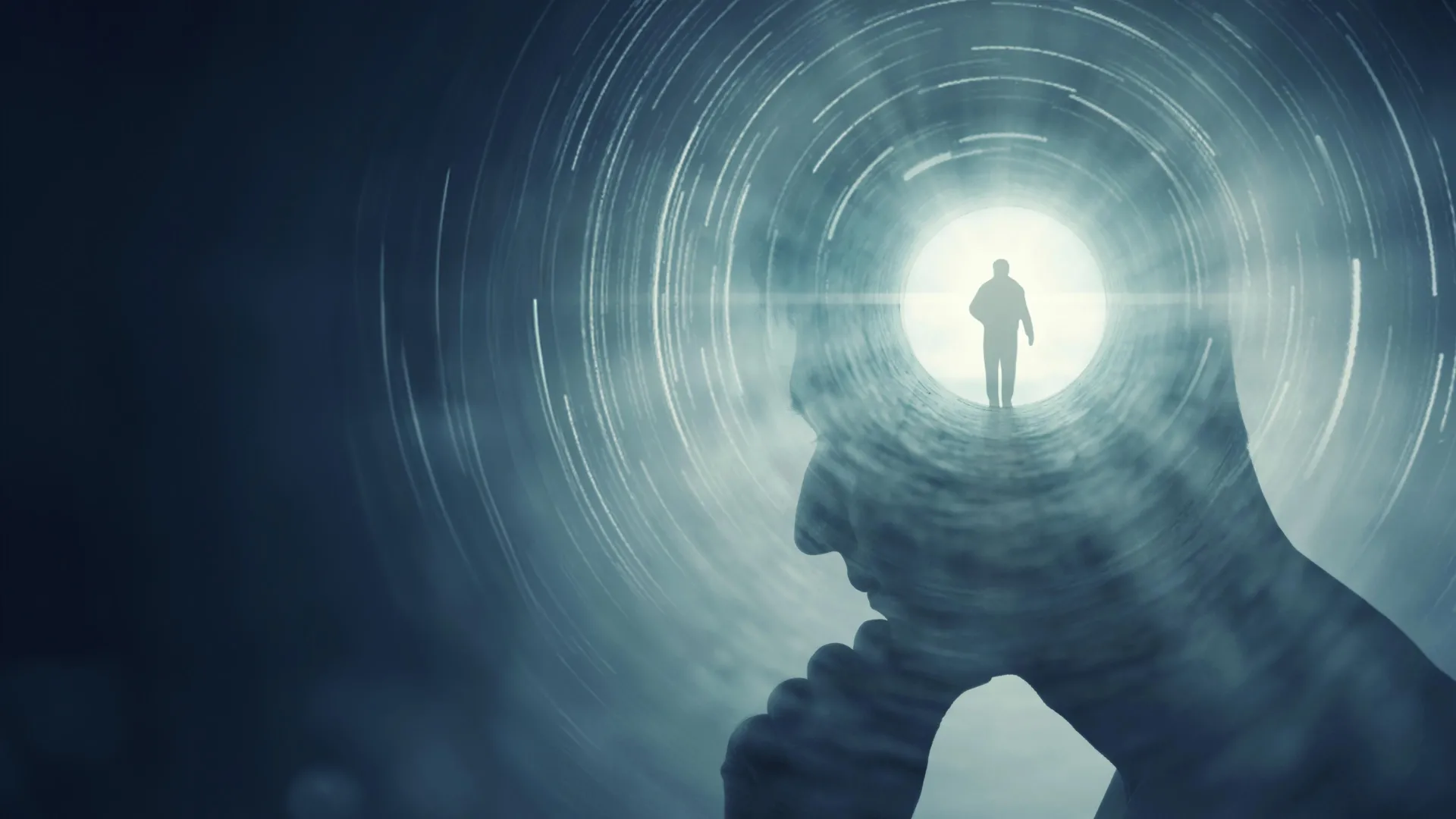
The profound enigma of subjective experience, the very sensation of "being," stands as one of science’s most formidable challenges, prompting leading researchers to question foundational assumptions about reality itself. At the heart of this intellectual frontier is the work of Dr. Christof Koch, a world-renowned neuroscientist, who recently illuminated the complexities of this quest during the 15th "Behind and Beyond the Brain" Symposium. His discourse ventured far beyond conventional neurological investigations, probing whether the human brain merely generates consciousness, or if awareness might, in fact, be an intrinsic, more fundamental property woven into the fabric of existence.
For decades, neuroscience has made monumental strides in mapping the brain’s intricate functions. Sophisticated imaging techniques allow researchers to pinpoint neural circuits activating when an individual perceives an object, registers pain, retrieves a memory, or formulates a decision. Yet, despite this remarkable progress in correlating brain activity with mental states, a critical chasm persists: the inability to explain why these observable physical processes are accompanied by an inner, felt experience. This gap represents what philosophers term the "hard problem" of consciousness—a term coined by David Chalmers—which differentiates it from "easy problems" like understanding how the brain processes sensory data or controls motor functions. While we can describe the mechanisms of neural firing, the transformation of electrochemical signals into the vivid, personal sensation of seeing the color red, or the subjective feeling of sadness, remains stubbornly opaque to purely materialist explanations.
Dr. Koch, formerly a distinguished professor at both the California Institute of Technology (Caltech) and the Massachusetts Institute of Technology (MIT), and now a principal investigator at the Allen Institute for Brain Science, has been at the forefront of consciousness research for many years. His early career focused extensively on identifying the neural correlates of consciousness (NCCs)—the minimal neuronal mechanisms sufficient for any one specific conscious percept. This groundbreaking work has been instrumental in bridging the gap between brain states and conscious states. However, his current explorations suggest a growing recognition of the limits of a strictly reductionist approach, particularly as it pertains to the "hard problem." He posits that while materialism, the prevailing scientific paradigm asserting that all phenomena can be explained through matter, energy, and physical laws, has yielded immense understanding, it encounters significant conceptual difficulties when confronting the qualitative nature of subjective experience.
In his recent presentation, Koch outlined three principal domains where current scientific models face substantial uncertainty and warrant deeper investigation. The first involves the inherent difficulty in reducing the entirety of conscious experience to merely the physical processes occurring within the brain. This touches directly upon the "hard problem," questioning whether a complete explanation of consciousness can ever emerge solely from analyzing neuronal networks and their biochemical interactions.
The second area of focus draws from contemporary physics, which has itself begun to challenge our intuitive understanding of "reality." Quantum mechanics, for instance, introduces concepts such as non-locality and observer-dependent reality, suggesting that the universe might be far stranger and less "material" than classical physics once proposed. These advancements prompt a reconsideration of what fundamental properties truly define our existence, potentially opening doors for consciousness to play a more central, rather than emergent, role.
Finally, Koch emphasized the importance of rigorously examining unusual human experiences that defy easy categorization or explanation within conventional scientific frameworks. These include phenomena like near-death experiences (NDEs), profound mystical states reported across cultures, and perhaps most strikingly, episodes of terminal lucidity. Terminal lucidity refers to the perplexing, often transient, return of mental clarity and cognitive function shortly before death, sometimes observed in individuals who have suffered from severe neurodegenerative conditions like advanced dementia or other debilitating brain disorders that had previously rendered them unable to communicate or recognize loved ones. Such occurrences present a profound challenge to the widely accepted notion that consciousness is entirely dependent on a fully functional brain, as they seem to manifest when the brain is in an advanced state of decay or severe impairment.
Dr. Koch stresses that while these extraordinary experiences do not definitively "prove" the existence of consciousness independent of the brain, their consistent reporting and peculiar nature demand serious scientific inquiry rather than dismissal. They serve as potential anomalies that could expose fundamental gaps or limitations in our current understanding of consciousness and brain function, much like inexplicable observations have historically spurred paradigm shifts in other scientific fields.
To address these profound questions, Koch suggests that researchers may need to broaden their conceptual toolkit, revisiting philosophical perspectives such as idealism and panpsychism, while steadfastly adhering to modern scientific methodologies. Idealism, in its broadest sense, proposes that consciousness or mind is the fundamental essence of reality, with the physical world being secondary or a manifestation of mind. Panpsychism, a more nuanced philosophical stance, posits that consciousness, or proto-conscious properties, are not limited to complex organisms like humans or animals but are instead a fundamental property of the universe, present in varying degrees throughout nature, perhaps even at the atomic or subatomic level. From these vantage points, consciousness would not merely "switch on" once a brain achieves a certain level of complexity; rather, it could be an underlying, ubiquitous feature of reality itself, with complex brains merely acting as sophisticated filters or amplifiers.
One of the most radical yet scientifically grounded frameworks exploring such possibilities is Integrated Information Theory (IIT), of which Dr. Koch is a leading proponent alongside its originator, Giulio Tononi. IIT attempts to describe consciousness mathematically, proposing that subjective experience arises in systems that possess a high degree of "integrated information." This means that consciousness depends not only on the sheer amount of information a system processes but critically on how deeply and irreducibly its parts are interconnected and interact to form a unified whole. A system with high "Phi" (Φ), the theory’s measure of integrated information, would exhibit a capacity for subjective experience because it cannot be reduced to its independent parts without losing its essential properties. For instance, the human brain, with its vast and intricate network of interconnected neurons, exhibits a high Φ, leading to rich conscious experience. This theory is often described as a scientific interpretation of panpsychism, as it allows for the theoretical possibility that any system, from a complex computer network to perhaps even fundamental particles, could possess some rudimentary form of subjective experience if it meets the criteria for integrated information.
Beyond these theoretical explorations, Dr. Koch’s work also has crucial practical implications. He has played a significant role in developing innovative approaches to detect potential signs of awareness in patients who appear unresponsive due to severe brain injury or disorders of consciousness. Many individuals in vegetative or minimally conscious states may retain some level of conscious brain activity despite being unable to move or communicate. Reliable methods for detecting such hidden awareness, often employing advanced neuroimaging techniques like fMRI or sophisticated EEG analyses, are vitally important for accurate diagnosis, guiding appropriate treatment decisions, and ensuring dignified medical care. This clinical application underscores the critical need to better understand consciousness, not only for philosophical enlightenment but for the tangible well-being of patients.
The journey to comprehend consciousness is inherently interdisciplinary, demanding insights from neuroscience, philosophy, physics, and psychology. By meticulously examining the boundaries of materialist explanations, confronting the unresolved questions within neuroscience, and rigorously investigating experiences that challenge conventional understanding, Dr. Christof Koch and his colleagues are pushing the very limits of scientific inquiry. Their endeavors raise the profound possibility that consciousness is not merely an emergent property of a complex brain but may be intricately woven into the very fabric of the cosmos, compelling humanity to fundamentally re-evaluate its place in the universe.
About the Author