As individuals navigate the journey of aging, maintaining functional independence becomes paramount for preserving quality of life. Among the body’s intricate systems, the shoulder joint stands out as a critical nexus for countless daily activities, from reaching into a cabinet to lifting grandchildren or even simply dressing oneself. For those over the age of sixty, the natural physiological changes associated with aging, such as sarcopenia (age-related muscle loss) and decreased joint flexibility, can significantly compromise shoulder integrity and range of motion. However, proactive engagement in targeted, functional strength training, particularly within the convenience of a home environment, offers a powerful pathway to not only mitigate these declines but actively enhance upper body resilience and overall mobility.
The shoulder girdle, a complex arrangement of bones, muscles, tendons, and ligaments, is renowned for its exceptional range of motion. This versatility, however, comes with a trade-off: a predisposition to instability and injury, especially as supportive tissues weaken with age. Common issues among seniors include rotator cuff tears, impingement syndrome, and generalized stiffness, all of which can severely impede functional tasks and contribute to a reduction in independence. Addressing these challenges requires a comprehensive approach that prioritizes joint stability, muscular strength across multiple planes of movement, and improved proprioception—the body’s sense of its position in space.
While commercial gym environments offer an array of equipment, including machines designed to isolate specific muscle groups, a compelling argument can be made for the efficacy and appropriateness of home-based functional exercises for the senior demographic. Unlike many gym machines that guide movement along a fixed path, thereby reducing the need for stabilizing muscles, functional home exercises demand greater control and coordination from the user. This approach fosters a more integrated activation of muscle chains, engaging not just the primary movers but also the critical stabilizing muscles of the shoulder, upper back, and core. Such comprehensive engagement mirrors the demands of real-world movements, rendering the strength gains more transferable to daily life and thus significantly more beneficial for enhancing practical capabilities. Furthermore, the accessibility of a home workout eliminates barriers such as travel, gym memberships, and the potential intimidation of a bustling fitness center, making consistent adherence more achievable. With just a few simple tools—a light resistance band and a single dumbbell—a highly effective and progressive shoulder strengthening regimen can be established.
Before embarking on any new exercise program, particularly for older adults, a fundamental principle involves assessing current movement patterns. A qualified fitness professional or physical therapist would typically observe how an individual’s arm moves through its full range, noting any compensatory actions such as excessive arching of the lower back during overhead lifts or poor scapular (shoulder blade) control. These observations are crucial because they reveal underlying weaknesses or imbalances that, if unaddressed, could perpetuate inefficient movement and heighten injury risk. The exercises outlined below are specifically chosen for their ability to address these common deficiencies, fostering improved control, stability, and strength.
Four Foundational Exercises for Shoulder Rejuvenation
The following exercises are designed to progressively build robust shoulder health, emphasizing both strength and dynamic stability, which are critical for seniors. They encourage the synergistic action of the shoulder, back, and core, leading to more fluid and powerful everyday movements.
-
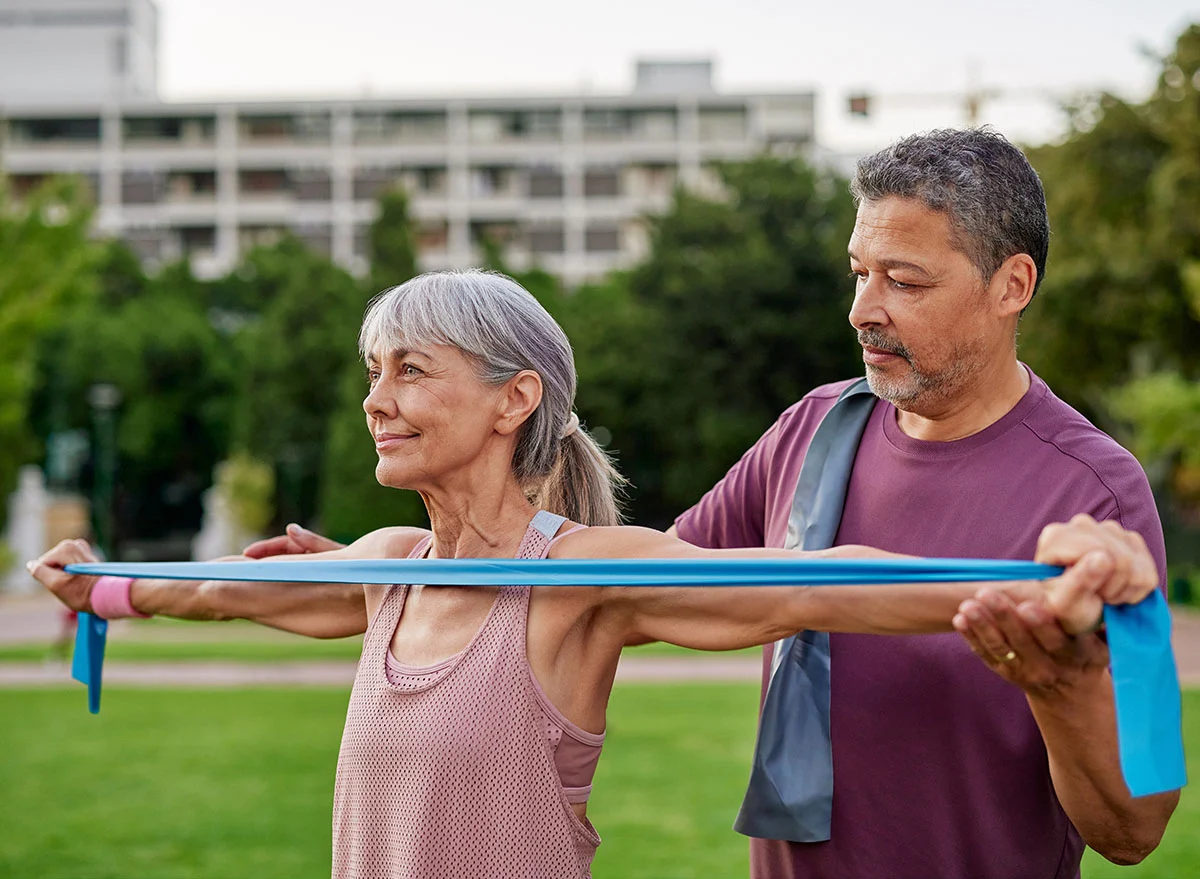
Resistance Band Scapular Retractions (Band Pull-Aparts)
- Core Purpose: This seemingly simple movement is profoundly effective for strengthening the often-underutilized muscles of the upper back and posterior shoulder, particularly the rear deltoids, rhomboids, and trapezius. These muscles play a pivotal role in proper scapular positioning and overall shoulder girdle stability, counteracting the tendency towards rounded shoulders and forward head posture common in sedentary lifestyles.
- Mechanism and Senior Benefits: By pulling a resistance band apart, individuals learn to actively engage the muscles responsible for drawing the shoulder blades together and down the back. This action helps to "set" the shoulder in a more stable and biomechanically advantageous position, which is crucial before performing any pressing, reaching, or overhead lifting. For seniors, improved scapular control translates directly into enhanced posture, reduced strain on the neck and front of the shoulders, and better support for the rotator cuff, thereby minimizing the risk of impingement or tears during daily tasks. It fortifies the posterior chain, which is essential for balance and preventing falls.
- Execution Nuances: Hold a light resistance band with hands shoulder-width apart, arms extended forward at chest height. Initiate the movement by squeezing the shoulder blades together, pulling the band apart until it touches the chest. The key is to keep the shoulders relaxed and depressed, preventing them from shrugging towards the ears, ensuring the work is performed by the upper back muscles. Return slowly to the starting position.
- Recommended Parameters: Aim for 2 to 3 sets of 12 to 15 repetitions. As strength improves, gradually increase the band’s resistance.
-
Unilateral Half-Kneeling Overhead Press
- Core Purpose: This exercise is a powerful diagnostic tool and strength builder for overhead pressing, specifically targeting the anterior and medial deltoids, triceps, and, crucially, the core stabilizers. The half-kneeling stance introduces an element of asymmetry that exposes and helps correct any tendencies to compensate with the lower back.
- Mechanism and Senior Benefits: By adopting a half-kneeling position (one knee on the ground, the other foot flat), the base of support is reduced, making it significantly harder to excessively arch the lower back (lumbar hyperextension) to assist the press. This forces the shoulder joint and the deep core musculature to perform their intended roles more effectively, promoting genuine shoulder strength and trunk stability. For seniors, developing robust overhead pressing capability directly translates to greater ease in reaching high shelves, storing items overhead, and even assisting with tasks that require pushing up from a seated position. It also fosters better balance and unilateral strength, addressing common age-related imbalances.
- Execution Nuances: Begin in a half-kneeling position with the knee down on the same side as the pressing arm. Hold a light dumbbell at shoulder height, palm facing forward. Engage the core to maintain a neutral spine, then smoothly press the dumbbell directly overhead until the arm is fully extended. Focus on keeping the rib cage "down" and aligned with the pelvis, preventing it from flaring outwards. Lower the weight with control.
- Recommended Parameters: Perform 2 to 3 sets of 8 to 10 repetitions per side. Start with a very light weight to master the form before considering any increase.
-
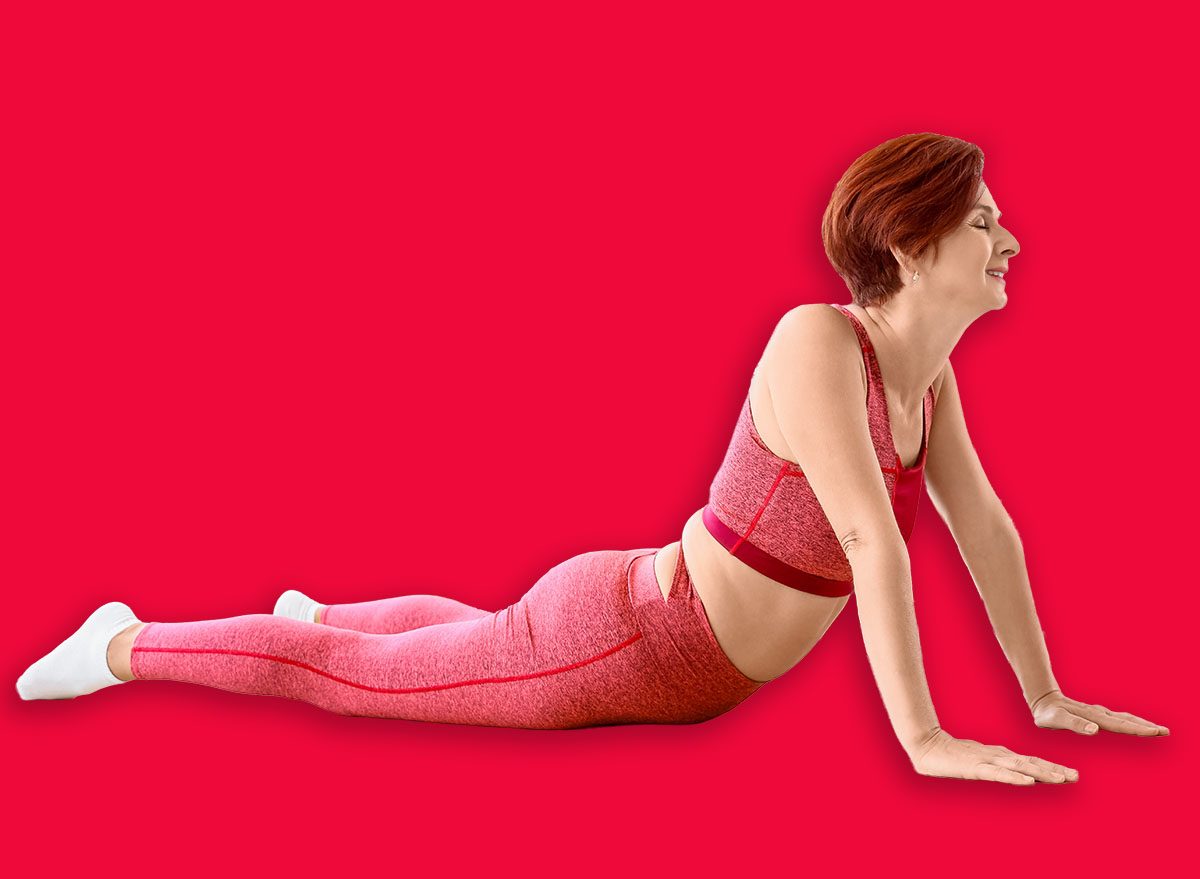
Dynamic Flow: Downward Dog to Cobra Transition
- Core Purpose: This fluid, bodyweight movement integrates shoulder strength with mobility, promoting dynamic flexibility and control throughout the shoulder girdle and spine. It’s less about a fixed hold and more about movement quality.
- Mechanism and Senior Benefits: The transition from Downward Dog to Cobra involves contrasting yet complementary actions. Downward Dog emphasizes pushing strength through the hands, engaging the shoulders and upper back while elongating the spine and hamstrings. Cobra, conversely, opens the chest and anterior shoulder, promoting thoracic (upper back) extension. This continuous flow enhances the full, functional range of motion of the shoulder joint and improves spinal articulation, which is often compromised with age. For seniors, this exercise aids in improving overall body awareness, increasing flexibility to perform tasks like reaching forward or getting up from the floor, and maintaining healthy spinal mobility. It strengthens the shoulders through their full range, not just isolated positions.
- Execution Nuances: Start in a plank position. Push hips up and back into Downward Dog, forming an inverted V-shape, pressing through the palms and reaching the heels towards the floor. Focus on controlling the shoulder blades. From Downward Dog, slowly lower the hips towards the floor, allowing the chest to lift and the spine to extend into Cobra pose, keeping the shoulders down and back. Reverse the movement back to Downward Dog in a controlled manner. Move deliberately, synchronizing with your breath.
- Recommended Parameters: Complete 2 to 3 sets of 6 to 8 repetitions, focusing on smooth, controlled transitions rather than speed. Only move through a range that feels comfortable and pain-free.
-
Dumbbell Rotational Circuit (Shoulder Halo)
- Core Purpose: This exercise is exceptional for building comprehensive shoulder girdle stability, particularly strengthening the rotator cuff muscles and enhancing joint control through a circular, multi-planar movement.
- Mechanism and Senior Benefits: Holding a light dumbbell and circling it slowly around the head requires the rotator cuff muscles to work intensely to stabilize the humeral head within the shoulder socket. Simultaneously, the core must remain engaged to prevent the torso from twisting or swaying. This controlled, rotational challenge improves the ability of the shoulder to manage loads from various angles, fostering robust joint integrity. For seniors, this translates to improved resilience against injury during complex arm movements, such as reaching behind the back, putting on a coat, or lifting objects from awkward positions. It significantly enhances joint control and coordination.
- Execution Nuances: Stand or sit tall, holding a light dumbbell with both hands close to your chest. Slowly guide the dumbbell in a controlled circular path around your head, keeping it as close to your head as possible. The movement should originate from the shoulders, with the core remaining stable and the torso upright. Ensure the movement is equally smooth and controlled in both clockwise and counter-clockwise directions.
- Recommended Parameters: Perform 2 to 3 sets of 5 to 8 repetitions in each direction. Emphasize a slow, deliberate tempo to maximize muscle engagement and control.
Integrating and Progressing Your Regimen
For optimal results, these shoulder-strengthening exercises can be incorporated into a fitness routine three to four times per week, allowing adequate time for muscle recovery between sessions. The cornerstone of effective training for seniors is consistency and a steadfast commitment to proper form. It is always advisable to commence with minimal resistance and focus intently on achieving fluid, controlled movements. Once the exercises feel stable and comfortable, gradual progression can be introduced, either by increasing the number of repetitions, adding an additional set, or carefully selecting a slightly heavier dumbbell or a more resistant band.
The ultimate objective of this home-based shoulder strengthening protocol extends far beyond mere muscle development; it is about cultivating confidence in movement, enhancing independence, and fostering a sustained quality of life. Stronger, more stable shoulders empower individuals to engage more fully with their environment, making everyday actions feel less arduous and more assured. By embracing these accessible, functional exercises, seniors can actively participate in safeguarding their physical autonomy and enjoying the benefits of resilient, capable upper body function for years to come. If any discomfort or pain arises during these exercises, it is crucial to cease immediately and consult with a healthcare professional or a certified fitness expert.
About the Author