As individuals gracefully advance through their sixties and beyond, maintaining lower body strength transitions from a mere fitness goal into a fundamental pillar of independent living and overall well-being. The natural physiological process of aging often brings with it sarcopenia, the progressive and generalized loss of skeletal muscle mass and strength. This decline can subtly, yet significantly, impact daily activities that were once effortless, such as ascending stairs, rising from a seated position, or simply navigating varied terrains with confidence. Strong quadriceps, gluteal muscles, and hip flexors are not just aesthetic assets; they are the biomechanical engines that power stability, balance, and the freedom of movement crucial for a high quality of life. Sustained engagement of these vital muscle groups through targeted exercise offers a potent strategy to counteract age-related degradation and foster enduring physical capability.
The notion that effective strength training necessitates extensive gym equipment or prolonged sessions is a common misconception, particularly for older adults. In reality, highly impactful routines can be remarkably brief and require minimal apparatus, often just a sturdy chair. This accessibility transforms fitness from a daunting commitment into an achievable daily practice. Many health and fitness professionals, including those in coaching capacities, advocate for integrating short, focused bursts of physical activity throughout the week. These concentrated periods of exercise, sometimes colloquially referred to as "fitness snacks," are not intended to replace comprehensive workout regimens but rather to augment them, providing consistent muscular stimulation and reinforcing essential movement patterns. They are invaluable for maintaining momentum and progress on days when a full-scale exercise session might not be feasible, ensuring that muscles remain active and responsive.
This innovative, six-minute, chair-based protocol is meticulously designed to activate the primary muscle groups of the lower body through controlled, seated movements. Its simplicity belies its efficacy, delivering a concentrated dose of tension and muscular engagement to the thighs and hips. The primary prerequisites are a stable chair and a commitment to just a few minutes of focused effort. The structure emphasizes deliberate repetitions and continuous tension, fostering both strength and endurance in a joint-friendly manner. For many older adults, the controlled environment of chair-based exercises provides an ideal entry point or continuation of a strength training journey, mitigating risks associated with balance or impact while still delivering significant physiological benefits.
The routine unfolds in a specific sequence, emphasizing mindful execution. Participants are encouraged to move deliberately, consciously connecting with the working muscles throughout each repetition. Minimal rest periods are integrated to maintain intensity and maximize efficiency, allowing the entire sequence to be completed in approximately six minutes. Detailed instructions ensure proper form, which is paramount for both safety and effectiveness.
Key Exercises in the Chair-Assisted Lower Body Protocol:
1. Chair Squats (Seated to Standing)
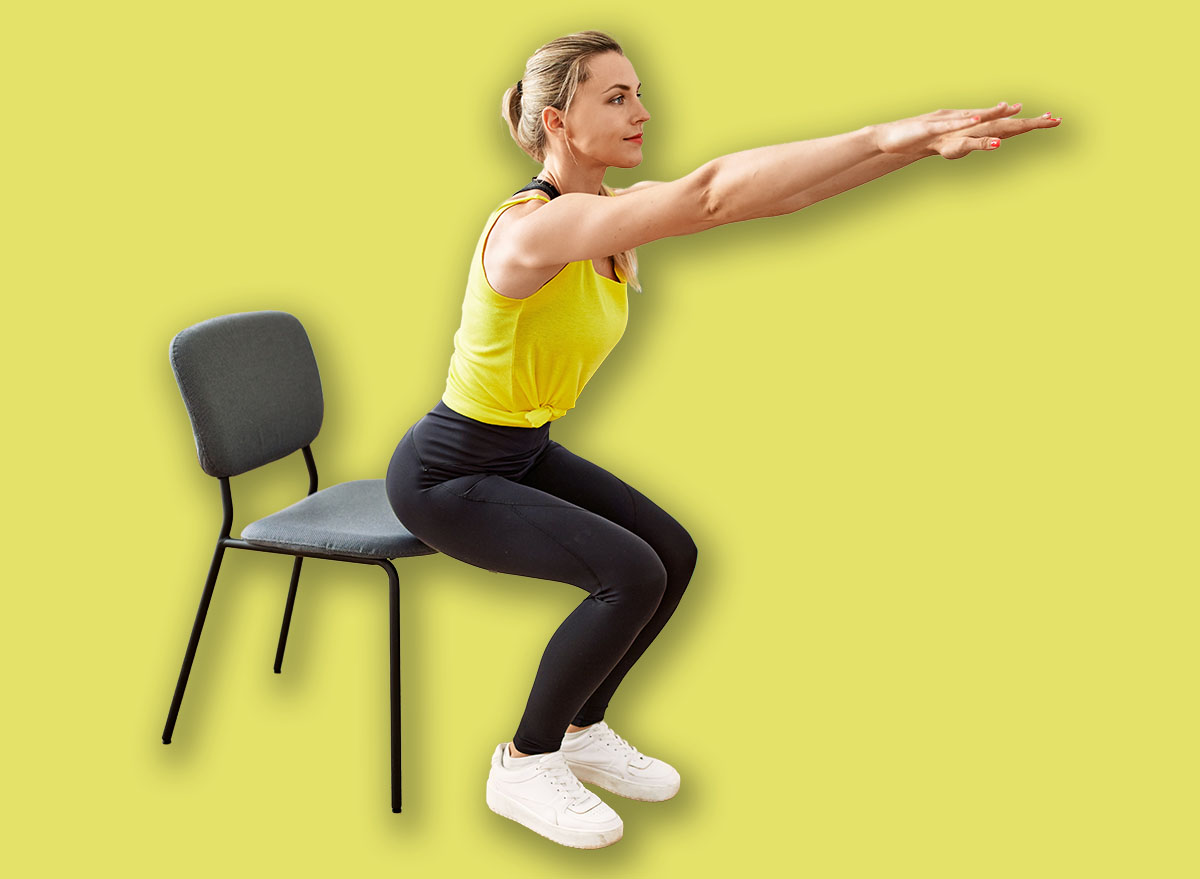
This foundational movement is a cornerstone of functional strength, directly translating to the ability to stand up from a chair, walk confidently, and climb stairs. By engaging the quadriceps and gluteal muscles, chair squats reinforce one of the most fundamental movement patterns the human body performs daily. For many older adults, the traditional barbell squat might be too challenging due to balance concerns or joint discomfort. Chair squats offer a modified, safer, and highly effective alternative, allowing individuals to develop significant lower body power without excessive strain. The act of sitting and standing with control systematically activates the largest muscles in the lower body, making it an excellent starting point for any leg strengthening regimen and an approachable exercise for a wide spectrum of fitness levels. Consistent practice builds stronger legs, leading to smoother, more stable everyday movements and significantly reducing the effort required for basic functional tasks.
- Muscles Engaged: Primarily targets the quadriceps (front of thighs) and gluteal muscles (buttocks), with secondary engagement of the hamstrings (back of thighs) and core stabilizers.
- Execution Guidance: Begin by sitting upright on the edge of a sturdy chair, with feet flat on the floor, hip-width apart, and toes pointing slightly forward. Lean slightly forward from the hips, engaging your core, and push through your entire foot (heels and forefoot) to stand up in a controlled manner. Avoid using momentum or pushing off with your hands. Once standing fully upright, slowly and deliberately reverse the movement, lowering your hips back towards the chair as if you are about to sit down, maintaining control throughout the descent. Lightly touch the chair with your glutes before standing up again, or pause briefly if aiming for increased time under tension.
- Prescribed Sets and Reps: Execute 2 sets of 10 to 12 repetitions. A 30-second recovery period should be observed between each set.
- Progression Options: To increase the challenge, consider incorporating a brief pause at the bottom of the movement (pause chair squats), slowing the tempo of both the ascent and descent (slow tempo squats), or performing the movement with arms crossed over the chest to eliminate assistance (hands-free squats).
- Form Imperative: Ensure weight distribution remains even across the entire foot, from heel to toe, throughout the movement to maintain optimal balance and recruit the intended muscle groups effectively.
2. Seated Knee Extensions
This exercise provides a focused and isolated contraction for the quadriceps, the powerful muscle group situated at the front of the thighs. The quadriceps are integral not only for overall leg strength but also play a critical role in stabilizing the knee joint, which is essential for walking, running, and preventing injuries. Seated knee extensions are particularly valuable because they target these muscles in a non-weight-bearing, joint-friendly position, making them suitable for individuals who may experience knee discomfort during weight-bearing exercises. The consistent execution of repetitions contributes to enhanced muscular endurance and firmness in the thighs. This isolation helps to directly strengthen the muscle responsible for extending the leg, which is crucial for functional movements like stepping up or kicking.
- Muscles Engaged: Primarily isolates the quadriceps, with some involvement from the hip flexors as the leg is lifted.
- Execution Guidance: Sit tall on the chair with your feet flat on the floor, knees bent at a 90-degree angle. Select one leg to work first. Slowly extend that leg forward, straightening the knee until the leg is parallel to the floor, or as straight as comfortably possible without locking the knee. Focus on squeezing the quadriceps at the peak of the extension. Gradually lower the leg back to the starting position with control, resisting the urge to let it drop. Complete all repetitions on one side before switching to the other.
- Prescribed Sets and Reps: Perform 2 sets of 12 repetitions for each leg. Allow a 30-second rest interval between sets.
- Progression Options: To amplify the intensity, experiment with slower movement tempos (slow tempo extensions), holding the leg in the fully extended position for a few seconds (hold at the top), or alternating legs with a continuous, rhythmic motion. Ankle weights can also be added for increased resistance once the movement is mastered.
- Form Imperative: Strive for complete knee extension at the apex of each repetition, ensuring the quadriceps are fully engaged, but avoid hyperextending or locking the knee.
3. Seated Marches
Seated marches are an excellent exercise for strengthening the hip flexors and the supportive musculature of the core, while simultaneously refining coordination between the hips and legs. This seemingly simple movement directly mimics and reinforces the biomechanics involved in everyday activities such as walking and climbing stairs. Incorporating seated marches as a concluding exercise in the routine offers a dynamic way to maintain lower body activation while also cultivating endurance within the hip region. Over time, consistent practice helps to cultivate a sensation of increased strength and responsiveness throughout the entire lower body, contributing to more fluid and confident ambulation. Moreover, strengthening hip flexors is crucial for improving stride length and reducing trip hazards.
- Muscles Engaged: Primarily targets the hip flexors and lower abdominal muscles, with secondary engagement of core stabilizers.
- Execution Guidance: Sit upright on the chair, maintaining a tall posture with your spine elongated and shoulders relaxed. Keep your feet flat on the floor. Begin by slowly lifting one knee towards your chest, aiming to raise it as high as comfortable while keeping your back straight and core engaged. Control the movement as you gently lower the foot back to the floor. Immediately proceed to lift the opposite knee, alternating legs in a controlled, marching motion. The movement should be deliberate, not rushed.
- Prescribed Sets and Reps: Execute 2 sets, each lasting 30 seconds. A 30-second rest period is recommended between sets.
- Progression Options: For a greater challenge, endeavor to lift the knees higher (higher knee marches), deliberately slow down the pace to increase time under tension (slower marches), or remove hand support to further engage core stabilizers (hands-free marches).
- Form Imperative: Maintain an erect and elongated spine throughout the exercise, avoiding slouching, as you alternate lifting each knee. This ensures proper core engagement and maximizes the benefit to the hip flexors.
Integrating Supportive Daily Habits for Optimal Leg Strength:
The most profound improvements in leg strength and overall physical resilience are realized when structured, short training sessions are harmoniously paired with consistent, supportive daily habits. Muscles respond optimally to frequent, varied activation and regular movement integrated throughout the week. Experienced coaches frequently observe that adults over 60 achieve superior results by synergizing dedicated workout routines with these "strength snacks." Such brief, focused sessions serve to reinforce the physiological adaptations initiated during longer workouts, creating a continuous stimulus for growth and maintenance. Consistency, above all, is the primary driver of sustainable progress. To further bolster the efficacy of this chair-based routine, consider adopting the following daily practices:
- Prioritize Regular Ambulation: Beyond structured exercise, commit to daily walking. Whether it’s a brisk stroll in the park or simply choosing to walk instead of drive for short errands, consistent walking strengthens leg muscles, improves cardiovascular health, and enhances overall endurance. Aim for at least 30 minutes most days of the week, broken into smaller segments if necessary.
- Embrace Functional Movement: Look for opportunities to integrate movement into your everyday life. Opt for stairs instead of elevators when feasible, stand while talking on the phone, engage in gardening, or participate in light household chores that involve lifting and bending. These seemingly small actions accumulate to provide significant muscular engagement.
- Hydration and Nutrient-Rich Diet: Adequate hydration is crucial for muscle function and recovery. Similarly, a balanced diet rich in lean proteins, complex carbohydrates, and healthy fats provides the necessary building blocks for muscle repair and growth. Ensure sufficient protein intake (e.g., poultry, fish, legumes, dairy) to support sarcopenia prevention and muscle synthesis.
- Maintain Healthy Weight: Carrying excess body weight places undue strain on joints and can hinder mobility. Conversely, being underweight can contribute to muscle loss. Striving for a healthy body weight through a balanced diet and regular exercise supports both muscle integrity and joint health.
- Adequate Rest and Recovery: Muscles grow and repair during periods of rest. Prioritize 7-9 hours of quality sleep each night to allow your body to recover from physical activity and facilitate muscle protein synthesis. Overtraining without sufficient recovery can lead to diminishing returns and increased risk of injury.
- Consult Healthcare Professionals: Before embarking on any new exercise regimen, especially if you have pre-existing health conditions or concerns, it is always advisable to consult with a physician or physical therapist. They can provide personalized recommendations and ensure the routine is appropriate for your individual health status.
By consistently adhering to this accessible six-minute chair routine and integrating these supportive daily habits, many adults over the age of 60 report experiencing significant improvements. These often include perceptibly stronger legs, enhanced control over their movements, improved balance, and a profound increase in confidence during the myriad of everyday activities that define an active and independent lifestyle. The power to cultivate and sustain robust lower body strength, thereby enhancing functional independence, truly lies within reach, requiring only a chair, a few minutes, and a commitment to ongoing wellness.
About the Author