As individuals navigate the landscape of life beyond 55, a common misperception often takes root: that diminishing physical capabilities, particularly in the lower body, are an unavoidable consequence of advancing age. However, a growing body of evidence, reinforced by expert insights from certified fitness professionals, robustly challenges this notion. The capacity for cultivating and maintaining robust leg strength, essential for sustaining an active and autonomous lifestyle, remains remarkably resilient throughout later adulthood. Rather than an inherent biological decree, the observed decline in lower body power frequently stems from modifiable factors such as reduced physical activity, a narrowing range of motion in daily movements, and an inconsistent approach to muscle-building efforts. For men specifically, understanding and implementing a strategic, daily regimen focused on lower-body activation can be the decisive factor in preserving vitality and independence.
The significance of strong legs extends far beyond aesthetic considerations or athletic prowess; it is fundamentally intertwined with overall health, safety, and quality of life. Powerful lower limbs are instrumental in performing everyday tasks with ease, from ascending stairs and carrying groceries to rising from a chair or navigating uneven terrain. Crucially, they serve as a primary defense against falls, a leading cause of serious injury and loss of independence among older adults. Beyond mere accident prevention, maintaining muscle mass in the legs, a process known as combating sarcopenia, plays a vital role in metabolic health, aiding in blood sugar regulation and contributing to a healthier body composition. An active lower body also supports cardiovascular health by facilitating more vigorous and consistent movement, which in turn positively influences cognitive function and mood.
The prevailing challenge for many men entering their mid-fifties and beyond is a gradual shift away from dynamic, compound movements. Routines may become increasingly sedentary, or gym workouts might inadvertently prioritize isolated upper-body training or rely heavily on fixed-path resistance machines that neglect crucial elements of functional movement. This often results in diminished balance, reduced hip stability, and a breakdown in the coordinated muscular effort required for real-world activities. True lower-body resilience demands more than simply pushing weight; it necessitates engagement of the entire kinetic chain, emphasizing hip extension, single-leg control, and core integration that translates directly into real-life scenarios. The approach advocated by experienced trainers focuses on foundational movements that meticulously rebuild and reinforce the primary muscle groups – the quadriceps, hamstrings, glutes, and various stabilizing muscles – within patterns directly relevant to daily function. Consistent execution with a deliberate tempo and impeccable form, coupled with a progressive increase in resistance, forms the bedrock upon which lasting leg strength can be re-established.
1. The Reverse Lunge: Cultivating Unilateral Power and Stability
Unilateral (single-leg) strength is a cornerstone of functional mobility, particularly as individuals age. The reverse lunge stands out as an exceptionally effective exercise for men over 55, precisely because it fortifies the quadriceps and glutes while simultaneously offering a knee-friendly alternative to forward lunges. The backward stepping motion inherently shifts a greater proportion of the load onto the hips, an area where strength often begins to wane first. This mechanism provides significant protection for the knee joint by reducing anterior shear forces, making it an ideal choice for those with a history of knee discomfort or injury. By demanding independent strength and balance from each leg, the reverse lunge directly enhances the ability to climb stairs, navigate curbs, and maintain equilibrium during walking, significantly mitigating fall risk. Executing this movement requires a slow, controlled step backward, lowering the body with precision until the front thigh is roughly parallel to the ground. Maintaining an upright chest and ensuring the front knee tracks directly over the mid-foot are paramount for optimal engagement and safety. The ascent back to the starting position should be driven powerfully through the heel of the front foot, engaging the glutes and hamstrings. This smooth, deliberate rhythm not only restores muscle density but also sharpens neuromuscular coordination, crucial for agile movement. As proficiency grows, light dumbbells can be introduced to incrementally increase the challenge.
2. The Dumbbell Romanian Deadlift: Reclaiming the Hip Hinge for Posterior Chain Dominance
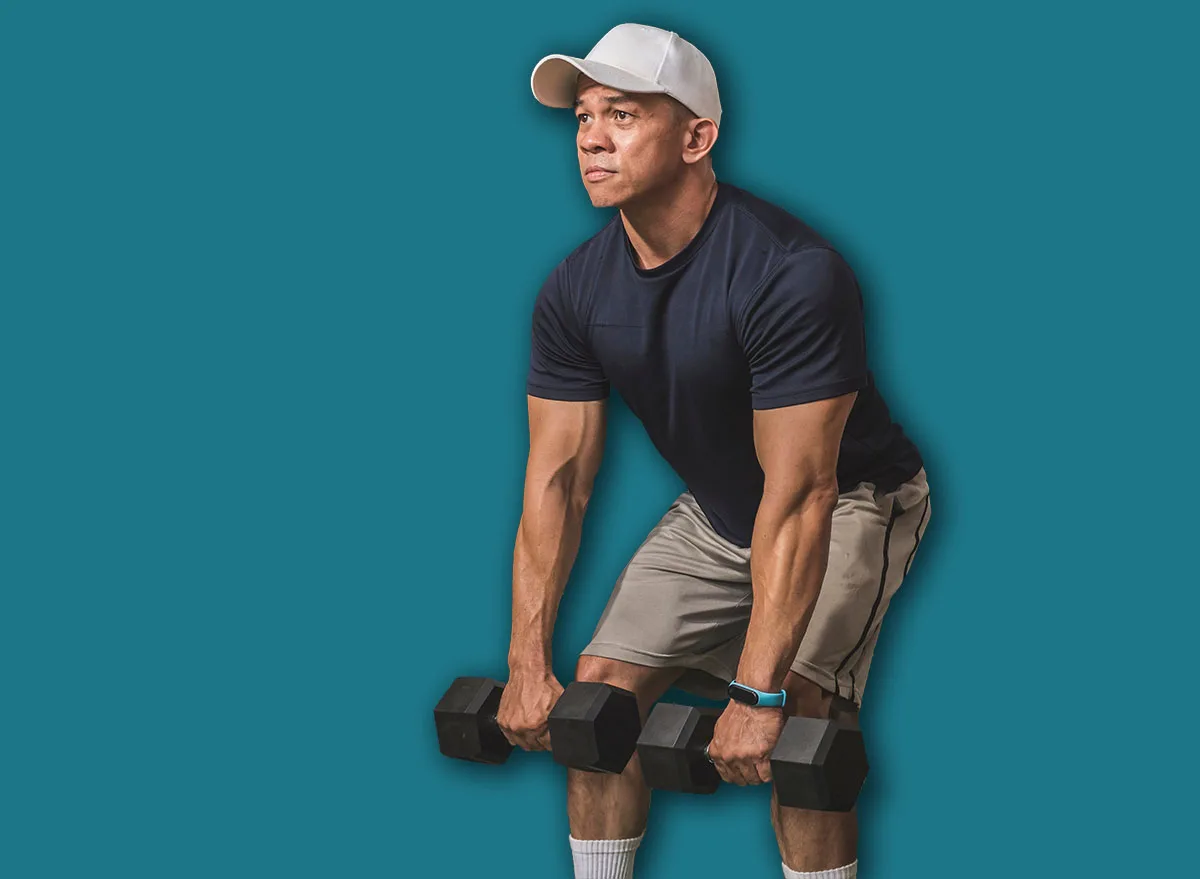
The integrity of the posterior chain – comprising the glutes, hamstrings, and lower back musculature – is indispensable for both robust everyday movement and the prevention of lumbar discomfort. The Dumbbell Romanian Deadlift (RDL) is a quintessential exercise designed to re-educate the hip hinge pattern, a fundamental movement often compromised by years of prolonged sitting and sedentary habits. Unlike a conventional deadlift, the RDL emphasizes a hip-dominant bend with minimal knee flexion, making it an excellent tool for targeting the hamstrings and glutes while placing less direct strain on the lower spine. Mastering this movement is transformative; it not only builds visible muscle tone in the glutes and thighs but, more importantly, teaches the body to lift objects safely and efficiently by leveraging the powerful muscles of the hips rather than straining the back. The technique involves initiating the movement by pushing the hips backward as if reaching for a wall behind you, allowing the dumbbells to descend along the front of the legs. A neutral spinal alignment must be maintained throughout the entire range of motion, and breathing should be steady and controlled. The upward phase involves driving through the heels to return to a fully upright position, culminating in a strong, conscious squeeze of the glutes at the apex to signify complete hip extension. This deliberate activation ensures that the primary movers are effectively engaged, reinforcing healthy movement mechanics.
3. Step-Ups: Building Practical Power for Everyday Ascents
Step-ups are an incredibly practical exercise that directly translates into improved daily function, making them indispensable for men over 55. Activities such as climbing flights of stairs, stepping onto or off curbs, and even traversing uneven outdoor terrain all demand unilateral power and coordination that step-ups meticulously cultivate. This exercise rebuilds crucial leg drive without imposing undue stress on the joints, making it a joint-friendly yet highly effective strength builder. Furthermore, step-ups inherently highlight and address any muscular imbalances that may exist between the left and right legs, promoting symmetrical strength and reducing the risk of compensatory movements that can lead to injury. To perform a step-up effectively, one foot is placed securely onto a sturdy bench or elevated platform. A slight forward lean is then adopted to pre-load the glutes, ensuring they are the primary drivers of the movement. The ascent is powered by driving through the heel of the elevated foot, lifting the body fully upright until both legs are extended. The descent should be controlled and deliberate, emphasizing the eccentric phase of the movement before switching to the opposite leg. Rushing through the motion diminishes its effectiveness; controlled execution maximizes muscle engagement and reinforces proper motor patterns.
4. The Wall Sit: Fortifying Isometric Endurance and Muscular Resilience
Isometric endurance, the ability of muscles to sustain tension in a static position, is a crucial, often-overlooked component of functional leg conditioning. The wall sit is a deceptively simple yet profoundly effective exercise that compels sustained engagement of the quadriceps while simultaneously demanding stabilization from the glutes and core. This exercise is an excellent predictor of real-world stamina, reflecting the capacity of the legs to endure prolonged periods of standing, walking, or maintaining a stable posture under fatigue. It builds mental fortitude alongside physical strength, teaching the body to maintain powerful positions without relying on dynamic movement. To execute a wall sit, position your back flat against a sturdy wall, then slide down until your thighs are parallel to the floor, mimicking a seated position. Ensure your knees are stacked directly above your ankles, forming a 90-degree angle, and your core is braced to support your spine. It is critical to avoid resting your hands on your thighs, as this reduces the load on the quadriceps. The objective is to hold this position for a prescribed duration, breathing steadily and maintaining an upright, neutral posture. Gradually increasing the hold time is the primary method of progression, challenging the muscles to adapt to longer periods of sustained effort.
5. Standing Calf Raises: The Foundation of Balance and Propulsive Power
The strength of the lower leg musculature, particularly the calves, is frequently underestimated yet plays an indispensable role in maintaining balance, regulating walking speed, and providing crucial propulsive power for every step. Weak calf muscles can significantly impair push-off strength during gait, leading to a less efficient stride and substantially increasing the risk of falls. Dedicated attention to calf training can yield remarkable improvements in walking efficiency, overall stability, and even the ability to react quickly to uneven surfaces. The standing calf raise is a straightforward yet highly impactful exercise that addresses this vital component of lower body health. Begin by standing tall, then slowly and deliberately rise onto the balls of your feet, lifting your heels as high as comfortably possible. A brief pause at the peak of the contraction ensures maximal muscle engagement before a controlled, slow descent back to the starting position. It is crucial to avoid bouncing or using momentum, as this diminishes the effectiveness of the exercise. Focusing on a full range of motion and a strict, unhurried tempo builds not only the strength of the gastrocnemius and soleus muscles but also enhances ankle stability and overall resilience, contributing significantly to confident and secure movement.
Implementing a Sustainable Regimen
The true power of these exercises lies in their consistent application. While "daily" may sound daunting, it refers to incorporating these fundamental movements regularly into one’s routine, perhaps even through short, focused sessions. The principle of progressive overload is paramount: as strength improves, gradually increase the challenge by adding more repetitions, sets, extending hold times, or introducing light external resistance like dumbbells. However, it is equally important to listen attentively to your body, differentiating between muscle fatigue and joint pain. Consulting with a healthcare professional or certified trainer before embarking on any new exercise program is always advisable, especially for those with pre-existing conditions. These exercises are not merely isolated movements; they are foundational components of a broader strategy to integrate physical activity into a vibrant, engaged lifestyle. By committing to these targeted lower body movements, men over 55 can definitively challenge the narrative of age-related decline, instead embracing a future characterized by robust strength, enduring mobility, and uncompromised functional independence. The journey to reclaiming and enhancing lower body power is not just about extending lifespan, but profoundly enriching the years ahead with vitality and autonomy.
About the Author