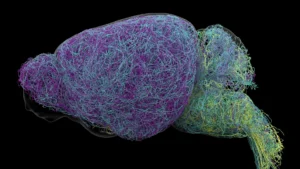
Early-Life Stress and Alcohol Use Can Forge Enduring Neurological Pathways of Impaired Adaptability
Recent scientific inquiry originating from the University of Massachusetts Amherst has illuminated a concerning potential for alcohol consumption, employed as a stress-management tactic during the formative years of young adulthood, to instigate profound and enduring alterations within the brain’s architecture. These neurological modifications, the research suggests, are not readily reversible, persisting even after extended periods of sobriety and manifesting notably by middle age. The observed consequences include a diminished capacity for mental agility, an amplified propensity to resort to alcohol as a coping mechanism during subsequent periods of stress, and a contribution to cognitive deterioration patterns reminiscent of those associated with neurodegenerative conditions like dementia and Alzheimer’s disease.
This groundbreaking investigation, detailed in the esteemed publication Alcohol Clinical and Experimental Research, offers a more nuanced understanding of the intricate interplay between alcohol and stress in fundamentally reshaping neural circuits. The researchers posit that this deepened insight could pave the way for more effective therapeutic interventions, shifting the focus from merely abstaining from alcohol to actively addressing the residual, long-term neurological impacts of its use.
The symbiotic relationship between stress and alcohol has long been acknowledged by the scientific community, with each exacerbating the other. While alcohol may offer a fleeting respite from feelings of stress, its habitual use can progressively erode the brain’s inherent capacity for stress regulation. Consequently, individuals may find themselves increasingly dependent on alcohol, consuming larger quantities to achieve the same level of perceived relief. Concurrently, heightened alcohol consumption can itself become a source of stress, often stemming from the poor decisions and their resultant repercussions. This creates a self-perpetuating cycle, progressively more challenging to disrupt as the brain adapts to the continuous onslaught of both stressors. The core objective of this research was to meticulously chart the long-term trajectory of these adaptive brain changes.
Dr. Elena Vazey, an associate professor of biology at UMass Amherst and the study’s senior author, articulated the lab’s focus: "My lab studies the neurocircuitry that underlies how we make decisions." She elaborated on the team’s inquiry, stating, "We all know that drinking can often lead to poor decision-making, but we wondered how early adulthood drinking combined with stress affects that circuitry, especially as we grow older. If we can figure out how alcohol and stress change the brain’s circuitry, then we can help figure out how best to help people." This statement underscores the translational aspirations of their fundamental research.
Supported by funding from the National Institute on Alcohol Abuse and Alcoholism (NIAAA), Dr. Vazey and her colleagues utilized a murine model, chosen for the significant overlap in brain circuitry between mice and humans, to investigate these complex phenomena. Their findings unequivocally demonstrated that the synergistic effect of alcohol and stress produced far more substantial and detrimental neurological changes than either factor acting in isolation.
Specifically, the study revealed that the reliance on heavy alcohol consumption as a means of coping with stress during early adulthood significantly increased the likelihood of the animal subjects returning to drinking when faced with stress in middle age, a propensity that persisted even after prolonged periods of complete abstinence. This outcome strongly suggests that the combined influence of alcohol and stress can engender lasting neurological modifications that endure well beyond the cessation of drinking.
An intriguing observation from the research was the minimal disparity in basic learning capabilities between middle-aged mice with a history of stress-related drinking and their counterparts who engaged in lighter drinking habits. The most pronounced difference emerged in the realm of cognitive flexibility, defined as the brain’s ability to swiftly adapt to evolving circumstances and formulate novel decisions when environmental conditions shift.
"Middle age is when problems start to add up," Dr. Vazey remarked, drawing a parallel between the animal models and human experience. "We know that alcohol is a risk factor for early cognitive decline, and we saw that that this alcohol-stress combination creates the kind of trouble adapting to changing situations that also happens in the early stages of dementia." This connection highlights the potential for early-life stress and alcohol use to sow the seeds of later-life cognitive vulnerabilities.
To elucidate the underlying mechanisms responsible for these protracted neurological effects, the research team directed their attention to a critical, albeit small, region within the brainstem known as the locus coeruleus (LC). This area plays a pivotal role in facilitating adaptive decision-making processes in both rodents and humans.
Under normal physiological conditions, the LC exhibits heightened activity during stressful episodes, subsequently returning to its baseline state once the stressor is removed. However, in the mice subjected to the dual onslaught of alcohol and chronic stress, the LC appeared to have lost crucial molecular components that normally facilitate its deactivation. The consequence of this disruption was a persistently compromised state of this brain region, thereby impairing its capacity to guide effective and adaptive decision-making.
Furthermore, the researchers detected elevated levels of oxidative stress within the LC of these subjects. This form of cellular damage is a well-established pathological hallmark found in the brains of individuals diagnosed with Alzheimer’s disease and can inflict harm on cells throughout the organism. Alarmingly, even after extended periods of abstinence, the middle-aged brains of the formerly heavy-drinking mice displayed minimal evidence of repair to this oxidative damage.
"The brain can really struggle to recover from a history of chronic stress and drinking in early adulthood," Dr. Vazey concluded, emphasizing the profound and persistent nature of these changes. "We think that the oxidative damage might be one of the things that keeps the heavy drinking going, that can lead to someone going back to alcohol even after long-term abstinence. It’s these persistent changes in the brain that also impair decision making and lead to the kinds of early cognitive decline associated with dementia and Alzheimer’s. The brain’s wiring system is damaged, which means quitting drinking or making better decisions isn’t a matter of willpower. After a history of stress and drinking, the brain simply works differently, and our treatment strategies need to able to address these long-lasting differences." This highlights the necessity for therapeutic approaches that acknowledge and target the deep-seated neurological adaptations rather than solely relying on volitional control.
Related posts:

Related News