
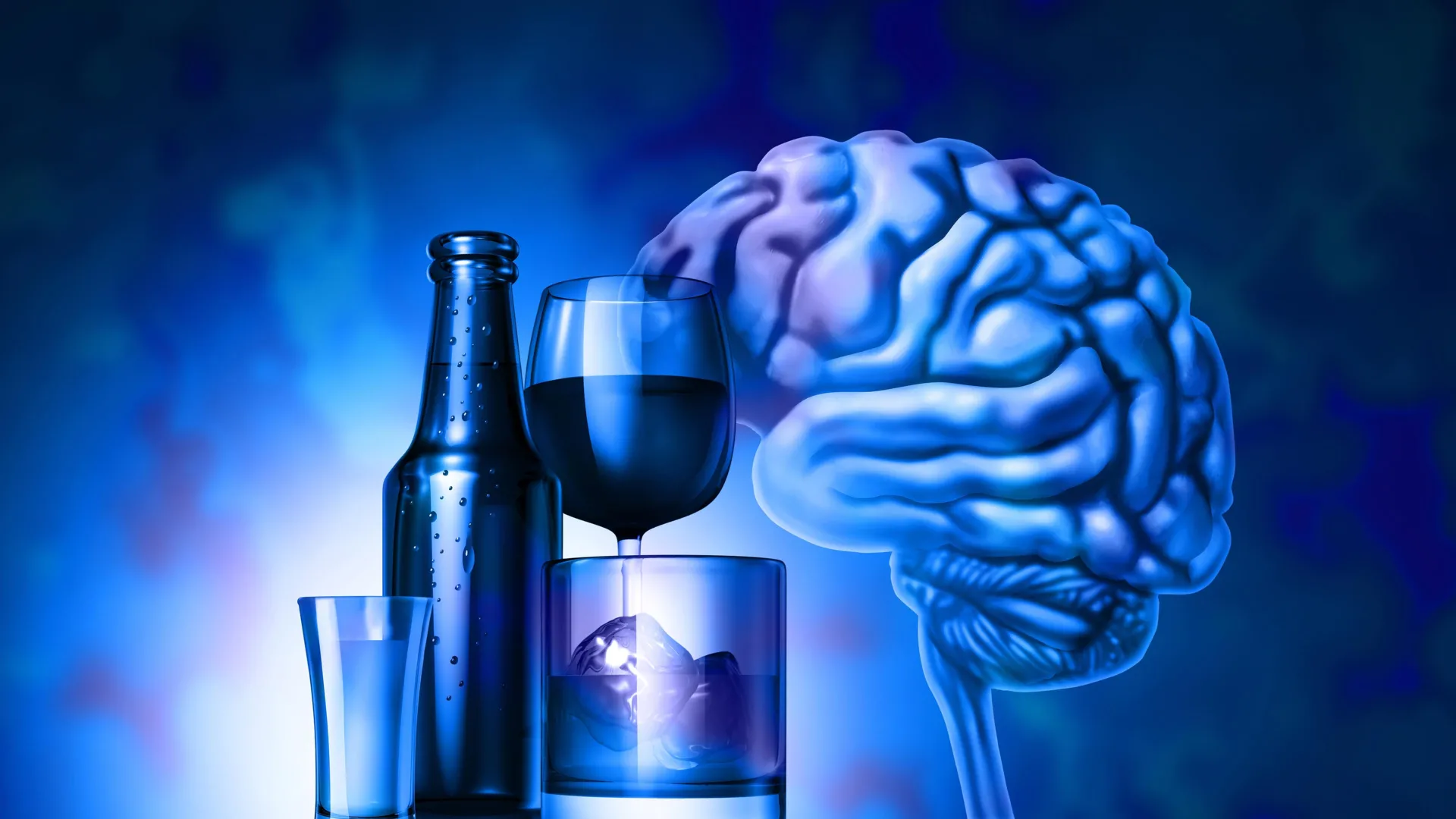
Emerging scientific inquiry from the University of Massachusetts Amherst suggests that the inclination to consume alcohol as a coping mechanism for stress during the formative years of early adulthood may precipitate enduring neurological modifications. These brain changes, the research indicates, are not readily reversible even after extended periods of sobriety and can manifest as early as middle age. The consequences observed include a diminished capacity for mental agility, a heightened propensity to revert to alcohol consumption when confronted with stressful circumstances, and a contribution to cognitive deterioration patterns akin to those associated with neurodegenerative conditions like dementia and Alzheimer’s disease.
The findings, detailed in the esteemed journal Alcohol Clinical and Experimental Research, offer a novel perspective on the intricate interplay between alcohol consumption and stress in reshaping neural pathways. This enhanced comprehension, according to the research team, holds the potential to pave the way for more effective therapeutic interventions that target the long-term sequelae of alcohol use, moving beyond a sole focus on abstinence.
A long-established observation within scientific circles is the mutually reinforcing relationship between stress and alcohol consumption. While alcohol may provide transient relief from feelings of stress, recurrent use can progressively erode the brain’s inherent capacity to effectively manage stress independently. Over time, this dynamic can foster a dependency on alcohol, compelling individuals to increase both the frequency and quantity of their intake to achieve the same level of perceived solace. Concurrently, patterns of heavier alcohol consumption can exacerbate stress by contributing to impaired judgment and the subsequent negative repercussions. This creates a self-perpetuating cycle that becomes increasingly formidable to interrupt as the brain adapts to the sustained exposure to both stressors and alcohol. The researchers were driven by a desire to elucidate the long-term manifestations of these adaptive changes.
Dr. Elena Vazey, an associate professor of biology at UMass Amherst and the senior author of the study, articulated the lab’s focus on the neurocircuitry underpinning decision-making processes. "We are all aware that alcohol consumption frequently leads to suboptimal decision-making," Dr. Vazey stated, "but our inquiry was directed towards understanding how the combination of alcohol use and stress during early adulthood impacts this circuitry, particularly as individuals advance in age. By deciphering the mechanisms through which alcohol and stress alter the brain’s circuitry, we can contribute to the development of more targeted and effective support strategies."
Supported by funding from the National Institute on Alcohol Abuse and Alcoholism (NIAAA), Dr. Vazey and her colleagues embarked on a comprehensive study utilizing rodent models, chosen for the significant parallels between their brain circuits and those found in humans. The experimental results unequivocally demonstrated that the synergistic effect of alcohol and stress exerted a considerably more profound impact on the brain than either factor encountered in isolation.
Specifically, the investigation revealed that heavy alcohol consumption, adopted as a strategy to mitigate stress during early adulthood, significantly increased the likelihood of the animal subjects returning to alcohol use when subjected to stress in middle age, even after prolonged periods of complete abstinence. This observation strongly implies that the co-occurrence of alcohol and stress can induce persistent alterations in brain structure and function that endure well beyond the cessation of drinking.
An intriguing facet of the findings was the minimal discernible difference in learning capabilities between middle-aged mice with a history of stress-related drinking and their counterparts who engaged in lighter alcohol consumption. The most pronounced divergence was observed in cognitive flexibility – the critical ability to adapt swiftly to evolving circumstances and formulate novel decisions when situational demands shift.
"Middle age often marks a period where cumulative challenges begin to surface," Dr. Vazey remarked. "We already recognize alcohol as a contributing factor to premature cognitive decline. Our findings indicate that this specific combination of alcohol and stress cultivates difficulties in adapting to changing environments, a pattern that also emerges in the initial stages of dementia."
To delve deeper into the underlying causes of these protracted neurological consequences, the research team concentrated their efforts on a diminutive region within the brainstem known as the locus coeruleus (LC). This area plays a pivotal role in adaptive decision-making processes in both rodents and humans.
In a healthy brain, the LC exhibits heightened activity during periods of stress and subsequently returns to its baseline state once the stressor is removed. However, in the mice exposed to the dual challenge of alcohol and chronic stress, the LC demonstrated a deficit in crucial molecular mechanisms that are normally responsible for its deactivation. Consequently, this brain region remained in a disrupted state, thereby compromising its capacity to facilitate effective decision-making.
Furthermore, the research team identified elevated levels of oxidative stress within the LC. This particular form of cellular damage is a recognized hallmark in the brains of individuals diagnosed with Alzheimer’s disease and can inflict harm on cells throughout the body. Notably, even after extended periods of abstinence, the middle-aged brains of the mice that had a history of heavy drinking displayed minimal evidence of recovery from this damage.
"The brain encounters significant challenges in recuperating from a history of chronic stress and alcohol consumption during early adulthood," Dr. Vazey emphasized. "We hypothesize that the oxidative damage may be a key factor perpetuating alcohol dependence, leading individuals to relapse even after protracted periods of sobriety. These enduring neurological changes not only impair decision-making abilities but also contribute to the early cognitive decline characteristic of dementia and Alzheimer’s. The brain’s intricate wiring system becomes compromised, suggesting that abstaining from alcohol or making better choices is not solely a matter of willpower. Following a history of stress and drinking, the brain operates fundamentally differently, necessitating treatment strategies that acknowledge and address these long-lasting neurological disparities."
About the Author












