Cultivating Robust Core Stability: Essential Home Exercises for Optimal Midline Health in Individuals Over 60
As individuals navigate the landscape of aging, maintaining physical autonomy and a high quality of life becomes increasingly vital, with core strength emerging as a cornerstone of this endeavor. The midsection, encompassing a complex network of muscles from the diaphragm to the pelvic floor, serves as the body’s central powerhouse, dictating balance, posture, and the efficiency of nearly every movement. For those over sixty, the physiological shifts inherent to aging often present unique challenges to this critical region, making targeted intervention not just beneficial, but often indispensable for continued independence and well-being.
The aging process brings with it a constellation of changes that can impact core health. Sarcopenia, the age-related loss of muscle mass and strength, progressively diminishes the integrity of core musculature. Concurrently, metabolic rate tends to slow, and hormonal fluctuations—such as declining estrogen in women and testosterone in men—can predispose individuals to increased visceral fat accumulation around the abdomen. This deep abdominal fat is not merely an aesthetic concern; it is metabolically active, contributing to inflammation and increasing risks for various chronic diseases. Furthermore, changes in bone density and joint mobility can exacerbate postural issues, placing additional strain on an already weakening core. Consequently, many older adults experience diminished stability, increased risk of falls, and a greater propensity for lower back pain, all of which underscore the urgent need for effective core strengthening strategies.
While the perception often exists that serious fitness necessitates a gym environment, a growing body of expert opinion challenges this notion, particularly concerning core development for older adults. The emphasis for this demographic shifts from lifting maximal weight to mastering control, stability, and functional movement patterns. Ngo Okafor, a renowned fitness expert and founder of Iconoclast Fitness, articulates this perspective, stating, "You don’t need a gym to build a strong core. In fact, some of the best core exercises require nothing more than your own body weight." He elaborates that home-based routines can be profoundly effective because they prioritize precise movements and fundamental stability, rather than simply escalating resistance through external weights. Okafor emphasizes that consistent engagement with thoughtfully designed bodyweight exercises can yield substantial improvements in core strength, balance, posture, and overall physical function, matching or even surpassing the functional benefits derived from gym workouts, especially for older populations.
Echoing this sentiment, Lyndsey Meade, a certified Pilates instructor and founder of BODY Hot Pilates, highlights the intrinsic value of bodyweight training. She asserts that "a functional core isn’t measured by how much weight you can lift—it’s measured by how well your body can stabilize while you move." This distinction is crucial, particularly for seniors, where the ability to maintain equilibrium during daily activities—such as walking on uneven surfaces, reaching for objects, or recovering from a stumble—is paramount. Bodyweight exercises, when executed with deliberate control and meticulous form, offer ample resistance to challenge and strengthen deep stabilizing muscles without placing undue stress on joints or risking injury from excessive loads. This approach fosters a profound mind-muscle connection, allowing individuals to truly understand and activate their core in a way that translates directly to improved everyday functionality.
The accessibility and convenience of home workouts further enhance their appeal for older adults. Eliminating the need for travel, gym memberships, or navigating unfamiliar equipment, home routines empower individuals to integrate fitness seamlessly into their daily lives. This ease of access can significantly boost adherence, a critical factor for long-term health outcomes. The privacy of one’s home can also reduce intimidation, fostering a more comfortable and consistent exercise practice. The following five exercises, recommended by fitness professionals, exemplify how targeted bodyweight movements can forge a robust and functional core, offering comprehensive benefits for individuals over sixty.
1. The Hundreds: Mastering Breath and Deep Abdominal Engagement
The Pilates-inspired "Hundreds" exercise is a foundational movement that intricately links breath control with deep core activation. Lyndsey Meade underscores its significance, explaining, "The Hundred teaches one of the most overlooked components of core strength: breathing. Coordinating lateral breathing with deep abdominal engagement activates the transverse abdominis—the body’s natural ‘corset’—while building endurance and improving spinal stability." This exercise involves lying on your back with legs lifted, head and shoulders slightly raised, and arms pumping rhythmically alongside the body, all while maintaining a steady, controlled breath pattern. The focus is on drawing the naval towards the spine, engaging the transverse abdominis (TVA), which is the deepest abdominal muscle responsible for stabilizing the lumbar spine and pelvis. For seniors, this exercise not only fortifies the TVA, crucial for preventing lower back pain, but also enhances respiratory efficiency and muscular endurance, which are beneficial for sustained physical activity throughout the day. Modifications, such as keeping the head down or feet on the floor, allow for progressive engagement tailored to individual capabilities.
2. Shoulder Bridges: Fortifying the Posterior Chain and Pelvic Stability
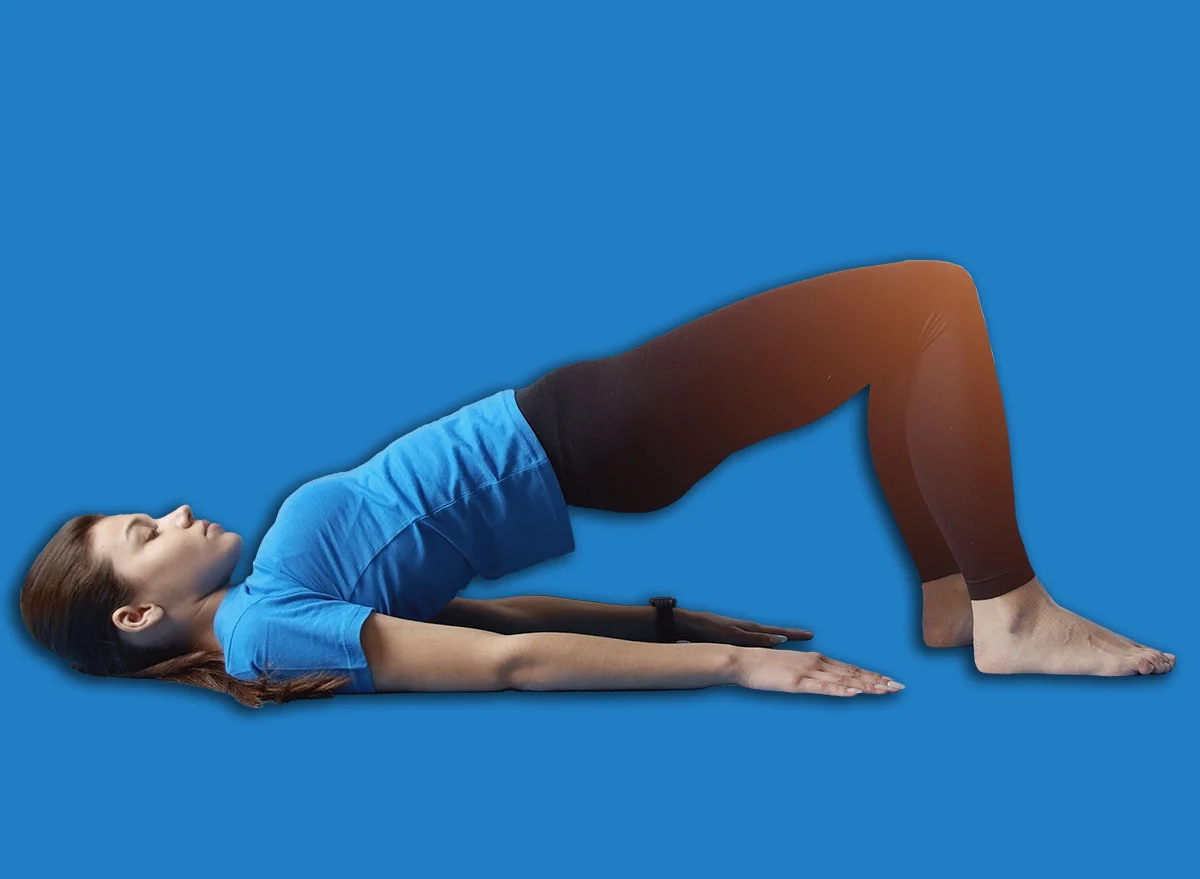
Often overlooked in core discussions, the posterior chain—comprising the glutes, hamstrings, and lower back muscles—is an integral component of a truly strong and functional core. The Shoulder Bridge exercise effectively targets these muscles, alongside promoting pelvic stability. As Meade notes, "A strong core extends far beyond the abdominals. Shoulder Bridge strengthens the glutes, hamstrings, and posterior chain while improving pelvic stability. Strong glutes help support the lower back and contribute to better posture and more efficient movement." To perform a Shoulder Bridge, lie on your back with knees bent and feet flat on the floor, then lift your hips towards the ceiling, creating a straight line from shoulders to knees. This movement engages the gluteal muscles powerfully, which are often weakened from prolonged sitting. For older adults, strong glutes are essential for everything from walking and climbing stairs to maintaining balance and preventing falls. By strengthening these key supporting muscles, the Shoulder Bridge directly enhances overall core integrity and reduces strain on the lower back, contributing to improved gait and a more upright posture.
3. Toe Taps: Cultivating Controlled Deep Core Activation
The deceptive simplicity of Toe Taps belies their profound effectiveness in teaching nuanced deep core activation. This exercise is particularly valuable for helping individuals understand how to engage their core muscles without relying on momentum or recruiting superficial abdominal muscles excessively. Meade describes Toe Taps as "one of my favorite exercises for helping clients understand what true core activation feels like while building stability that carries over into everyday movement." The exercise typically involves lying on your back with knees bent at a 90-degree angle, then slowly lowering one foot to tap the floor while maintaining a stable pelvis and engaged core, before returning it to the starting position and alternating legs. The challenge lies in resisting the urge to arch the lower back as the foot descends, requiring precise control from the deep abdominal muscles. For seniors, mastering this control translates directly to improved stability during dynamic movements, enhancing coordination and reducing the risk of instability-related incidents during daily tasks.
4. Planks: The Ultimate Isometric Core Stabilizer
The Plank is a universally recognized isometric exercise renowned for its ability to build comprehensive core strength and endurance. It engages virtually every major muscle in the core, including the rectus abdominis, obliques, transverse abdominis, and muscles of the back and hips, all while maintaining a static, rigid position. To perform a Plank, individuals typically hold a push-up position, either on their hands or forearms, ensuring a straight line from head to heels, with the core actively engaged to prevent the hips from sagging or rising too high. For older adults, the Plank is invaluable for developing full-body stability, improving posture, and strengthening the muscles that protect the spine. It teaches the body to resist gravity and maintain a neutral spinal alignment, a critical skill for everyday activities and preventing back pain. Modifications, such as performing the Plank on knees or against a wall, allow for progressive strengthening, ensuring accessibility for various fitness levels.
5. Dead Bugs: Enhancing Coordination and Anti-Rotation Strength
The Dead Bug exercise is a highly effective, low-impact movement that focuses on anti-rotation and anti-extension core strength, promoting spinal stability while improving limb coordination. Performed lying on the back with arms extended towards the ceiling and knees bent at a 90-degree angle (like a "dead bug" on its back), the exercise involves slowly extending one arm overhead and the opposite leg towards the floor, all while meticulously maintaining a flat lower back and a stable core. The challenge lies in preventing any arching of the lower back as the limbs extend, which requires significant control from the deep core muscles. For seniors, the Dead Bug is particularly beneficial for improving inter-limb coordination, enhancing balance, and strengthening the deep abdominal muscles that resist unwanted spinal movement. This anti-rotational strength is crucial for functional movements that involve reaching, twisting, or navigating unpredictable environments, contributing significantly to fall prevention and overall physical resilience.
Beyond these targeted exercises, a holistic approach to core health in older adults integrates other vital components. Adequate protein intake is crucial to combat sarcopenia and support muscle repair and growth. Hydration, quality sleep, and effective stress management also play significant roles in overall physiological well-being, influencing metabolic function and reducing systemic inflammation. Prior to embarking on any new exercise regimen, consulting with a healthcare provider or a certified fitness professional specializing in senior fitness is always recommended to ensure the chosen activities are appropriate and safe for individual health conditions.
In conclusion, the journey to a stronger, more functional midsection after sixty does not necessarily require a gym membership or heavy weights. By embracing the principles of control, precision, and bodyweight resistance, older adults can effectively cultivate robust core stability from the comfort and convenience of their homes. These five expert-recommended exercises—The Hundreds, Shoulder Bridges, Toe Taps, Planks, and Dead Bugs—collectively strengthen the core from multiple angles, emphasizing breath, stability, and control. This integrated approach fosters a stronger, more functional core that not only enhances physical performance but also significantly contributes to improved balance, reduced pain, and sustained independence, empowering individuals to navigate the aging process with greater vitality and confidence.
Related posts:

Related News