As individuals progress into their later years, maintaining autonomy and an active lifestyle becomes increasingly paramount. A cornerstone of this independence, often overlooked until challenges arise, lies in the strength and mobility of the hip complex. The seemingly simple act of rising from a chair or navigating varied terrains can transform from an unconscious movement into a significant hurdle, signaling a decline in crucial physical capabilities. Michael Betts, a veteran personal trainer with nearly four decades of experience and the co-founder and director of TRAINFITNESS, a prominent UK provider of fitness education, has observed a consistent pattern: robust hip strength stands as one of the most significant predictors of sustained independence beyond the age of 60. Unfortunately, it is also an area that many individuals have inadvertently neglected for extended periods.
The prevailing solution to this challenge does not necessitate a costly gym membership, specialized equipment, or complex routines. Instead, a series of four targeted, chair-supported exercises, when performed regularly a few times each week, offers a surprisingly effective and efficient pathway to rebuilding hip strength. These accessible movements can restore functional capacity far more rapidly than many might anticipate, offering a practical approach to mitigating age-related decline.
The contemporary Western lifestyle, characterized by prolonged periods of sitting—whether at a desk, during commutes, or in leisure—exerts a profound and often detrimental impact on the human body, particularly the hip region. This sedentary existence contributes to a constellation of musculoskeletal imbalances that become more pronounced with advancing age. By the sixth decade of life, many individuals experience a phenomenon often termed "gluteal amnesia," where the gluteus maximus, the body’s largest and most powerful muscle, effectively "forgets" how to activate properly. This underactivity shifts the burden of movement to smaller, less efficient muscles, or, more commonly, to compensatory patterns that can lead to pain and dysfunction elsewhere in the body.
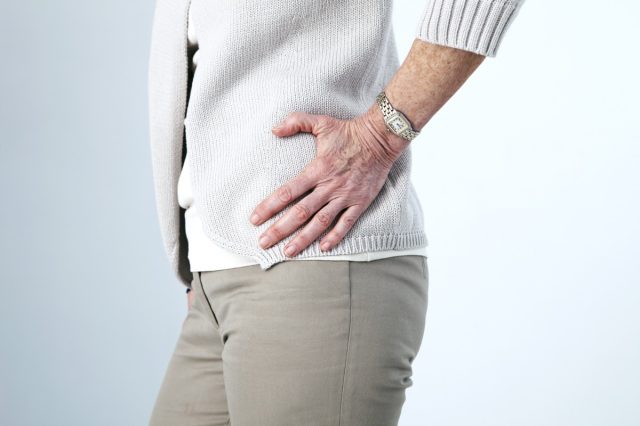
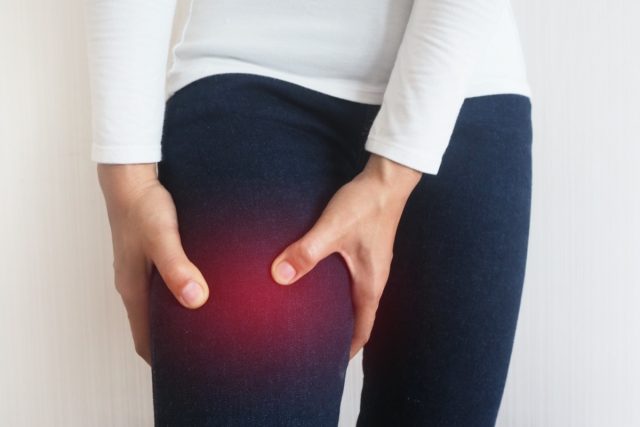
Conversely, the hip flexor muscles, located at the front of the hip, become chronically shortened and overactive due to constant sitting. This tightness pulls on the lumbar spine, frequently manifesting as lower back discomfort or pain. Beyond these anterior and posterior imbalances, the lateral aspect of the hip often suffers from severe neglect. The gluteus medius, a crucial muscle situated on the outer hip, plays a vital role in stabilizing the pelvis during locomotion, preventing it from dipping to one side with each step. When this muscle is weak, the entire kinetic chain is compromised, often resulting in a cascade of issues including knee pain, generalized hip pain, and exacerbated lower back problems.

Furthermore, a common consequence of aging and inactivity is a significant reduction in joint mobility, particularly the capacity for external rotation of the leg. This range of motion is indispensable for everyday activities such as entering or exiting a vehicle, putting on socks, or shifting weight sideways to retrieve an object. Many individuals over 60 find that this critical aspect of hip function has diminished more than they realize, directly impacting their ease and safety in daily life.
Underpinning these physical declines is a psychological dimension: a pervasive loss of confidence. Weak hips often lead to feelings of instability and unsteadiness, which in turn foster caution and a tendency towards smaller, more tentative movements. This reduced physical exploration then precipitates further muscle weakening, creating a reinforcing negative feedback loop—a slow, insidious spiral downwards. Breaking this cycle early through targeted intervention is key to restoring both physical capability and self-assurance.
The humble chair, an ubiquitous piece of furniture in virtually every home, emerges as an unexpectedly powerful tool in the pursuit of enhanced hip strength and mobility. Its immediate availability represents a significant practical advantage over traditional gym environments. The absence of travel, membership fees, equipment queues, or the potential intimidation associated with public fitness facilities dramatically lowers the barrier to entry for consistent exercise. This reduction in "friction"—the ease with which one can initiate and maintain a workout routine—is a primary determinant of long-term adherence and, consequently, the achievement of meaningful physical change.
Beyond its convenience, a chair offers a remarkably adaptable and progressive support system for exercise. Beginners can utilize the chair to bear a substantial portion of their body weight, gradually reducing reliance as strength improves. This can progress to using it lightly for balance, eventually leading to the performance of unassisted standing variations of the exercises. This graded progression stands in contrast to many gym machines, which often eliminate the need for stability altogether, thereby limiting the development of functional, integrated strength.
Moreover, while dedicated hip machines in gyms frequently isolate hip muscles, requiring a padded seat to immobilize the rest of the body, chair-based exercises promote a more holistic approach. They engage the hip musculature in coordination with the trunk stabilizers, mimicking the complex demands of real-world movements such as walking, standing, and ascending stairs. This integrated training approach fosters strength that is directly transferable to daily functional tasks, making the body more resilient and efficient in its natural movements.
Foundational Movements for Hip Rejuvenation: Four Essential Chair Exercises
Here are four core exercises, each addressing specific aspects of hip strength and mobility, designed to be performed with the support and assistance of a sturdy chair.
1. The Assisted Stand-Up (Sit-to-Stand)
- Muscles Engaged: Gluteus maximus, quadriceps, hamstrings.
- Functional Significance: This fundamental movement is arguably the most critical for older adults, directly training the muscles and movement patterns required to transition from a seated to a standing position. Its proficiency is often a key indicator used by physical therapists to assess an individual’s potential for maintaining independent living. Mastering this exercise directly translates to greater ease in daily life.
- How to Perform: Begin by sitting upright on a sturdy chair, feet flat on the floor, shoulder-width apart, directly beneath your knees. Lean slightly forward from your hips, engaging your core. Press through your heels and stand up smoothly, avoiding any rocking motion or momentum. Once standing tall, slowly and controllably lower yourself back down to the chair, allowing your glutes to lightly tap the seat before rising again.
- Common Pitfalls & Form Pointers: Avoid relying on your arms to push off your knees or armrests excessively, as this diminishes the work done by your legs and hips. Maintain a long spine and keep your chest lifted throughout the movement. If rising without rocking is challenging, start with a slightly higher chair or add a firm cushion to reduce the range of motion until strength improves.
- Recommended Repetitions: 10 to 15 controlled repetitions.
2. Seated Leg Lifts (Seated March)
- Muscles Engaged: Hip flexors (iliopsoas, rectus femoris), core, and trunk stabilizers.
- Functional Significance: This exercise specifically activates the hip flexors and simultaneously trains the trunk to maintain stability while the legs are in motion. It is crucial for preserving a natural and efficient stride length as one ages, a key factor in sustained mobility and independence.
- How to Perform: Sit tall on the edge of a sturdy chair, with your feet flat on the floor and hands resting lightly on your thighs or the chair sides for support. Engage your core to keep your torso stable. Gently lift one knee towards your chest, maintaining a proud chest and an elongated spine, without leaning back or rounding your lower back. Slowly lower the foot back to the floor and repeat with the opposite leg.
- Common Pitfalls & Form Pointers: Resist the temptation to slouch or lean excessively as you lift your leg; the movement should primarily originate from the hip, not the spine. Focus on controlled, deliberate lifts rather than quick, jerky motions. Imagine a string pulling the top of your head towards the ceiling to maintain spinal length.
- Recommended Repetitions: 20 lifts in total (10 on each side).
3. Lateral Leg Elevation (Standing Side Leg Lift)
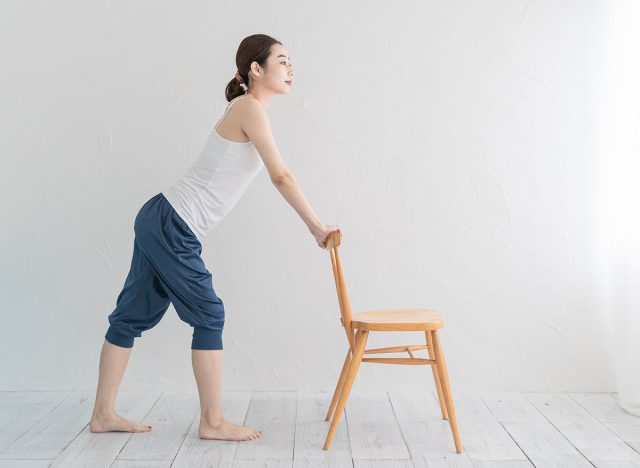
- Muscles Engaged: Gluteus medius (outer hip).
- Functional Significance: This targets the gluteus medius, a muscle frequently overlooked in conventional training. Strengthening it is paramount for stabilizing the pelvis during walking, preventing the characteristic "hip drop" that can lead to compensatory movements and pain. Rebuilding strength in this area often yields an immediate, noticeable improvement in balance and the fluidity of one’s gait.
- How to Perform: Stand beside a sturdy chair, holding onto its back or side for balance. Keep your standing leg slightly bent, not locked. With your working leg straight but not rigid, slowly lift it out to the side, leading with your heel and keeping your toes pointing forward or slightly down. Lift only as high as you can without tilting your torso or hiking your hip. Control the movement as you lower the leg back down, without letting it swing.
- Common Pitfalls & Form Pointers: The primary mistake is to compensate by swaying the upper body or hiking the hip of the lifting leg. A small, controlled elevation of the leg, performed with a stable trunk, is far more effective for muscle activation than a larger, uncontrolled lift. Focus on feeling the contraction in your outer hip.
- Recommended Repetitions: 10 repetitions per side.
4. Posterior Leg Extension (Standing Hip Extension)
- Muscles Engaged: Gluteus maximus.
- Functional Significance: This exercise specifically activates the gluteus maximus in a pattern essential for activities like walking uphill, climbing stairs, or standing up from a deep squat. A weak gluteus maximus is prevalent among older adults, and its strengthening significantly reduces the strain placed on the lower back during daily movements.
- How to Perform: Stand behind a sturdy chair, holding onto its back for support. Keep your standing leg slightly bent. Keeping your working leg straight but not locked, slowly extend it directly backward, engaging your glutes. Avoid arching your lower back; the movement should come primarily from the hip. Maintain a stable torso and avoid leaning forward excessively. Control the return of your leg to the starting position.
- Common Pitfalls & Form Pointers: The most common error is to overextend the lower back instead of initiating the movement from the glutes. A short, powerful squeeze of the gluteal muscles, even if it results in only a small backward movement of the leg, is far more effective than a larger movement achieved by hyperextending the spine.
- Recommended Repetitions: 10 repetitions per side.
Implementing Your Regimen: Frequency, Progression, and Safety
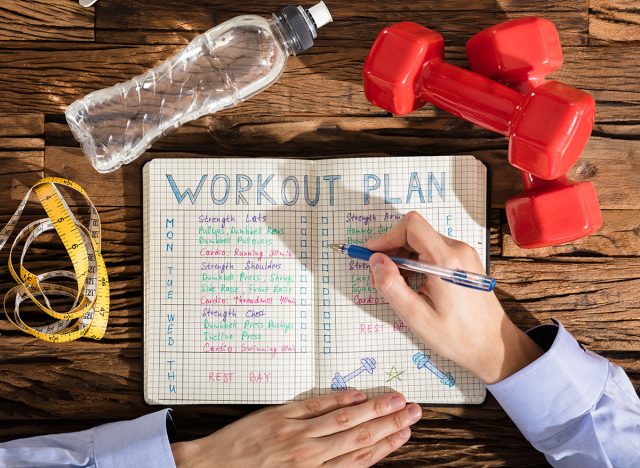
Workout Schedule: A sensible starting point for this regimen is three days per week. Once your body has adapted and responds well, typically after about two weeks, you can gradually increase the frequency to four or five days. Given the low-impact nature and controlled loading of these exercises, performing them daily is also acceptable for most individuals. Begin with two sets of 10 to 12 repetitions for each of the four exercises. This initial program should take approximately 12 minutes, including brief rest periods, making it highly achievable for busy schedules. Allow 30 to 45 seconds of rest between sets, or extend this period if you require more recovery.
Progression: After approximately two weeks of consistent practice, consider adding a third set to each exercise to further challenge your muscles. After a month, introduce an isometric hold: at the peak contraction of each repetition, particularly for the leg lifts and hip extensions, pause for two seconds. This sustained muscle engagement significantly enhances strength development and deepens neuromuscular control, marking a crucial phase where transformative results begin to accumulate.
Safety Protocols: Before commencing any new exercise program, especially if you have pre-existing medical conditions, recent injuries, or are over the age of 60, it is always advisable to consult with a healthcare professional, such as your general practitioner or a physical therapist. Individuals who have undergone recent hip surgery, a hip or knee replacement within the last 12 months, or have an active diagnosis of arthritis in the hip should seek medical clearance and guidance. If specific movements have been advised against post-surgery, prioritize those recommendations and integrate these exercises only to complement, rather than override, prescribed therapies.
Furthermore, if you have experienced balance problems severe enough to cause a fall within the last six months, a medical evaluation is essential to rule out underlying causes such as blood pressure fluctuations or inner ear disturbances. While standing exercises are beneficial for long-term balance improvement, addressing primary medical causes of falls is paramount.
For all participants, adherence to standard exercise safety guidelines is crucial: listen to your body, avoid movements that cause sharp pain, and ensure your environment is safe. The chair used for these exercises must be robust and stable. Avoid chairs with wheels, folding mechanisms, or any that exhibit flexibility when leaned upon. A solid dining chair typically serves as the ideal piece of equipment for safely executing all four movements.
Anticipated Transformations: The Journey to Enhanced Mobility and Well-being
The commitment to this chair-based exercise program typically yields noticeable improvements relatively quickly, often serving as powerful motivation for continued engagement.
By the end of the first fortnight: Most individuals report that transitioning from a seated position to standing requires less exertion. This initial shift is not merely a perception of increased energy; it represents a genuine, measurable improvement in muscular strength and neuromuscular efficiency.
Within four weeks: A distinct change in walking patterns becomes apparent. The hips begin to activate more effectively, leading to a lengthened stride and improved pelvic stability, eliminating the subtle "hip drop" that might have been present. Many participants observe that they can keep pace with faster walkers without conscious effort, and family members or companions may comment on a noticeably steadier gait.
By six weeks: Day-to-day functional tasks that once felt challenging begin to feel significantly easier. This includes navigating tricky movements such as standing up from a low sofa, effortlessly entering and exiting a car, or confidently stepping over a bath edge. These are precisely the movements that often become incrementally more difficult around the age of 60 and are among the first to respond positively to targeted hip strengthening. At this six-week mark, strength gains in the sit-to-stand exercise are typically substantial, ranging from 30 to 50 percent.
The true power of this regimen, however, lies in its sustained application. Continuing these exercises through months two and three allows hip strength to compound significantly, fostering a continuous upward trajectory in balance, mobility, and overall confidence. This progressive enhancement contributes profoundly to an improved quality of life, empowering older adults to maintain their independence and engage more fully with the world around them.
About the Author