
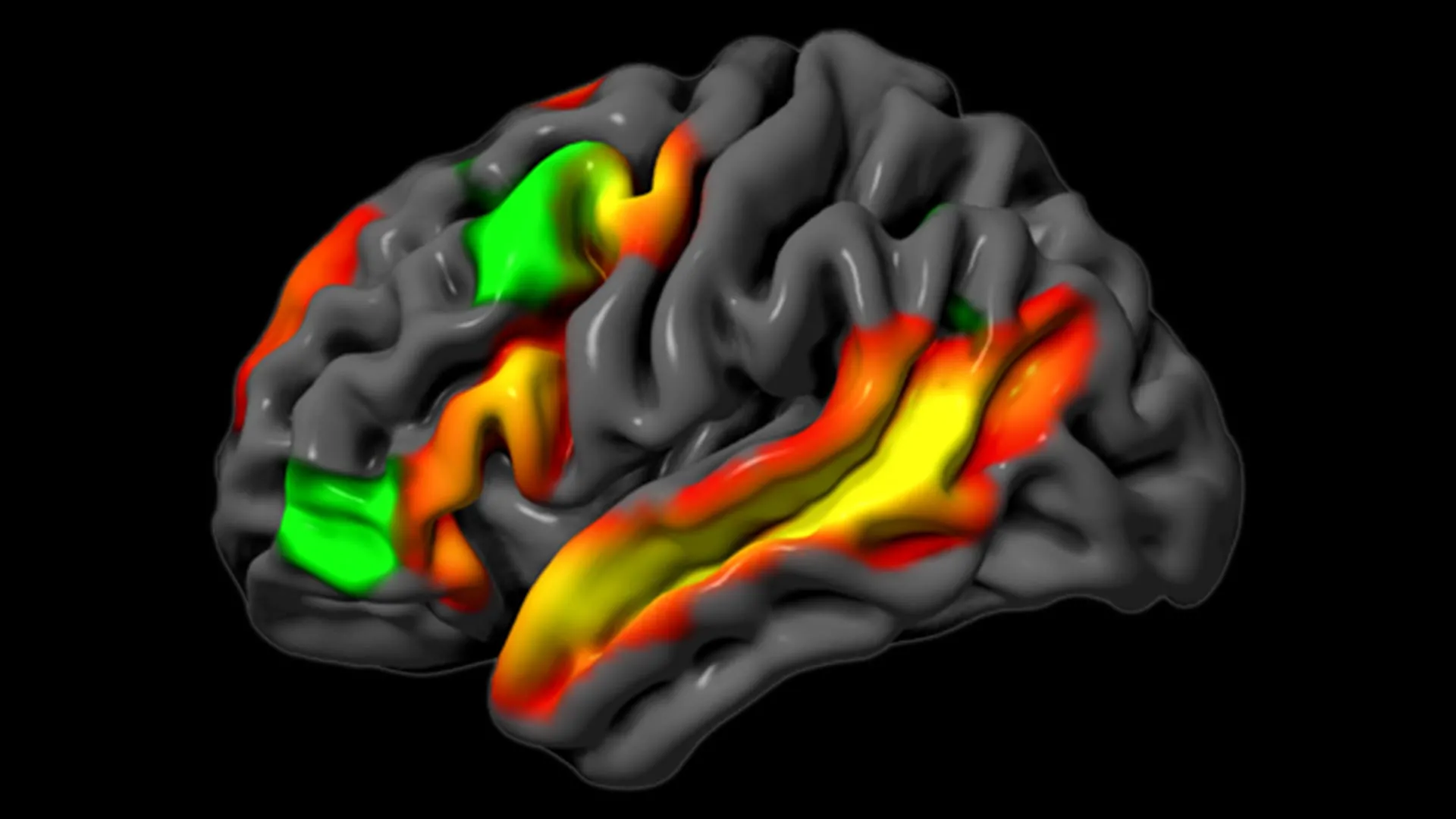
A groundbreaking investigation by neuroscientists at the Massachusetts Institute of Technology’s McGovern Institute for Brain Research has illuminated a fundamental aspect of human cognition: the capacity for logical reasoning operates independently of linguistic processing. For millennia, the intricate relationship between language and thought has been a subject of profound philosophical and scientific debate, with many positing that our ability to reason is inextricably bound to our command of words. However, this recent research, published in the esteemed journal PNAS, challenges that long-held assumption, demonstrating that individuals can successfully engage in complex logical problem-solving even when their language faculties are significantly compromised. Furthermore, advanced brain imaging techniques employed in the study reveal that the neural regions typically associated with language comprehension and production are not actively recruited during logical deduction.
The notion that language serves as the primary vehicle for thought is deeply ingrained, stemming from observable similarities between the structure of language and the architecture of abstract reasoning. Hope Kean, a postdoctoral researcher and former K. Lisa Yang Integrative Computational Neuroscience (ICoN) Center graduate fellow at MIT, explains that this connection seems intuitive. "Abstract thinking possesses characteristics that strongly resemble language," Kean notes, highlighting the parallels in their hierarchical organization. "One can deconstruct a thought into its constituent parts, much like dissecting propositions into atomic logical units, and then assemble these components in a structured, hierarchical fashion to construct more elaborate rules, mirroring the way language operates." This structural congruence has led many to believe that language is not merely a tool for expressing thought, but rather a prerequisite for its very formation.
Despite these apparent overlaps, Kean and her principal investigator, Evelina Fedorenko, an associate professor of brain and cognitive sciences and a McGovern Institute investigator, harbored a suspicion that the brain might possess distinct neural substrates for the process of reasoning itself and its subsequent articulation through language. While the outward manifestation of reasoning—whether in formulating a problem, debating potential solutions, or explaining a conclusion—heavily relies on linguistic expression, the internal cognitive machinery underpinning logical thought might operate on a separate neural network. Kean elaborates, "There are dimensions of cognition that appear to transcend the inherent limitations of language." She points to the precision often demanded by logical reasoning, a level of exactitude that everyday language may not consistently provide. Moreover, language unfolds in a linear, sequential manner, word by word, whereas arriving at a logical conclusion may necessitate the simultaneous consideration of multiple disparate pieces of information in a less sequential fashion.
To empirically investigate these questions, Kean embarked on a challenging research endeavor, seeking to understand the brain’s mechanisms for logical reasoning without relying on the very faculty under scrutiny. The conventional approach in human cognitive research typically involves linguistic instructions and responses, posing a significant methodological hurdle. The research team, however, devised an ingenious solution by collaborating with Rosemary Varley, a neuroscientist at University College London renowned for her work with individuals experiencing acquired language impairments, and her research group.
The study focused on two participants who had sustained strokes that resulted in substantial damage to the brain regions responsible for language processing, leading to severe difficulties in both understanding and producing language. To circumvent the reliance on verbal communication, the researchers designed a series of logic-based games that utilized numerical and visual patterns as their core elements. In one task, participants were presented with two lists of numbers and were tasked with identifying the underlying rule that transformed the first list into the second. These rules could involve operations such as digit reversal or the exclusion of numbers exceeding a specific threshold. Once the rule was deciphered, participants were required to apply it to novel sets of numbers. Another task involved presenting participants with a matrix of geometric patterns, from which they had to select the pattern that correctly completed the sequence.
As the complexity of these puzzles escalated, the results provided compelling evidence that language was not a prerequisite for this form of reasoning. Participants with profound language deficits performed on par with a control group of neurotypical individuals, demonstrating an equivalent capacity to solve the logical challenges. Remarkably, they were also able to articulate the rules they had discovered through non-linguistic means, such as gestures and sketches, further underscoring the dissociation between their reasoning abilities and their compromised language skills. "This finding genuinely challenges theories that propose symbolic rule induction is impossible without linguistic capabilities," Kean stated, emphasizing the significance of this outcome.
Complementing these behavioral findings, the researchers employed functional magnetic resonance imaging (fMRI) to observe the neural activity in the brains of healthy adults as they engaged in logical problem-solving. Participants underwent MRI scans at MIT, during which their brain activity was meticulously recorded as they performed a variety of tasks. These included the same logic games used with the participants exhibiting language impairments, as well as tasks specifically designed to pinpoint their individual language-processing areas. A separate set of tasks was dedicated to mapping the "multiple demand network," a widespread brain system recognized for its role in supporting complex cognitive functions.
The neurotypical participants tackled logic puzzles analogous to those presented to the individuals with language impairments. Additionally, they engaged with problems that involved syllogistic reasoning, employing conditional "if-then" statements such as, "If the ball is red, then it is big. The ball is red. Is the ball big?" The researchers strategically adjusted the difficulty of these puzzles to identify which brain regions exhibited increased activity in response to escalating reasoning demands. They also compared brain activity patterns when participants were tasked with discovering an unknown rule (inductive reasoning) versus when they were simply required to apply a pre-established rule (deductive reasoning).
The fMRI data revealed a striking and clear demarcation between language and logic centers in the brain. The neural network typically associated with language processing showed no activation during either inductive reasoning, where participants were identifying hidden rules, or deductive reasoning, where they were evaluating the validity of logical conclusions. The findings concerning the multiple demand network presented a more nuanced picture. While scientists had anticipated its significant involvement in logical reasoning, the scans indicated that this network became active during inductive reasoning but did not appear to play a role in deductive reasoning. Kean indicated that this particular finding is a subject of ongoing investigation in her current research.
For Fedorenko and Kean, these combined results offer robust empirical support for the hypothesis that language and logic are underpinned by distinct neural systems within the brain. These findings build upon previous research emanating from Fedorenko’s laboratory, which had already demonstrated that other cognitive functions, such as object categorization and social cognition, do not appear to be dependent on linguistic capacities.
The implications of this research extend significantly to the understanding and treatment of acquired language disorders, commonly known as aphasia. Professionals who work with individuals affected by aphasia have long recognized that a loss of linguistic ability does not equate to a loss of general intelligence. Many individuals with aphasia retain the capacity to enjoy complex activities like playing chess, solving Sudoku puzzles, or managing household finances. However, there remains a societal tendency to mistakenly equate difficulties in communication with deficits in cognitive capacity. "This research contributes to an expanding body of evidence that establishes that even individuals with severe aphasia can preserve their capacity for abstract logical thought—a defining characteristic of our species," Fedorenko asserted. "We must continue to educate the public that linguistic challenges, whether stemming from aphasia, developmental language conditions like stuttering, or being a non-native speaker, are not indicators of a person’s overall intelligence or capabilities."
Beyond the clinical realm, these findings may also offer valuable insights for the burgeoning field of artificial intelligence. Sophisticated large language models, such as ChatGPT and Claude, are trained exclusively on textual data and generate text as their output, yet they are remarkably adept at simulating certain forms of human reasoning. The human brain, as this study suggests, operates on a fundamentally different principle, with language and abstract logical thought existing as separate cognitive entities. Kean suggests that a comparative analysis of the distinct mechanisms underlying human reasoning and the operational processes of large language models could provide fertile ground for innovation and refinement in the development of future AI systems. The precise computational architecture that enables the human brain to perform reasoning remains a vibrant and active area of scientific inquiry, a new frontier in charting the complex landscape of human thought that Kean eagerly anticipates exploring further.
About the Author












