The intricate biological machinery responsible for purging metabolic byproducts from the brain, particularly during the restorative phase of deep sleep, exhibits a remarkable dual-speed functionality, a groundbreaking study has uncovered. This vital cleansing mechanism, known as the glymphatic system, operates by facilitating the movement of a cerebrospinal fluid-like substance that circulates through the brain’s delicate architecture, effectively flushing out waste products that can accumulate and contribute to neurodegenerative conditions such as Alzheimer’s disease. While the existence of this system has been recognized for over a decade, pioneered by the seminal work of neuroscientist Maiken Nedergaard, the precise dynamics of fluid transit within the living brain have remained an elusive area of research. The inherent difficulty in observing these slow-moving fluids without causing collateral damage has presented a significant hurdle for scientific investigation.
Traditional methods for studying brain tissue, such as employing high-resolution microscopes to scrutinize small, localized areas, offer unparalleled detail but provide only a microscopic glimpse of the overarching circulatory network. Conversely, Magnetic Resonance Imaging (MRI), a powerful tool for generating three-dimensional anatomical maps of the brain, has proven inadequate for capturing the sluggish velocities characteristic of glymphatic flow. This limitation stems from the fundamental principles of MRI technology, which is not inherently designed to detect movement at such an infinitesimal pace.
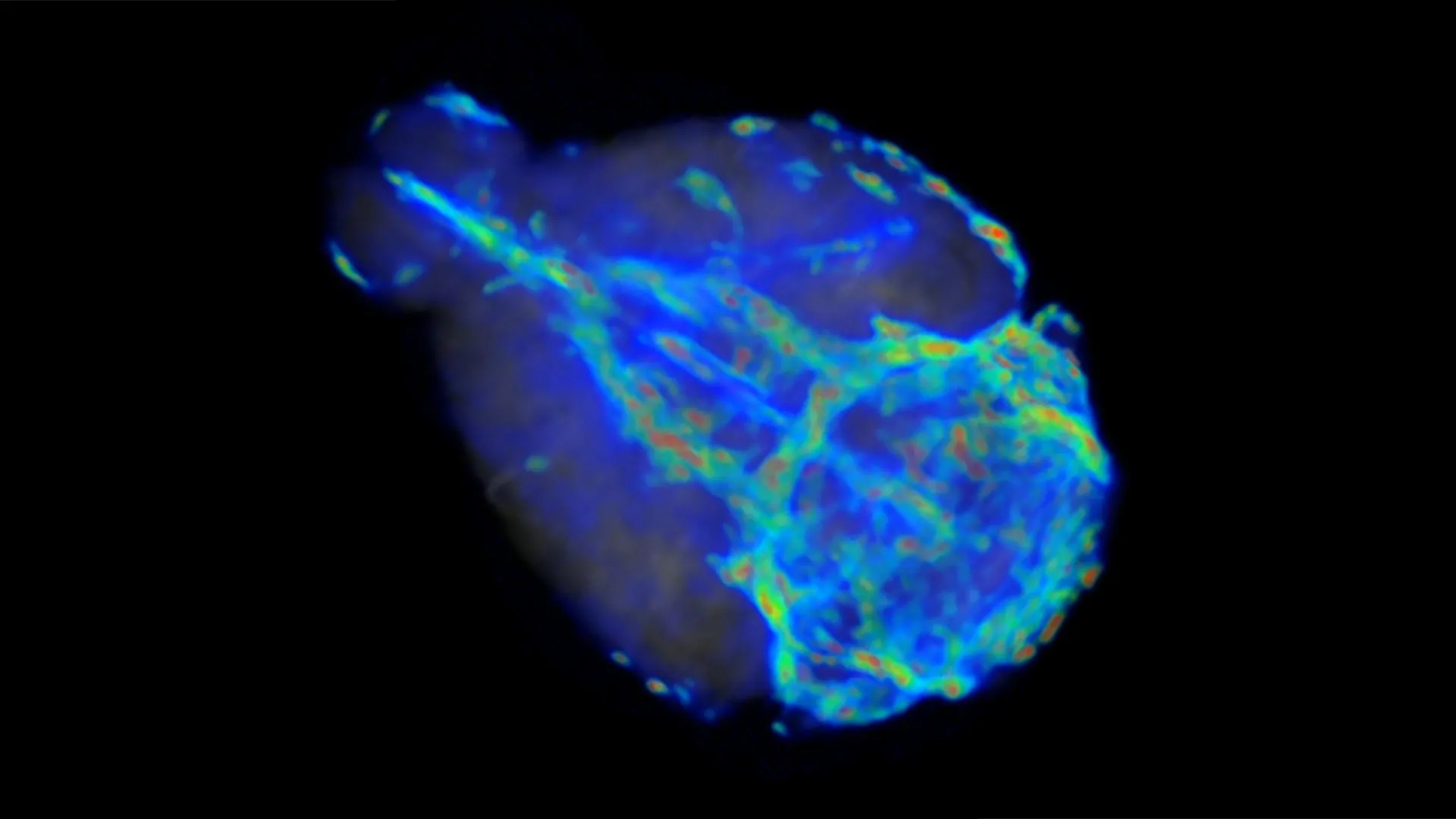
To surmount these observational challenges, a multidisciplinary team of researchers from the University of Rochester, Brown University, and the University of Copenhagen has harnessed the power of artificial intelligence, specifically a physics-informed AI approach. Their novel methodology, detailed in a recent publication in the esteemed journal Science Advances, utilizes advanced neural networks trained on temporal data of dye diffusion within brain tissue. By meticulously analyzing the progression of dye movement over time, these AI models are capable of inferring not only the speed of the fluid but also the intrinsic permeability of the surrounding brain parenchyma.
The findings from this AI-driven analysis have illuminated a fascinating dichotomy in the glymphatic system’s operational speeds, revealing two distinct pathways for the clearance of particulate matter, including the amyloid-beta proteins implicated in the pathogenesis of Alzheimer’s disease. In more expansive cranial spaces, such as the subarachnoid space located between the dura mater and the arachnoid mater – the outermost membranes enveloping the brain – the cleansing fluid flows at a comparatively brisk pace, on the order of several microns per second. However, as the fluid penetrates deeper into the brain’s intricate tissue matrix, its velocity experiences a dramatic deceleration. The research indicates that this intraparenchymal flow is approximately fifty times slower than its more superficial counterpart, suggesting a complex, multi-tiered clearance strategy.
The current research phase involves establishing baseline measurements of fluid dynamics in animal models, primarily mice, to refine and validate the AI tools. This foundational work is crucial for developing robust algorithms that can accurately characterize normal fluid circulation patterns. The ultimate objective of this research endeavor is to draw comparative analyses between the glymphatic circulation patterns observed in healthy and diseased brains, as well as to investigate potential age-related differences in this critical waste removal process.
A significant long-term aspiration of this research initiative is the translation of these methodologies to human subjects. The ability to quantitatively assess fluid circulation within and around the human brain holds immense potential for revolutionizing the study and management of neurological disorders and traumatic brain injuries. Such advancements could pave the way for novel diagnostic and therapeutic strategies, offering unprecedented insights into the mechanisms underlying brain health and disease.
The implications for clinical applications are profound and far-reaching, according to Professor Douglas Kelley from the University of Rochester’s Department of Mechanical Engineering, a key contributor to the study. The development of techniques to measure fluid flow in human brains could lead to the identification of impaired glymphatic function in individuals at risk for Alzheimer’s disease, potentially enabling earlier intervention and preventative measures. Furthermore, the ability to assess post-concussive fluid circulation disruption could enhance the diagnosis and management of traumatic brain injuries, providing objective data to guide recovery protocols. This current study represents a significant stride toward realizing these transformative clinical possibilities.
The research efforts underpinning this discovery have been generously supported by grants from the National Institutes of Health (NIH) through its National Center for Complementary and Integrative Health and the NIH BRAIN Initiative, underscoring the national importance placed on advancing our understanding of brain function. The collaborative nature of this project, involving researchers from diverse disciplines and institutions, highlights the power of interdisciplinary scientific inquiry in tackling complex biological challenges. Key collaborators on this groundbreaking study include Juan Diego Toscano, a PhD student at Brown University; Yisen Guo, a computational scientist at the University of Rochester; Zhibo Wang, a PhD student at Brown University; Mohammad Vaezi, a PhD student at the University of Rochester; Yuki Mori, an Associate Professor at the University of Copenhagen; George Karniadakis, a Professor at Brown University; and Kimberly Boster, an Assistant Professor at the University of Rochester. Their collective expertise has been instrumental in developing and implementing the innovative AI-driven approach that has unveiled the dual-speed nature of the brain’s essential waste clearance system.
About the Author