A recent examination published in the esteemed neurocognitive journal Entropy proposes a compelling convergence between contemporary neuroscience and the pioneering theories of psychoanalysis, suggesting that the dominant models of brain function today bear a remarkable resemblance to concepts first articulated by Sigmund Freud over 130 years ago. This scholarly inquiry posits that a synergistic integration of these seemingly disparate fields could unlock a more profound and comprehensive understanding of the human psyche.
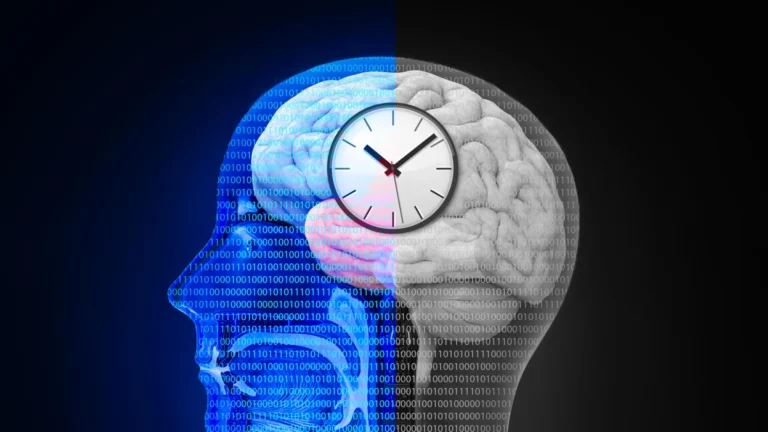
At the heart of this interdisciplinary dialogue lies the "prediction paradigm," a cornerstone of modern neuroscience. This theoretical framework posits that the human brain operates as a perpetual prediction engine, continuously formulating anticipations about forthcoming events and subsequently refining these internal models by cross-referencing them with incoming sensory data. Neuroscientists widely endorse this ongoing predictive process as a fundamental architect of perception, a shaper of behavioral responses, and a crucial regulator of emotional states.
The research team, comprising Erik Stänicke, Bendik Hovet, Line Indrevoll Stänicke, and their colleagues from the Department of Psychology, asserts that this neuroscientific framework aligns strikingly with enduring psychoanalytic notions concerning how individuals subjectively apprehend and interpret their lived experiences. As Stänicke articulates, "For over 130 years, psychoanalysis has developed psychological theories about how predictions take place at a subjective level, which cognitive neuropsychology is now studying at a physiological level." This statement underscores the core argument: while the methodologies and levels of analysis may differ, the underlying mental operations being described exhibit a profound congruence.
The authors elaborate that both neuroscience and psychoanalysis are, in essence, articulating many of the same fundamental mental processes, albeit through distinct lenses. Neuroscience endeavors to elucidate the intricate biological and computational machinery operating within the brain’s architecture. Conversely, psychoanalysis delves into the subjective phenomenological experience of these processes, focusing on how they are perceived and interpreted from the individual’s unique vantage point.
A salient illustration of this shared conceptual ground is found in the psychoanalytic concept of "projection." The researchers draw a direct parallel between this concept and the brain’s inherent predictive operations. "When we attribute qualities, intentions or feelings to other people, our brain shapes our experience of the world in line with established expectations," Stänicke explains, highlighting how our internal predictive models influence our social perceptions. This process is deeply rooted in our cumulative history of interactions. According to the researchers, past interpersonal experiences subtly yet powerfully mold our expectations for future encounters and the unfolding of novel situations. This mirrors the neuroscientific distinction between the brain’s internal recalibration of its predictions—a process known as perceptual inference—and the more active endeavor to shape the external world to align with these expectations, termed active inference.
Furthermore, the paper illuminates another critical area of overlap: the mind’s fundamental drive for stability and predictability, a concept that resonates with the principle of homeostasis in biological systems. Both predictive neuroscience and psychoanalytic theory characterize the mind as an entity striving to maintain a state of psychological equilibrium. Within the predictive brain model, this stability is largely achieved by minimizing uncertainty. The brain endeavors to render the world more comprehensible by leaning on its pre-existing frameworks of expectation.
This tendency is mirrored in psychoanalytic thought, where "Psychoanalysts refer to the tendency in the mind to recreate familiar relational patterns, even when these are poorly adapted," notes Stänicke. He posits that this confluence of ideas between the two disciplines holds significant promise for illuminating the origins and maintenance of mental health disorders. The researchers suggest that conditions characterized by rigid and persistent symptoms, such as paranoid ideation or the internalization of a harsh critical voice, might represent highly stable yet inflexible predictive models. For instance, individuals who consistently anticipate criticism, rejection, or hostility from others may interpret social interactions through this predetermined filter, even when objective reality does not support such interpretations.
These deeply ingrained mental constructs can endure because they effectively reduce cognitive dissonance and uncertainty, even at the cost of distorting an accurate perception of reality. From this perspective, both psychoanalytic insights and the tenets of predictive neuroscience offer valuable explanations for why profound and lasting psychological transformation can be an arduous and time-consuming process. The researchers further elaborate that these deeply embedded expectations are not solely lodged in conscious belief systems but are also ingrained within procedural memory, manifesting in enduring patterns of interpersonal relating. Stänicke elaborates that these deeply ingrained relational patterns, stored in procedural memory, fundamentally shape how individuals engage with and respond to the world and the people within it. Consequently, he suggests, "psychotherapy sometimes has to work relationally. For example, new experiences in the relationship between therapist and patient can gradually help to change entrenched relational patterns."
The authors conclude by advocating for a more integrated approach to understanding the human mind, one that harmonizes the biological underpinnings identified by neuroscience with the rich subjective experiences explored by psychoanalysis. Predictive neuroscience, they propose, could provide a tangible biological foundation for many psychoanalytic hypotheses. In parallel, psychoanalysis offers neuroscience a nuanced framework for comprehending the subjective experience, interpretation, and outward expression of predictive processes in the fabric of daily life and interpersonal relationships. "Bringing these two fields together can open up for a more holistic psychology, in which both neurological mechanisms and subjective experience are included. In this way, we can understand subjectivity in a more scientific manner," the researchers state, envisioning a future where a unified psychological science can more effectively address the complexities of human consciousness and behavior.
About the Author