Maintaining robust core strength becomes increasingly vital as individuals advance beyond the age of 55, impacting everything from daily mobility to overall spinal health. The muscles comprising the core—a complex network extending far beyond the superficial "six-pack"—are fundamental to stabilizing the spine, facilitating balanced movement, and upholding healthy posture. With age, natural physiological shifts, including muscle atrophy (sarcopenia) and changes in fat distribution, can contribute to a weakening of these essential muscles, often leading to diminished stability, increased risk of falls, lower back discomfort, and a less firm abdominal appearance. However, dedicated and consistent engagement in targeted exercises can effectively counteract these age-related declines, fostering a stronger, more resilient midsection.
While numerous fitness regimens exist, at-home, bed-based exercises present a uniquely advantageous approach for older adults. The inherent convenience eliminates barriers like travel to a gym or the need for specialized equipment, making consistent adherence more achievable. Crucially, performing these movements on a softer surface like a mattress significantly reduces impact on joints, which can be a primary concern for individuals over 55. This gentle environment also encourages heightened proprioception—the body’s awareness of its position and movement—allowing for a deeper connection with the targeted muscles. By removing the immediate challenge of maintaining balance, individuals can concentrate more intently on activating specific core musculature, leading to more effective and safer workouts.
The core musculature is a sophisticated anatomical system, encompassing not only the rectus abdominis (the visible "six-pack" muscles) but also the internal and external obliques, which wrap around the sides of the torso; the transverse abdominis, a deep, corset-like muscle crucial for spinal stability; and the muscles of the pelvic floor and diaphragm. Together, these muscles form a dynamic cylinder that acts as the body’s central powerhouse. A strong core supports the entire trunk, improving balance, enabling efficient transfer of power between the upper and lower body, and protecting the spine from excessive strain during activities ranging from lifting groceries to simply standing upright. Neglecting these muscles can exacerbate postural issues, contribute to a visible protrusion of the lower abdomen (often termed a "belly pooch"), and diminish overall functional independence. Incorporating specific movements that target these diverse core components is therefore paramount for comprehensive well-being.
A strength coach’s insights reveal that simple, focused movements, when performed regularly, yield substantial benefits, particularly when executed in a manner that allows for deliberate muscle engagement. The following five exercises are specifically chosen for their efficacy in strengthening the core from multiple angles while remaining gentle on aging joints. They aim to enhance stability, improve muscle tone, and contribute to a more supported and aesthetically firmer midsection.
1. Russian Twists
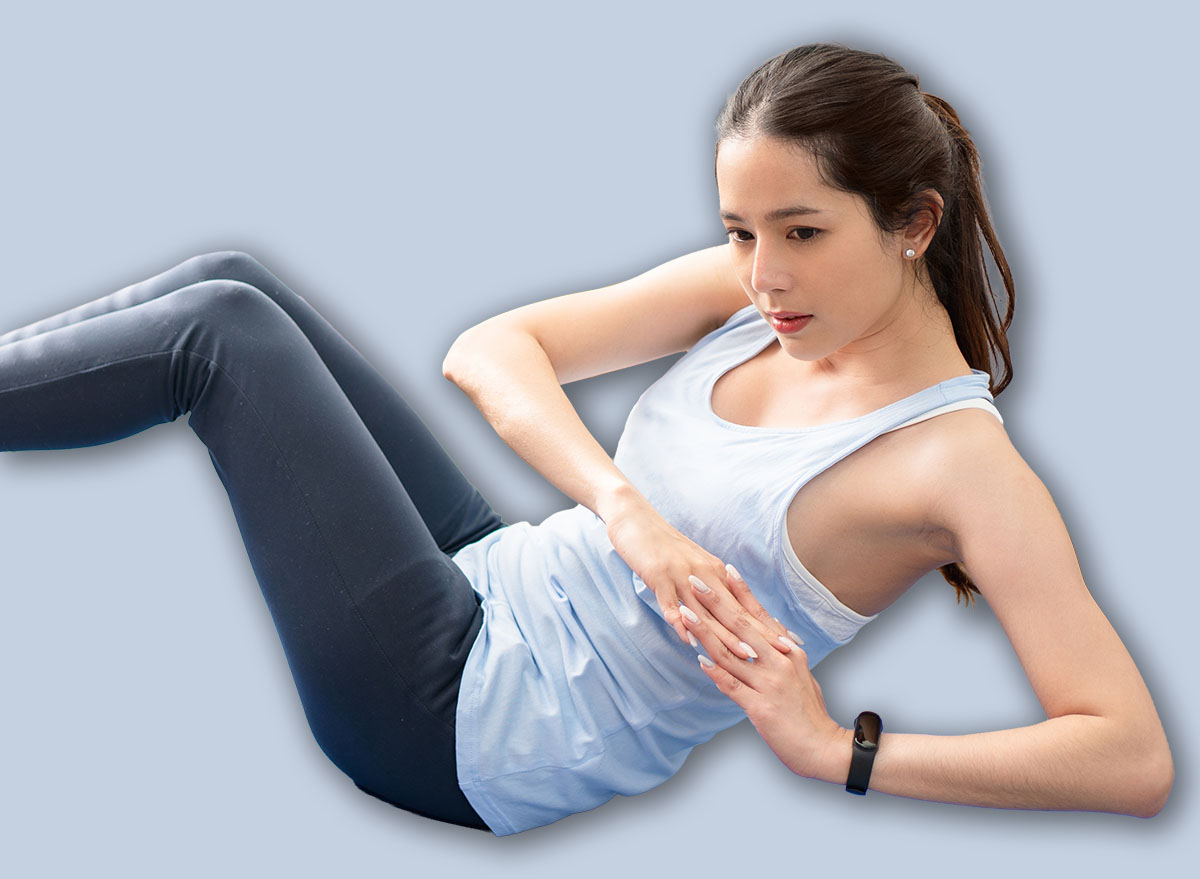
This dynamic exercise specifically targets the oblique muscles, which are instrumental in shaping the waistline and facilitating rotational movements of the torso. By engaging these muscles, Russian twists contribute to enhanced trunk stability and the overall aesthetic of a more defined midsection. Performing them on a bed allows for a more controlled execution, emphasizing muscular contraction over momentum. The consistent rotational demand also refines the coordination between the upper and lower body, crucial for everyday tasks.
- Muscles Trained: Primarily the internal and external obliques, with secondary engagement of the rectus abdominis, transverse abdominis, and hip flexors. The obliques are vital for twisting and side bending, while the transverse abdominis provides deep stabilizing support.
- Benefits: Improves rotational power, enhances waist definition, and strengthens the muscles responsible for lateral flexion and trunk stability. This translates to easier movements like turning to look behind you or reaching for objects at your side.
- Execution Principles: Begin seated on the bed with knees bent and feet flat. Lean back slightly, engaging your core to maintain a stable torso, ensuring your spine remains elongated and not rounded.
- Form Nuances: The key is to initiate the twist from your torso, rotating through your rib cage rather than just moving your arms. Keep your chest elevated throughout the movement, and maintain a braced core to protect your lower back. Avoid excessive rocking or using momentum; control is paramount.
- Recommended Sets and Reps: Aim for 3 sets of 16 to 20 alternating repetitions. Allow for a 45-second rest period between each set.
- Progressions/Variations: To increase difficulty, consider holding a light weight (e.g., a small pillow or light dumbbell) close to your chest, or slightly elevating your feet off the mattress for a greater challenge to the core stabilizers. Slowing the tempo of each twist can also deepen muscle engagement.
2. Dead Bug
The dead bug exercise is a foundational movement for cultivating deep abdominal strength and enhancing spinal stability, particularly targeting the transverse abdominis. It effectively trains the core to maintain a stable, neutral spine while the limbs move independently, mimicking the demands of everyday activities. This anti-extension exercise is superb for reinforcing proper posture and improving neuromuscular control. Its slow, deliberate nature also fosters better coordination between the upper and lower body, an important aspect of functional fitness in later years.
- Muscles Trained: Primarily the transverse abdominis and multifidus (deep core stabilizers), along with the rectus abdominis and hip flexors. This exercise specifically trains the core to resist arching of the lower back.
- Benefits: Significantly improves spinal stability, cultivates deep core strength, enhances body awareness, and supports better posture. This directly translates to reduced lower back pain and improved control during dynamic movements.
- Execution Principles: Lie on your back on the bed with knees bent at a 90-degree angle, feet lifted, and arms extended towards the ceiling. Initiate the movement by slowly extending one arm and the opposite leg simultaneously, maintaining a stable core.
- Form Nuances: The most critical aspect is keeping your lower back pressed gently into the mattress throughout the entire exercise. Avoid any arching, which indicates a loss of core engagement. Imagine your belly button pulling towards your spine. Breathe steadily, exhaling as you extend your limbs.
- Recommended Sets and Reps: Perform 3 sets of 10 to 12 repetitions per side. Rest for 45 seconds between each set.
- Progressions/Variations: For a more challenging version, incorporate a resistance band around your feet or hands. Alternatively, a "heel tap dead bug" involves only tapping the heel to the mattress without fully extending the leg, which can be a good starting point.
3. Reverse Crunch
The reverse crunch specifically emphasizes the lower abdominal muscles, an area often challenging to target and frequently associated with the "belly pooch." By lifting the hips towards the ceiling rather than the upper body, this exercise effectively isolates and strengthens the muscles responsible for pelvic stability and lower core integrity. The movement encourages the abdominal muscles to initiate the lift while the rest of the core stabilizes the spine. This direct engagement of the lower abdominals through the controlled motion of the legs contributes significantly to a firmer midsection.
- Muscles Trained: Predominantly the lower portion of the rectus abdominis, along with significant involvement from the hip flexors and deep core stabilizers.
- Benefits: Strengthens the lower abdominal region, improves pelvic control, and contributes to a more toned appearance in the lower abdomen. This also aids in movements requiring controlled pelvic tilt and spinal flexion.
- Execution Principles: Lie on your back on the bed with your knees bent and feet flat. Bring your knees towards your chest, then use your abdominal muscles to lift your hips off the mattress, driving your knees upward.
- Form Nuances: The key is to lift your hips using your abdominal strength, not by swinging your legs or using momentum. Focus on a controlled, smooth upward motion and an equally controlled descent. Avoid letting your lower back arch excessively as you lower your legs.
- Recommended Sets and Reps: Complete 3 sets of 10 to 12 repetitions. Rest for 45 seconds between each set.
- Progressions/Variations: To increase intensity, perform a "slow tempo reverse crunch," taking several seconds for both the upward and downward phases. For those seeking variety, an "alternating knee tuck" can challenge each side independently.
4. Supine Knee Tucks
Supine knee tucks are an excellent exercise for engaging the entire abdominal wall through a focused curling motion. This movement demands that the abdominal muscles contract effectively to bring the knees towards the chest while simultaneously stabilizing the spine. Performing this exercise on a bed facilitates a slower, more deliberate execution, enhancing the connection with both the upper and lower portions of the rectus abdominis. Consistent practice builds comprehensive abdominal strength and promotes a tighter, more supported midsection.
- Muscles Trained: The entire rectus abdominis (upper and lower), hip flexors, and a range of core stabilizers work in concert during this exercise.
- Benefits: Strengthens the complete abdominal wall, improves spinal flexion control, and enhances overall core endurance. This contributes to better posture and a more integrated core response during daily activities.
- Execution Principles: Lie flat on your back on the bed with legs extended. Simultaneously bring both knees towards your chest while lifting your upper back and shoulders slightly off the mattress, crunching your abs.
- Form Nuances: Maintain a smooth, controlled motion throughout the exercise. Avoid jerky movements. Focus on squeezing your abdominal muscles as you tuck your knees, and control the extension of your legs back to the starting position. Your breath should be coordinated with the movement: exhale as you tuck, inhale as you extend.
- Recommended Sets and Reps: Aim for 3 sets of 10 to 12 repetitions. Rest for 45 seconds between each set.
- Progressions/Variations: For increased challenge, try "single-leg knee tucks" where you alternate legs, or perform the exercise with a "slow tempo" to maximize time under tension.
5. Heel Taps
Heel taps are a superb exercise for isolating and strengthening the oblique muscles and the deeper abdominal stabilizers, which are crucial for defining the waistline and improving trunk control. The side-to-side reaching motion challenges the core to stabilize the torso while performing lateral flexion. This movement not only builds strength along the sides of the abdomen but also enhances body awareness and coordination. As these muscles become more robust, they provide superior support for posture and contribute to a feeling of greater abdominal tension and stability.
- Muscles Trained: Primarily the internal and external obliques, with support from the rectus abdominis and transverse abdominis. These muscles are key for lateral stability and rotation.
- Benefits: Strengthens the obliques, improves lateral trunk control, and contributes to a more toned and stable waistline. This helps with balance and preventing injury during twisting or bending movements.
- Execution Principles: Lie on your back on the bed with knees bent, feet flat, and arms by your sides. Lift your head and shoulders slightly off the mattress, engaging your core. Reach one hand towards the heel of the same-side foot.
- Form Nuances: Keep your shoulders elevated throughout the exercise to maintain constant tension in your core. The movement should come from your side abdominal muscles, gently flexing your spine laterally as you reach. Avoid straining your neck; keep your gaze towards the ceiling.
- Recommended Sets and Reps: Perform 3 sets of 16 to 20 alternating repetitions. Rest for 45 seconds between each set.
- Progressions/Variations: To intensify the exercise, consider "weighted heel taps" by holding a light plate or small dumbbell across your chest, or try "extended-leg heel taps" with legs slightly straighter, increasing the leverage and challenge.
Beyond these specific exercises, adopting a holistic approach significantly amplifies the benefits of core strengthening. Nutritional choices, adequate hydration, sufficient sleep, and effective stress management all play pivotal roles in overall health and body composition. For individuals over 55, consistency in movement is often more impactful than sporadic high-intensity workouts. Integrating these bed-based exercises into a regular routine, perhaps as a morning wake-up or an evening wind-down, can make adherence much simpler. Always consult with a healthcare professional before embarking on any new exercise program, especially if you have pre-existing health conditions or concerns.
Embracing a regimen of targeted core work, even through accessible bed-based movements, offers a powerful pathway to enhanced physical resilience and improved quality of life. By consistently nurturing the strength and stability of your core, you are investing in better posture, reduced discomfort, greater functional independence, and a more confident, supported self well into your golden years.
About the Author