Traditional fitness evaluations often conjure images of high-intensity treadmill sessions or maximum weightlifting attempts, rigorous assessments typically conducted in clinical or specialized athletic environments. Yet, a deceptively simple, chair-based movement sequence offers a profoundly insightful measure of an individual’s functional physical state, particularly for those navigating the landscape of middle age and beyond. This accessible five-minute challenge, involving continuous, unassisted transitions from a seated to a standing position, provides a comprehensive diagnostic window into several critical components of physical well-being. It is a benchmark of everyday resilience, reflecting the fundamental capacities necessary to maintain autonomy and quality of life as the years progress.
The act of transitioning from sitting to standing is a foundational human movement, integral to countless daily activities, from exiting a vehicle to rising from a dining chair, ascending staircases, or simply getting off a sofa. Its apparent simplicity belies the complex interplay of muscle groups, neural coordination, and cardiovascular efficiency required for smooth, repeated execution. For individuals aged 55 and older, the capacity to perform this maneuver with consistent control and without external aid for a sustained period speaks volumes about their current health trajectory and potential for future independence. This particular iteration of the seated-to-upright transition test specifically mandates five continuous minutes of this action, performed entirely without using one’s hands for support.
What makes this unassuming physical assessment so powerful is its ability to simultaneously gauge multiple facets of physical fitness that are paramount for healthy aging. Primarily, it evaluates the muscular strength and endurance of the lower body, engaging key muscle groups such as the quadriceps, hamstrings, and gluteal muscles. These are the primary movers responsible for extending the knees and hips, providing the necessary power to overcome gravity and lift the body. As individuals age, a natural decline in muscle mass and strength, known as sarcopenia, can significantly impair these capabilities, leading to reduced mobility and an increased propensity for weakness. The sustained effort over five minutes further tests the endurance of these muscles, reflecting their capacity for repetitive work without rapid fatigue.
Beyond raw strength, the continuous chair challenge also scrutinizes core stability and postural control. To execute the movement efficiently and safely, the trunk musculature—comprising the abdominal, back, and pelvic floor muscles—must actively engage to stabilize the spine and pelvis. This engagement prevents undue stress on the lower back and ensures that force generated by the legs is transferred effectively throughout the body. A strong, stable core is indispensable for maintaining upright posture, facilitating balanced movement, and mitigating the risk of falls, which become a significant health concern in later life. The test demands that participants maintain an upright chest and align their ribs over their hips, a clear indicator of integrated core engagement throughout the activity.
Furthermore, the repetitive nature of the exercise, sustained over five minutes, significantly elevates the participant’s cardiovascular demand, thereby providing insights into their aerobic capacity. As the body continuously performs work, the heart and lungs must efficiently deliver oxygen to working muscles and remove metabolic waste products. The ability to maintain a consistent pace and regulated breathing throughout the duration of the test without becoming excessively breathless is a strong indicator of a robust cardiorespiratory system. Research consistently links higher levels of aerobic fitness to reduced incidence of chronic diseases, improved energy levels, and enhanced overall longevity.
Finally, the coordinated nature of standing up and sitting down repeatedly assesses balance and proprioception. Participants must manage their center of gravity, shifting weight effectively between their feet and maintaining equilibrium throughout the motion. The requirement to avoid hand support further intensifies this demand, revealing the body’s intrinsic ability to stabilize itself. Adequate balance and coordination are fundamental for preventing accidental falls, which can lead to serious injuries, loss of confidence, and a spiral of declining physical activity. The test, therefore, serves as a practical, real-world assessment of these vital protective mechanisms.
The scientific community widely supports the diagnostic utility of variations of the seated-to-upright transition test. Numerous studies have established its strong correlation with several critical health markers in older populations. For instance, performance on such tests has been directly linked to an individual’s ease of movement and functional independence, indicating how well they can navigate their daily environments. More critically, published research demonstrates a significant relationship between diminished performance on these assessments and an elevated propensity for accidental falls, a leading cause of morbidity and mortality among seniors. Moreover, some longitudinal investigations have even identified a connection between an individual’s capacity to perform these movements and their overall survival rates, underscoring its predictive value for long-term health outcomes. The sustained, repetitive execution characteristic of the five-minute challenge specifically highlights its efficacy as an indicator of aerobic capacity, further solidifying its multifaceted assessment potential.
According to James Brady, a personal trainer affiliated with OriGym, successfully completing five continuous minutes of controlled, hand-free seated-to-upright transitions at the age of 55 signifies an exceptional level of functional physical conditioning. Brady emphasizes that this achievement vividly illustrates the harmonious and efficient operation of the lower limb musculature, trunk stabilizers, and cardiorespiratory system working in concert. He further highlights its immense practical relevance, explaining that "it mirrors the physical requirements of everyday scenarios, such as disembarking from a vehicle, ascending and descending staircases, rising from low-slung seating, and significantly reducing the likelihood of falls." This perspective reinforces the test’s value not merely as a fitness metric but as a predictor of sustained independence and vitality.
Performing the Five-Minute Chair Protocol Correctly: A Detailed Guide
To ensure accurate and safe execution of this functional assessment, meticulous attention to form and technique is paramount. Before beginning, select a sturdy, armless chair placed on a non-slip surface. The seat height should ideally allow your feet to be flat on the floor with your knees at approximately a 90-degree angle when seated. A brief warm-up, including light marching in place or leg swings, is advisable.
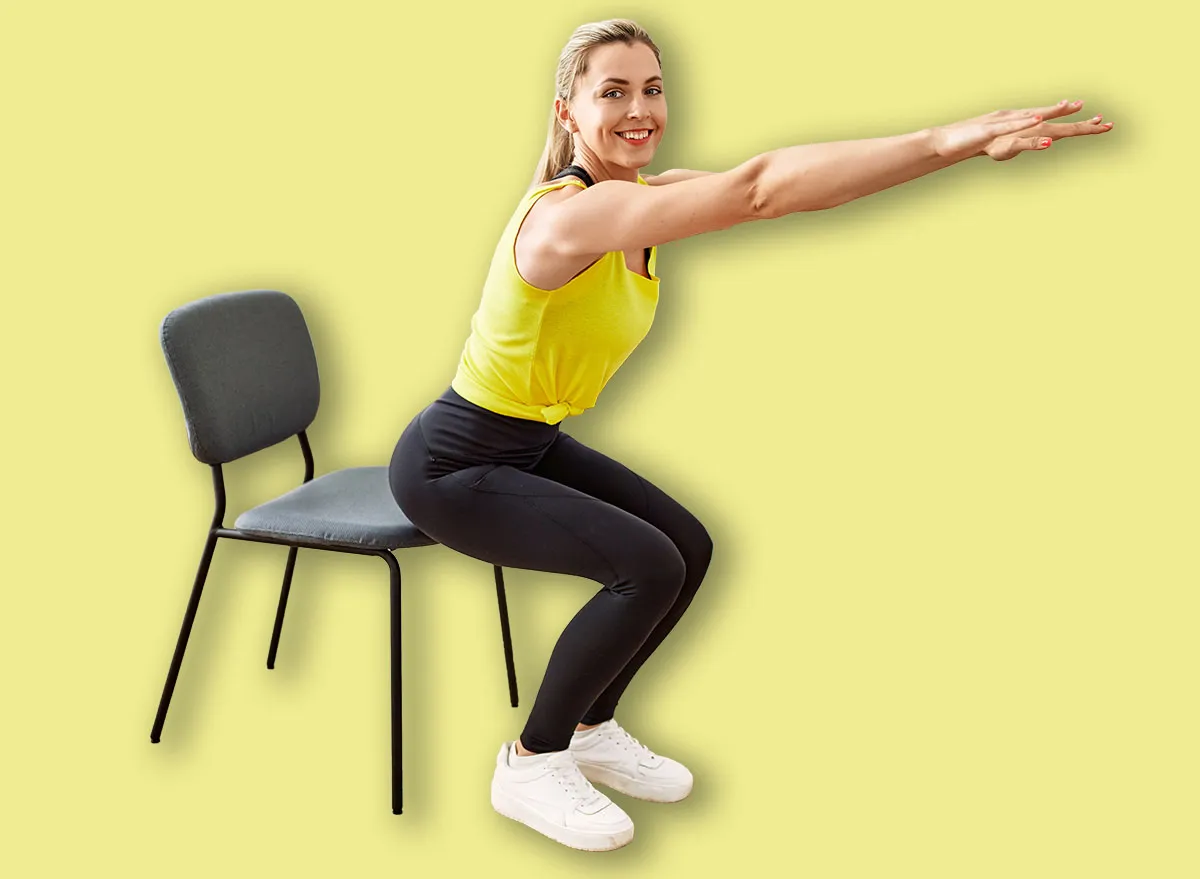
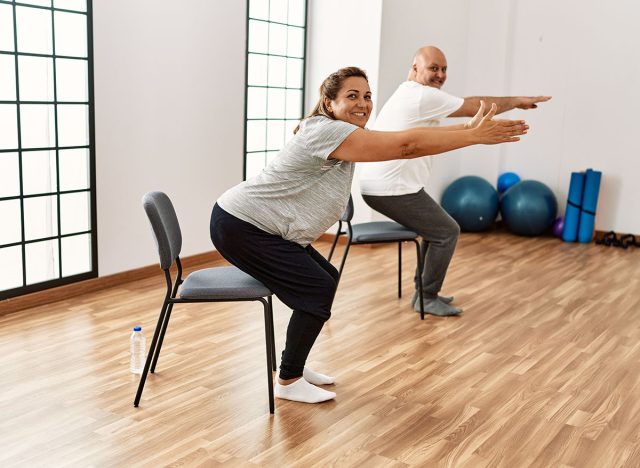
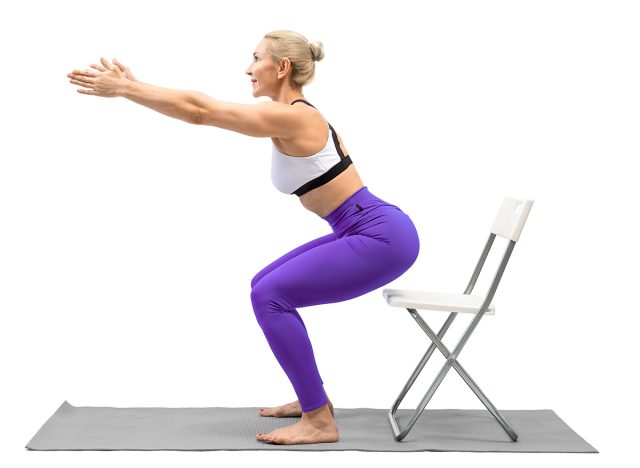
- Initiating the Movement: Begin seated, with your feet flat on the floor, roughly hip-width apart. Position your arms across your chest or hold them loosely in front of you, ensuring they do not assist in the ascent or descent. Lean slightly forward from your hips, engaging your core.
- The Ascent (Standing Up): Push through your heels and the midfoot, activating your thigh and gluteal muscles. Drive upwards in a controlled manner, striving for a smooth, powerful rise without jerking or using momentum excessively. Ensure your knees track in line with your toes, avoiding any inward collapse. Fully extend your hips and knees at the top of the movement, standing tall with good posture.
- The Descent (Sitting Down): This phase is equally critical. Instead of simply dropping, initiate the descent by pushing your hips back as if you are trying to reach for the chair behind you. Maintain control throughout the lowering phase, using your quadriceps and glutes to resist gravity. Gradually lower your body until your glutes lightly tap the chair before immediately initiating the next ascent. A controlled descent helps prevent strain on the knee joints and maximizes muscle engagement.
- Maintaining Core and Postural Integrity: Throughout the entire five minutes, focus on keeping your torso upright and stable. Your abdominal and back muscles should remain gently engaged to support your spine. Avoid rounding your back or allowing your shoulders to slump forward. Picture a string pulling you upwards from the crown of your head, maintaining a tall, elongated posture. This not only optimizes force transfer but also protects your lower back.
- Breathing and Cardiopulmonary Regulation: Coordinate your breath with the movement. A common and effective strategy is to exhale as you exert effort (standing up) and inhale as you lower yourself back to the chair. Maintain a consistent, rhythmic breathing pattern, avoiding breath-holding. The goal is to regulate your respiration to sustain the activity for the full duration, indicating robust aerobic conditioning.
- Pacing and Consistent Rhythm: The temptation might be to start aggressively, but for a five-minute continuous test, a sustainable, controlled pace is key. Aim for a steady tempo that you can realistically maintain for the entire duration without burning out prematurely. This demonstrates not just strength but also endurance and smart energy management. The consistency of your rhythm throughout the five minutes is a vital component of the assessment.
Interpreting Your Performance:

Successfully completing the full five minutes of continuous, unassisted chair transitions, especially when aged 55 or beyond, is a significant achievement. It suggests that your lower limb strength, core stability, balance, coordination, and cardiovascular endurance are all operating at an exemplary level for your age cohort. This outcome indicates a strong foundation for maintaining functional independence, significantly reducing the likelihood of falls, and contributing to overall health and vitality well into your later years. Individuals achieving this benchmark are often considered to possess above-average functional fitness, translating to greater ease in daily living and a reduced burden of age-related physical limitations.
If you are unable to complete the full five minutes, it is not an indication of failure but rather a valuable starting point for improvement. The test provides clear insights into areas that may require more attention. For instance, if muscle fatigue in your legs sets in quickly, focused lower body strengthening exercises are warranted. If balance or postural issues emerge, incorporating core-strengthening and proprioceptive training would be beneficial. Difficulty maintaining a consistent pace or regulated breathing points to an opportunity to enhance cardiovascular fitness. The beauty of this test lies in its diagnostic simplicity, empowering individuals to identify specific areas for targeted physical development.
Beyond the Test: Cultivating Functional Resilience
Irrespective of your initial performance, the principles underpinning this chair protocol – fostering strength, stability, balance, and endurance – are cornerstones of a resilient aging process. To enhance your functional capacity, consider integrating a balanced exercise regimen that includes:
- Resistance Training: Focus on compound movements like squats, lunges, and step-ups to build lower body and core strength. Bodyweight exercises, resistance bands, or light weights can all be effective.
- Core Strengthening: Exercises such as planks, bird-dog, and controlled trunk rotations can significantly improve spinal stability and postural control.
- Balance and Proprioception Exercises: Standing on one leg, heel-to-toe walking, and tai chi can sharpen your equilibrium and body awareness, crucial for fall prevention.
- Cardiovascular Conditioning: Regular aerobic activities like brisk walking, cycling, or swimming will bolster your heart and lung health, improving your endurance for daily tasks.
The journey toward sustained health and independence is an ongoing one, requiring consistent effort and mindful engagement with our physical capabilities. The five-minute chair challenge serves as an empowering tool, demystifying fitness assessment and placing a powerful measure of functional resilience within everyone’s reach. By understanding and actively working on the components it evaluates, individuals can proactively shape a future marked by greater vitality and autonomy.
About the Author