Maintaining robust, stable knee joints is a cornerstone of preserving independence and quality of life, particularly as individuals progress through their later years. The knees, as critical weight-bearing joints, are indispensable for a myriad of everyday actions, from the simple act of standing to navigating stairs and enjoying a brisk walk. When knee integrity falters, common indicators such as persistent stiffness, a sensation of wobbliness or instability, and general achiness can manifest, transforming once effortless movements into challenging or even painful endeavors. Recognizing these symptoms early and consulting with an orthopedic specialist or primary healthcare provider for a thorough evaluation is always the recommended first step to ascertain the underlying causes and appropriate course of action.
Numerous physiological shifts contribute to a decline in knee strength and function after the age of 55. A predominant factor is age-related muscle loss, medically termed sarcopenia. This natural degenerative process involves a progressive reduction in muscle mass and strength throughout the body if not actively counteracted through resistance training. Sarcopenia not only impairs physical capabilities but also affects metabolic health and increases the risk of falls. For women, the hormonal fluctuations experienced during perimenopause and menopause can significantly accelerate the loss of both muscle tissue and bone density, making targeted strength training even more critical for mitigating these effects.
Beyond the intrinsic aging process, pain itself plays a substantial role in weakening the knee musculature. As Dr. Gabriela Van Sickle, a Doctor of Physical Therapy and Co-Founder of Functional Physical Therapy, explains, conditions such as osteoarthritis, previous injuries, or chronic knee discomfort can trigger a protective mechanism in the body. This often leads to an inhibition of the quadriceps and other crucial muscles surrounding the knee joint. Even mild, ongoing pain can diminish the effectiveness with which these muscles contract, resulting in disuse atrophy and progressive weakness over time. This creates a challenging cycle where pain leads to weakness, and weakness can, in turn, exacerbate pain and instability.
For individuals whose knees are generally sound but require a boost in strength and reliability, identifying appropriate and effective exercise modalities is paramount. While traditional gym workouts offer numerous benefits, a specific category of home-based exercises utilizing a simple wall can provide unique advantages, particularly for the demographic over 55. These wall-supported movements can foster knee strength development with remarkable efficacy, sometimes even surpassing the practical benefits of conventional gym routines for this population due to their inherent accessibility and safety profile.
The rationale behind the effectiveness of wall exercises lies in their provision of external stability, a feature that Dr. Van Sickle emphasizes as invaluable. By leaning against or interacting with a wall, individuals gain a secure anchor, allowing them to concentrate solely on generating force and executing proper movement patterns. This support eliminates the common concerns of maintaining balance, managing transitions to and from the floor, or navigating complex gym machinery. This benefit is particularly significant for older adults who may experience reduced confidence in their balance, live with arthritic conditions, or have a history of falls, as it dramatically lowers the perceived risk associated with exercise.
When the demands on balance are minimized, individuals can typically perform exercises with enhanced technique, greater control over the movement’s speed, and increased consistency. This precision ensures that the target muscles receive an optimal training stimulus without the introduction of unnecessary compensatory movements from other muscle groups or joints, which often happens when struggling with balance. The result is a more focused and efficient strengthening process that translates directly to improved knee function and resilience.
Here are five exemplary wall-assisted exercises designed to build knee strength and stability, offering a practical and effective approach to lower body conditioning:
1. Isometric Wall Sit
The Wall Sit is a fundamental exercise that primarily targets the quadriceps, glutes, and hamstrings through an isometric contraction—meaning the muscles are engaged without changing length. This exercise is remarkably joint-friendly because it involves very little movement at the knee joint, making it an excellent option for individuals experiencing mild knee discomfort. The intensity can be easily adjusted by altering the angle of the hips and knees; a shallower squat places less stress, while a deeper angle increases the challenge. By holding a static position with the back pressed against a wall and knees bent to approximately a 90-degree angle (or less, depending on comfort and strength), individuals build muscular endurance and static strength, which directly contributes to knee stability and the ability to maintain upright postures for extended periods.
2. Dynamic Wall Sit with Stability Ball
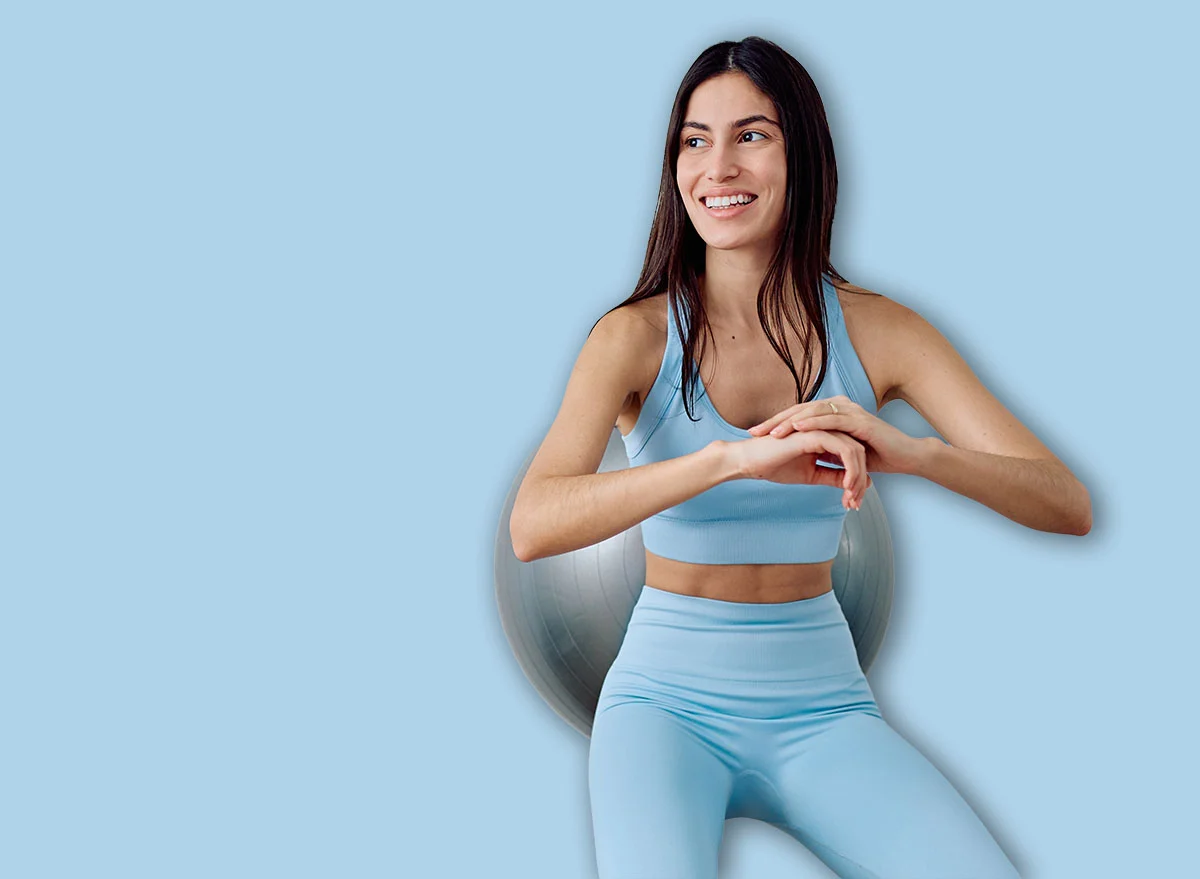
Building upon the basic wall sit, incorporating a stability ball between the back and the wall introduces a dynamic element while still leveraging external support. As Dr. Van Sickle highlights, the ball guides movement, facilitating proper alignment throughout a functional range of motion and engaging the quadriceps, glutes, and hamstrings more dynamically. The rolling action of the ball encourages smoother, controlled descents and ascents, promoting symmetrical weight-bearing and distributing forces evenly across both legs. Crucially, the presence of the ball can also significantly reduce the psychological barrier of fearing a backward fall, enhancing confidence and allowing for greater engagement with the exercise. This variation is excellent for transitioning from isometric to dynamic strength building.
3. Wall-Assisted Calf Raises
While the primary focus of this exercise is strengthening the calf muscles—specifically the gastrocnemius and soleus—their robust development plays a vital, albeit indirect, role in knee health. Strong calves are instrumental in improving walking mechanics, providing crucial shock absorption during movement, and reducing the overall stress transmitted to the knee joint during activities like walking, running, and jumping. By utilizing the wall for balance support, individuals can concentrate entirely on the concentric (lifting) and eccentric (lowering) phases of the calf raise, maximizing muscle activation without the distraction or risk of losing balance. This controlled environment ensures that the calf muscles receive an effective training stimulus, contributing to a more stable and resilient lower limb kinetic chain.
4. Wall-Supported Standing Hip Abduction
This exercise specifically targets the gluteus medius and other hip abductor muscles, which are located on the outer side of the hip. These muscles are absolutely essential for maintaining a level pelvis and ensuring proper knee alignment during dynamic activities such as walking, climbing stairs, and standing on one leg. Weakness in the hip abductors is a common culprit behind the knee collapsing inward (valgus collapse), which significantly increases stress on the medial aspect of the knee joint and can lead to pain or injury. By using the wall for gentle support, individuals can isolate these critical hip muscles, focusing on controlled movement and correct form rather than expending energy on simply staying upright. This isolation fosters stronger hip mechanics, which directly translates to better knee stability and tracking.
5. Wall-Supported Standing Hip Extension
The Wall-Supported Standing Hip Extension focuses on strengthening the gluteus maximus and hamstrings, two powerful muscle groups that are fundamental in supporting the knee. These muscles are vital for performing everyday functional movements such as walking, ascending stairs, and rising from a seated position. A strong gluteus maximus, in particular, helps to reduce excessive stress on the knee by improving overall lower-extremity alignment and distributing forces more efficiently throughout the hip and leg. This reduces the strain on the knee joint, especially during impact activities. With the wall providing balance assistance, individuals can dedicate their attention to achieving proper muscle activation and executing controlled, deliberate movements, maximizing the benefits for both hip and knee stability.
Incorporating these wall-supported exercises into a regular fitness regimen offers a practical, accessible, and highly effective pathway to enhancing knee strength and stability. This approach is particularly beneficial for older adults seeking to maintain or regain functional independence and confidence in their mobility. While these exercises are designed for safety and efficacy, it is always advisable to consult with a healthcare professional or physical therapist before starting any new exercise program, especially if there are pre-existing conditions or concerns. Consistency, proper form, and listening to one’s body are key components of any successful strength-building journey, laying the foundation for a more active, pain-free, and fulfilling life.
About the Author